Download the App and manage your eSIMs easily
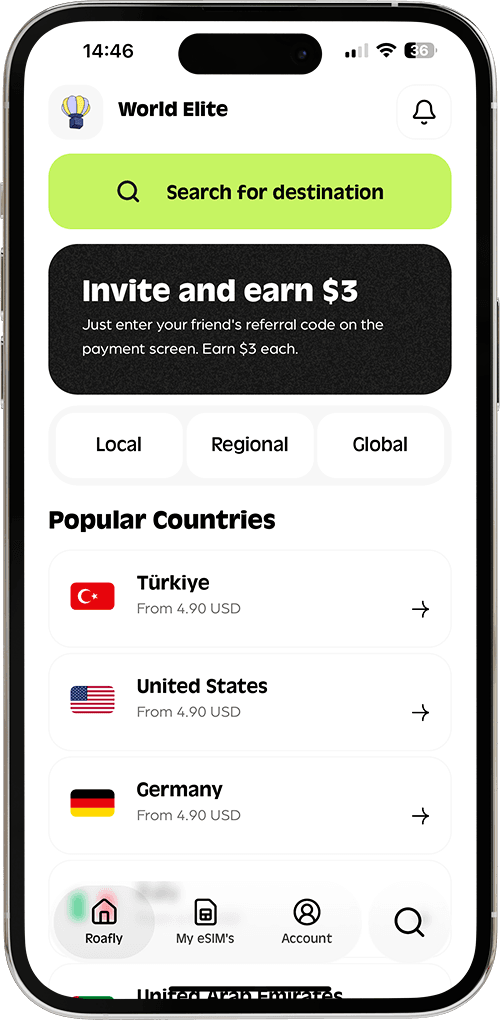
Create your order quickly
See your eSIM details
Track your remaining data
Download the App and manage your eSIMs easily
Create your order quickly
See your eSIM details
Track your remaining data
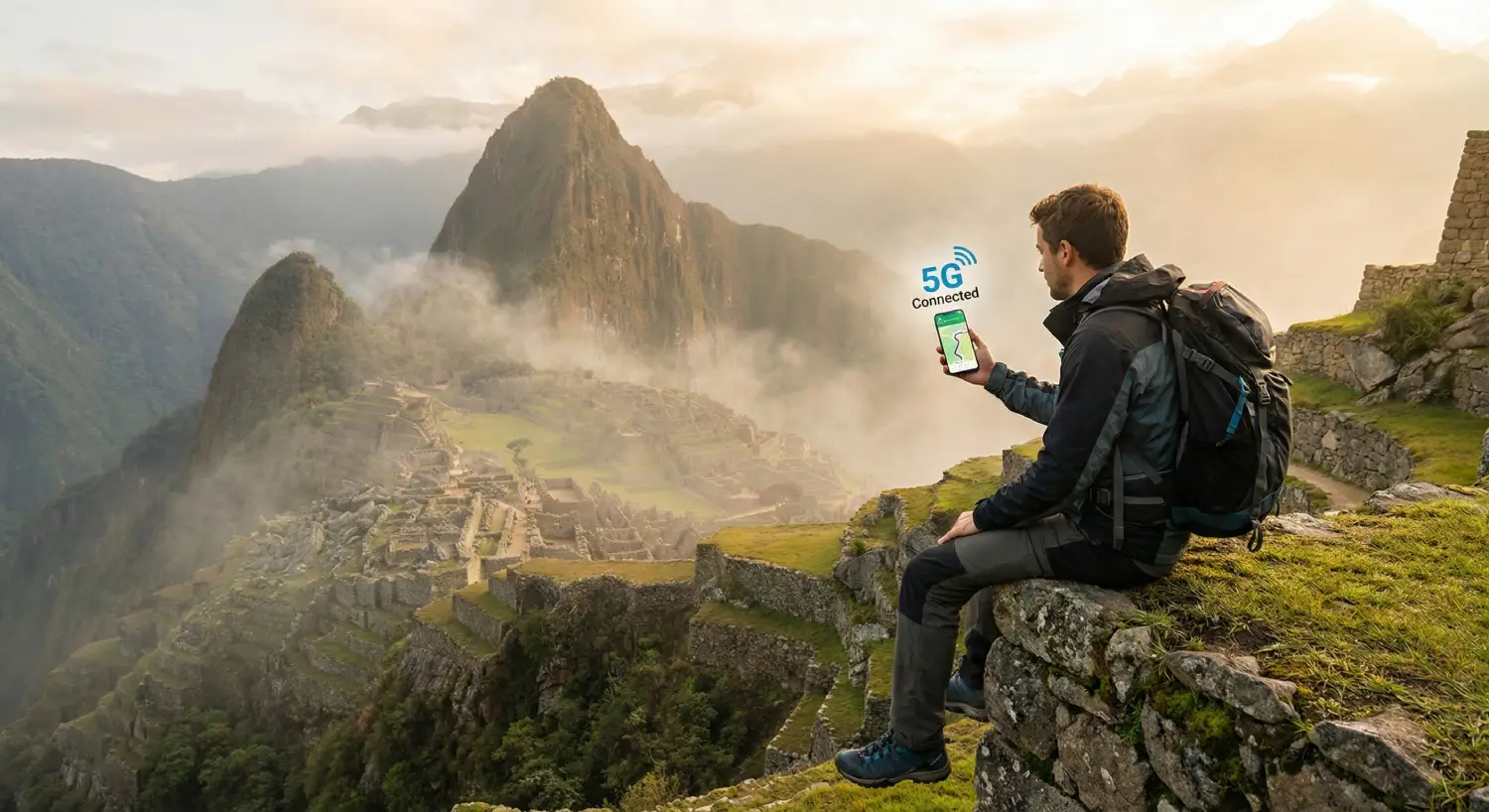
Landing in Peru is an assault on the senses in the best way possible. From the misty peaks of the Andes to the chaotic, vibrant streets of Lima, it is a country that demands to be shared. In 2026, staying connected is no longer just about posting to Instagram; it is about calling an Uber to avoid taxi scams, using Google Translate in a remote village, and accessing your digital tickets for Machu Picchu.
Entel
Instant delivery
From 4.90 USD

Sophie Callahan
Updated Jan 19, 2026
10 min read
Jump to section
👇Best for most trips
Entel

Peru
10 GB · 30 days
Enough for maps, bookings and everyday travel.
Hotspot supported
$24.90
From 4.90 USD
However, the landscape of mobile internet in Peru has shifted significantly over the last few years. While coverage has expanded into the Sacred Valley and 5G is becoming standard in Miraflores and San Isidro, the bureaucratic hurdles for obtaining a local SIM card as a foreigner remain surprisingly high.
If you are planning a trip to the land of the Incas this year, you have four main options to get online. We have tested and analyzed the pricing, speed, and convenience of each method to save you time and money. Here is everything you need to know about getting internet in Peru in 2026.
Choose the perfect data plan for your trip
For many travelers, the instinct is to sort out connectivity the moment the wheels touch the tarmac. At Jorge Chávez International Airport (LIM) in Lima—the primary gateway for international flights—this is possible, but it comes at a steep premium.
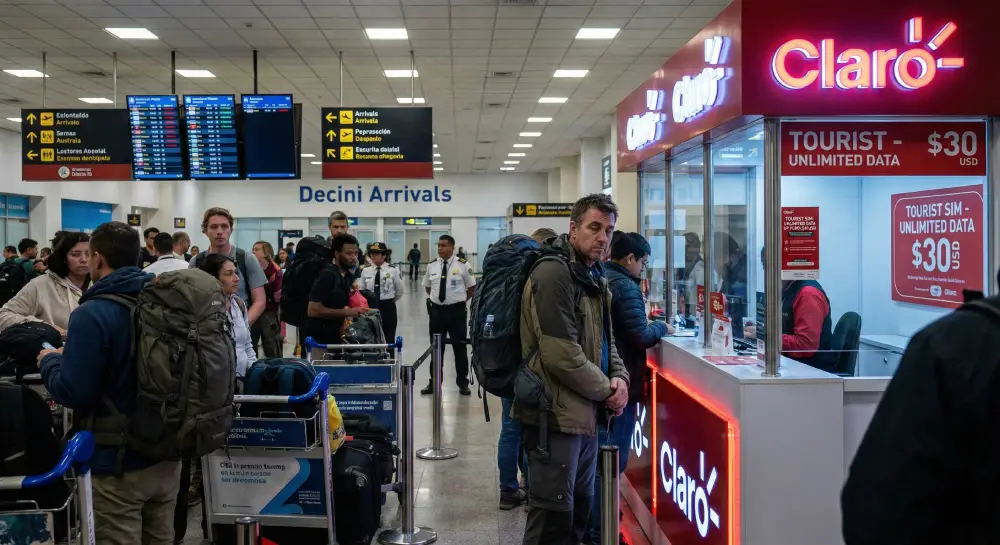
Once you pass through immigration and customs at Jorge Chávez, you will enter the chaotic arrivals area. In 2026, the airport layout has improved, but the aggressive marketing hasn't. You will immediately see kiosks for PeruSIM, Claro, and sometimes resellers offering "Tourist Packages."
These kiosks are open 24/7 to catch every flight, but they hold a monopoly on your immediate need for data.
The prices at the airport are vastly inflated compared to what you would pay in the city. These vendors know you are tired, likely don't have Peruvian Soles yet, and are worried about navigating to your hotel without maps.
Average Cost: In 2026, a basic "Tourist Plan" at the airport typically starts around $25 USD.
What You Get: This usually includes a SIM card with roughly 5GB to 10GB of data valid for 30 days.
The Trap: Some packages are advertised as "Unlimited," but the fine print often reveals a speed cap after the first few gigabytes, throttling you down to 2G speeds that are useless for anything other than text messages.
Even at the airport, you cannot simply hand over cash and leave. Peruvian law requires every mobile line to be registered to a passport.
You must present your physical passport (no photocopies).
The agent will scan it and take a digital photo of you.
Activation can take anywhere from 15 minutes to 2 hours depending on the network's system status.
Verdict: Only choose this option if you absolutely need internet before leaving the airport terminal and price is not an object. You are essentially paying a $15-$20 convenience fee for a $5 product.
If you can survive the taxi ride to your accommodation without data (or by using the airport's spotty free Wi-Fi), buying a SIM card in the city is the most authentic and affordable way to get connected. However, it requires patience and a bit of Spanish.
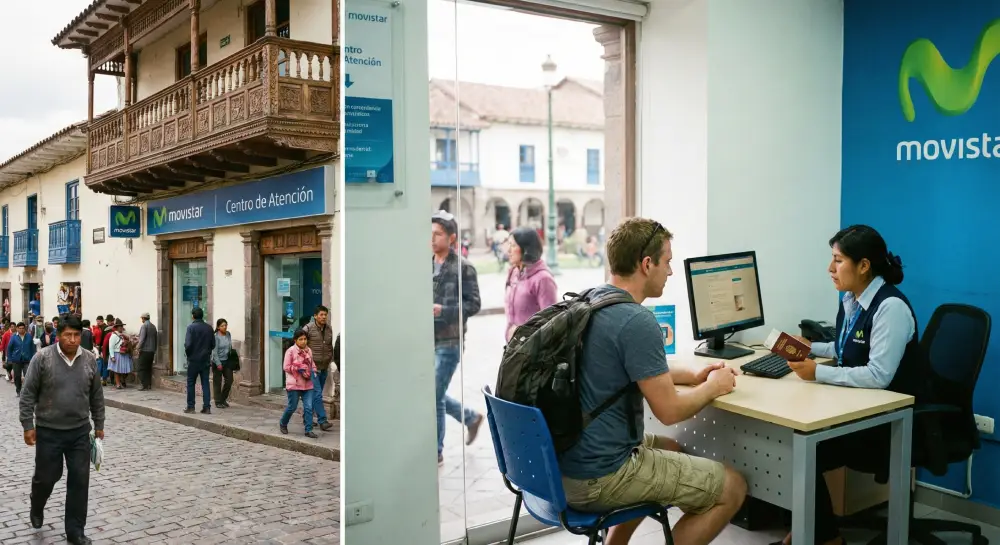
In Peru, you cannot just buy a SIM card at any corner store or pharmacy like you might in Europe. Corner stores (bodegas) only sell "Recargas" (credit top-ups). To buy the actual chip (SIM card), you must go to an official Centro de Atención al Cliente (Customer Service Center) of one of the major operators: Claro, Movistar, Entel, or Bitel.
Movistar: historically the largest player with the widest rural coverage. If you are trekking in very remote areas of the northern Andes, Movistar is often the best bet. However, their customer service centers are notoriously crowded.
Claro: The strongest competitor and often the preferred choice for tourists in 2026. They offer excellent 4G/5G speeds in Lima, Cusco, and Arequipa. Their network is robust in the Sacred Valley.
Entel: Known for the fastest download speeds in urban areas. If you are staying mostly in Lima and digital nomading, Entel is fantastic. Rural coverage is weaker.
Bitel: The budget option with a focus on 3G/4G in the provinces. They often have signal in weirdly remote places where others fail, but the data speeds are generally slower.
Buying a SIM in the city involves a specific dance:
Locate a Store: Find a "Claro" or "Movistar" store in a safe district like Miraflores or Barranco (Lima), or near the Plaza de Armas in Cusco.
Take a Number: You will likely have to wait in a queue. In 2026, some stores have digital queuing, but the wait can still be 30-60 minutes.
The "Extranjero" Issue: Tell the staff you need a "Chip Prepago" (Prepaid SIM). The critical hurdle is the system recognizing a foreign passport. Sometimes, the biometric scanners fail for non-Peruvians, requiring the staff to perform a manual override, which they may or may not know how to do.
Cost:
The Chip: ~S/5 PEN ($1.30 USD).
The Plan (Paquete): You will need to load a "Paquete de Datos." For example, S/30 PEN (~$8 USD) will get you around 5GB - 8GB of high-speed data plus unlimited social media (WhatsApp, Facebook) for 30 days.
Verdict: This is the cheapest option (~$10 total), but it costs you valuable vacation time. Is saving $15 worth spending your first morning in Cusco standing in a fluorescent-lit store instead of exploring the San Pedro Market?
For the modern traveler, the eSIM (embedded SIM) has rendered the physical SIM card hunt obsolete. In 2026, this is the gold standard for connectivity—balancing price, performance, and sheer ease of use.
Roafly has established itself as a premier choice for travelers to South America, specifically optimizing its network for the Andean terrain.
One of the most critical factors when choosing an eSIM is knowing which local network it connects to. A cheap eSIM is useless if it connects to a budget network with no signal in the mountains.
Roafly's Peru eSIMs operate on the Claro network. As mentioned earlier, Claro is widely regarded as offering the best balance of speed and coverage for tourists. It covers the major tourist corridor (Lima -> Paracas -> Huacachina -> Arequipa -> Cusco -> Machu Picchu) exceptionally well. This means you are getting the premium connectivity of a top-tier local provider without the bureaucracy.
Based on current offerings, Roafly provides flexible tiers to suit different trip lengths. You don't need to overpay for unlimited data if you don't need it, but the option is there for heavy users.
1 GB Plan: Perfect for a short layover or light backup.
Validity: 7 Days
Price: $4.90 USD
3 GB Plan: Great for a week-long trip focused on messaging and maps.
Validity: 30 Days
Price: $9.90 USD
5 GB Plan: The sweet spot for most 2-week vacations.
Validity: 30 Days
Price: $14.90 USD
10 GB Plan: For heavy social media users or remote workers.
Validity: 30 Days
Price: $24.90 USD
20 GB : $39.90 USD. Available for longer-term nomads.
(Note: Prices are estimates based on 2026 market rates; check the app for live promotional pricing.)
The beauty of the eSIM is the setup process:
Purchase Online: You buy the plan Peru eSIM before you leave your home country.
Instant Delivery: The QR code arrives via email instantly.
One-Tap Install: If you have the Roafly app, it’s often just a single button press to install.
Arrival: When you land in Lima, you simply turn on "Data Roaming" for the Roafly eSIM. You connect instantly. No lines, no passports, no biometric scans.
Verdict: Roafly offers the best coverage-to-price ratio. You can see how we stack up against the competition in our best eSIM for Peru guide, but if you simply want the robust Claro network without the "gringo pricing" of the airport or the paperwork of city stores, Roafly is the smartest choice.
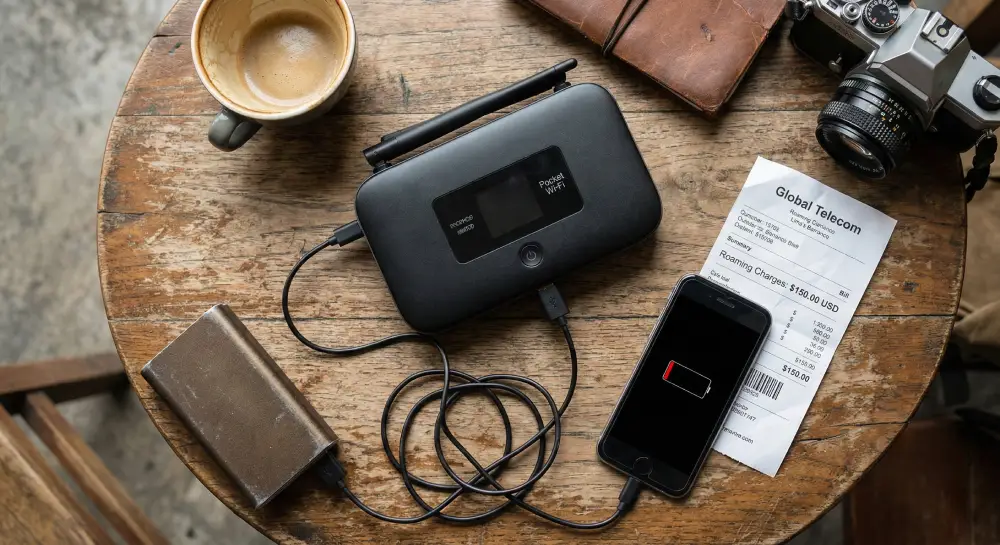
In the early 2010s, renting a portable hotspot (Pocket Wi-Fi) was popular. In 2026, it is largely obsolete for individual travelers.
The Cost: Rental fees are high ($8-$12/day).
The Risk: If you lose the device (easy to do on a hike or in a busy market), you are liable for a $150+ replacement fee.
The Hassle: You have to carry the device and a power bank to keep it charged. It adds weight to your day pack that you don't need at 4,000 meters altitude.
Unless you have a specific plan like Google Fi, using your home carrier (AT&T, Verizon, Vodafone, etc.) is financial suicide.
Day Passes: Many carriers charge $10 - $12 USD per day for international usage. A 10-day trip adds $100+ to your phone bill.
Pay-Per-MB: Without a pass, rates can be $2.05 per megabyte. Opening one email could cost $10.
Peru's geography is extreme, and managing your expectations is key.
Signal: Excellent (5G/4G+). Whether you are in Miraflores, Barranco, or visiting the Ballestas Islands, coverage is perfect with Roafly (Claro) or local SIMs. You can stream video and make video calls effortlessly.
Signal: Good to Very Good. Cusco city has full 4G coverage. The main towns in the Sacred Valley (Pisac, Urubamba, Ollantaytambo) also have strong signals.
Note: Inside the thick adobe walls of older hotels, the signal might drop.
Signal: Surprisingly Good. Machu Picchu Pueblo (Aguas Calientes) has full 4G coverage. You will even get a signal at the entrance of the citadel and at the classic "postcard view" spot. However, once you start hiking towards the Sun Gate or Huayna Picchu, the signal will fade.
Signal: Poor / Non-Existent. These are true wilderness experiences. You might catch a fleeting signal at high mountain passes (like Dead Woman’s Pass), but for 80% of the trek, you will be offline. Enjoy the digital detox.
Signal: Spotty. The main towns have 4G, but as soon as you take a boat to your eco-lodge, you will likely lose service. Some lodges have satellite Wi-Fi in the lobby, but it is slow.
Best for most trips
Entel
Peru
10 GB · 30 days
Enough for maps, bookings and everyday travel.
Hotspot supported
$24.90
From 4.90 USD
Prices updated as of January 2026.
In 2026, the choice for internet in Peru depends on how you value your time.
Avoid the Airport Kiosks: They are overpriced tourist traps.
Skip the Local Store: Unless you are staying for 2+ months or are on an extreme budget, the bureaucracy isn't worth the $5 savings.
Choose the eSIM: For 95% of travelers, Roafly is the sweet spot. It connects to the reliable Claro network, sets up in seconds, and costs a fraction of roaming fees. You land, you connect, and you start exploring.
Don't let connection anxiety ruin your arrival in one of the world's most beautiful countries. Secure your data beforehand and focus on the Pisco Sours and alpacas.
Check the latest Peru eSIM packages here

Manage your eSIM in the app
Install, top up and track data.
Choose the perfect data plan for your trip
Manage your eSIM in the app
Install, top up and track data.
