

'/%3e%3cpath fill='%23fff' d='m8.751-17.959 10.11 11.373L3.997-9.844l13.94-6.1-7.692 13.129z'/%3e%3c/svg%3e)
When traveling to Pakistan, ignorance of the law is never an excuse. The country’s legal system operates with zero tolerance for certain infractions, especially those concerning national security and religious statutes. You must proactively familiarize yourself with local laws to avoid hefty fines, sudden deportation, or severe prison sentences.
The Espionage Trap: Strict Drone and Photography Bans
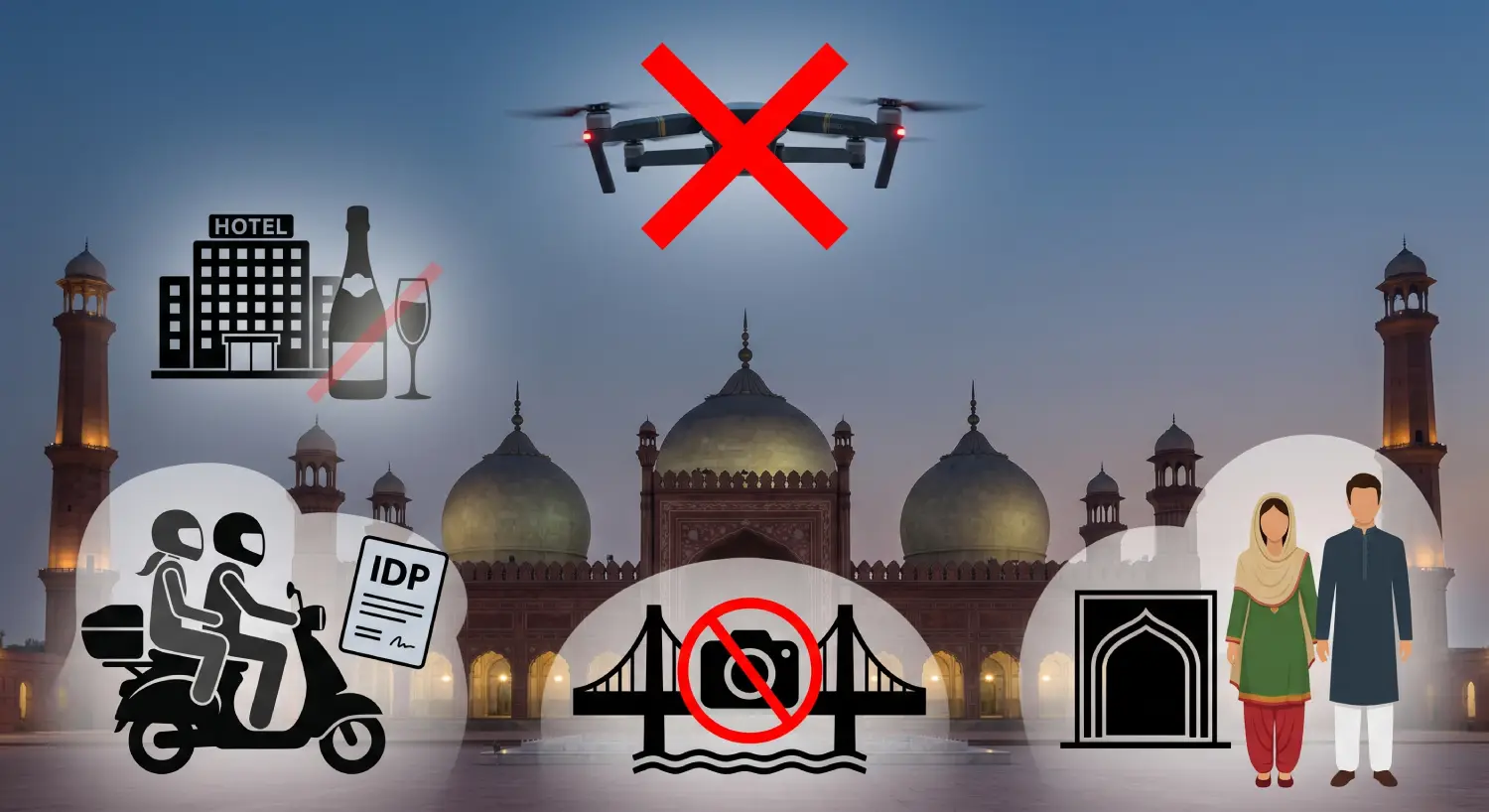
Flying a drone in Pakistan without extreme pre-approval is a fast track to severe legal trouble. Drones are heavily restricted due to regional security concerns and anti-terrorism laws. If you pack a drone in your luggage without clearance from the Pakistan Civil Aviation Authority, it will be immediately confiscated at customs.
Taking unauthorized aerial footage or flying near restricted airspace carries massive fines and potential espionage charges. Even if you manage to bring a small drone into the country, flying it in urban areas or near government buildings will result in immediate arrest. You must secure a No Objection Certificate (NOC) months in advance, which is rarely granted to tourists.
Photography on the ground is equally heavily regulated. Do not photograph military installations, airports, bridges, or sensitive government buildings. Before exploring border areas or politically sensitive zones, be sure to read our guide on Is Pakistan Safe to Visit? Street Scams, Red Zones & Solo Travel Reality.
-
Never photograph women in rural or conservative areas without explicit permission from them and their male relatives.
-
Avoid taking pictures of military personnel or police checkpoints.
-
Keep your camera stowed when near dams, power plants, or the Line of Control (LoC).
Dry by Default: The Complex Reality of Alcohol Allowances

Pakistan is an Islamic republic, and the consumption, sale, and transport of alcohol by Muslims is strictly prohibited by law. There is no culture of public drinking, and being visibly intoxicated in public will result in immediate arrest and deportation. If you are a non-Muslim tourist, you are granted specific exceptions, but the process is highly regulated.
Non-Muslim foreigners can legally consume alcohol, but in licensed locations such as four-star and five-star hotels. Alternatively, you can apply for a Non-Muslim Liquor Permit through the local Excise and Taxation Department. Buying alcohol from illegal bootleggers on the street is incredibly dangerous and frequently leads to severe methanol poisoning or sting operations.
If you plan on bringing duty-free alcohol into the country, the rules are highly restrictive. You cannot bring any alcohol if traveling on a Muslim passport or declaring Islam as your religion on your visa. To understand the exact duty-free limits and border confiscation risks, review our breakdown on Pakistan Airport Customs Rules: Alcohol, DIRBS & Limits.
Prescriptions, Vaping, and Prohibited Substances
Pakistan enforces a zero-tolerance policy regarding illegal narcotics, and drug trafficking carries the death penalty. Even carrying a small amount of recreational drugs like marijuana will result in years of imprisonment in notoriously harsh conditions. You must also be incredibly careful with standard prescription medications.
Common Western prescriptions, particularly ADHD medications (like Adderall or Ritalin) and strong painkillers, are classified as controlled substances. You must carry a signed doctor’s note and the original prescription bottles to prove the medication is for personal use. Failure to declare these at customs can result in them being treated as illegal narcotics.
Vaping and e-cigarettes are currently legal and widely available in major Pakistani cities. However, vaping on public transportation, in airports, or inside government buildings is illegal and carries steep fines. Always ask for permission before vaping near outdoor cafes or crowded public spaces.
Chaotic Roads: Scooter Rentals, IDPs, and Traffic Traps
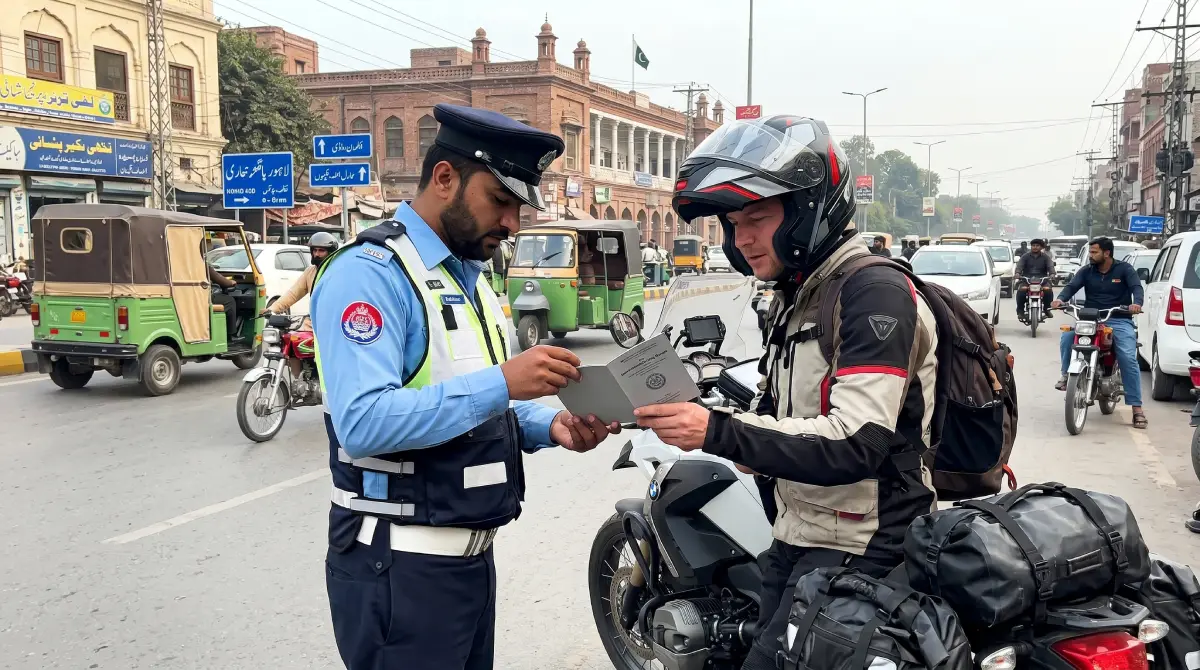
Riding a scooter or motorcycle is a popular way to navigate the bustling streets of Lahore or the scenic mountain passes of Gilgit-Baltistan. However, an International Driving Permit (IDP) is absolutely mandatory alongside your home country's valid motorcycle license. Renting a bike without an IDP will result in police harassment, fines, and the immediate impounding of your vehicle.
Traffic laws in Pakistan can appear completely non-existent to outsiders, but police strictly enforce rules on foreigners. Helmet laws are strictly enforced for expats and tourists, and riding without will result in immediate on-the-spot fines. Furthermore, in the event of an accident, driving without an IDP instantly voids any travel insurance coverage you hold.
When road-tripping through remote areas, you will encounter numerous military checkpoints that require you to show your passport, visa, and NOCs. Having reliable mobile data to pull up your documents and GPS is critical in these moments. Before you hit the road, make sure to read How to Get Internet in Pakistan.
The Ultimate Red Line: Blasphemy Laws and Religious Respect
Pakistan’s blasphemy laws are among the strictest in the world and must be taken with the utmost seriousness. Insulting Islam, the Prophet Muhammad, or the Quran is a criminal offense that carries mandatory life imprisonment or the death penalty. Even perceived disrespect or a culturally ignorant joke can incite mob violence long before the police arrive.
Tourists must also adhere strictly to local dress codes and religious etiquette. While there is no legal mandate for foreign women to wear a hijab in public, modest dress is culturally enforced. Both men and women must cover their shoulders and knees at all times to avoid public shaming and police warnings.
-
During Ramadan, it is illegal to eat, drink, smoke, or chew gum in public from sunrise to sunset.
-
Remove your shoes and ensure your head is covered (for women) before entering any mosque or shrine.
-
Never point the soles of your feet at another person, a religious text, or a shrine, as it is considered deeply offensive.
Customs and Connectivity: Navigating the DIRBS Tax Trap
Bringing your personal smartphone into Pakistan comes with a unique legal catch known as the Device Identification, Registration and Blocking System (DIRBS). Designed to combat mobile smuggling, the Pakistan Telecommunication Authority requires all phones operating on local networks to be registered. If you use a local physical SIM card for more than 120 days, your phone’s IMEI will be permanently blocked unless you pay a massive import tax.
This tax can sometimes equal the actual value of your smartphone, catching long-term tourists completely off guard. Using roaming data or an international travel eSIM allows you to bypass the local DIRBS registration entirely.
Stay Connected to Stay Safe
Navigating a country with frequent military checkpoints, sudden road closures, and complex laws requires real-time access to information. Having a reliable internet connection is not just about posting photos; it is a vital safety tool. You need data to use Google Maps in chaotic traffic, translate legal documents, or contact your embassy in an emergency.
Need data in Pakistan? Get an eSIM!
Choose the perfect data plan for your trip

Manage your eSIM in the app
Install, top up and track data.
Relying on public Wi-Fi in Pakistan is unreliable and poses severe cybersecurity risks. Purchasing a local physical SIM card can subject your device to the frustrating DIRBS blocking rules mentioned earlier. Instead, a Pakistan eSIM allows you to connect to local towers securely the moment your plane lands, bypassing government registration delays entirely.
To ensure you stay securely and avoid getting lost in remote northern valleys, check out our guide on the Best eSIM for Pakistan.
Summary Checklist (Don't Be That Tourist)
-
Leave the Drone at Home: Do not bring a drone to Pakistan unless you have an official, pre-approved No Objection Certificate from the Civil Aviation Authority.
-
Respect the Blasphemy Laws: Never make jokes, comments, or social media posts criticizing religion, the Quran, or local customs.
-
Dress Modestly: Always cover your shoulders and knees; failure to do so will result in denied entry to landmarks and public harassment.
-
Get an IDP: You must have an International Driving Permit to legally rent or ride a motorcycle or scooter.
-
Carry Prescriptions: Keep all medications in their original bottles with a stamped doctor's letter, especially for stimulants and painkillers.
-
Watch Where You Point Your Camera: Photographing bridges, dams, airports, or military personnel can lead to espionage charges.
Note: Travel laws and fines can change. This information is accurate as of April 2026. Always consult official local authorities before your trip.