Download the App and manage your eSIMs easily
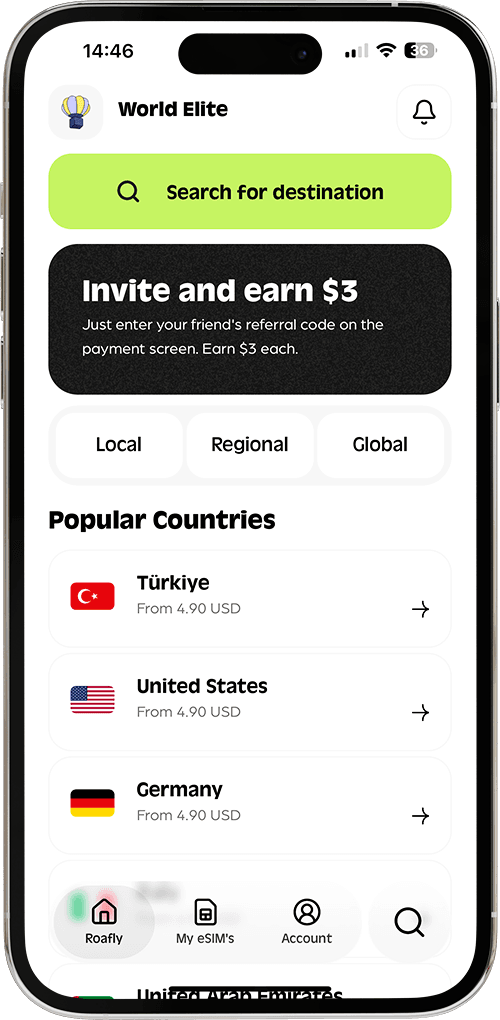
Create your order quickly
See your eSIM details
Track your remaining data
Download the App and manage your eSIMs easily
Create your order quickly
See your eSIM details
Track your remaining data
Montenegro’s visa-free entry routes come with different time limits: many passports allow visits of up to 90 days, while entry using an eligible foreign visa or residence permit is capped at 30 days. Changes introduced on 1 November 2026 also mean that older nationality lists can give you the wrong answer.

Sophie Callahan
Updated Nov 9, 2026
7 min read

Save 15% on your Roafly eSIM
Stay connected on your next trip. Use the code below at checkout.
View All DestinationsJump to section
👇Save 15% on your Roafly eSIM
Stay connected on your next trip. Use the code below at checkout.
View All Destinations
Manage your eSIM in the app
Install, top up and track data.
These requirements reflect the rules in force on 9 November 2026 for short tourist visits with ordinary passports. Start with your nationality and the document you will use to enter, then check the conditions for that route.
The examples below cover the main tourist routes. Nationality and residence are separate: living in a country with visa-free access does not give you the same rights as holding its passport.
| Passport or travel document | Entry route | Stay limit |
|---|---|---|
| US, UK, Canadian, Australian, German or French passport | Visa-free | Up to 90 days, subject to the 90-in-180-day limit |
| Peruvian passport | Visa-free under a separate provision | Up to 30 days |
| Valid national identity card issued by an EU member state, such as Germany, France or Italy | Visa-free entry using the ID card | Up to 30 days |
| Passport accompanied by an eligible valid foreign visa or residence permit, including qualifying Indian or Turkish passport holders | Exemption from a separate Montenegrin visa | Up to 30 days, or the supporting document’s expiry if earlier |
| Indian, Turkish, Russian, Belarusian, mainland Chinese or Saudi Arabian ordinary passport, without an applicable exemption | Obtain a Montenegrin visa before travelling | As authorised by the issued visa |
These are examples rather than a complete nationality list. Montenegro’s current visa regulation sets out the full groups and exceptions.
The document choice matters for EU visitors: entering with a national ID card gives a shorter allowance than entering with a passport. Bring your passport if you intend to stay beyond the ID-card allowance.
Ordinary passport holders from Türkiye, Russia, Belarus, mainland China and Saudi Arabia now need a Montenegrin visa unless they qualify for an exemption. Previous visa-free arrangements should not be used to plan a new arrival.
The exemption for eligible foreign visas and residence permits remains available. Someone affected by the November change may therefore still enter without obtaining a separate Montenegrin visa, but must qualify through that document.
Hong Kong and Macao travel documents retain a separate visa-free provision of up to 90 days. Diplomatic and official passports also have their own rules; the ordinary-passport route above should not be applied to them.
Montenegro accepts qualifying valid visas or residence permits from the Schengen area, Australia, Japan, Canada, New Zealand, Ireland, the United States and the United Kingdom for this exemption.
Your stay is limited to 30 days and cannot extend beyond the supporting document’s expiry. If that document expires during your planned trip, shorten the visit or arrange another valid basis for entry before travelling.
Carry the passport and the visa or residence document on which you are relying. Residence in a country outside the accepted group is not a substitute for one of these documents.
Single-entry visas deserve particular attention. Get confirmation from the relevant Montenegrin mission before relying on one, especially if it has already been used. The printed expiry date alone does not establish whether the visa is still valid for your intended journey.
If no exemption covers you, arrange your visa before departure through the responsible Montenegrin embassy or consulate, or its authorised application centre where available. Start with Montenegro’s diplomatic missions and visa information to identify the office handling your application.
The short-stay C visa covers tourist visits. It may be issued for one, two or multiple entries, with a permitted stay within the short-stay framework of 90 days in 180. Follow the dates, entry allowance and authorised duration on the visa you receive.
Prepare the application form, passport, photograph and evidence supporting the purpose of your trip. Visa applicants need a passport valid for at least three months beyond the visa’s validity. The application checklist also covers financial means, health insurance and payment of the consular fee; accommodation and return or onward travel evidence help establish your itinerary.
Use the checklist for the office where you apply, including any invitation or guarantee requirements. Application-centre charges and arrangements depend on location, so obtain the total and appointment instructions from that office before submitting.
Montenegro’s general passport requirement is a document issued within the previous ten years and valid for at least three months after your planned departure. Check both dates: a passport can have time left before expiry but still be too old for the journey.
Keep your entry documents in your hand luggage. Alongside your passport and any visa or residence permit supporting your admission, have these trip details readily available:
Your accommodation address and reservation, or your host’s contact details.
Your return or onward itinerary.
Evidence that you can support yourself during the visit.
Save copies offline so you can retrieve them without a mobile connection. Keep the original travel documents accessible too.
Mobile data is useful once you need to message your host or find the address after arrival. Compare the best eSIM for Montenegro before departure if you want to choose a provider and allowance in advance.
Your luggage has a separate set of requirements. Review Montenegro’s customs rules for goods and declarations before packing.
Montenegro is outside the Schengen area. Its short-stay allowance is separate from Schengen’s: days spent in Montenegro do not count as days spent in Schengen, and leaving Schengen does not erase the days you have already used there.
This matters if you fly to Dubrovnik and continue overland. You must qualify to enter Croatia for the airport-to-border journey, then qualify separately to enter Montenegro. If your return flight also leaves from Dubrovnik, your documents must allow you to enter Croatia again.
Check the entry count on any Schengen visa used for that itinerary. Permission to enter Montenegro using a foreign visa does not settle whether you can return to the country or area that issued it.
Driving through Albania, Bosnia and Herzegovina or Serbia also requires the documents applicable to each country on your route. Beyond border paperwork, consider road and travel safety in Montenegro when choosing the drive and allowing time for it.
Keep a record of your entry and exit dates. On passport-based journeys, check that the relevant border stamps have been entered so your travel history is clear.
Visitor registration is a separate step after you enter Montenegro. How it is completed depends on where you stay and who provides the accommodation.
At a hotel or another accommodation provider, the provider is responsible for registration within 12 hours of arrival. Ask at check-in whether it has been completed and request confirmation.
If you are responsible for your own registration, complete it within 24 hours through the local tourist organisation or police in the place where you are staying. Bring your passport and the exact accommodation address. Arrange deregistration as required when you leave.
Moving between municipalities can create another registration obligation: register in each municipality where you stay for more than 24 hours. Montenegro’s official visitor-registration guidance explains the provider and self-registration routes.
Keep your host’s details and registration confirmation with your travel records. On an unlocked, eSIM-compatible phone, Roafly’s Montenegro eSIM can provide mobile data for messaging your accommodation and accessing directions while you settle in.
Once registration is handled, the remaining local laws in Montenegro help you plan the stay itself. Leave within the allowance attached to your entry route; accommodation registration does not extend it.
