Download the App and manage your eSIMs easily
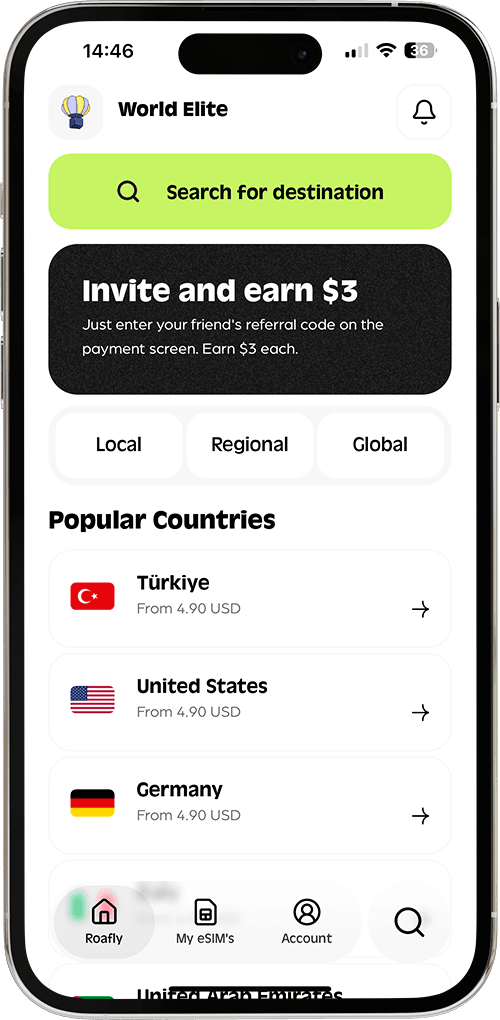
Create your order quickly
See your eSIM details
Track your remaining data
Download the App and manage your eSIMs easily
Create your order quickly
See your eSIM details
Track your remaining data
Mexico’s tourist entry requirements depend on your passport, any qualifying foreign visa or permanent residence you hold, and how you enter the country. Many visitors can travel without a Mexican visa. Others need an advance consular visa, an electronic authorization or Brazil’s separate eVisa.

Lena Hartley
Updated Oct 19, 2026
9 min read
Save 15% on your Roafly eSIM
Stay connected on your next trip. Use the code below at checkout.
View All DestinationsJump to section
👇Save 15% on your Roafly eSIM
Stay connected on your next trip. Use the code below at checkout.
View All Destinations
Manage your eSIM in the app
Install, top up and track data.
The entry routes checked on 19 October 2026 include an important distinction: permission to travel to Mexico and permission to stay for 180 days are different things. Immigration authorities decide whether to admit you and how long you may remain.
Start with your passport nationality, then consider whether an existing visa or permanent residence gives you an exemption.
| Tourist entry route | Representative passport countries or qualifying group | What to arrange |
|---|---|---|
| Visa exemption by nationality | United States, Canada, United Kingdom, Germany, France, Australia, Japan and New Zealand | Travel with your valid passport and supporting trip documents. |
| Exemption through another country’s visa or permanent residence | Eligible holders of the documents explained below, regardless of nationality | Carry the qualifying visa or proof of permanent residence alongside your passport. |
| Electronic authorization, known as SAE | Eligible ordinary-passport holders from Türkiye, Russia and Ukraine arriving by air | Obtain the authorization before flying and carry a printed copy. |
| Brazilian eVisa | Brazilian nationals arriving by air who do not qualify for an exemption | Apply through Mexico’s separate electronic visa system before departure. |
| Advance consular visa | Examples include India, China and South Africa when no qualifying exemption applies | Complete the relevant application through a Mexican embassy or consulate before travel. |
These are examples for ordinary passports, not an exhaustive nationality list. Mexico’s official visa-exempt country list lets you check your nationality. Diplomatic, official and special passports may follow different rules.
Short tourist visits fall under the visitor category without permission to undertake paid activities. The maximum permitted stay is generally 180 days, but your individual admission may be shorter.
Mexico allows qualifying visitors to use certain foreign immigration documents instead of obtaining a Mexican visitor visa.
The two main groups are:
Qualifying valid visas issued by the United States, Canada, Japan, the United Kingdom or a country in the Schengen Area.
Proof of permanent residence in those countries, or in Chile, Colombia or Peru.
Carry the actual qualifying document with your passport. Permanent residence is a specific status; living, working or studying abroad on a temporary permit does not automatically satisfy this exemption.
Mexican consular guidance commonly specifies a valid multiple-entry visa. If you are relying on a foreign visa, verify its entry conditions and remaining validity before booking. An expired visa should not be treated as sufficient simply because a separate document allows you to remain in the issuing country.
US ESTA is not a US visa and cannot be used as the qualifying visa for this exemption.
This distinction can change your application route entirely. Check whether you already qualify before paying for a Mexican visa or electronic application.
Eligible ordinary-passport holders from Türkiye, Russia and Ukraine can use the Sistema de Autorización Electrónica, usually shortened to SAE, for travel to Mexico by air.
SAE is an electronic travel authorization. It is separate from the newer eVisa system available to Brazilian nationals.
Apply through the official INM electronic authorization form. The authorization is free, valid for 30 days from issue and usable for one trip. That 30-day window concerns using the authorization to travel; your permitted stay is determined when you enter Mexico.
Before departure:
Enter your details exactly as they appear in the passport you will use.
Make sure your airline participates in the SAE scheme.
Print the approved authorization and carry it with that passport.
If the system does not authorize your application, you will need to pursue the appropriate consular visa route.
SAE applies to arrival by air. For entry by land or sea, you need a Mexican visa unless a separate exemption covers you. Turkish special and service passports should not be treated as eligible simply because ordinary Turkish passports can use SAE.
Brazilian nationals have had access to a separate Mexican eVisa system since 5 February 2026. It covers eligible short visits without paid activities when entering Mexico by air.
The application is completed through the official Mexican eVisa portal, including document uploads and payment.
The published application terms include:
Validity: 180 days.
Entries: one.
Application fee: US$10.
Entry method: air only.
Upload the requested passport information and photograph carefully. The issued visa must match the passport used for travel. A replacement passport or changed personal details can require a new application.
Carry the approved eVisa in an accessible format; a printed backup is useful during airline and immigration checks.
Plan carefully if your itinerary enters Mexico more than once. Each entry requires a new eVisa unless you qualify for a separate exemption. The electronic route also does not cover entry by land or sea.
If neither a nationality-based exemption nor another qualifying route applies, arrange your visa before travelling. Do not plan to resolve a visa requirement at the airport or land border.
The relevant short-stay category is generally Visitor without permission to engage in remunerated activities.
Consular applications normally involve an appointment, an application form, a passport, photographs, supporting financial or employment documents, and an interview. Requirements depend on the office handling your application and your circumstances.
Use that consulate’s current instructions for financial evidence, translations, appointment booking and payment. Bank-balance thresholds, accepted documents and processing arrangements should not be copied from another country’s consulate.
Visa validity and permitted stay also serve different purposes. Your visa allows you to travel and request admission within its conditions; the immigration record issued at entry determines your authorized visit.
Your passport must be valid when you enter Mexico and throughout your stay. Mexico’s general admission guidance does not impose a universal six-month remaining-validity rule on every visitor.
However, a consular visa application may have a longer passport-validity requirement. Transit countries and airline document checks can also affect your journey, so assess the complete route if your passport is nearing expiry.
If you are flying from the United States, carry a passport book. A US passport card is not valid for international air travel to Mexico.
Keep the following documents easy to reach:
Your passport and any required visa, authorization or proof of permanent residence.
Accommodation confirmations showing where you will stay.
Return or onward travel details consistent with your intended visit.
An itinerary that explains your dates and destinations.
Evidence of funds to support the trip if requested.
Your host’s address and contact details if staying with friends or relatives.
Immigration officers may ask about your purpose of travel, occupation, accommodation, finances and departure plans. Answer clearly and keep the documents consistent with your actual trip.
Build your itinerary around realistic journeys and the safety considerations for your Mexico route, particularly if travelling between regions.
Save essential confirmations offline before departure. Your baggage needs separate preparation: Mexico’s customs rules cover what you can bring through the border, including personal belongings and restricted goods.
The Forma Migratoria Múltiple, or FMM, records immigration status and admission. It is not a substitute for a required visa or electronic authorization.
At international airports, INM guidance says you do not need to complete or carry a paper FMM in advance. Your immigration record is generated during the entry process.
Follow the instructions at your arrival point and retain any immigration documents issued to you. Check your passport stamp or entry record for the authorized length of stay.
Older instructions telling every airline passenger to fill in a paper tourist card can cause confusion. Use the process applicable at your airport rather than buying a third-party “tourist card” package because an old guide says it is compulsory.
Land arrivals still involve the FMM procedure. If you obtain the form electronically before travelling, print it and present it with your passport and any required visa at the immigration checkpoint for validation.
Completing an online form does not finish the border process. Make sure your entry is properly recorded before continuing into Mexico.
Treat 180 days as a ceiling, not a promised allowance. Immigration authorities can grant a shorter period based on your trip and the information presented.
If your confirmed trip lasts 21 days, do not assume that you have six months simply because your passport qualifies for visa-free travel. Read the actual permission issued to you.
Raise any apparent discrepancy before leaving the immigration area. If plans change later, contact INM before your authorized stay ends. A hotel extension, changed flight or still-valid visa does not extend the admission period by itself.
An airport connection can still require a Mexican visa or another qualifying entry document. Remaining at the airport does not automatically remove the requirement.
If your nationality requires a visa, you must either hold the appropriate Mexican visitor visa or qualify for an applicable exemption or eligible electronic route. Mexico’s relevant consular category for this purpose is the visitor visa without permission to undertake paid activities.
Also consider the return journey. A single-entry electronic document used on the outbound trip cannot be reused for a second entry into Mexico.
Flights reaching Mexico through the United States or another country have a separate document question: you must meet that country’s transit or entry requirements as well.
Organize your arrival around the address and route in your booking documents. Keep your accommodation’s full address, contact number and transfer arrangements available offline.
The guide to airport transfers and onward travel in Mexico can help you connect the arrival airport with your first overnight stop.
If you want mobile data ready for the journey, compare eSIM plans for Mexico before departure and complete any necessary setup while you have a reliable connection.
Roafly’s Mexico eSIM provides mobile data for accessing booking updates, maps and messages after arrival on a compatible, unlocked phone. Keep essential documents downloaded even when you have a data plan.
Once admitted, retain your immigration record and observe the departure date you were given. Familiarize yourself with the local laws that affect tourists in Mexico before beginning the rest of your trip.
