

'%3e%3cg id='e'%3e%3cg id='d'%3e%3cg id='c'%3e%3cg id='b'%3e%3cpath id='a' d='M0-6v6h3' transform='rotate(18 0 -6)'/%3e%3cuse xlink:href='%23a' transform='scale(-1 1)'/%3e%3c/g%3e%3cuse xlink:href='%23b' transform='rotate(72)'/%3e%3c/g%3e%3cuse xlink:href='%23b' transform='rotate(-72)'/%3e%3cuse xlink:href='%23c' transform='rotate(144)'/%3e%3c/g%3e%3cuse xlink:href='%23d' y='-24'/%3e%3cuse xlink:href='%23d' y='-48'/%3e%3c/g%3e%3cuse xlink:href='%23e' x='24'/%3e%3cuse xlink:href='%23e' x='48'/%3e%3cuse xlink:href='%23d' x='-48'/%3e%3cuse xlink:href='%23d' x='-24'/%3e%3cuse xlink:href='%23d' x='-24' y='-24'/%3e%3c/g%3e%3c/svg%3e)
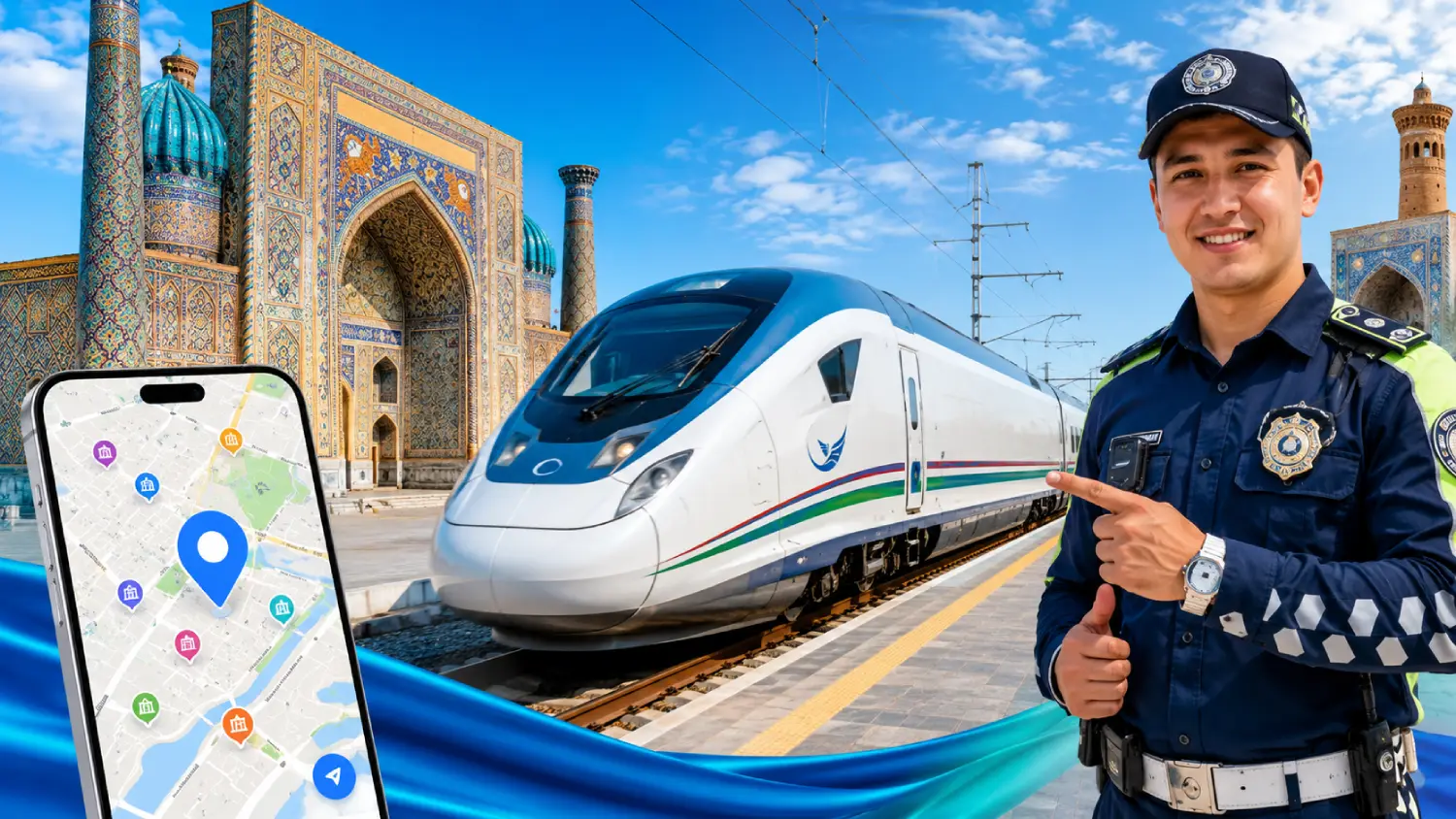
The short answer is yes, Uzbekistan is extremely safe. In fact, it recently claimed the top spot worldwide in the Solo Female Travel Safety Index and ranks highly on global safety indexes. Violent crime against tourists is virtually non-existent.
The heavy police presence and stable political environment keep the streets peaceful, even late at night. However, the danger here has shifted away from traditional street crime and toward administrative traps. Tourists are far more likely to face severe fines or jail time for bringing in the wrong items than they are to be mugged.
Understanding the strict local regulations is your absolute priority before booking your flight. Let’s break down the reality of traveling to Uzbekistan in 2026.
The Reality on the Streets: Authoritarian Stability & Zero-Tolerance Laws
Uzbekistan’s government maintains strict control over its internal security. Protests are practically non-existent, and the streets of major cities like Tashkent, Samarkand, and Bukhara are heavily policed. This authoritarian approach results in an incredibly safe environment for foreign visitors.
Crime rates are impressively low, with petty theft being the minor concern in crowded bazaars. However, this same strict governance means there is zero leniency if you break local laws. Ignorance is never accepted as an excuse by the local authorities.
Before packing, you must familiarize yourself with the strict regulations on what you can and cannot bring into the country. Reviewing the Uzbekistan Tourist Bans & Laws guide is absolutely mandatory.
-
Total Drone Ban: Drones are completely illegal. Bringing will result in immediate confiscation and potential prison time.
-
The Prescription Trap: Common medications like ADHD stimulants, codeine, and certain sleeping pills are highly illegal. Carry original packaging and translated doctor's letters.
-
Vaping & Smoking Crackdowns: Vaping in unapproved public spaces, including near metro stations, will result in immediate fines.
-
Strict Customs Limits: Be aware of the $1,000 limit on personal goods and the cash limits when entering. Check our Uzbekistan Airport Customs Rules for the exact numbers.
Regional Breakdown: The Silk Road Route vs. Rural Areas
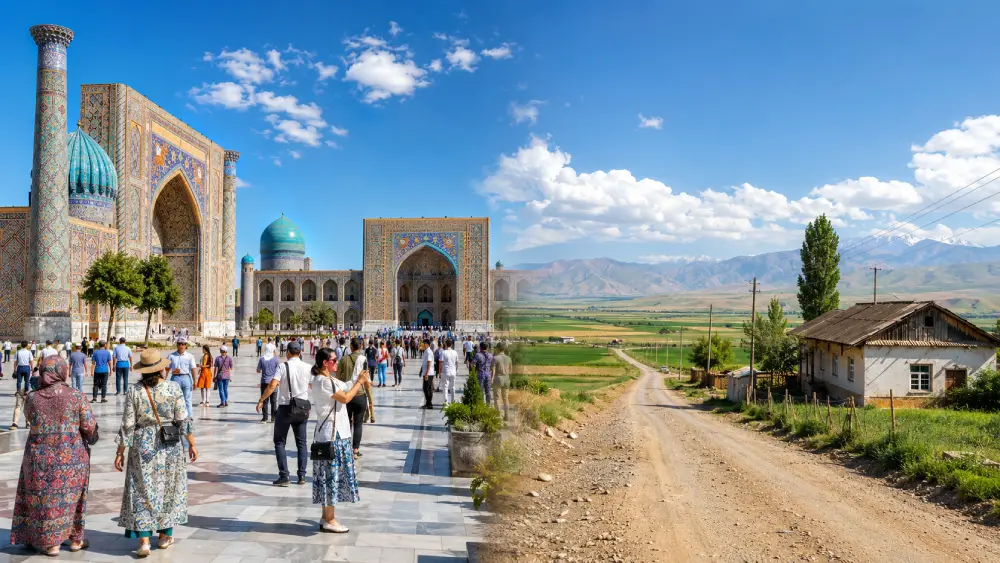
The classic tourist route—Tashkent, Samarkand, Bukhara, and Khiva—is exceptionally well-equipped for foreigners. These areas feature dedicated tourist police who often speak English and are genuinely helpful. You can walk around the historical centers of these cities late at night with complete peace of mind.
Tashkent, the capital, feels like a modern European city in many aspects, but keep your guard up in crowded areas like the Chorsu Bazaar. Pickpocketing can happen in dense markets, though it remains rare. The metro stations are grand, safe, and heavily monitored.
Venture outside the main cities into rural areas or the Fergana Valley, and the vibe changes. The infrastructure drops off significantly, and the local culture becomes much more conservative. While violent crime remains low, the lack of medical facilities and reliable transport means you must be self-sufficient and culturally respectful.
Transportation Safety: High-Speed Trains vs. Hustling Taxis
The absolute safest and best way to travel between major cities is the Afrosiyob high-speed train. It is modern, incredibly safe, and highly reliable. However, tickets sell out weeks in advance, so plan accordingly.
Inside the cities, your transportation experience will be a mixed bag. Official apps like Yandex Go (the local Uber equivalent) are safe, trackable, and lock in the price. We highly recommend using ride-hailing apps over hailing random cars off the street.
Street taxis are where tourists face the highest risk of being ripped off. Unlicensed drivers will aggressively approach you at airports and train stations. They often refuse to use meters and inflate prices tenfold the moment they see a foreign passport.
-
Always use Yandex Go: It eliminates the need to negotiate and provides safety tracking.
-
Ignore the airport hustlers: Walk past the shouting drivers at arrivals and order your ride through an app.
-
Avoid night driving: Rural roads are poorly lit, filled with potholes, and local driving habits can be erratic.
Tourist Scams: The New Threat in the Bazaars
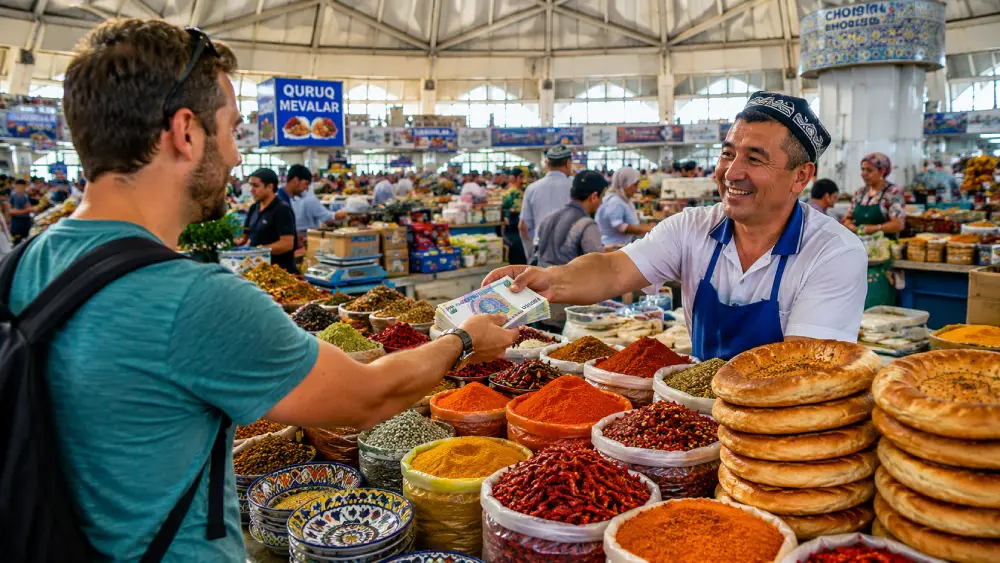
While violent crime is a non-issue, opportunistic locals will occasionally try to squeeze extra cash out of wide-eyed tourists. The scams here are usually low-level and rely on confusion over the local currency, the Uzbek Som (UZS).
Because the exchange rate involves thousands of Som to a single Dollar or Euro, tourists often get confused with the zeros. Vendors at the bazaar may "accidentally" give you the wrong change, hoping you won't notice. Always count your cash carefully before walking away.
Another common issue involves unofficial tour guides lingering near historical sites. They will start walking with you, pointing out facts, and then aggressively demand payment at the end. Be firm, say a polite but hard "No," and walk away if you don't want their services.
-
The Overcharging Vendor: Always agree on a price before buying souvenirs or eating at a market stall without a menu.
-
The Unofficial Guide Trap: Do not engage with individuals offering unsolicited tours at mosques or madrasas.
-
The Currency Switch: Double-check your change. Handing over a 100,000 note and getting change for a 10,000 note is a common sleight of hand.
Women’s Safety & Solo Travel: The Global #1
Uzbekistan has earned a stellar reputation for solo female travelers. In 2026, it is widely considered of the safest countries in the world for women traveling alone. Catcalling is incredibly rare, and the culture places a high value on hospitality and respect for guests.
However, Uzbekistan remains a deeply conservative, predominantly Muslim society. Respecting local norms is essential to avoid unwanted stares or uncomfortable situations. Modesty is key, especially outside of the modern center of Tashkent.
When visiting religious sites, mosques, or rural areas, conservative dress is strictly required. Even in cities, blending in will make your experience much smoother. Nightlife exists in Tashkent, but it is low-key; always watch your drink and take an official Yandex ride home.
-
Dress Code: Cover your shoulders and knees. Carry a scarf to cover your head when entering mosques.
-
Avoid tight clothing: Baggy, breathable fabrics are both culturally appropriate and better for the desert heat.
-
Firm boundaries: If anyone asks overly personal questions about your marital status, a polite but firm misdirection is perfectly acceptable.
Health, Tap Water & Nature: The Hidden Risks
Do not drink the tap water in Uzbekistan. The water filtration systems are outdated, and consuming tap water will almost certainly lead to a severe case of traveler's diarrhea. Stick exclusively to bottled water, even when brushing your teeth.
Medical facilities in Tashkent are decent, but outside the capital, the standard of care drops drastically. Pharmacies are abundant, but as mentioned, strict drug laws mean your preferred brands won't be available. Bring a basic first-aid kit, but cross-reference every item with the customs banned list.
The climate is of the biggest natural hazards. Summers are brutally hot, easily exceeding 40C (104F). Dehydration and heatstroke are real threats if you spend all day exploring ruins. Winters are freezing, so pack according to the season.
The Ultimate Safety Tool: Staying Connected
Having a reliable internet connection in Uzbekistan is not just about posting photos; it is a critical safety tool. You need data to order safe taxis via Yandex, translate menus to avoid food poisoning, and use Google Maps to escape confusing bazaar labyrinths.
Need data in Uzbekistan? Get an eSIM!
Choose the perfect data plan for your trip

Manage your eSIM in the app
Install, top up and track data.
Relying on public Wi-Fi is a massive security risk, and hotel networks are notoriously slow. Using a digital SIM ensures you have secure data the moment you land, helping you bypass the chaotic airport taxi hustlers. If you are unsure which plan to pick, check out the Best eSIM for Uzbekistan for the current deals.
A reliable Uzbekistan eSIM also means you can instantly pull up your translated medical documents if questioned by authorities. For a deep dive into connectivity options, read How to Get Internet in Uzbekistan.
Official Travel Advisories (2026 Update)
Here is a summary of what major governments are advising their citizens regarding travel to Uzbekistan:
-
USA (State Department): Advises exercising normal precautions. Highlights the strict local laws regarding medications and the total ban on drones.
-
UK (FCDO): Notes that the country is generally safe but warns travelers to be hyper-aware of customs regulations and to avoid the border areas with Afghanistan.
-
Canada: Recommends normal security precautions. Warns about erratic driving conditions, the risk of minor petty crime in tourist areas, and emphasizes the need to carry prescription documentation.
The Verdict: Is Uzbekistan Safe?
Yes, Uzbekistan is incredibly safe for tourists in 2026, provided you play by their strict rules. The threat of street crime is almost non-existent, and the locals are famously hospitable. The real dangers lie in administrative mistakes—bringing the wrong medication, flying a drone, or getting scammed by an unofficial taxi driver. If you respect the local culture and do your paperwork homework, you will have a spectacular Silk Road adventure.
-
Leave the Drone at Home: Do not attempt to bring a drone into the country; it will lead to confiscation and potential jail time.
-
Document Your Meds: Carry all prescriptions in their original bottles with translated, signed doctor’s letters.
-
Use Yandex Go: Never hail street taxis; always use the official app to lock in prices and ensure safety.
-
Don't Drink the Tap Water: Rely strictly on bottled water for drinking and brushing your teeth.
-
Dress Conservatively: Respect the local culture by covering your shoulders and knees, especially at religious sites.
Note: Travel safety situations can change rapidly. This information is accurate as of May 2026. Always exercise street smarts and consult official advisories before your trip.