

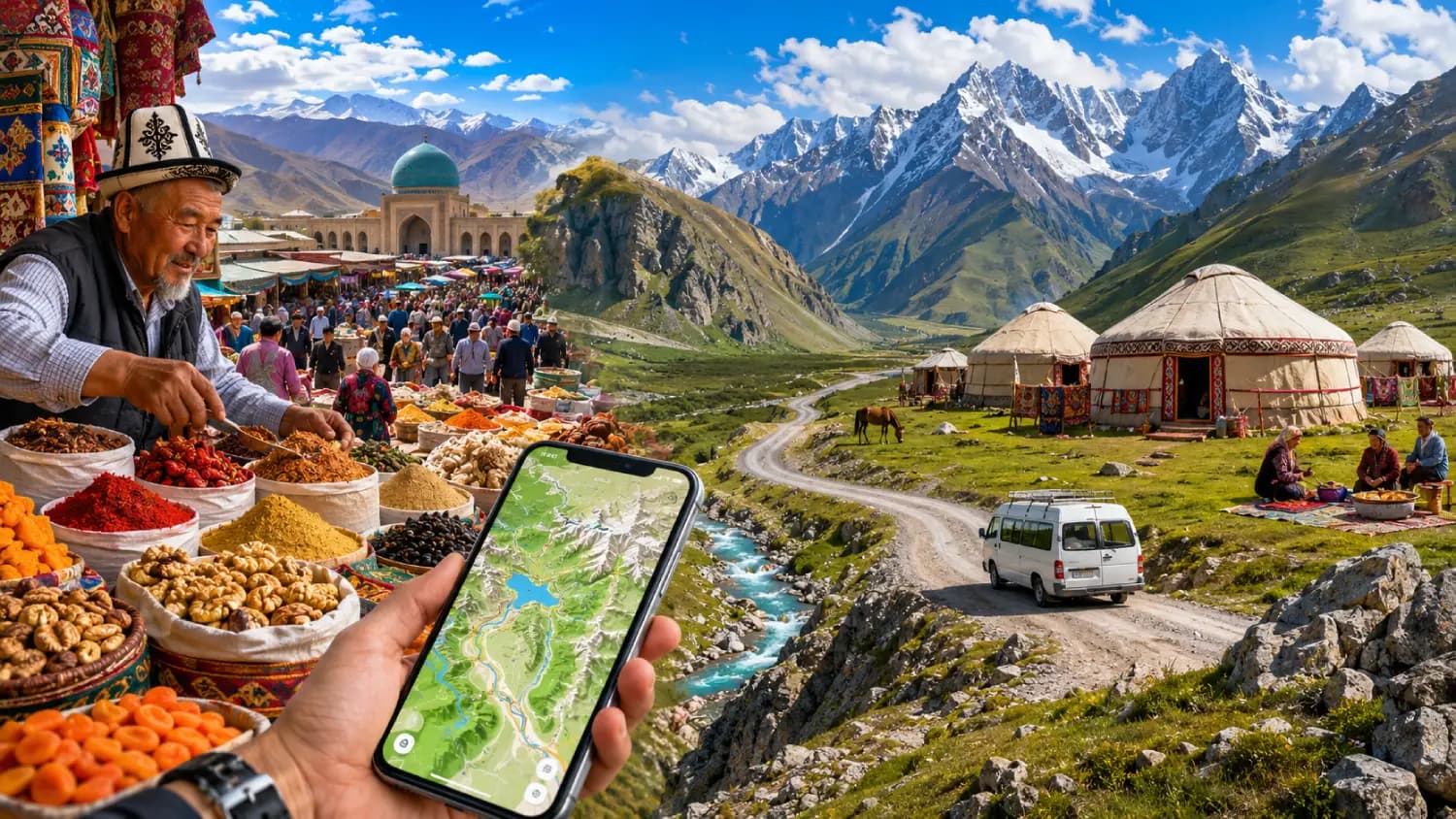

The short answer is yes, Kyrgyzstan is broadly safe for tourists and remains of the most secure countries in Central Asia. The days of widespread post-Soviet lawlessness are largely gone, and the country has heavily invested in welcoming international backpackers and trekkers. However, petty crime and institutional corruption still catch naive travelers completely off guard. In recent years, the dangers have shifted from violent muggings to highly organized scams targeting tourists' wallets and passports.
The Current Reality: Protests, Police, and Strict New Laws
Kyrgyzstan has a volatile political history, having experienced multiple revolutions since its independence. While the government is currently stable in 2026, political demonstrations in the capital city of Bishkek can erupt with very little warning. These protests usually happen in major squares and can turn violent quickly if police deploy crowd control measures. Tourists should never photograph these demonstrations or attempt to observe them up close.
Law enforcement in Kyrgyzstan can be a double-edged sword for foreigners. While official police are generally helpful, institutional corruption remains a stubborn reality in 2026. Officers frequently conduct random document checks on the street to verify your legal status. You are legally required to carry your identification at all times, but handing over your actual passport to a corrupt officer can result in a shakedown for a "bribe" to get it back. Always carry a legally notarized, color photocopy of your passport and visa instead of the original.
Beyond police interactions, the government has cracked down hard on specific tourist behaviors. For example, late 2025 and 2026 saw the implementation of incredibly strict anti-vaping laws. You must read the Kyrgyzstan Tourist Bans & Laws guide to understand these changes. Ignorance of local laws will not save you from steep fines or deportation.
-
The Vaping Ban: All e-cigarettes and vaping liquids are strictly illegal to import, use, or sell. Customs agents will confiscate them instantly, and using them in public carries severe administrative fines.
-
Military Photography: It is a serious crime to photograph military bases, border checkpoints, police stations, or hydroelectric dams. Your camera gear will be seized.
-
Drone Restrictions: Drones cannot be flown near borders or above 120 meters. Heavy drones require official aviation registration.
Regional Breakdown: Safe Zones vs. Borders to Avoid
Kyrgyzstan's safety profile changes dramatically depending on your GPS coordinates. Bishkek is largely a safe, modern city with tree-lined boulevards, vibrant cafes, and reliable infrastructure. You can walk safely during the day, though certain areas like the Osh Bazaar are absolute hotspots for aggressive pickpockets. Karakol and Lake Issyk-Kul are heavily touristed, safe zones offering world-class trekking and a relaxed, welcoming environment.
The real danger zones lie entirely at the outer edges of the country. Foreign governments uniformly advise against all non-essential travel to the Ferghana Valley and the immediate borders shared with Tajikistan and Uzbekistan. Tensions over unrecognized border lines frequently result in violent skirmishes involving military shelling and gunfire.
Furthermore, these southern and western borders are still littered with unexploded landmines from past conflicts. If you are venturing into the Batken region or the deep south near Osh, you must stay strictly on marked roads. Never wander into unmarked fields or attempt to hike across unofficial border lines.
-
The Safe Havens: Bishkek center, Lake Issyk-Kul, Karakol, and the central Tian Shan trekking routes.
-
The No-Go Zones: The immediate Tajikistan border, unmarked trails in the Batken region, and the deep Ferghana Valley.
-
Osh City: Generally safe for tourists during the day, but requires heightened situational awareness due to occasional ethnic tensions and a heavier military presence.
Transportation Safety: Surviving the Roads & Taxis
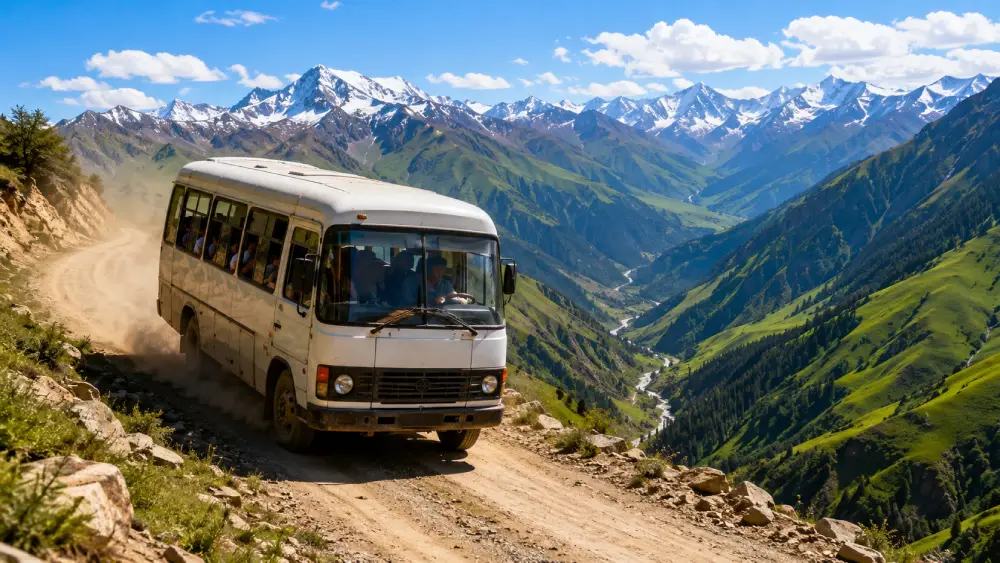
Getting around Kyrgyzstan is an adventure in itself, but it requires serious caution. Public transportation, known locally as marshrutkas (minibuses), is incredibly cheap but notoriously crowded. These packed vans are the primary hunting ground for coordinated pickpocket rings. If you must ride a marshrutka, wear your backpack on your chest and keep your hands in your pockets over your valuables.
For city travel, strictly avoid hailing random street taxis. Unmarked cabs are a massive liability, often resulting in aggressive fare extortion you reach your destination. Instead, use official rideshare apps like Yandex Taxi or InDrive. These apps lock in the price beforehand, track your GPS route, and remove the need to negotiate in Russian or Kyrgyz.
If you plan to rent a car and drive yourself, prepare for a stressful experience. Local driving habits are highly aggressive, and mountain roads are often unpaved, narrow, and lack guardrails. You must possess an International Driving Permit (IDP) alongside your home license. Furthermore, driving at night outside city limits is effectively a death wish due to unlit roads, wandering livestock, and deep potholes.
-
Headlight Laws: It is illegal to drive without your headlights on outside of city limits, even in broad daylight.
-
Corrupt Traffic Cops: Police actively target rental cars for crossing solid white lines. Fines are steep, and roadside bribes are frequently demanded.
-
Airport Scams: Never accept a ride from aggressive "meet and greet" drivers inside the arrivals hall; they will lure you to a fake taxi and extort you.
Tourist Scams (Fake Police & Airport Traps)
While violent muggings are rare, highly coordinated scams are the primary threat to your travel budget. The most notorious trap in 2026 is the "Fake Police" scam. Plainclothes criminals, sometimes flashing fake badges, will approach you in tourist areas like the Osh Bazaar. They will claim they are searching for counterfeit currency or drugs and demand to inspect your wallet. they handle your cash, they use sleight of hand to steal your large bills before handing the wallet back.
Another major threat revolves around your debit cards. ATM card skimming is a rising issue in Bishkek and Osh. Criminals install hidden cameras and card readers on street-facing ATMs to drain tourist bank accounts. Always withdraw cash from ATMs located physically inside a bank, a major hotel, or a high-end shopping mall where security guards are present.
The nightlife scene also carries distinct risks. If you are drinking in Bishkek's bars or nightclubs, you must be wary of drink spiking. Both male and female travelers have reported being drugged by overly friendly strangers, leading to robbery or worse. Never accept a drink you did not see the bartender pour, and do not let your glass out of your sight.
-
The Wallet Inspection: Never hand your wallet to anyone. If "police" demand a search, insist on walking to the nearest official police station first.
-
The Overfriendly Local: Be highly suspicious of strangers who invite you back to their apartment for drinks; accomplices are often waiting to rob you.
-
Customs Extortion: Ensure you understand the Kyrgyzstan Airport Customs Rules to prevent border agents from legally confiscating your goods and demanding fines.
Women’s Safety, Solo Travel & Yurt Etiquette
Kyrgyzstan is widely considered of the safest destinations in Central Asia for solo female travelers. Local culture is deeply rooted in hospitality, and foreign women are generally treated with immense respect. Street harassment and aggressive catcalling are surprisingly rare compared to other global backpacking hubs. You can comfortably explore Bishkek alone, dine solo, and use rideshare apps without constant anxiety.
However, the cultural vibe shifts dramatically you leave the capital. In rural villages and nomadic mountain regions, conservative Islamic traditions and traditional patriarchal norms dictate daily life. Solo female travelers should dress modestly outside of Bishkek—covering shoulders and knees—to avoid unwanted attention and to show respect for the local culture.
If you are staying in a traditional yurt camp, understanding basic etiquette is vital for a safe and respectful experience. Disrespecting your hosts can quickly turn a warm homestay into a hostile environment. You must take your shoes off at the door and place them neatly outside. Never leave your shoes resting with the soles facing up, as this is considered deeply offensive.
-
Trekking Safety: Solo female hikers should avoid trekking completely alone in remote mountains; hire a verified local guide or join a small group.
-
Nightlife: Avoid walking alone late at night in Bishkek. Always use Yandex Taxi to get from the bar directly to your hostel door.
-
Sacred Bread: Never throw away bread or place it upside down on a table during a homestay. It is considered a massive insult to the family.
Health, Altitude & Nature (Earthquakes & Water)
Kyrgyzstan's greatest dangers often come from the environment itself, not the people. The country is overwhelmingly mountainous, and altitude sickness is a very real threat. Popular trekking destinations like Son-Kol Lake (over 3,000 meters) and the Ala-Kul Pass (near 4,000 meters) require proper acclimatization. Do not rush your ascent. If you experience severe headaches, nausea, or dizziness, you must descend immediately before it turns into life-threatening pulmonary edema.
You absolutely cannot drink the tap water anywhere in Kyrgyzstan. The local plumbing infrastructure is outdated, and tap water carries a high risk of heavy metals, giardia, and severe gastrointestinal infections. Stick exclusively to bottled water, even when brushing your teeth in rural homestays. Furthermore, be highly cautious of salads or raw vegetables washed in local water.
Finally, Kyrgyzstan sits in a highly active seismic zone. Earthquakes and minor tremors are incredibly common. While catastrophic quakes are rare, travelers should know the basic protocol: drop, cover, and hold on if the ground starts shaking. In the mountains, these tremors frequently trigger deadly avalanches and rockslides, making trail conditions highly unpredictable.
-
Medical Care: Rural healthcare is virtually non-existent. You must carry a robust first-aid kit and comprehensive travel insurance that covers emergency helicopter evacuation.
-
Prescription Drugs: If bringing personal medication, carry a translated doctor's note and declare it, or risk customs treating it as illegal narcotics.
-
Food Safety: eat meat that is fully cooked and served piping hot. Avoid dairy products from unregulated roadside vendors to prevent severe food poisoning.
The Ultimate Safety Tool: Staying Connected
When you are navigating the chaotic streets of Bishkek or trekking through remote mountain passes, a reliable internet connection is your greatest safety asset. Relying on spotty public Wi-Fi leaves you vulnerable to cyber theft and leaves you completely stranded when you need to order a safe rideshare or translate a vital conversation with the police. A reliable mobile connection allows you to track your taxi on a map, contact emergency services, and instantly access offline maps when you are lost.
Need data in Kyrgyzstan? Get an eSIM!
Choose the perfect data plan for your trip

Manage your eSIM in the app
Install, top up and track data.
You should never land at Manas International Airport without a data plan already active on your phone. Getting an eSIM before you arrive means you bypass the predatory SIM card vendors at the airport and instantly secure a secure, encrypted connection. If you want to know the absolute best network options for the mountains, read our How to Get Internet in Kyrgyzstan.
If your phone supports digital SIMs, purchasing a Kyrgyzstan eSIM is the smartest, most secure move you can make for this trip. It keeps your primary number active for banking alerts while giving you fast local data. To find the cheapest and most reliable data packages for this year, compare the top providers in our Best eSIM for Kyrgyzstan guide.
Official Travel Advisories (2026 Update)
Global foreign ministries maintain specific alerts for Kyrgyzstan. While the general consensus is that the country is stable, they uniformly warn about the volatile border regions and the constant threat of petty crime. Always register with your embassy before flying into Central Asia.
-
United States (State Department): Level 1 (Exercise Normal Precautions). The US views the country as generally safe for tourists but advises maintaining high situational awareness regarding pickpockets in crowded markets.
-
United Kingdom (FCDO): Advises exercising a high degree of caution overall. The UK explicitly warns against all travel to the borders with Tajikistan and Uzbekistan due to military clashes and unexploded landmines.
-
Canada & Australia: Both advise exercising a high degree of caution. They heavily emphasize the risks of fraudulent police officers, ATM skimming, and the potential for sudden political unrest in Bishkek.
The Verdict: Is Kyrgyzstan Safe?
Yes, Kyrgyzstan is safe for tourists in 2026, provided you treat the country with the respect and situational awareness it demands. The raw beauty of the Tian Shan mountains and the deep warmth of the nomadic culture make it a phenomenal destination. As long as you stay away from the volatile southern borders, refuse to hand your wallet to strangers posing as cops, and respect the strict new laws, your trip will be wildly memorable for all the right reasons.
-
Carry Copies, Not Originals: Never hand your actual passport or wallet to anyone claiming to be a police officer on the street.
-
Ditch the Vapes: Leave all e-cigarettes at home to avoid instant confiscation and massive fines at the airport.
-
Skip the Street Cabs: use Yandex Taxi or InDrive to avoid aggressive extortion from unmarked drivers.
-
Respect the Borders: Stay completely away from the Tajikistan and Uzbekistan borders, and never fly drones near military sites.
-
Watch Your Step: Take off your shoes before entering any yurt, and never point the soles of your feet at the central fire pit.
Note: Travel safety situations can change rapidly. This information is accurate as of May 2026. Always exercise street smarts and consult official advisories before your trip.