These plans are:
If you want to browse all available data options, you can check all Morocco eSIM plans here.
Convenience — Why eSIM Is More Practical in Morocco
Buying a physical SIM in Morocco usually requires:
-
showing your passport
-
waiting for manual activation
-
negotiating tourist pricing
-
dealing with language barriers
-
swapping out your main SIM
With an eSIM:
-
you install it before your flight
-
it activates as soon as your phone connects to Orange
-
no passport needed
-
no physical store required
-
and you keep your regular SIM active for iMessage/WhatsApp
If you value zero hassle, an eSIM wins every time.
Coverage & Speed Expectations (Orange Morocco)
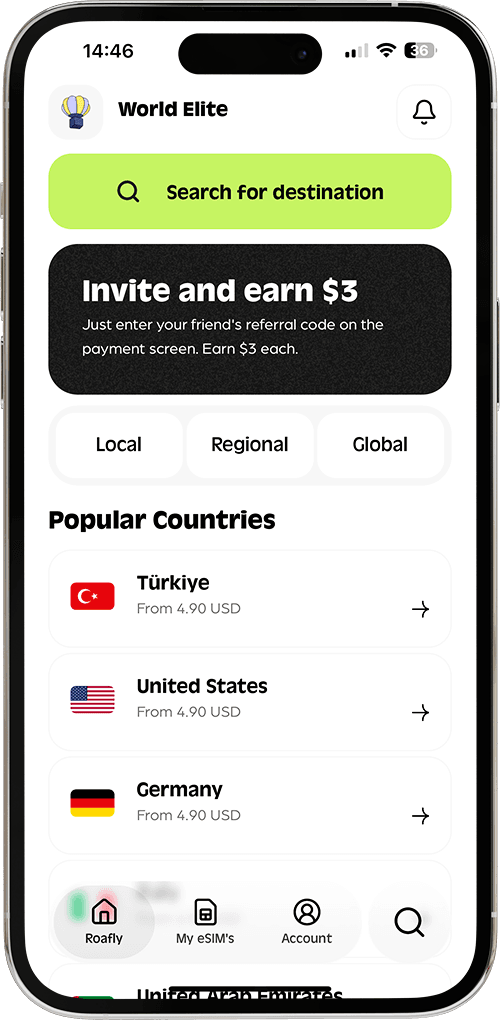
Most international eSIMs for Morocco — including Roafly — use Orange Morocco.
In major cities like Marrakech, Agadir, Fes, Rabat, and Casablanca, you can expect:
-
solid 4G coverage
-
10–40 Mbps download speeds
-
stable WhatsApp messaging
-
reliable Google Maps navigation
If you want a deeper breakdown of Orange vs Inwi vs Maroc Telecom, I cover it in the Morocco network comparison guide.
eSIM Providers & Plans for Morocco
Most travelers compare three things:
Roafly, Airalo, and Saily are the most common providers travelers look at — but the key is always network routing.
For a full side-by-side comparison of speeds, routing, and coverage, see the Best eSIM for Morocco guide.
When an eSIM Makes Sense — Real Travel Scenarios
Not every traveler has the same connectivity needs. Here’s when an eSIM is most worth it in Morocco:
✈️ Short Trips (1–7 Days)
If you’re in Morocco for a long weekend, a business trip, or a quick holiday:
-
You don’t want to waste time at SIM shops
-
You don’t need a huge data allowance
-
You want data instantly when you land
eSIM wins clearly here.
For example, Roafly’s 1GB or 2GB Morocco plans work perfectly for Google Maps, Uber/Heetch, WhatsApp, and light browsing.
Recommended:
Check the available Morocco eSIM plans to pick the right size for your stay.
🌴 Longer Trips (10–30 Days)
If you’re traveling across multiple cities:
-
Marrakech
-
Casablanca
-
Fes
-
Agadir
-
Tangier
-
Chefchaouen
…sticking to Orange Morocco gives you the most consistent experience.
The 10GB / 20GB / 50GB plans usually offer the best value.
Remote Areas (Atlas Mountains, Sahara Desert)
Morocco’s rural and desert regions are less predictable.
Orange still performs best in:
-
Ouarzazate
-
Merzouga
-
Ait Benhaddou
-
Imlil / Toubkal area
If you're exploring rural zones, read the Morocco network guide for detailed coverage notes.
How to Activate an eSIM in Morocco (Step-by-Step)
Activation is simple, but each phone behaves slightly differently.
Before You Travel
Make sure:
-
Your phone supports eSIM
-
Your device is carrier-unlocked
-
You have Wi-Fi to scan the QR code
-
Data Roaming is enabled on the eSIM line
You can check device compatibility on the eSIM’s description page or inside your account after purchase.
iPhone Setup
- Open Settings → Mobile Service
-
Tap Add eSIM
-
Scan the QR code
-
Select the new line as Mobile Data
-
Switch on Data Roaming
If you want a visual tutorial, follow the step-by-step Morocco eSIM activation guide.
Android Setup
- Open Settings
-
Search for eSIM / SIM Manager
-
Tap Add eSIM
-
Choose “Use QR code”
-
Enable Roaming after installation
Some Android devices may require restarting the phone.
Troubleshooting Tips
If it doesn’t connect immediately:
-
Toggle Airplane Mode
-
Confirm you selected the eSIM as your data line
-
Ensure Data Roaming is ON
-
Avoid using VPN during activation
-
Restart the device
For issues like calls not connecting or slow data, check the WhatsApp blocking guide or VPN legality guide.
eSIM vs Physical SIM in Morocco
Here’s when a physical SIM might be better:
-
Your phone does NOT support eSIM
-
You need local calling minutes
-
You’re staying several months
But for most tourists, the advantages of eSIM win easily:
eSIM Advantages:
-
Install before you fly
-
No passport check
-
No queues
-
No physical SIM swapping
-
Instant activation
If you're comparing both options, the Morocco SIM card guide breaks down tourist SIM prices at the airport vs downtown.
Is Roaming Cheaper Than an eSIM in Morocco?
Almost never.
Most carriers charge:
-
$5–$10/day roaming passes
-
$1–$3 per MB outside of Europe
-
Hidden usage caps
-
No clear breakdown of daily limits
This means 1 week of roaming can cost $40–$70, while an eSIM for Morocco costs a fraction of this.
We compared both options in detail here:
→ Roaming vs eSIM Morocco guide
When an eSIM Might Not Be Worth It
Rare cases include:
🚫 Your phone is locked
If your device is still tied to a carrier, eSIM won’t activate.
You can check this here:
→ “Can I use my phone in Morocco?”
🐢 Old Android phones
Some older models do not support eSIM or have buggy eSIM firmware.
💰 Ultra-budget travelers
If you’re looking for the absolute cheapest option and don’t mind hunting for the lowest in-store price, a SIM downtown may save a few dollars.
FAQ — Common Questions About Using an eSIM in Morocco
Can I hotspot/tether?
Yes, Roafly Morocco plans support hotspot on all compatible devices.
Does eSIM drain battery?
No more than a physical SIM. Poor coverage drains battery — not the eSIM itself.
Do WhatsApp calls work in Morocco?
Messaging is fine. Calls sometimes fail depending on network.
See the WhatsApp in Morocco guide.
Which operator does Roafly use?
Orange Morocco — the most stable choice for tourists.
Can I install the eSIM after landing?
Yes. You need Wi-Fi for the initial QR scan.
Why is my eSIM slow in the Medina or old towns?
Narrow streets and thick walls weaken signals.
Orange still performs better than Inwi/Maroc Telecom.
Final Verdict — Is an eSIM Worth It for Morocco?
Yes — absolutely.
For most travelers, an eSIM gives:
The convenience alone is worth it — and the pricing makes the decision even easier.
If you want to pick the right data size, you can browse all Morocco eSIM plans below.


'/%3e%3cpath d='m450 224.315-44.467 136.87 116.401-84.559h-143.87l116.403 84.559z' style='fill:none;stroke:%23006233;stroke-width:14.62993431;stroke-miterlimit:4;stroke-dasharray:none'/%3e%3c/svg%3e)