Download the App and manage your eSIMs easily
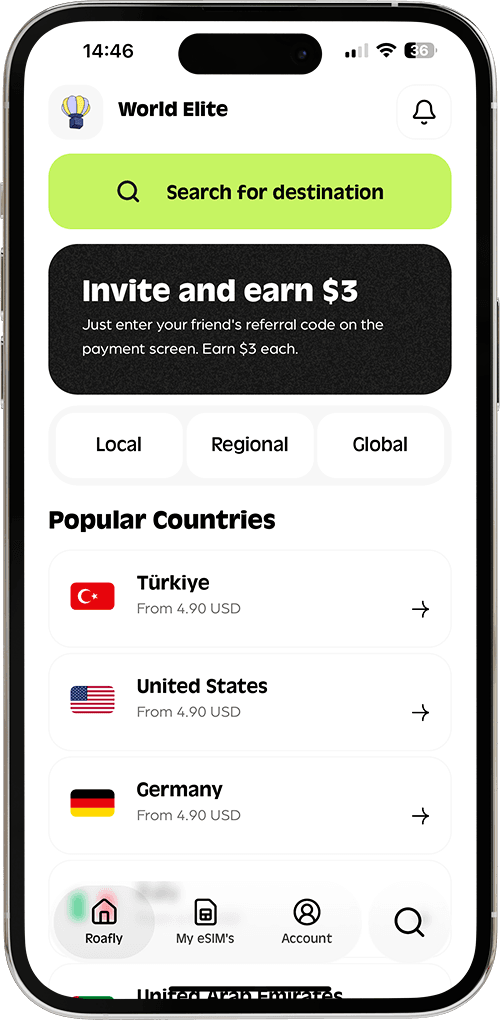
Create your order quickly
See your eSIM details
Track your remaining data
Download the App and manage your eSIMs easily
Create your order quickly
See your eSIM details
Track your remaining data
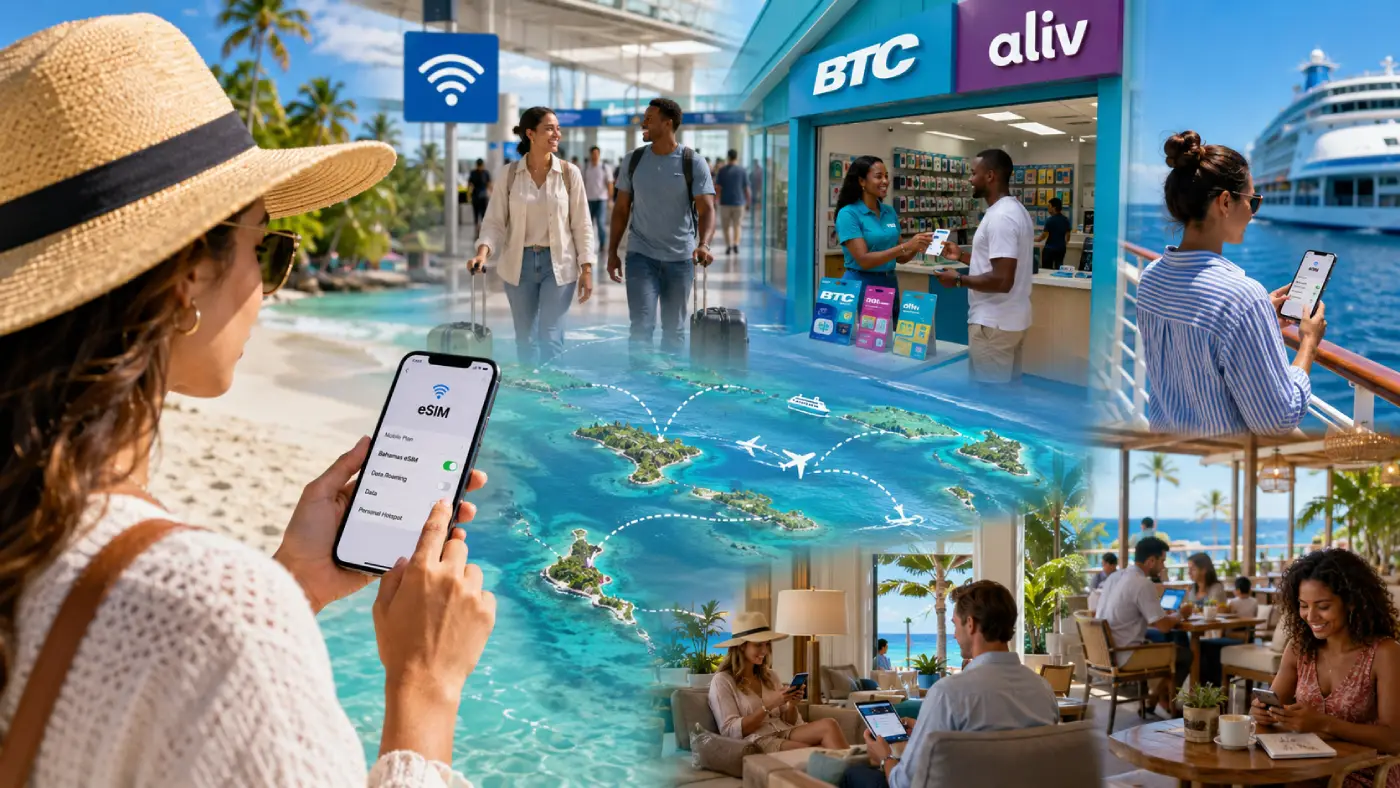
Most short-trip travelers in the Bahamas will find an eSIM the easiest way to get mobile data without spending arrival time at a phone shop.
BTC
Instant delivery
6.90 USD From 6.21 USD

Sophie Callahan
Updated Aug 31, 2026
8 min read
Best for most trips
BTC

Bahamas
10 GB · 30 days
Enough for maps, bookings and everyday travel.
Hotspot supported
$34.90
$31.41
BAHAMAS10 automatically applied
$6.90From 6.21 USD
10% reader discount
Travelers who need a Bahamian number, local calls or a longer-term prepaid setup may prefer BTC or ALIV instead. Island-hopping and cruise itineraries need extra planning because connectivity can change once you leave the main population centers or sail offshore.
| Option | Typical cost | Best for | Watch out |
|---|---|---|---|
| Roafly eSIM | See current pack | Easy mobile data | Data only |
| Local prepaid SIM | Varies by plan | Local number and calls | Purchase and setup |
| Home roaming | Varies by carrier | Very short visits | Daily or usage fees |
| WiFi options | Free to paid | Backup connectivity | Not available everywhere |
| Cruise ship cellular | Often separate charges | Connectivity at sea | Maritime roaming rates |
Roafly is the simpler fit when the priority is having mobile data without finding a local store or replacing the physical SIM. Local prepaid service becomes more attractive when a Bahamian phone number, local calling or a longer stay matters.
Travelers who want mobile data ready without a local SIM purchase can check the Bahamas eSIM before departure.
Choose the perfect data plan for your trip
Exclusive Reader Bonus!
Enjoy an extra %10 OFF your first Roafly eSIM purchase as a thank you for reading.
Most international visitors flying to Nassau arrive through Lynden Pindling International Airport (LPIA). Travelers continuing to Paradise Island, Cable Beach or central Nassau can reach local telecom shops after leaving the airport, so buying a physical SIM immediately on arrival is not essential.
Current airport information does not provide a dependable, permanent list of SIM counters, package prices, stock or opening hours that travelers should build a trip around. Visitors who specifically want BTC or ALIV service should therefore avoid assuming that a particular airport bundle will be available at the moment they land.
Free WiFi is available throughout LPIA, with the airport directing passengers to the “LPIA Free WiFi” network. That connection is useful for messaging accommodation, checking transfer details or opening directions while deciding whether to buy local mobile service later.
Travelers landing late, connecting onward to another island or simply wanting to leave the terminal quickly may find pre-arranged mobile data more convenient than making airport SIM availability part of the arrival plan.
The Bahamas has two national mobile network operators: BTC and ALIV. Both provide prepaid mobile service, while short-validity options can suit visitors who want data together with local calling and a Bahamian number.
Local SIMs make the most sense when communication by ordinary phone call matters. They can also suit longer stays when the benefits of a local prepaid account justify the extra purchase and setup.
SIM prices and bundles change more often than the basic connectivity decision, so this guide does not duplicate a full BTC-versus-ALIV package comparison. Current plan prices, allowances and tourist purchasing details are covered in Bahamas SIM Card for Tourists: BTC vs ALIV Prices.
Travelers choosing a physical SIM should also make sure the phone is unlocked and compatible with the local network before buying service.
Roafly's Bahamas eSIM uses the BTC network, making it a convenient option for travelers who want data without visiting a telecom store or swapping a physical SIM after arrival.
Setup can be completed before the trip on an unlocked, eSIM-compatible phone. Your primary SIM can remain installed, which is useful when you still need access to the number associated with banking, messaging apps or other accounts.
Roafly country plans for the Bahamas are data-only. They do not provide a Bahamian phone number, standard voice calls or SMS, so app-based calling and messaging should be used when internet access is available.
Hotspot and tethering work across the purchased data allowance, with no separate hotspot quota. That can be useful when connecting a laptop or sharing data briefly with another device.
Network performance still depends on BTC signal availability, the specific island or location, congestion, the device and local conditions. Roafly does not turn weak local coverage into stronger coverage simply because the connection is delivered through an eSIM.
Local prepaid service remains the better choice when a local number or traditional calling is important. Travelers comparing plan sizes, network details and eSIM choices can continue with Best eSIM for the Bahamas.
Coverage planning matters more in the Bahamas than it does in a compact city destination. Nassau, Paradise Island and other populated areas are generally easier connectivity environments than remote beaches, lightly populated islands and stretches of an island-hopping itinerary.
Travelers visiting places such as Abaco, Eleuthera or the Exumas should check the expected network coverage for the specific stops rather than assuming that service on one Bahamian island predicts service everywhere else. Boat journeys between islands can also include periods without a useful land-based mobile signal.
Roafly follows BTC's local network footprint in the Bahamas. Signal quality can therefore change as the itinerary moves away from populated areas or into buildings, secluded coastal locations and other weaker-signal spots.
Before leaving a reliable connection, download anything that would be difficult to retrieve offline:
Offline maps for the next island or driving route
Accommodation addresses and check-in details
Ferry, flight or transfer information
Booking confirmations
Essential contact details
Travelers working remotely should check coverage at the exact accommodation instead of relying only on island-level expectations. Hotel or rental WiFi can also provide a useful second connection when mobile service is inconsistent indoors.
Home roaming can be the easiest option when the trip is extremely short and the carrier already includes the Bahamas at a reasonable rate. Inclusion should be checked before departure because “Caribbean” coverage does not automatically mean every Bahamas trip is covered under the same terms.
Daily passes, data allowances and fair-use rules vary by home carrier. Travelers who have not confirmed their roaming terms should keep data roaming disabled until they know what their plan will charge.
Roaming can still be valuable as a backup even when another connection handles most data. Keeping the home SIM installed may also help with incoming verification messages, depending on the carrier and account setup.
Short-term pocket WiFi rental availability in the Bahamas is not reliably published enough to make it a dependable default for visitors. Travelers who specifically want a dedicated hotspot should confirm current rental terms, pickup or delivery arrangements, data limits and return requirements before relying on one.
Groups with several devices may still see value in a dedicated hotspot when a suitable rental is available. Solo travelers and couples will usually find phone tethering simpler, especially since Roafly allows hotspot use across the purchased data allowance.
LPIA provides free WiFi throughout the airport, making it a useful arrival backup before mobile data is working. Hotels, resorts, restaurants and other visitor businesses may also provide guest WiFi, though access conditions differ by property.
Public WiFi works best as a backup rather than the only internet plan. Confirm the network name before connecting, avoid sensitive activity on unfamiliar networks and disable automatic reconnection when the network is no longer needed.
Cruise itineraries create a connectivity issue that ordinary Bahamas hotel stays do not. Shipboard cellular networks can operate as maritime roaming services rather than as normal Bahamian mobile networks once the vessel is offshore.
Charges from those networks may be completely different from the cost of using BTC on land. Travelers should check their cruise and home-carrier arrangements before allowing a phone to connect automatically at sea.
When no cruise cellular package has been confirmed, airplane mode is the safest default while sailing. WiFi can then be enabled separately if the ship provides an onboard package.
Roafly's Bahamas plan should be treated as a land-based Bahamas connection through BTC, not as a plan for maritime cellular networks.
Fastest setup: Roafly eSIM suits short trips when mobile data matters more than having a Bahamian phone number.
Need a local number: BTC or ALIV prepaid service is the stronger choice when ordinary calls and local mobile service are important.
Longer stay: Local prepaid service can make more sense when you will be in the Bahamas long enough to benefit from a local number and ongoing prepaid use.
Island-hopping trip: Choose connectivity based on the specific islands and routes, then keep offline maps and travel details available for weak-signal periods.
Cruise vacation: Use land-based mobile service while in port, but control cellular connections at sea so the phone does not unexpectedly use a maritime network.
Multi-country Caribbean trip: Travelers continuing through several Caribbean destinations may prefer a Caribbean eSIM rather than managing a different local setup at every stop.
Roafly eSIM is the most straightforward choice for a typical short Bahamas vacation when the goal is mobile data without a store visit or SIM swap. Travelers needing a Bahamian number, standard calls or a longer prepaid setup should compare BTC and ALIV instead. Island-hopping and cruise travelers should also prepare for gaps away from populated areas and keep control of roaming whenever the phone leaves a Bahamian land network.
Best for most trips
BTC
Bahamas
10 GB · 30 days
Enough for maps, bookings and everyday travel.
Hotspot supported
$34.90
$31.41
BAHAMAS10 automatically applied
$6.90From 6.21 USD
10% reader discount

Manage your eSIM in the app
Install, top up and track data.
