Download the App and manage your eSIMs easily
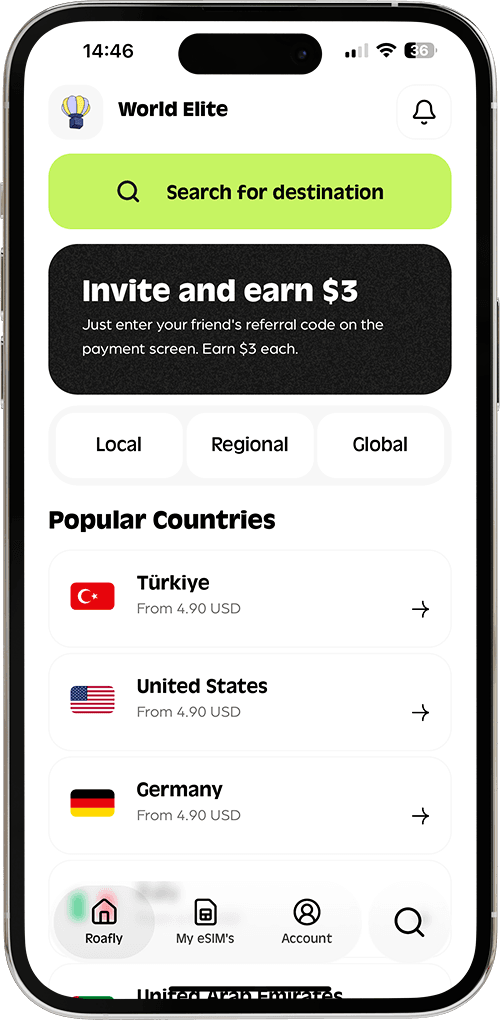
Create your order quickly
See your eSIM details
Track your remaining data
Download the App and manage your eSIMs easily
Create your order quickly
See your eSIM details
Track your remaining data
The Bahamas looks like a simple eSIM purchase until your trip moves beyond Nassau. Price matters, but the underlying BTC or Aliv network can matter just as much once island-hopping enters the itinerary.
BTC
Instant delivery
6.90 USD From 6.21 USD

Lena Hartley
Updated Aug 20, 2026
11 min read

Jump to section
👇Best for most trips
BTC

Bahamas
10 GB · 30 days
Enough for maps, bookings and everyday travel.
Hotspot supported
$34.90
$31.41
BAHAMAS10 automatically applied
$6.90From 6.21 USD
10% reader discount
Landing at Lynden Pindling International Airport and heading straight for Nassau or Paradise Island makes mobile data fairly straightforward: you want maps, messages and ride information working without hunting for a SIM shop. Once the itinerary continues to Exuma, Eleuthera, Abaco or another Family Island, another question becomes more important — which local network does the eSIM actually use?
Our top pick is Roafly. Its $6.90 1GB plan is the lowest-priced capped entry option in this comparison, while the $22.90 5GB plan also undercuts the comparable 5GB offers from Airalo, aloSIM and Roamless. Roafly lists BTC in the Bahamas and supports hotspot use across the purchased data allowance.
Ubigi is the most interesting alternative if 3GB is enough, while Holafly changes the calculation for people who specifically want an unlimited plan rather than a fixed allowance.
| Provider | Starting plan | Practical plan | Validity | Network | Key difference |
|---|---|---|---|---|---|
| Roafly | 1GB — $6.90 | 5GB — $22.90 | 7 days / 30 days | BTC | Lowest capped prices in this comparison; hotspot across purchased allowance |
| Airalo | 1GB — $9.50 | 5GB — $30 | 7 days / 30 days | BTC | Same disclosed local network as Roafly at higher compared prices |
| Ubigi | 1GB — $7 | 3GB — $14 | 7 days / 30 days | Aliv | Useful lower-cost 3GB middle option |
| aloSIM | 1GB — $7 | 5GB — $28 | 7 days / 30 days | BTC | Competitive 1GB entry; higher 5GB price than Roafly |
| Roamless | 1GB — $8.95 | 5GB — $29.95 | 7 days / 30 days | Aliv | Aliv-based fixed-data alternative |
| Holafly | — | Unlimited — $36.50 | 7 days | Aliv | Unlimited model; 1GB/day hotspot and fair-use policy apply |
Prices, data allowances, validity and listed networks checked August 20, 2026. eSIM pricing and network arrangements can change, so check the current product page before purchasing.
Choose the perfect data plan for your trip
Exclusive Reader Bonus!
Enjoy an extra %10 OFF your first Roafly eSIM purchase as a thank you for reading.
The table also shows why forcing every provider into identical 5GB, 10GB and 20GB baskets would be misleading here. Ubigi's useful middle option is 3GB, while Holafly sells a completely different unlimited model.
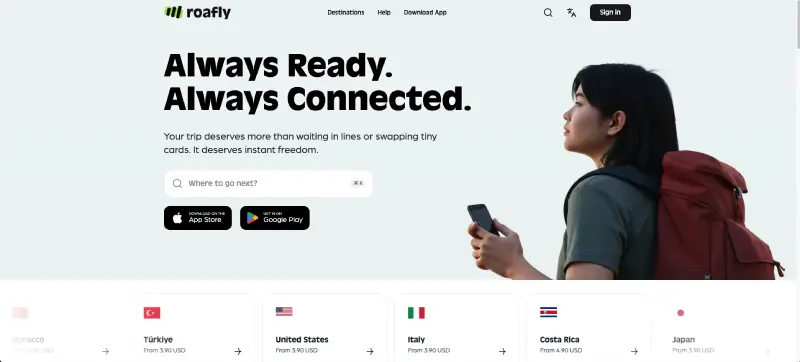
Roafly has the strongest combination of price and practical features among the capped plans we compared.
The 1GB plan costs $6.90 for seven days, making it particularly sensible for a short Nassau stay, cruise port visit or light-use trip built around maps, messaging and occasional browsing. aloSIM and Ubigi are close at $7, but neither beats that entry price.
The difference becomes more noticeable at the larger comparable tier. Roafly's 5GB plan costs $22.90 for 30 days, versus $28 with aloSIM, $29.95 with Roamless and $30 with Airalo.
That is not a token price advantage. Someone choosing between the listed 5GB plans saves $5.10 against aloSIM and more than $7 against Airalo while still getting a 30-day validity window.
Roafly also supports tethering across the purchased data allowance. If you buy 5GB, that allowance can be shared with a laptop or another device rather than being subject to a separate daily hotspot quota.
You can compare Roafly's current Bahamas eSIM packages before departure and choose the allowance that fits the length and shape of your trip.
If the Bahamas is one stop on a wider regional trip, Roafly’s Caribbean eSIM covers 25 countries in total, so it is worth comparing with a Bahamas-only plan before you buy.
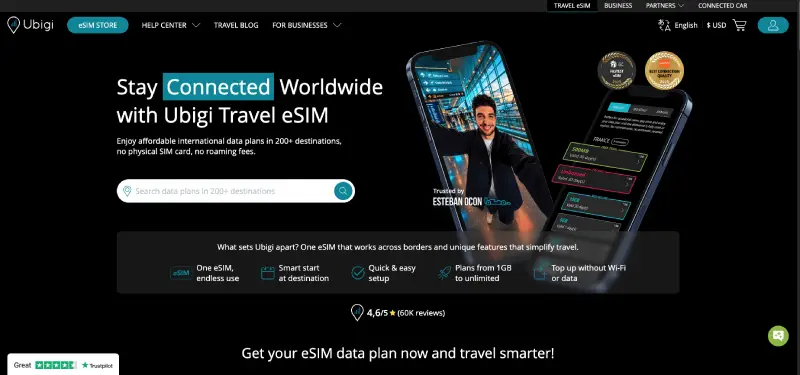
Ubigi is the clearest alternative for someone who does not need 5GB.
Its 3GB plan costs $14 for 30 days, creating a genuinely useful middle tier between a tiny short-stay package and the larger 5GB plans. That can suit a week of normal phone use if accommodation Wi-Fi handles heavier downloads and streaming.
Ubigi lists Aliv, so it also gives you a different underlying network from Roafly, Airalo and aloSIM. That distinction can matter more than a few dollars when your itinerary moves between islands.
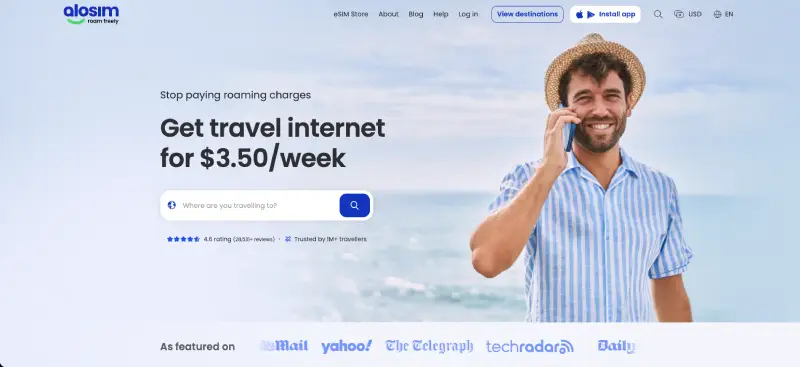
aloSIM starts at $7 for 1GB over seven days, only ten cents above Roafly. At the entry level, the price difference is effectively small enough that other preferences could decide the purchase.
Its 5GB/30-day plan rises to $28, however, putting Roafly $5.10 ahead for the same stated allowance and validity.
Both list BTC in this comparison, so aloSIM does not introduce a different local-network angle to offset that larger-plan price gap.
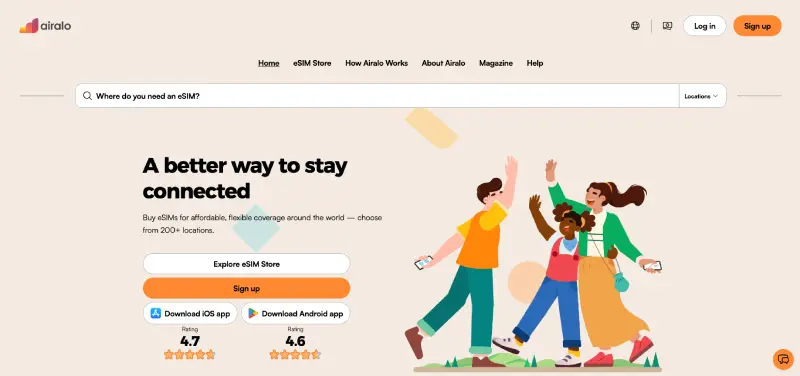
Airalo's Bahamas pricing is harder to justify on the two directly comparable capped tiers here.
The 1GB/7-day plan is $9.50, while 5GB/30 days costs $30. Both use BTC, the same disclosed local network as Roafly.
That leaves the decision relatively simple on the verified commercial data: Roafly offers the same stated data amounts and validity periods at lower prices.
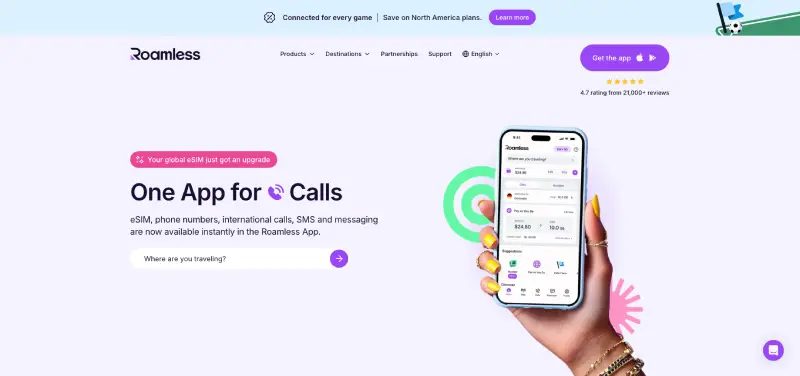
Roamless supplies the Aliv branch of the fixed-data comparison, with 1GB for $8.95 over seven days and 5GB for $29.95 over 30 days.
Its different listed network may be relevant if you specifically prefer an Aliv-based travel eSIM. Purely on capped-plan price, though, it does not displace Roafly: the 5GB option is $7.05 more expensive.
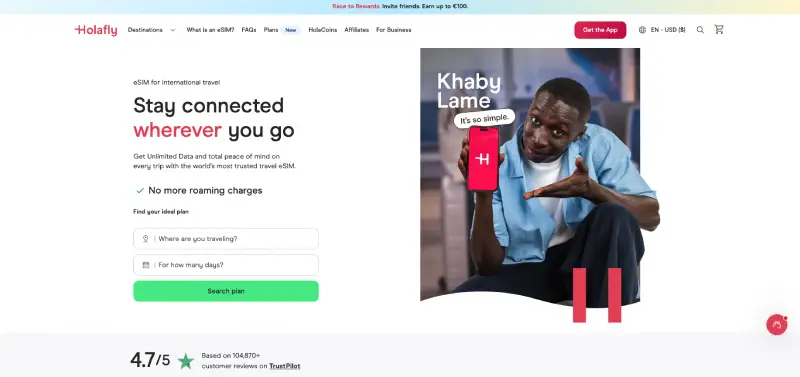
Holafly should be compared differently because its $36.50 seven-day plan is unlimited, rather than another fixed 5GB product.
That can make sense for someone expecting unusually heavy phone-based data use and who does not want to monitor a fixed allowance. “Unlimited” does not mean unrestricted full-speed use under every circumstance, however.
Holafly says its Bahamas eSIM uses Aliv, allows 1GB of hotspot sharing per day, and is subject to a Fair Usage Policy that can temporarily reduce speeds. Holafly states that such a restriction, if applied, lasts no more than one day before resetting.
That hotspot rule creates a meaningful distinction from Roafly. Over seven days, Holafly provides up to 7GB of shareable hotspot data, while Roafly lets you tether from the full fixed allowance you purchased. The better model depends on whether your priority is unlimited handset use or predictable shareable data.
The Bahamas does not have a long list of competing national mobile operators. Its communications regulator, URCA, identifies BTC and Aliv as the country's two cellular mobile service providers.
That makes the network column unusually useful in an eSIM comparison.
There is no responsible basis for reducing the choice to “BTC is best” or “Aliv is best.” BTC received Ookla's Best Mobile Coverage award for Q1–Q2 2024, a coverage-specific metric based on Speedtest data.
More recently, Ookla's Speedtest Awards named Aliv the Fastest Mobile Network in The Bahamas for Q3–Q4 2025. Based on consumer-initiated Speedtest tests during that period, Aliv recorded a Speed Score of 54.64, with median download speeds of 62.40 Mbps and median upload speeds of 12.37 Mbps.
Those findings measure different things. BTC's cited result concerns mobile coverage, while Aliv's later award concerns network speed. Neither metric alone proves that one network will be better at every resort, road, beach or Family Island.
On a trip centered on Nassau, price may therefore remain the more useful tie-breaker. Island-hopping makes the underlying network worth checking more carefully because signal quality can vary with island, settlement, building and route.
Roafly, Airalo and aloSIM list BTC in this comparison. Ubigi, Roamless and Holafly list Aliv. None of those listings guarantees signal at every beach, road, marina or cay, and they should not be read as guarantees of speed or network priority.
Three details reinforce the price advantage.
First, the 1GB and 5GB prices are both competitive without relying on a tiny teaser package that stops being attractive once more data is needed. The $22.90 5GB option remains the cheapest directly comparable 5GB plan in our shortlist.
Second, BTC access is not merely an arbitrary operator name. BTC has credible independent evidence behind its coverage performance, which is relevant in an archipelago where trips can extend well beyond the main Nassau hotel corridor. That does not guarantee better service at every destination, but it gives the network choice useful context.
Third, Roafly's full-allowance hotspot support is straightforward. A 5GB purchase remains 5GB you can use between your phone and tethered devices. That is particularly helpful for a short laptop session at accommodation, sharing data with a tablet or getting a second device online without buying another connection.
Those advantages together are why we prefer Roafly overall rather than treating the decision as a race to the lowest headline price alone.
Buying locally remains reasonable if you would rather deal directly with a Bahamian mobile operator, need services not included with your chosen travel eSIM, or are staying long enough to make a local plan worthwhile.
BTC and Aliv are the two domestic mobile operators, and prepaid service is well established in the market. URCA's mobile-market review documents mobile offerings from both operators.
Buying a travel eSIM before departure removes the need to make a SIM-store stop part of the first day. Once installed, it can connect after arrival according to the provider's activation instructions.
On a normal holiday, that convenience plus the competitive fixed-data pricing is why we would start with the eSIM comparison above rather than treating a local SIM as the default.
Bahamas eSIM service depends on terrestrial mobile networks. It can be useful around Nassau, Freeport and other inhabited islands where your listed network has signal, but it should not be mistaken for open-ocean connectivity.
During stretches at sea, the phone may be beyond the reach of normal BTC or Aliv towers. Ship Wi-Fi or a dedicated maritime service is a separate product.
This matters for cruise passengers because a cheap 1GB eSIM can still be excellent value for a port day without replacing whatever connection you use while the vessel is offshore.
It is also worth checking which SIM your phone is using for mobile data before sailing. Keeping an expensive home-carrier roaming connection active by mistake can defeat the point of buying a prepaid travel eSIM.
Choose Roafly if you want the strongest overall value from the capped plans compared here. The $6.90 entry price is the lowest of the fixed-data options, while $22.90 for 5GB/30 days creates a clearer advantage for a longer or more data-intensive trip.
Pick Ubigi if 3GB is a better fit than 5GB and you specifically want an Aliv-based option. Its $14 middle tier fills a useful gap that the other providers do not match directly.
Consider Holafly when unlimited phone data itself is the priority and the higher seven-day price is acceptable. Remember that fair-use speed management can apply and hotspot sharing is limited to 1GB per day.
Airalo, aloSIM and Roamless all remain workable alternatives, but their verified pricing does not produce a stronger overall value case than Roafly in this comparison.
It will if the device supports eSIM and is unlocked for use with another carrier. Compatibility varies by phone model and sometimes by the country where the device was originally sold, so check your exact model before purchasing.
Installing it before departure while you have reliable Wi-Fi is usually the easiest approach. Follow the activation instructions from your provider carefully, because installation and plan activation are not always the same event. Once you arrive, select the travel eSIM for mobile data and enable data roaming if the provider's setup instructions require it.
Roafly is our best eSIM for the Bahamas in this comparison.
Its $6.90 1GB/7-day plan works well for a short visit, while 5GB for $22.90 over 30 days is the strongest directly comparable 5GB value among the shortlisted providers. BTC access adds credible coverage context, and hotspot support across the purchased allowance gives the fixed-data package more flexibility.
The cheapest package should not be the only thing you look at in an island country. Check whether your eSIM lists BTC or Aliv, think about where beyond Nassau your itinerary goes, and choose the data model that matches how you will actually use your phone.
Across most trips covered by the plans compared here, Roafly gets that balance right without charging extra for a comparable fixed allowance.
Disclosure: Roafly publishes this guide and is included in the comparison.
Best for most trips
BTC
Bahamas
10 GB · 30 days
Enough for maps, bookings and everyday travel.
Hotspot supported
$34.90
$31.41
BAHAMAS10 automatically applied
$6.90From 6.21 USD
10% reader discount

Manage your eSIM in the app
Install, top up and track data.
