Download the App and manage your eSIMs easily
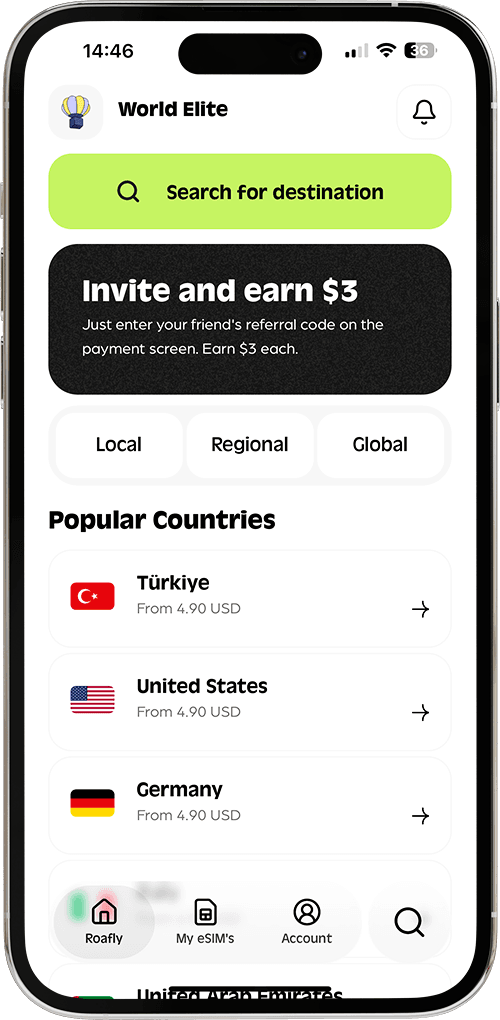
Create your order quickly
See your eSIM details
Track your remaining data
Download the App and manage your eSIMs easily
Create your order quickly
See your eSIM details
Track your remaining data
The Dominican Republic has no general tourist VAT-refund scheme under the official guidance checked in October 2026. You should budget to pay the applicable ITBIS on ordinary purchases, without expecting to recover it when you leave.

Ethan Brooks
Updated Oct 23, 2026
5 min read
Save 15% on your Roafly eSIM
Stay connected on your next trip. Use the code below at checkout.
View All DestinationsJump to section
👇Save 15% on your Roafly eSIM
Stay connected on your next trip. Use the code below at checkout.

Manage your eSIM in the app
Install, top up and track data.
ITBIS is the country’s VAT-style consumption tax, with a standard rate of 18%. Airport duty-free shopping and the separate US$10 tourist card refund follow different rules. Understanding those distinctions helps you compare prices and avoid planning around a refund that is unavailable.
Foreign visitors cannot claim a general shopping-tax refund simply because they live overseas or take their purchases home. Keeping receipts, paying with a foreign card or showing a passport does not establish eligibility.
Confusion comes partly from discussions about introducing a tourist refund. Legislative proposals can attract headlines before a usable scheme exists. In January 2026, the Dominican tax authority, DGII, clarified in its official response on tourist refunds that the proposed measure was not in force without promulgation.
That distinction matters when you encounter articles describing minimum purchase amounts, qualifying goods or future refund arrangements. Those details should not become part of your shopping budget unless an active scheme and its procedures have been officially established.
Compare purchases using the full amount you will pay. There is no verified general tourist-refund process on which to base an airport appointment, a customs stamp request or a promised repayment.
ITBIS stands for Impuesto sobre Transferencias de Bienes Industrializados y Servicios. It applies to taxable goods and services, including many purchases visitors make during a trip.
The standard ITBIS rate is 18%, although exemptions and other product-specific treatment exist. The standard rate should therefore not be applied indiscriminately to every receipt.
Before paying, establish whether the quoted amount includes tax. The useful question is the final total, especially when comparing a shop price with an airport offer.
Here is an illustrative calculation for a purchase subject only to standard-rate ITBIS:
| Receipt item | Amount |
|---|---|
| Price before ITBIS | RD$1,000 |
| ITBIS at 18% | RD$180 |
| Total payable | RD$1,180 |
If RD$1,180 is already the tax-inclusive price, the ITBIS component is RD$180. Multiplying the final price by 18% would give the wrong tax amount. This example explains the bill; it does not represent an available refund.
Restaurant receipts may also show a separate 10% legal service charge, or propina legal. That charge is distinct from ITBIS. Where both apply to a RD$1,000 meal subtotal, the calculation is RD$180 in ITBIS plus RD$100 in legal service charge, giving RD$1,280 before any additional voluntary tip.
Include applicable taxes and charges when budgeting for your Dominican Republic trip, rather than treating the headline price as the total.
Duty-free shopping takes place through shops operating under a specific tax arrangement. You buy eligible merchandise through that channel; you do not submit receipts from ordinary town shops for reimbursement.
Punta Cana International Airport lists Duty Free Americas among its retailers, with products including liquor, tobacco, fragrances, watches and gifts. Its terminal shopping options also include local crafts and souvenirs.
The practical comparison is the final price of the same product and quantity. A tax advantage alone does not establish which shop offers better value. Compare bottle sizes, package contents and currencies before deciding where to buy.
Airport purchases also need to fit the rest of your journey. Consider baggage space and your airline’s handling requirements before buying bulky or fragile items. If you are shopping on arrival, review the Dominican Republic customs rules for the separate question of bringing goods into the country.
Ordinary shopping receipts remain useful for documenting what you bought and how much you paid. They are not tourist tax-refund forms.
Some passengers can recover the US$10 tourist card charge included in an eligible airline ticket. This concerns an entry-related charge, rather than tax paid on shopping, restaurant meals or accommodation.
The exemption categories include:
Dominican citizens.
Foreign residents with a valid Dominican residence card.
Foreign nationals with a valid Dominican visa.
Diplomats accredited in the country.
Nationals covered by qualifying bilateral exemption agreements.
Being a foreign visitor alone does not qualify you. The relevant question is whether you belong to an exempt category and were charged the tourist card fee.
Eligible passengers can use DGII’s tourist card refund process. Supporting documents include the passport identity page and an airline ticket showing the fare, taxes and charges, together with residence, visa or diplomatic documentation where applicable.
The application window runs from the ticket purchase until 30 days after entry into the Dominican Republic. DGII also describes an e-ticket application route requiring a Dominican identity number and a local mobile number.
Keep the wider entry requirements and e-ticket process separate from your shopping plans. Eligibility for a tourist card refund does not create eligibility for an ITBIS refund.
The most useful preparation is understanding the bill and comparing the amount charged.
Ask for the final total. Establish whether the displayed or quoted price includes ITBIS and any applicable service charge.
Identify the currency. RD$ and US$ represent different amounts. Our guide to paying in pesos or US dollars covers the wider cash-and-card decision.
Keep an itemized receipt. It records the goods, seller, tax and total, and helps you raise a billing discrepancy.
Compare matching products. Check the size, quantity and final price when choosing between local shops and duty-free.
Arrange access to prices and store locations. Save useful details before heading out, or compare Dominican Republic eSIM options if you want mobile data for checking alternatives while shopping.
Evaluate any refund promise before buying. Ask which active scheme applies and where its official eligibility and claim instructions are published.
