Download the App and manage your eSIMs easily
Create your order quickly
See your eSIM details
Track your remaining data
Download the App and manage your eSIMs easily
Create your order quickly
See your eSIM details
Track your remaining data
Colombia’s tourist laws need more nuance than a list of things you cannot do.

Lena Hartley
Updated Oct 20, 2026
9 min read
Save 15% on your Roafly eSIM
Stay connected on your next trip. Use the code below at checkout.
View All DestinationsJump to section
👇Save 15% on your Roafly eSIM
Stay connected on your next trip. Use the code below at checkout.
View All Destinations
Manage your eSIM in the app
Install, top up and track data.
Alcohol is restricted to adults aged 18 and over, smoke-free rules also cover vaping, and personal-use drug protections do not give visitors permission to consume anywhere. Your location matters: a city street, nightclub and protected beach can have different restrictions. Start with the national rules, then apply the conditions of the place you are visiting.
| Topic | Current status | What visitors need to know | Safest action |
|---|---|---|---|
| Drinking age and nightlife | Alcohol is for adults aged 18+ | Under-18s cannot be supplied alcohol; alcohol-focused venues have separate access restrictions | Carry accepted identification and check the venue’s admission policy |
| Drinking in public | Location-dependent restrictions | Colombia does not have a simple nationwide ban covering every public place | Use permitted hospitality venues and follow local restrictions |
| Cannabis and other drugs | Personal use and trafficking are legally distinct | Personal-use protections do not remove restrictions on consumption in public places | Do not treat visible street use as permission |
| Smoking and vaping | Restricted in protected smoke-free spaces | Indoor hospitality venues, transport and other protected settings are covered | Move outside protected areas and follow applicable site rules |
| Tayrona and drones | Park-specific restrictions and permissions | Tayrona prohibits entry with drones without permission and restricts several everyday items | Read the park’s conditions before packing |
| Driving | Valid foreign licences are recognized for eligible visitors | Tourist or transit status and authorized stay matter | Carry your valid licence and evidence of your visitor status |
| Noise | Disturbing other people can breach public-order rules | Private accommodation is not exempt when noise affects neighbours | Keep music and gatherings from disturbing others |
| Tipping | Voluntary | Suggested tips require your agreement | Review the bill and accept, change or decline the tip |
Rules checked on October 20, 2026. Laws, local restrictions and penalties can change; verify the linked official guidance before travel.
These are rules for your stay. Visa eligibility and arrival paperwork are covered separately in our Colombia entry requirements guide.
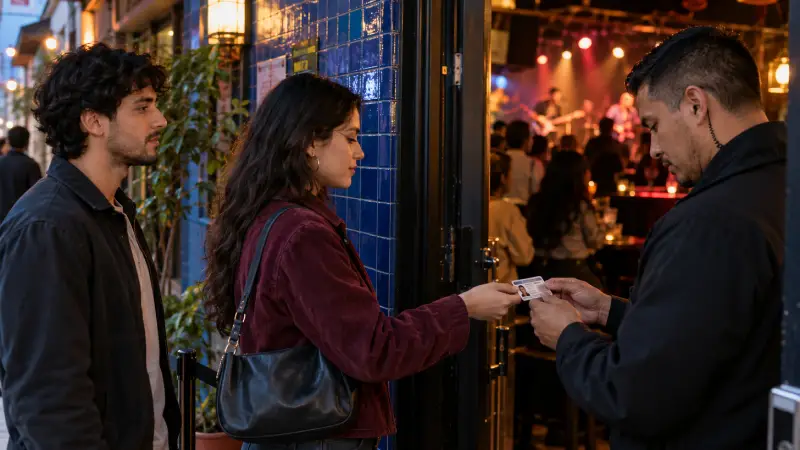
Colombia’s drinking age is 18. Selling or supplying alcohol to under-18s is prohibited, and the rules also address consumption by minors. This is not simply an age limit at the supermarket checkout.
Parents or other adults cannot override the restriction by buying alcohol for a minor. Being accompanied by family does not create a general exception allowing an under-18 visitor to drink.
Colombia’s public-order code prohibits admitting minors to places where entertainment is directed toward alcohol consumption and other specified adult activities. Treat alcohol-focused bars and nightclubs as unsuitable for an under-18 outing, even with parents present.
Restaurants require a different distinction. Serving wine with meals does not automatically make every restaurant an adults-only nightclub. The venue’s activity and the part of the premises you plan to use matter; a hotel restaurant and its late-night club should not be treated as interchangeable.
Ask about the particular restaurant, event or hotel facility when travelling with children. Family access does not authorize alcohol service to them.
The national alcohol threshold is 18. Admission still depends on the venue or event’s own conditions, including its age policy and accepted identification.
Check those conditions before buying tickets. Do not assume that a passport photo on your phone will satisfy a door check, or that being old enough to drink guarantees admission.
Colombia does not have a straightforward nationwide rule making every drink on every street illegal. The Constitutional Court struck down broad public-consumption prohibitions in 2019, but specific restrictions and public-order obligations remain.
School surroundings, locally regulated spaces and particular sites can have additional rules. Behaviour that disturbs other people is a separate issue from whether the drink itself is permitted.
For an ordinary evening out, drinking at an authorized restaurant or bar avoids much of this uncertainty. Taking a drink into a nearby square, park or beach creates a different question about that location.
Park admission rules can also restrict alcohol independently of the rules elsewhere in the city. Tayrona, for example, lists liquor bottles among the items visitors may not bring inside.
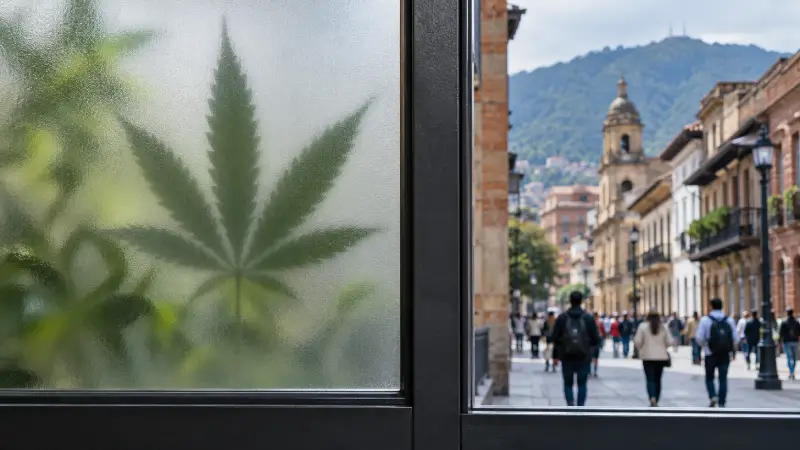
Colombia distinguishes possession for personal consumption from trafficking and distribution. That distinction is often simplified online into “cannabis is legal,” which is too broad to guide a visitor.
Personal-use protections do not establish unrestricted recreational sales or permission to consume in any public place. Medical cannabis operates within a separate regulated framework.
The Ministry of Justice’s guidance on public consumption restrictions explains the distinction between personal use and trafficking, alongside local authorities’ powers to restrict consumption in relevant public settings.
The practical consequence is that the location and circumstances matter. Parks, educational surroundings and places used by children require particular care. Seeing someone consume openly does not establish that the same conduct is permitted there.
Avoid relying on a quoted “personal dose” as a blanket guarantee against police action. Possession, distribution and public consumption are different legal questions, and the quantity alone does not answer all of them.
Bringing controlled medicines or substances across the border is another separate issue. Our Colombia customs guide covers the arrival side of carrying medicines and other belongings.
Colombia’s smoke-free protections extend to electronic cigarettes, nicotine-free vaping devices and heated tobacco. Vaping is not an indoor alternative to smoking.
The smoke-free framework covers enclosed public and workplace areas, including restaurants, cafés, bars, clubs and hotels, alongside transport and other protected settings. An enclosed smoking room or extractor fan does not create an exemption.
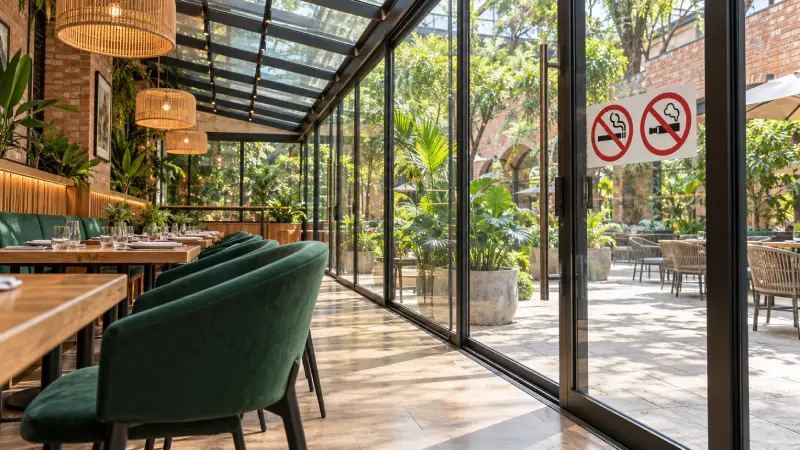
Ordinary open streets are not subject to a blanket nationwide smoking ban under this framework. However, outdoor status alone does not establish permission: protected premises, sports and cultural spaces, local restrictions and property rules still matter.
Covered terraces enclosed by walls should not be treated as open-air exceptions. Open patios require attention to the premises and applicable restrictions; an ashtray or staff permission cannot override the law.
Keep clear of entrances and queues as a courtesy, and follow smoke-free signs at parks, beaches and transport facilities. Use a designated outdoor area only where smoking is legally permitted.
Ask about the property’s policy before booking if this affects your choice. A private booking does not automatically make a room or balcony a permitted smoking area. Hotel rules may be stricter than the statutory baseline.
Tayrona’s visitor conditions are specific to the protected area. They include entry restrictions on:
Drones without permission.
Speakers.
Single-use plastics, including disposable bottles, bags and cutlery.
Liquor bottles and hallucinogenic substances.
Pets.
Inside the park, stay on marked trails, do not feed wildlife and swim only in authorized areas. Red-flag beaches remain closed for safety.
The official Tayrona visitor page lists recurring closures from February 1–15, June 1–15 and October 19–November 2. These periods support environmental, cultural and spiritual activities agreed with the Indigenous peoples of the Sierra Nevada.
Read the current park conditions before arranging transport. Save essential instructions offline; a Colombia eSIM can help you access announcements and coordinate bookings where mobile coverage is available.
Tayrona requires permission to bring a drone into the park. Park permission and compliance with aviation rules are separate requirements.
Arrange the relevant permissions before visiting. Do not assume that a small recreational drone, a quiet beach or a hotel’s approval makes a flight lawful. Drone import requirements also remain separate from permission to operate it.
Valid foreign driving licences are recognized for tourists and people in transit during their authorized stay, subject to the applicable rules. This visitor provision should not be treated as indefinite permission for someone who has moved to Colombia.
Keep your valid licence and evidence of your visitor status available. Rental-company documentation and eligibility requirements are a separate part of arranging the vehicle.
Noise can also become a legal issue during an otherwise ordinary holiday. Music or gatherings in an apartment, hotel or other private premises can breach public-order rules when they disturb neighbours. Keep volume reasonable and follow the accommodation’s quiet-hour policy.
Before heading away from your accommodation, arrange access to maps, booking messages and current local information. Our guide to internet options in Colombia explains the available connection methods.
Colombia’s customs vary by region and community. The most useful approach is to follow the guidance of the people hosting your visit, particularly in Indigenous territories and sacred places.
Community visits should follow local guidance about where visitors may go and what they may photograph. Ciudad Perdida is one setting where official tourism guidance specifically advises asking permission before taking photographs.
Ask before making someone the subject of a close-up portrait, and accept a refusal without pressure. Keep ceremonies, homes and sacred areas out of your photographs when hosts ask you to do so. These courtesies should not be confused with a nationwide ban on ordinary travel photography.
Buying crafts directly from their makers and using community-led experiences can also help your spending support the people whose culture you are visiting.
Colombia’s tipping rules give you a choice. Restaurants and similar establishments may suggest a tip, but acceptance remains voluntary.
A tip suggested by the establishment and added to the bill with your agreement cannot exceed 10% of the service value. Staff should ask whether you want it included, and you may accept, decline or choose a different amount.
Treat the conversation politely and review the bill before paying. A suggested tip is not an unavoidable tax.
A few specific preparations are more useful than memorizing a long list of supposed “strange laws”:
Check the admission age and identification requirements for your planned night out.
Follow the restrictions of the street, venue or park you are actually using.
Read Tayrona’s current conditions before packing or arranging transport.
Ask permission where community hosts or sacred-site guidance requires it.
Save essential documents and instructions offline. If you need travel data, compare Colombia eSIM plans before departure.
Keep legal restrictions, venue policies and everyday courtesy distinct. Each affects your trip differently, and understanding which one applies makes the next decision much easier.
