Download the App and manage your eSIMs easily
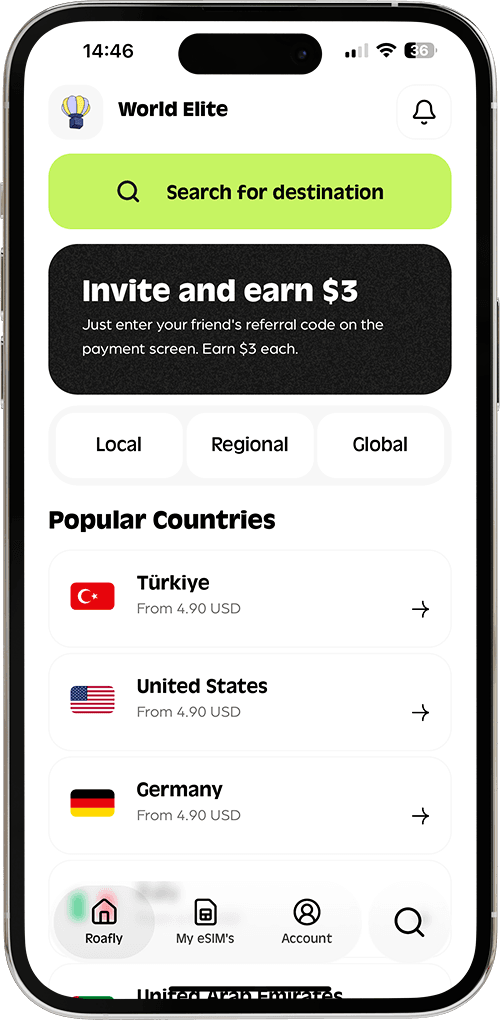
Create your order quickly
See your eSIM details
Track your remaining data
Download the App and manage your eSIMs easily
Create your order quickly
See your eSIM details
Track your remaining data
Buying a local SIM in China can give you a Chinese number, domestic data and calling allowances. Registration rules and internet restrictions make the decision more complicated than simply choosing the cheapest package.
China Mobile
Instant delivery
3.70 USD From 3.33 USD

Ethan Brooks
Updated Aug 25, 2026
11 min read

Jump to section
👇Best for most trips
China Mobile

China
10 GB · 30 days
Enough for maps, bookings and everyday travel.
Hotspot supported
$16.90
$15.21
CHINA10 automatically applied
$3.70From 3.33 USD
10% reader discount
China Mobile, China Unicom and China Telecom all provide options that foreign visitors can use, but tourist packages and prices are not perfectly standardized nationwide. Passport registration is part of the process, while short-term plans are easiest to arrange through official carrier locations or selected international-arrival service points.
One China-specific difference deserves attention before comparing prices: mainland mobile data does not automatically restore access to services such as WhatsApp. Roafly routes its China eSIM traffic through Hong Kong IP infrastructure, so those mainland restrictions do not apply in the same way.
| Operator / Option | Plan | Data & Validity | Total Upfront Price | Key Difference |
|---|---|---|---|---|
| China Mobile | Shanghai visitor benchmark | 30GB / 7 days + 100 minutes | Not fully disclosed; ¥90 plan price | Short-term physical SIM |
| China Unicom | Shanghai visitor benchmark | 10GB / 7 days + 100 minutes | Not fully disclosed; ¥58–80 reported plan price | Lower entry-price benchmark |
| China Telecom | Foreign-national card | 20GB / 7 days + 100 minutes + 50 SMS | Not fully disclosed; ¥85 published package price | Explicit foreign-passport product |
| Roafly eSIM | China data plan | 5GB or 20GB / 30 days | $9.90 / $24.00 | Hong Kong IP routing; data-only |
Prices checked August 25, 2026. China Mobile and China Unicom figures above are current Shanghai visitor benchmarks rather than guaranteed nationwide tariffs. China Telecom publishes the ¥85 foreign-national package price, but any separate SIM, activation or counter-level charge that is not disclosed should not be assumed to be zero.
Local SIMs make the strongest case when a Chinese number, domestic calls or a larger local allowance matters. Roafly removes the physical-store step and is more practical when mobile data and access to commonly restricted apps are the priorities.
See current China eSIM plans before deciding between a physical SIM and pre-travel mobile data.
Choose the perfect data plan for your trip
Exclusive Reader Bonus!
Enjoy an extra %10 OFF your first Roafly eSIM purchase as a thank you for reading.
Yes. Foreign visitors can register mobile service using a passport, although the safest route is an operator-run business hall that handles foreign identity documents.
China’s telecom authorities describe in-person registration at self-operated carrier service halls as the standard route when foreign visitors use passports. The current China telecom registration guidance is the best reference when deciding what identification to bring.
Real-name registration means the purchase process is more formal than buying an anonymous prepaid card. Domestic online signup flows can also be difficult when they expect a Chinese identity card.
Bring:
Original passport
Unlocked phone
Preferred physical SIM size if the handset does not use nano-SIM
Accepted payment method
Enough time to finish registration and test the connection before leaving
Exact identity-verification steps can differ between branches. Biometric checks, activation timing and payment acceptance should therefore be confirmed at the location rather than assumed in advance.
No single operator publishes one tourist tariff that can safely be treated as the standard price across all of China. Provincial branches and local visitor services can offer different short-term packages.
China Mobile, China Unicom and China Telecom still form the practical shortlist.
China Mobile provides short-duration visitor options in major international-arrival markets. Current Shanghai visitor information lists a 7-day package at ¥90 with 30GB of domestic data and 100 voice minutes.
That ¥90 amount works as a current Shanghai benchmark, not a guaranteed China Mobile price in Beijing, Guangzhou, Chengdu or every other city.
Useful points:
Passport registration is available through suitable physical service halls.
Short-duration packages appear in major visitor markets.
Exact allowances and prices depend on the local branch.
Separate SIM or activation charges are not consistently published beside the plan price.
Roafly lists China Mobile as its local network in China.
The listed Roafly network should not be interpreted as a guarantee of coverage at every specific address or route.
China Unicom also accepts foreign identity documents through appropriate business halls. Visitors who prefer this operator can use the official China Unicom business hall locator to find nearby service locations.
Current Shanghai visitor information places a 7-day tourist package around ¥58–80 with 10GB and 100 call minutes. Longer short-term packages are also available in that market.
Price variation is the important point here. One Shanghai amount should not be presented as a nationwide Unicom tariff.
China Unicom has also warned customers about unauthorized online SIM sellers. Official channels matter because SIM registration involves identity information, and unofficial sellers may not provide a reliable foreign-passport registration process.
China Telecom currently provides the clearest published short-term product specifically designed around foreign-national eligibility.
The 7-day package costs ¥85 and includes:
20GB domestic data
100 domestic voice minutes
50 domestic SMS
7 days of validity
Foreign-passport eligibility is stated directly in the current China Telecom foreign-national 7-day card terms.
Longer versions are also published. The 15-day package is ¥125 with 30GB and 200 minutes, while the 30-day package is ¥195 with 50GB and 300 minutes. Both currently include 50 SMS.
Those package prices are useful because the duration, allowance and target customer are clearly defined. Complete cash due at the counter should still be confirmed before payment if the page does not disclose every physical-SIM or service charge.
Headline plan price and complete purchase price are not always identical.
Operator and visitor-service pages often show the tariff without clearly stating every possible SIM-card, activation or counter-level fee. Missing information should never be converted into an assumed zero charge.
Check these items before paying:
Published package price
Physical SIM or starter-card fee
Activation or service charge
Mandatory first balance or top-up
Renewal or automatic-expiry terms
Any location-specific seller charge
Complete amount due at registration
China Telecom currently gives the clearest public short-term pricing because its foreign-national plans have defined durations and allowances.
China Mobile and China Unicom require more location-specific checking. Asking staff to confirm the complete amount due today is more reliable than choosing a carrier from the headline tariff alone.
Official carrier stores are the most dependable general buying channel.
Operator-run service halls can handle identity registration, package selection and activation in one visit. Foreign-passport capability may still differ between individual branches, so larger business halls in major cities are usually more practical than assuming every small outlet can complete the process.
Selected international airports and arrival-service centers provide another route. Shanghai currently offers mobile communication services to international arrivals, with short-term SIM products available through designated facilities. The official Shanghai international-arrival SIM service information is useful when Shanghai is the entry point.
Airport availability should remain a location-specific fact. Shanghai evidence does not prove that every airport in China sells the same operators, plans or prices.
Use this buying sequence:
Choose an official carrier counter or recognized international-arrival service point.
Show your passport before selecting a package.
Confirm whether the plan is short-term or recurring.
Ask for the complete amount payable at activation.
Check whether the number closes automatically when validity ends.
Test mobile data before leaving the counter.
Broader choices such as roaming, Wi-Fi and other connectivity methods belong in internet options in China.
China uses real-name registration for mobile numbers, so foreign visitors should expect identity verification during the purchase.
The practical process usually looks like this:
Visit a carrier business hall that accepts foreign passports.
Present the original passport.
Select the package and confirm its duration.
Complete the operator’s identity-registration process.
Pay the published package price plus any disclosed extra charge.
Insert the SIM and complete activation with staff assistance.
Test mobile data, calls or SMS included in the purchased package.
Online buying deserves more caution. Domestic signup systems can expect Chinese identity credentials, while unofficial SIM sellers may create additional registration or privacy problems.
No exact nationwide activation time should be assumed. Branch procedures, identity checks and network provisioning can vary.
Local mobile data solves the basic connectivity problem, but it does not remove mainland internet restrictions.
WhatsApp and similar services may remain restricted when traffic uses a standard mainland mobile connection. Buying a China Mobile, China Unicom or China Telecom SIM should therefore not be treated as a method for bypassing those restrictions.
Roafly works differently in China. Its China eSIM traffic uses Hong Kong IP routing, so the connection does not encounter those mainland blocks in the same way.
That difference can matter when WhatsApp is needed for accommodation messages, work communication or staying in touch during the trip.
More detail is covered in using WhatsApp in China.
Roafly’s China plans are data-only. They do not provide a Chinese phone number, voice allowance or SMS, so a physical local SIM remains the better match when those services are necessary.
Convenience and local-number access pull the decision in different directions.
Choose a local SIM when:
You need a Chinese mobile number.
Domestic calls or SMS matter.
Your phone does not support eSIM.
Larger local data allowances are useful.
Visiting a carrier store and completing passport registration is acceptable.
Choose Roafly when:
Mobile data is the main requirement.
You want the connection arranged without visiting a local SIM counter.
Keeping the primary physical SIM in the phone matters.
WhatsApp or similar restricted services need to remain accessible through Hong Kong-routed traffic.
Hotspot use matters.
Roafly supports tethering across the purchased data allowance. Keeping the primary SIM installed is also possible on a compatible eSIM phone, which can be useful when messages to your usual number still matter.
Readers comparing travel-eSIM providers rather than local physical SIMs can use best eSIM options for China.
Trip needs matter more than simply picking the operator with the lowest visible tariff.
Short city break: China Telecom’s documented 7-day package gives a clear local option with data, calls and SMS. Roafly avoids the local-store process when only mobile data is needed.
One- to two-week trip: All three major operators can provide short-duration options in major visitor markets, but exact local pricing needs confirmation.
Longer stay: Larger local packages can make sense when high data use, a Chinese number or domestic calls matter more than setup convenience.
Several cities: Choosing one of the three major operators keeps the purchase straightforward. Route-specific coverage differences should be checked separately rather than reduced to an unsupported nationwide “best network” claim.
WhatsApp-dependent trip: Roafly has a meaningful practical advantage because of its Hong Kong IP routing.
Chinese number required: Local physical SIM wins because Roafly’s China product is data-only.
Yes. Foreign visitors can use a passport for real-name mobile registration through appropriate operator service halls.
Some international-arrival facilities sell local SIM cards. Shanghai provides a current confirmed example, but airport availability and package pricing should not be generalized across the country.
China Telecom currently publishes the clearest short-term foreign-national product terms, including price, data, validity, calls and SMS.
China Mobile and China Unicom remain practical choices, although current tourist pricing depends more heavily on location.
Not necessarily. Mainland internet restrictions can still affect WhatsApp when using a normal local mobile connection.
Roafly uses Hong Kong IP routing for its China eSIM, which avoids those mainland blocking conditions.
Package details differ. China Telecom’s current foreign-national short-term products explicitly include domestic voice and SMS allowances.
China Mobile and China Unicom inclusions should be checked against the exact visitor package being purchased.
Official physical carrier channels are safer when a foreign passport is being used. Domestic online systems may require Chinese identity credentials, and unofficial online sellers can complicate registration.
China Telecom currently offers the easiest local tourist SIM to price with confidence because its foreign-national short-term packages publish clear validity, allowance and eligibility details.
China Mobile and China Unicom remain strong local choices, but their visitor-plan pricing should be confirmed by city rather than treated as one nationwide tariff.
Roafly is the more practical option when the trip mainly needs mobile data, pre-travel convenience and access to services that may be restricted on mainland-routed connections. Local physical SIMs remain better when a Chinese number, domestic calls, SMS or a larger local allowance matters more.
Roafly publishes this guide and offers the travel-eSIM alternative discussed above.
Best for most trips
China Mobile
China
10 GB · 30 days
Enough for maps, bookings and everyday travel.
Hotspot supported
$16.90
$15.21
CHINA10 automatically applied
$3.70From 3.33 USD
10% reader discount

Manage your eSIM in the app
Install, top up and track data.
