Download the App and manage your eSIMs easily
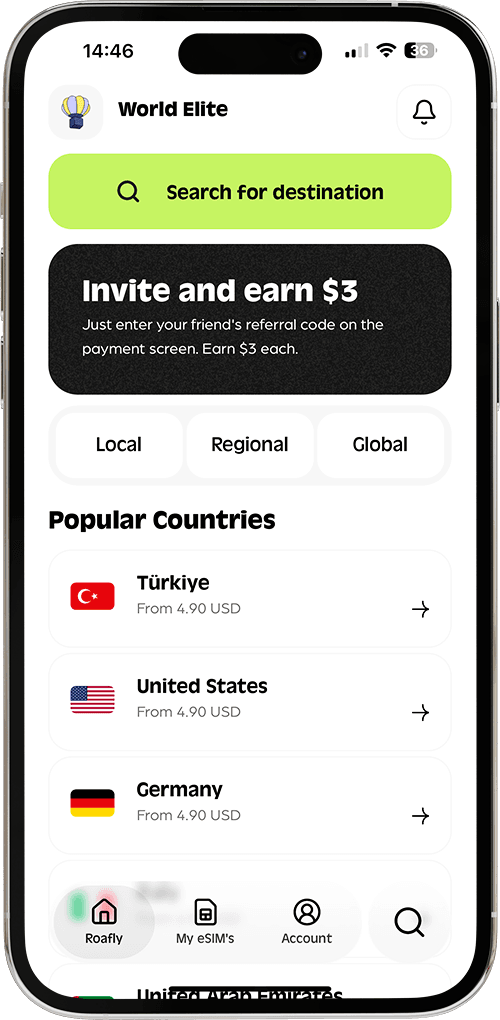
Create your order quickly
See your eSIM details
Track your remaining data
Download the App and manage your eSIMs easily
Create your order quickly
See your eSIM details
Track your remaining data
Taiwan is one of the easiest countries in Asia for staying connected, but it is also a market where travelers can overpay fast. Airport SIM counters are convenient, local telecom plans are strong, and travel eSIM brands all look similar at first glance. The real difference usually comes down to price, network partner, installation convenience, and whether the plan fits a short city break or a longer island trip.
Chunghwa, Taiwan Mobile
Instant delivery
From 4.50 USD

Lena Hartley
Updated Apr 1, 2026
11 min read

Jump to section
👇Best for most trips
Chunghwa, Taiwan Mobile

Taiwan
10 GB · 30 days
Enough for maps, bookings and everyday travel.
Hotspot supported
$16.90
From 4.50 USD
If you want a Taiwan eSIM that is easy to install before landing, works on major local networks, and gives strong value at 5GB, 10GB, and 20GB for a 30-day trip, Roafly is the most balanced choice in this comparison. Taiwan still has excellent local operator infrastructure, so the best travel eSIM is usually the one that gives you access to a top network without the airport queue, passport check, or local setup friction.
Taiwan is compact, but travel patterns are not. Some visitors stay mostly in Taipei, Ximending, and the MRT corridor. Others move across Taichung, Tainan, Kaohsiung, Jiufen, Sun Moon Lake, Hualien, or Alishan. Your mobile setup needs to handle dense urban use, high-speed rail transfers, maps, ride apps, translation, food delivery, and occasional mountain or coastal travel. In that context, network quality matters, but so does not wasting money on more data than you need.
Taiwan’s mobile market is strong overall. Chunghwa Telecom remains the benchmark many travelers trust for broad coverage and fast performance, while Taiwan Mobile and Far EasTone also offer robust 4G and 5G service, especially in cities and major travel corridors. Opensignal’s Taiwan report showed Chunghwa leading 5G Coverage Experience, while Taiwan Mobile, Chunghwa, and Far EasTone all remained competitive across several experience categories.
That means your Taiwan eSIM decision is not just about “which network exists.” It is about which provider gives you the best price-to-coverage ratio for your trip length and usage style.
Below is the direct comparison based on the prices you provided. All plans listed here are 30-day plans and all prices are in USD.
| Provider | 5GB | 10GB | 20GB | Validity | Network / Notes |
|---|---|---|---|---|---|
| Roafly | $9.90 | $16.90 | $24.90 | 30 days | Chunghwa, Taiwan Mobile |
| Airalo | $12.00 | $19.00 | $29.00 | 30 days | Taiwan Mobile |
| Saily | $11.99 | $17.99 | $27.89 | 30 days | Operator not specified; short-term discount noted |
| Roamless | $10.95 | $17.45 | $27.45 | 30 days | Chunghwa |
| GigSky | $18.69 | $31.02 | — | 30 days | Operator not specified |
| Yesim | $20.40 | $27.60 | $43.20 | 30 days | Chunghwa |
| Holafly | — | — | — | 7 days | Unlimited data, $29.90; fair use policy may apply |
Price comparison based on the rates you supplied for this article on April 1, 2026. Availability and operator routing can change over time.
The pattern is clear. Roafly is the cheapest option at 5GB, 10GB, and 20GB in this set. It also uses premium Taiwan partners, which matters because low pricing only helps if the local network is reliable. Airalo and Saily stay relatively competitive, but both come in above Roafly at every comparable tier. Roamless is close on value, especially at lower data amounts, but still trails Roafly on price. Yesim and GigSky are notably more expensive in this dataset. Holafly is harder to compare directly because it sells unlimited-style duration-based access rather than fixed 5GB, 10GB, and 20GB bundles. For a seven-day heavy-use trip it may appeal to some users, but for most 30-day travelers it is not the best value option here.
For most travelers, the sweet spot is 10GB or 20GB. Ten gigabytes is usually enough for maps, messaging, social media, some hotspot use, and frequent browsing. Twenty gigabytes makes more sense for remote work, video-heavy use, hotspot sharing, or travelers moving around Taiwan for several weeks.
Roafly stands out because it gets the fundamentals right.

First, the pricing is simply stronger than the other options in this comparison. Saving a few dollars may not sound dramatic, but Taiwan is a destination where local connectivity is already very good. In that type of market, travelers benefit most from a provider that keeps pricing lean while still using top-tier local networks.
Second, Roafly uses Chunghwa and Taiwan Mobile for Taiwan coverage. That is a meaningful advantage. Chunghwa is widely seen as the strongest all-round network for travelers who care about broad reach and strong 5G performance, while Taiwan Mobile is also a solid choice with good urban and tourist-zone service. Taiwan Mobile’s official tourist offer highlights unlimited 4G/5G tourist SIM options and eSIM availability, while Chunghwa’s tourist SIM page emphasizes unlimited 5G/4G access, nationwide CHT Wi-Fi access, and airport distribution.
Third, eSIM convenience matters more in Taiwan than many people expect. Taiwan is well organized for tourists, but airport SIM purchase still means finding the right counter, showing documents, and often paying in local currency depending on the operator. Chunghwa explicitly notes that its airport tourist products are purchased in NTD cash, and Taoyuan Airport lists telecom service counters from Chunghwa and Far EasTone among its traveler facilities.
With Roafly, you can install before departure and arrive connected. That is especially useful if you need data immediately for airport trains, hotel check-in messages, ride apps, or digital tickets.
A 5GB Taiwan eSIM works well if you are visiting for less than a week, staying mostly in cities, and relying on hotel or café Wi-Fi for heavier tasks. It is also enough for maps, messaging, translation apps, and basic browsing.
At this tier, Roafly at $9.90 is the strongest value in your comparison. Roamless is the next-closest competitor, but still costs more. Airalo and Saily are not dramatically overpriced, but they do not beat Roafly on value.
For most people visiting Taiwan for one to two weeks, 10GB is the safest default. Taiwan’s travel rhythm encourages constant phone use. You will likely use Google Maps, transit apps, food recommendations, translation, social media uploads, and a steady stream of messaging.
At $16.90, Roafly again leads the group. That makes it the easiest recommendation for average travelers who want enough data without paying for a larger bundle they may never finish.
If you are staying longer, traveling across multiple cities, or using your phone as a hotspot, 20GB is the smarter buy. It gives you room for navigation, cloud backups, streaming, and work-related use.
At $24.90, Roafly undercuts Airalo, Saily, Roamless, and Yesim. This is where the gap becomes even more noticeable. For travelers who want peace of mind without jumping to an “unlimited” plan, 20GB is probably the best price-performance tier in this comparison.
Taiwan is one of the better destinations for buying a physical SIM after arrival. Taoyuan Airport has telecom service counters, including Chunghwa Telecom and Far EasTone, so getting connected on arrival is absolutely possible.

That said, airport convenience does not always equal best value. Official operator pages confirm airport sales and tourist availability, but the exact pricing structure is often tied to day-based unlimited packs rather than the 5GB, 10GB, and 20GB bundles many eSIM shoppers compare online. Chunghwa’s tourist prepaid page focuses on day-pass style unlimited products, and Taiwan Mobile’s tourist SIM page highlights 3-, 5-, and 7-day unlimited options.
For travelers checking the broader airport market, Taiwan Mobile’s prepaid internet page lists 30-day options at NT$599, NT$799, and NT$999, with high-speed thresholds of 24GB, 36GB, and 60GB before speeds can be reduced to 10 Mbps or less. It also lists a 4G 30-day unlimited product at NT$899 and a 4G 30-day plan at NT$699 that slows after 20GB to 5 Mbps or less.
Using the Central Bank of the Republic of China’s April 1, 2026 closing rate of NT$31.949 per US dollar, those Taiwan Mobile price points are roughly:
If you want the best mix of price, network quality, and travel convenience, Roafly is the best eSIM for Taiwan in this comparison.
It is the cheapest option across 5GB, 10GB, and 20GB. It uses trusted local partners in Chunghwa and Taiwan Mobile. It lets you avoid airport SIM counters. And it fits the way most people actually travel now: set everything up before takeoff, land connected, and start the trip immediately.
Travelers who specifically want a local number or massive local prepaid allowances may still consider a physical SIM from Chunghwa, Taiwan Mobile, or Far EasTone. But for the majority of tourists, that extra effort is unnecessary.
For a Taiwan trip in 2026, Roafly is the most balanced buy.
Check the latest eSIM packages for Taiwan before your trip and choose the data tier that matches how you actually travel.
Best for most trips
Chunghwa, Taiwan Mobile
Taiwan
10 GB · 30 days
Enough for maps, bookings and everyday travel.
Hotspot supported
$16.90
From 4.50 USD
| Local operator option | Local price | Approx. USD |
|---|---|---|
| Taiwan Mobile 30-day package | NT$599 | ~$18.75 |
| Taiwan Mobile 30-day package | NT$799 | ~$25.01 |
| Taiwan Mobile 30-day package | NT$899 | ~$28.14 |
| Taiwan Mobile 30-day package | NT$999 | ~$31.27 |
| Chunghwa 30-day 60GB prepaid package | NT$999 | ~$31.27 |
USD conversions use the NT$/US$ closing rate published for April 1, 2026. Real card charges and exchange rates can vary.
This is where travel eSIM value becomes obvious. Roafly’s 20GB plan at $24.90 is cheaper than several local 30-day prepaid options once you factor in airport setup and plan structure. Local SIMs can still make sense for very heavy users, especially if they specifically want domestic voice credit or a local number. But for most tourists, a travel eSIM is the simpler purchase.
Sometimes, yes.
A local SIM can be worthwhile if you need a Taiwan phone number, want domestic voice credit, or are staying long enough that a local operator’s larger prepaid bucket becomes cost-effective. Chunghwa’s prepaid offering includes broader service-center availability and free CHT Wi-Fi access, while Taiwan Mobile and Far EasTone both maintain tourist-oriented products and eSIM support.
But for short and medium trips, local SIMs lose some of their advantage because:
That is why many travelers now prefer to land with data already active.
Coverage is one of the strongest reasons to feel comfortable buying an eSIM for Taiwan. The country’s mobile infrastructure is mature, and all three major operators perform well for normal tourism use.

Chunghwa is the safest all-round network recommendation for Taiwan. Its tourist SIM materials emphasize service centers at four major airports, nationwide Wi-Fi access, and flexible prepaid options. Opensignal’s Taiwan mobile report also showed Chunghwa winning 5G Coverage Experience outright, reinforcing its reputation for broad reach and strong performance.
For travelers visiting both cities and more rural or mountainous areas, Chunghwa is usually the network people feel most comfortable choosing first.

Taiwan Mobile is also a strong option, especially for mainstream urban and intercity travel. Its tourist product page highlights unlimited 4G/5G service, no throttling on those tourist day plans, free airtime, and eSIM availability. Its prepaid internet page also shows a broad range of 30-day options for heavier users.
If your eSIM routes on Taiwan Mobile, that is still a high-quality network choice for Taipei, Taichung, Tainan, Kaohsiung, and the standard visitor route.
Far EasTone remains one of Taiwan’s core telecom players and is widely available to tourists, including at Taoyuan Airport. Its tourist prepaid page confirms physical SIM and eSIM purchasing at airport service centers and notes unlimited-data validity during the active period, with terms around hotspot sharing and usage policies.
For most travelers, Far EasTone is a good network. It may not be the first name people pick for maximum coverage confidence, but it is still more than capable for normal tourist use.
Third-party coverage tools such as nPerf show nationwide 2G, 3G, 4G, and 5G mapping for Chunghwa, Taiwan Mobile, and Far EasTone, while recent Taiwan reporting cites 4G/5G population coverage around 97% and continued 5G expansion. In practical terms, travelers can expect very reliable data in cities, on transport corridors, and across most popular destinations. Some remote mountain zones can still be less predictable, which is exactly why network partner quality matters when choosing an eSIM.
Choose the perfect data plan for your trip
Choose the perfect data plan for your trip

Manage your eSIM in the app
Install, top up and track data.
Manage your eSIM in the app
Install, top up and track data.
