Download the App and manage your eSIMs easily
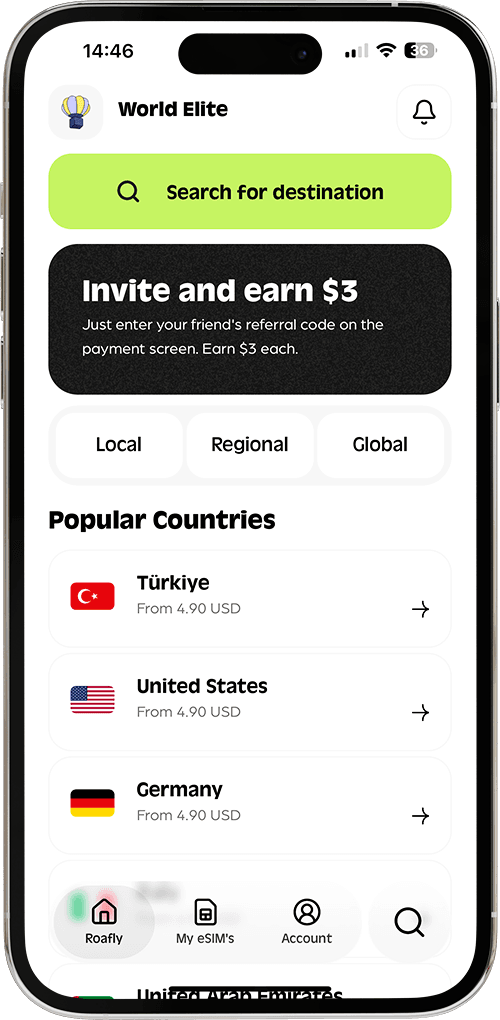
Create your order quickly
See your eSIM details
Track your remaining data
Download the App and manage your eSIMs easily
Create your order quickly
See your eSIM details
Track your remaining data
Traveling to Ecuador means exploring the Galápagos Islands, hiking volcanoes in the Andes, and walking through colonial cities like Quito and Cuenca. But staying connected during your trip is essential for navigation, transportation apps, and sharing your travel moments.
Tuenti
Instant delivery
From 4.90 USD

Ethan Brooks
Updated Mar 4, 2026
8 min read

Jump to section
👇Best for most trips
Tuenti

Ecuador
10 GB · 30 days
Enough for maps, bookings and everyday travel.
Hotspot supported
$29.90
From 4.90 USD
Traditional SIM cards can be inconvenient for international travelers. Airport kiosks often charge high prices, local registration can take time, and switching SIM cards means losing access to your primary number.
This is where eSIM technology becomes the most practical solution.
In this guide, we compare the best eSIM options for Ecuador in 2026, including Roafly, Airalo, Holafly, Saily, and other providers. We'll also cover coverage, pricing, and what travelers should consider before choosing an eSIM.
Choose the perfect data plan for your trip
eSIM technology allows travelers to activate mobile data without inserting a physical SIM card. Everything is installed digitally, which makes the process significantly easier.
For Ecuador, this matters even more because local SIM card registration may require passport verification and Spanish-language assistance at stores.

With an eSIM you can:
Install your plan before arriving in Ecuador
Connect instantly when your plane lands
Avoid airport SIM card lines
Keep your original SIM active for calls or OTP messages
Most eSIM providers in Ecuador partner with major local operators such as Movistar or Claro, which offer the strongest nationwide coverage.
That means you can expect stable connectivity in major destinations like:
Quito
Guayaquil
Cuenca
Baños
Galápagos Islands (limited but available)
For travelers who rely on Google Maps, Uber, or WhatsApp, this convenience can make a huge difference during the trip.
Choosing the best eSIM often comes down to three factors:
price
data allowance
network reliability
Below is a comparison of popular eSIM providers offering plans for Ecuador.
| Provider | 5 GB | 10 GB | 20 GB | Validity | Network |
|---|---|---|---|---|---|
| Roafly | $19.90 | $29.90 | $49.90 | 30 days | Movistar |
| Airalo | $28.00 | $45.00 | — | 30 days | Claro |
| Saily | $24.99 | $34.99 | — | 30 days | Not specified |
| Roamless | — | — | 3 GB $41.95 | 30 days | Movistar |
| Flexiroam | $52.00 | — | — | 30 days | Not specified |
| BNESIM | $31.62 | $60.50 | $118.36 | 30 days | Claro |
| Alosim | $28.00 | $46.00 | — | 30 days | Claro |
| Holafly | Unlimited (7 days) $36.90 | — | — | 7 days | Not specified |
Prices are in USD and reflect available public plans at the time of writing.
As the table shows, pricing differences between providers can be significant. Some services charge more than double the price for similar data allowances.
When comparing data allowances and pricing, Roafly offers one of the most competitive eSIM plans currently available for Ecuador.
Looking at the comparison table above, Roafly delivers significantly better value per gigabyte than many competing providers.
For example:
5 GB costs $19.90, while many competitors charge around $25–$30.
10 GB costs $29.90, which is noticeably lower than similar plans from Airalo, Alosim, and BNESIM.
20 GB costs $49.90, while BNESIM charges more than $118 for the same allowance.
For travelers staying 1–3 weeks, these data allowances are typically enough for navigation, messaging, and social media.
Roafly’s Ecuador eSIM operates on the Movistar network, which provides strong 4G/LTE coverage across the country.
This makes it suitable for travelers visiting popular destinations such as:
Quito
Otavalo
Baños
Cuenca
Guayaquil
While connectivity in remote areas like the Amazon rainforest may vary, this is true for all providers using Ecuadorian infrastructure.
Roafly supports three activation methods:
iOS & Android direct installation
QR code installation
manual activation
Most travelers complete the setup in under two minutes.
Once installed, the eSIM automatically connects when you arrive in Ecuador.
Ecuador’s mobile infrastructure is relatively strong in cities and popular tourist destinations. However, coverage may become weaker in remote Amazon regions or high mountain areas.

The main operators include:
Movistar is widely considered one of the most reliable networks for travelers. It offers strong 4G/LTE coverage in cities and good performance along major highways.
Many eSIM providers use Movistar infrastructure for their Ecuador plans.
Claro is another large operator with extensive coverage across Ecuador. It performs particularly well in urban areas such as Quito and Guayaquil.
Some international eSIM providers rely on Claro for their connectivity.
For most tourists visiting Ecuador, both networks provide solid performance for:
Maps and navigation
Messaging apps
Ride-hailing services
Social media
Streaming and video calls
However, speed and reliability can vary depending on your provider and which local partner network they use.
The amount of mobile data you need depends on your travel style and how often you rely on internet services.
Here is a rough guideline for typical travelers:
Light usage (3–5 GB)
Good for messaging, maps, and occasional browsing.
Moderate usage (10 GB)
Ideal for most travelers using social media, ride apps, and occasional video streaming.
Heavy usage (20 GB or more)
Recommended for digital nomads, remote workers, or travelers who frequently upload photos and videos.
A two-week Ecuador trip typically falls into the 5–10 GB range for most visitors.
If you plan to visit the Galápagos Islands or rely heavily on navigation apps during road trips, choosing a slightly larger plan can provide more flexibility. If you're unsure how much data you'll actually need, you can estimate your usage with Roafly’s data usage calculator before selecting a plan.
Some travelers still consider buying a physical SIM card after landing in Ecuador. While this option exists, it often involves more steps.
SIM cards are sometimes available at major airports like Quito International Airport.
However, travelers often report:
higher prices
limited plan options
long queues during busy hours
You can also buy SIM cards from local operator stores in the city.
But this typically requires:
passport registration
Spanish-language assistance
waiting for activation
With an eSIM you can activate your data plan before arriving in Ecuador.
This means your phone connects to the network immediately after landing, which is especially useful for:
booking rides
accessing hotel reservations
navigating the city
For many travelers, the convenience factor alone makes eSIM the better option.
Installing an eSIM takes only a few minutes and can be completed before your trip.
Most travelers follow these steps:
Purchase an Ecuador eSIM plan online
Receive an installation email with activation instructions
Install the eSIM using one of the available methods
Enable the eSIM on your phone
Activate data roaming once you arrive in Ecuador
Roafly supports multiple installation options to make the process as easy as possible:
iOS & AndroidDirect Install (one-tap installation)
QR code installation
Manual installation if needed
You can also install your eSIM directly through the Roafly website or mobile app, which often makes the setup even faster than scanning a QR code.
Once you arrive in Ecuador, simply enable data roaming for the eSIM and the connection should start automatically.
If you encounter any issues, troubleshooting steps are usually simple. For example, if your phone connects but does not show data service, guides like fixing the iPhone SOS-only issue can help identify common network configuration problems.
Most modern smartphones support eSIM technology.
Popular compatible devices include:
Apple devices
iPhone XS and newer
iPhone SE (2020 and newer)
Samsung devices
Galaxy S20 series and newer
Galaxy Z Fold and Flip models
Google devices
Pixel 3 and newer
If you are unsure whether your phone supports eSIM, you can usually check the cellular settings menu or the device specifications page. You can also verify compatibility using Roafly’s compatible devices page, which lists smartphones and tablets that support eSIM technology.
To make the most of your eSIM during your trip, consider the following tips.
Google Maps allows you to download offline maps for cities and regions. This can be useful when traveling through mountainous areas where coverage may be weaker.
Hotels, cafes, and airports in Ecuador usually offer free Wi-Fi. Connecting occasionally can help reduce mobile data usage.
If you are using navigation apps frequently or uploading many photos, data consumption can increase quickly.
Travelers who want to estimate their needs can use a mobile data usage calculator before selecting a plan.
Ecuador is an incredible destination, from the historic streets of Quito to the biodiversity of the Amazon and the wildlife of the Galápagos Islands. Staying connected during your trip helps you navigate the country more easily and share your travel experiences in real time.
When comparing available eSIM providers, differences in pricing and data allowances are quite noticeable. Some services charge significantly more for similar data packages.
Roafly currently offers one of the most balanced options in terms of price, network reliability, and installation simplicity for travelers visiting Ecuador.
Check the latest Ecuador eSIM packages to find the plan that best fits your trip.
Best for most trips
Tuenti
Ecuador
10 GB · 30 days
Enough for maps, bookings and everyday travel.
Hotspot supported
$29.90
From 4.90 USD

Manage your eSIM in the app
Install, top up and track data.
Choose the perfect data plan for your trip
Manage your eSIM in the app
Install, top up and track data.
