

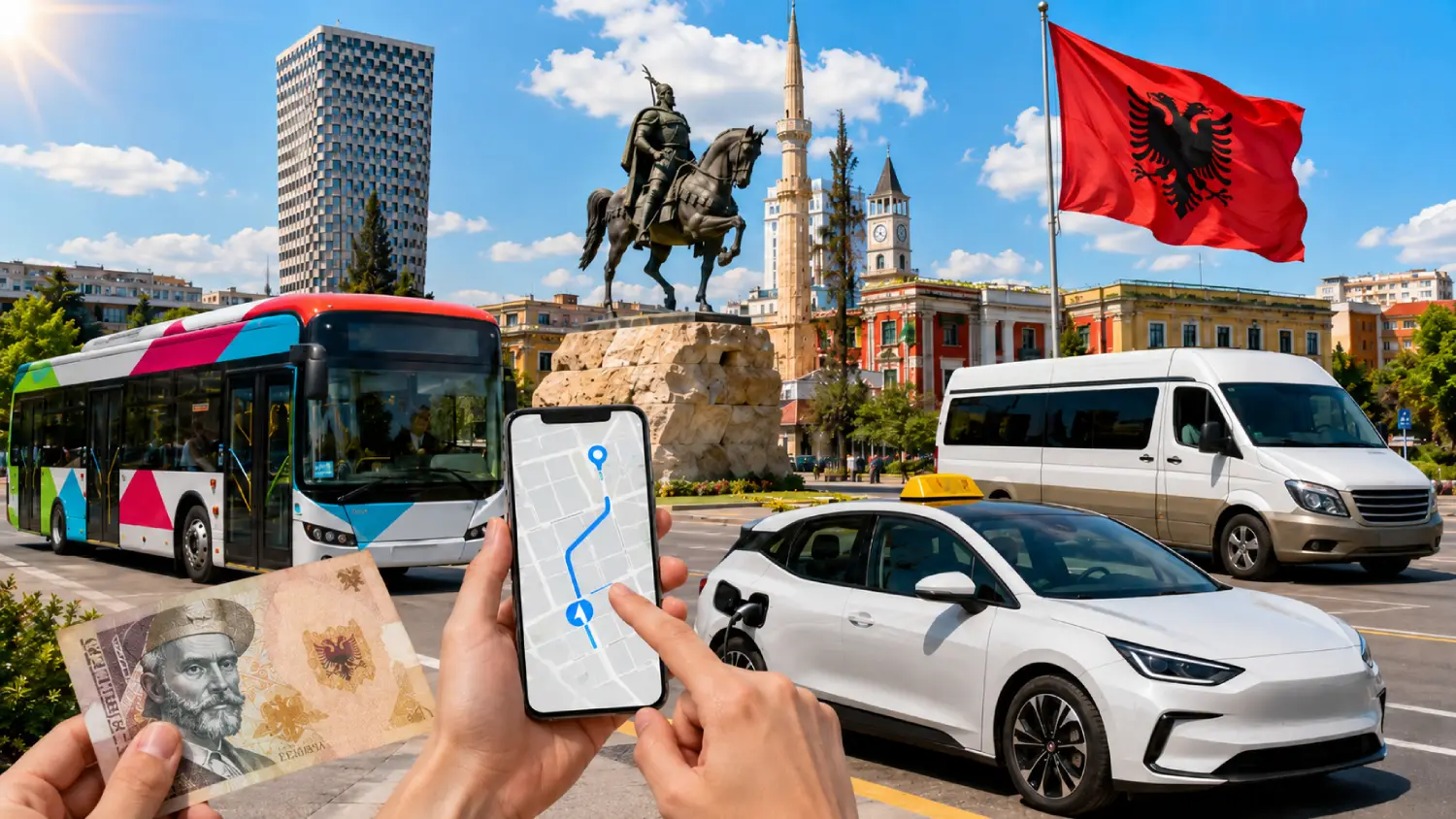

Forget the sterile, ultra-regulated transit grids of Western Europe. Traveling through Albania is an adventure that requires cash in your pocket and a bit of patience. While infrastructure is rapidly improving to handle the massive tourism boom, much of the country still relies on informal transport networks.
You will find zero domestic train networks functioning reliably for tourists, and global ride-sharing giants are completely blocked. But do not worry. With the right local knowledge, getting from the bustling cafes of Tirana to the pristine beaches of the Albanian Riviera is surprisingly cheap and easy.
The Basics: Understanding the Network
The backbone of Albanian public transport is the furgon (minibus) and the larger intercity coach buses. There is practically no passenger railway system operating for tourists right now. If you want to move between cities, rubber tires on asphalt are your absolute option.
In the capital, Tirana city buses (Line 1, 3, 4, and others) run frequently and cover major districts like Blloku and Skanderbeg Square. However, they can get extremely crowded during the 7 AM and 5 PM rush hours. If you plan to use them, reading up on the Best Time to Visit Albania can help you avoid the suffocating peak summer transit crush.
For regional travel, Tirana recently reorganized its chaotic bus system into designated terminals. You now have the North & South Albania Bus Terminal (for places like Shkodër, Durrës, and Sarandë) and the Tirana East Bus Terminal (TEG) for international routes. Finding the right terminal for your specific destination is half the battle.
Payment & Tickets: Mobile Apps vs. Physical Cards
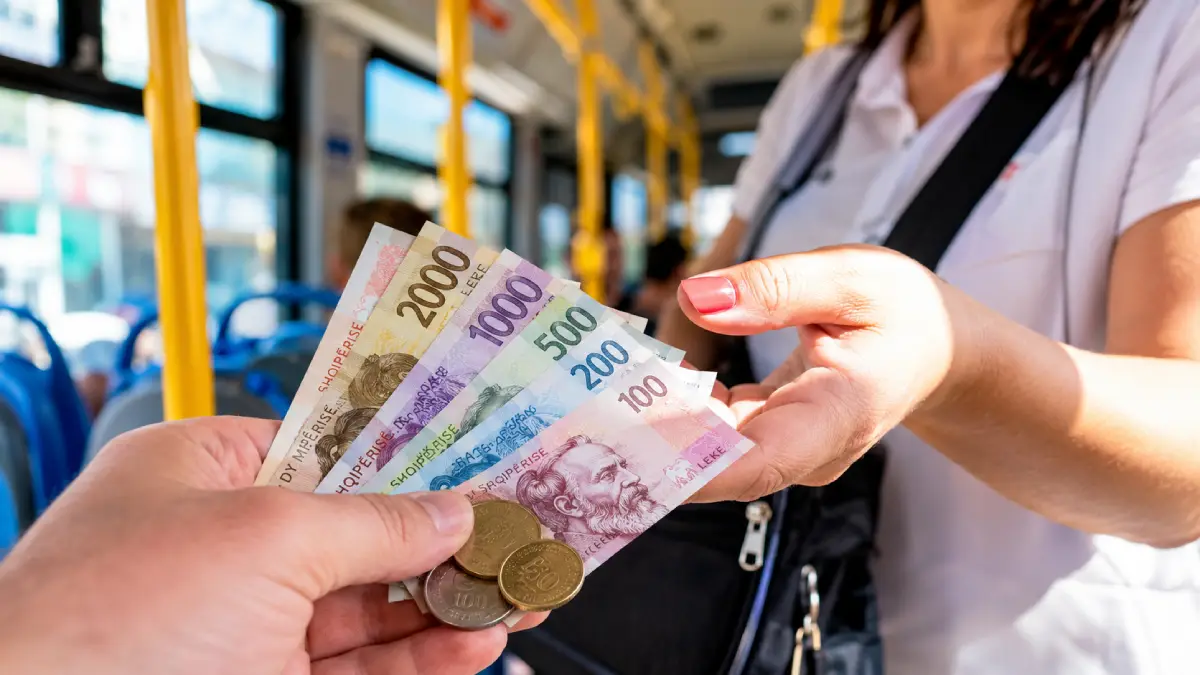
Put away your digital wallets and smartwatch payment apps right now. Albania remains heavily reliant on a cash-based transport economy. You must carry Albanian Lek (ALL) in small denominations to get anywhere using public transit.
For local Tirana city buses, a single ride costs a flat 40 ALL. You do not buy a ticket in advance or tap a transit card at the door. You simply board the bus, find a seat, and a ticket collector will walk down the aisle to collect your coins and hand you a paper receipt.
Intercity buses and furgons operate exactly the same way. You pay the driver directly in cash either before departure or upon arrival at your destination. While reading our How to Get Internet in Albania guide will help you book private transfer apps using a credit card, public mass transit strictly demands physical currency.
Airport Transfers: Getting to the City Safely
Arriving at Tirana International Airport (TIA) is straightforward, but you need an immediate exit plan. Before you even walk out the doors, make sure your luggage complies with the Albania Airport Customs Rules to avoid hefty delays at the scanner. outside, you have two primary options: the airport shuttle bus or a taxi.
The Luna Travel Airport Bus is the absolute best budget option in 2026. It runs 24/7, departing every single hour from behind the Palace of Culture in Tirana, and costs just 400 ALL. The journey takes roughly 30 to 40 minutes depending on Tirana's notoriously heavy traffic.
If you prefer a private ride, official airport taxis cost a fixed rate of €25 to €35 to the city center. Never accept rides from random drivers soliciting inside the terminal. While violent crime is rare, overcharging tourists is a known issue, which we detail extensively in Is Albania Safe? Crime, Scams & Travel Reality Check.
Shifting Cities: Inter-City Trains, Shuttles & Domestic Flights
Domestic flights do not exist in Albania, and the train lines are essentially historical relics. To get from city to city, you will use the vast network of furgons and private coaches. These buses connect Tirana to coastal hotspots like Vlorë, Himarë, and Sarandë daily.
If you are debating whether to explore the Albanian Riviera instead of crowded neighboring coastlines, our Albania vs. Croatia: Is the "New Maldives" Worth the Hype? guide breaks down the travel logistics. A bus ride from Tirana to Sarandë takes about 5 hours and costs roughly 1500 ALL. You cannot usually book these; you simply show up at the North & South Bus Terminal, find a bus with your destination on the dashboard, and claim a seat.
For those who want zero stress, private intercity transfers are booming. Services let you book a private car for fixed prices. A private transfer from Tirana to Ksamil will cost around €190 to €250, offering a massive relief from hauling heavy luggage through dusty bus stations in the heat.
Taxis, Ride-Sharing & Local Driving Laws
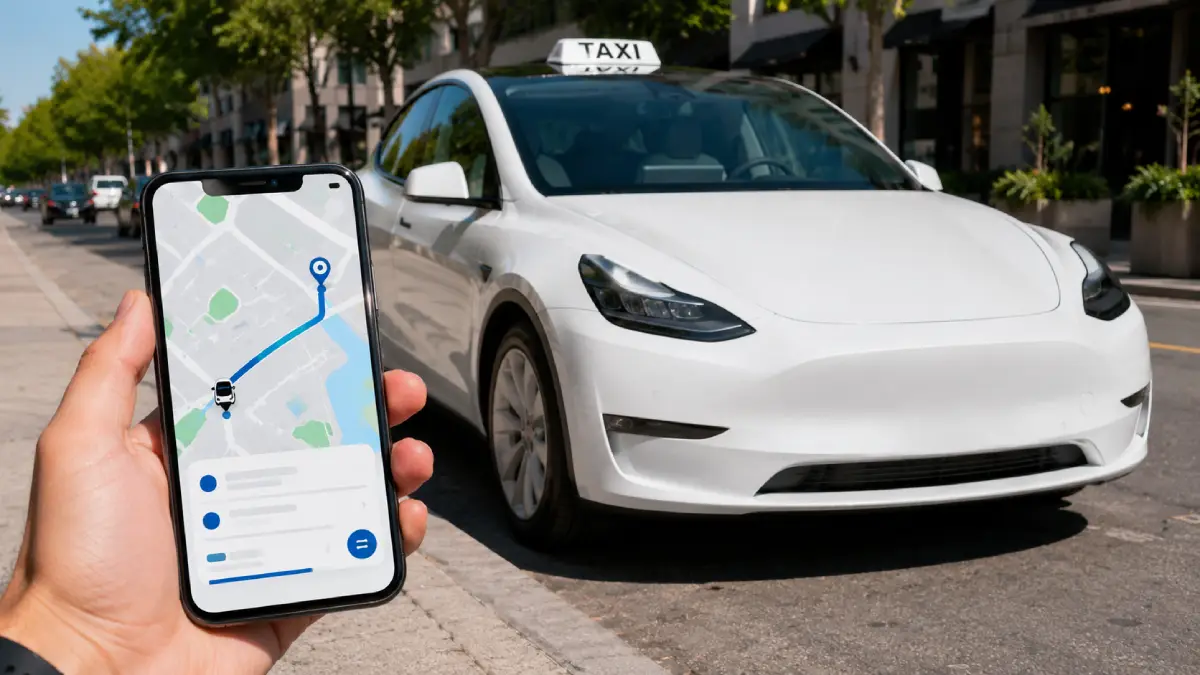
Let us clear up the biggest transportation misconception right away: Uber, Lyft, and Bolt DO NOT exist in Albania in 2026. Due to strict local commercial transport regulations, these global apps are entirely banned from operating. If you open your Uber app in Tirana, you will simply see a blank map.
Instead, locals use dispatch webapps or local platforms like Hoptodrop, Speed Taxi, and Ups Taxi. These platforms allow you to book licensed, yellow or white electric taxis with fixed, transparent pricing. Always insist the driver uses the meter if you flag a cab off the street, or negotiate a firm price before your luggage goes in the trunk.
Thinking about renting a car? Driving in Albania requires nerves of steel. Local drivers are famously aggressive, passing on blind curves and frequently ignoring speed limits. Before renting, you must review the Albania Tourist Bans & Laws to understand local traffic enforcement, mandatory headlight rules, and the strict zero-tolerance policy on drinking and driving.
Transit Etiquette & Unwritten Rules
Albanian transit etiquette is deeply rooted in hospitality and respect for elders. If you are sitting on a crowded city bus, it is absolutely mandatory to give up your seat for elderly passengers or pregnant women. Failing to do so will result in loud, public shaming from the ticket collector and surrounding passengers.
When traveling in a furgon, be prepared for very close quarters. Do not place your heavy backpack on an empty seat; always put it in the trunk or under your legs to make room. It is also quite common for the driver to play loud traditional Albanian music or smoke out the window, and complaining about it will get you nowhere.
Finally, try to keep your voice down. While Albanians are incredibly warm and expressive, loudly broadcasting your travel stories across a quiet intercity bus is considered highly obnoxious. Sit back, watch the incredible mountain scenery roll by, and enjoy the chaotic charm of the ride.
Navigation Apps & The Best Route Tools
Google Maps is your best friend in Tirana, offering highly accurate, real-time live bus positions and schedules for 2026. You can instantly see which numbered city bus to catch and exactly when it will arrive at Skanderbeg Square. However, outside the capital, Google Maps becomes significantly less reliable for transit schedules.
For intercity furgons, digital schedules are mostly non-existent. You will need to rely heavily on local knowledge, asking your hostel or hotel reception for the latest departure times. The golden rule of Albanian rural travel is to start your journey early in the morning, as most regional furgons stop running completely by 3 PM.
If you are driving, frequently switch between Google Maps and Waze. Local drivers actively update Waze with police speed traps, pothole warnings, and sudden road closures. It is an essential, life-saving tool for surviving the unpredictable Albanian highways.
Staying Connected: Your Ultimate Navigation Tool
Navigating Albania's fragmented transit system requires constant, uninterrupted internet access. You need data to hail a local web-taxi, translate Albanian bus signs in real-time, and check Waze for sudden mountain road closures. Without connectivity, finding the hidden regional bus terminals becomes incredibly frustrating.
Need data in Albania? Get an eSIM!
Choose the perfect data plan for your trip

Manage your eSIM in the app
Install, top up and track data.
Before you board your flight, read our Best eSIM for Albania to fully understand your data options. Relying on patchy free Wi-Fi at bus stations is a guaranteed recipe for getting lost. Buying a local physical SIM takes time, but downloading a digital data pack gives you instant coverage the moment your plane lands in Tirana.
Make sure your phone is unlocked and grab an Albania eSIM to stay completely independent on the road. It is the absolute cheapest insurance policy against getting stranded in the Balkans.
Summary Checklist: Transport Tips
-
Cash is King: Always carry small Albanian Lek (ALL) coins for city buses and intercity furgons, as card readers do not exist on transit.
-
No Uber or Bolt: Use local dispatch webapps or official metered taxis to avoid being overcharged by rogue drivers.
-
Find the Right Terminal: Tirana has split its bus hubs; strictly use the North & South Terminal for domestic coastal travel.
-
Book Private for Comfort: Pre-book a fixed-price airport transfer to skip the chaos of the arrivals taxi line.
-
Drive Defensively: If renting a car, stay extremely alert, use Waze for police traps, and completely avoid mountain driving at night.
-
Travel Early: Catch intercity furgons before noon, as afternoon schedules in rural areas are highly unreliable.