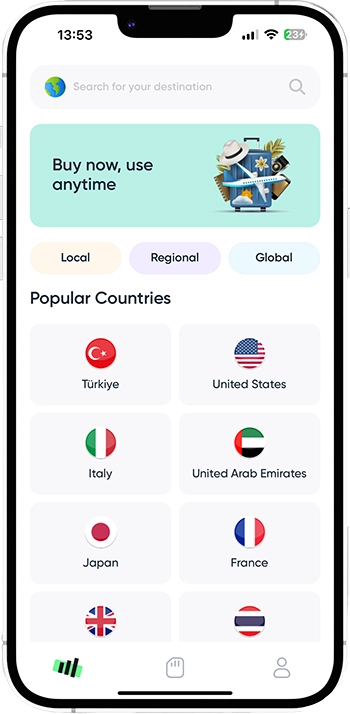



This guide explains every realistic way to get internet in Greece, with real prices, operator-by-operator coverage insights, and clear explanations of what works best for travelers.
Internet Options for Travelers in Greece
Travelers in Greece generally choose between three options:
-
Buying a SIM card at the airport
-
Purchasing a local prepaid SIM from a Greek operator
-
Using a digital eSIM before or after arrival
Each option has trade-offs in cost, setup time, and coverage reliability.
Need data in Greece? Get an eSIM!
Airport SIM Cards in Greece: Convenience at a Cost
SIM cards are sold at major international airports including Athens (ATH), Thessaloniki (SKG), Heraklion (HER), and some seasonal island airports.
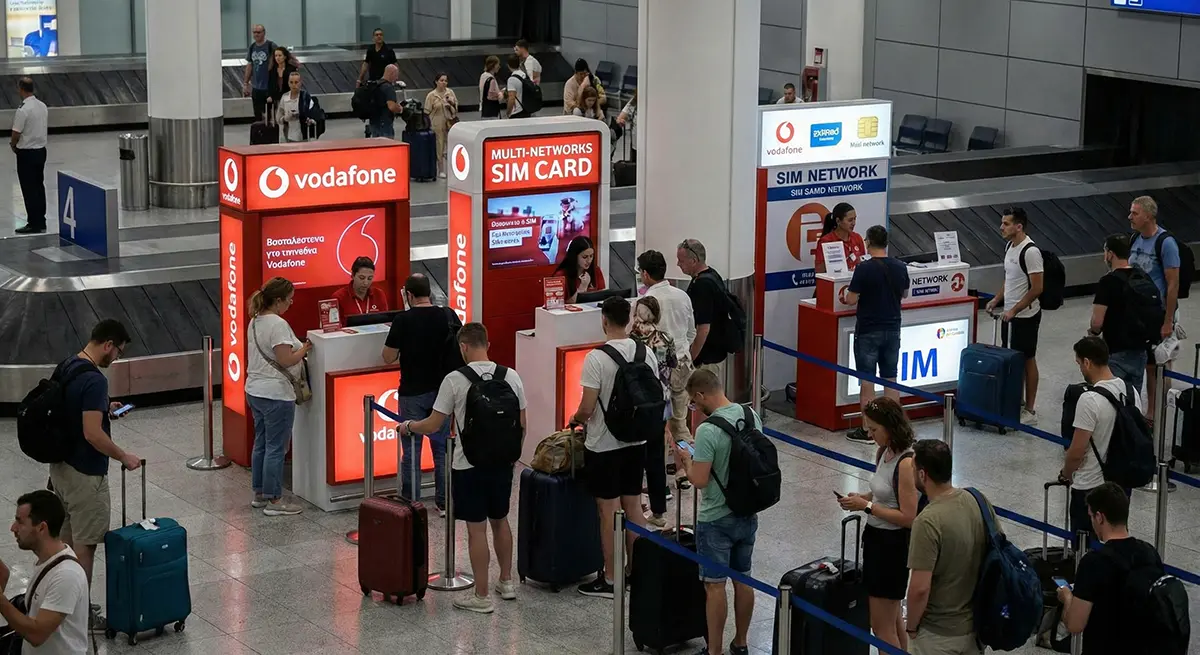
Airport kiosks mainly sell tourist SIM packages, most commonly under Vodafone branding or multi-network resellers.
Typical Airport SIM Prices
-
10–15GB for 30 days: €15–€25
-
“Unlimited” data tourist SIMs: €25–€30
Airport SIMs are usually pre-activated and convenient, but they come with two downsides:
-
Prices are consistently higher than city stores
-
“Unlimited” plans are almost always subject to Fair Usage Policy limits
For short trips, they work. For longer stays or island travel, they are rarely the best value.
Local Mobile Operators in Greece (Complete Overview)
Greece has three main mobile network operators and several MVNOs that rely on their infrastructure.
Main Network Operators
Cosmote

-
Largest and most extensive network in Greece
-
Best coverage on islands and rural areas
-
Strong 4G nationwide, growing 5G in cities
Cosmote is widely considered the most reliable operator for coverage consistency, especially outside major cities.
Vodafone Greece

-
Very strong urban and tourist-area coverage
-
Excellent performance in Athens, Thessaloniki, and popular islands
-
Reliable 4G and expanding 5G footprint
Vodafone performs well for most travelers, particularly those staying in cities or well-developed islands.
Nova (formerly WIND Hellas)

-
Budget-oriented operator
-
Good coverage in cities
-
Slightly weaker performance in rural mainland and smaller islands
Nova is often cheaper but may struggle in less populated regions.
MVNOs in Greece
-
CU (Cosmote network)
-
Frog Mobile (Cosmote network)
-
Q Telecom (Nova network)
-
Cyta Greece (Vodafone network)
MVNOs can be cheaper but usually:
-
Have limited English support
-
Offer fewer tourist-friendly plans
-
Require more setup time
Local SIM Card Prices (City Stores)
Buying a SIM card in city centers is cheaper than at the airport, but it requires time and ID verification.

Typical prepaid prices:
-
10GB / 30 days: €10–€15
-
20GB / 30 days: €15–€20
-
Unlimited plans: €20–€30 (Fair Usage Policy applies)
All physical SIM purchases require passport or ID registration, and activation can take 20–40 minutes during busy periods.
Using an eSIM in Greece: The Simplest Option
An eSIM eliminates physical SIM cards entirely. There is no store visit, no passport registration, and no waiting time. Installation takes minutes, and activation begins when the eSIM connects to a supported network.
Roafly provides Greece eSIM plans that connect to Vodafone and Nova (Wind) networks, giving travelers access to two established Greek mobile infrastructures instead of relying on a single operator.
Need data in Greece? Get an eSIM!
Roafly Greece eSIM Plans (USD)
-
1GB – 7 Days – $3.90
-
2GB – 15 Days – $5.50
-
3GB – 30 Days – $7.50
-
5GB – 30 Days – $9.90
-
10GB – 30 Days – $12.00
-
20GB – 30 Days – $16.00
-
50GB – 180 Days – $39.90
All plans are:
-
Data-only
-
Hotspot-enabled
-
No eKYC or passport required
-
Valid across Greece
If you ever experience connectivity issues after arrival, this guide explains how to fix common eSIM no service problems after landing.
Network Coverage in Greece: Operator-by-Operator Comparison
Coverage quality matters, especially for island hopping and mainland road trips.
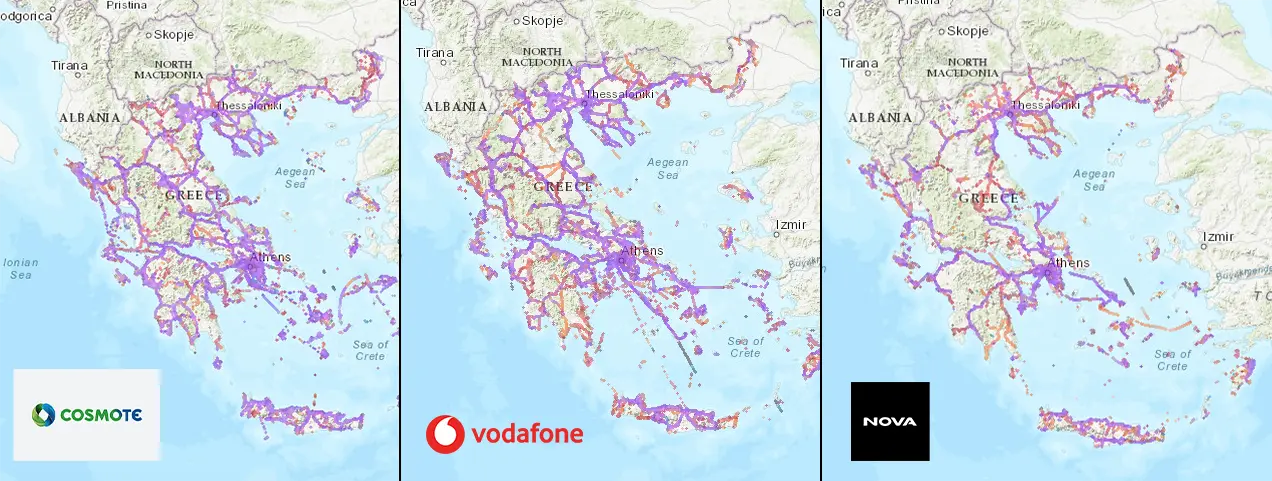
source: nperf.com
Cosmote Coverage
-
Best overall national coverage
-
Strongest signal on smaller islands and rural mainland
-
Preferred choice for consistency
Vodafone Coverage
-
Excellent performance in cities and major tourist destinations
-
Reliable on popular islands such as Santorini, Mykonos, and Crete
-
Slightly weaker than Cosmote in very remote areas
Nova (Wind) Coverage
-
Solid in cities
-
Acceptable on major islands
-
Can be inconsistent in less populated regions
How Roafly Handles Coverage
Roafly’s Greece eSIM connects to Vodafone and Nova networks, allowing stable performance across urban areas, islands, and tourist regions without locking users into a single operator experience.
Important Warning About “Unlimited” Data Plans
Many SIM cards in Greece marketed as “unlimited” are subject to Fair Usage Policy (FUP).
What this means in practice:
-
High-speed data is capped daily (usually 1–3GB/day)
-
After the cap, speeds are heavily reduced
-
Streaming, hotspot use, and navigation may become slow
This applies to both airport SIMs and local operator plans. Travelers often discover these limits only after experiencing sudden speed drops.
Internet Options Comparison
| Option | Cost | Setup Time | ID Required | Coverage Reliability |
|---|---|---|---|---|
| Airport SIM | High | Immediate | Yes | Medium |
| Local SIM | Medium | 20–40 min | Yes | High |
| Roafly eSIM | Low–Medium | 1-5 min | No | High |
If your trip continues beyond Greece and you plan to visit Turkey, it’s worth checking our detailed guide on how to get mobile internet in Turkey to avoid roaming surprises.
Final Verdict
Travelers who value speed, simplicity, and predictable performance will find that eSIMs offer the most balanced solution for internet access in Greece. Physical SIM cards still work, but higher prices, registration requirements, and Fair Usage Policy limitations often make them less appealing.
Check the latest Greece eSIM packages before your trip.