

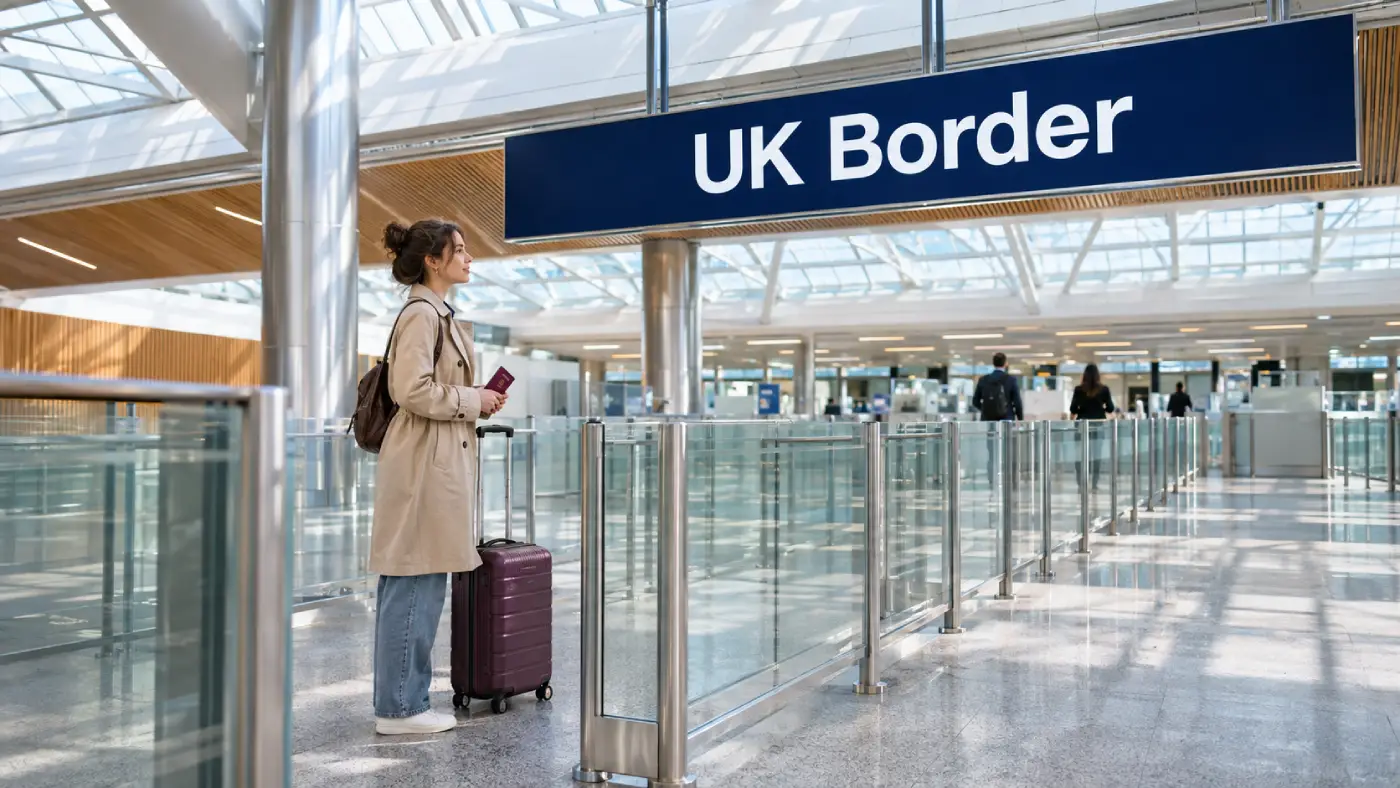

UK entry requirements depend on your passport nationality, the purpose of your trip and any UK immigration permission you already hold. As of 6 November 2026, most international tourists need either an approved electronic travel authorisation (ETA) or a Standard Visitor visa before travelling. Irish citizens are among the groups exempt from both.
Start with that distinction before booking a visa appointment or paying for an application. ETA eligibility, a visa decision and permission to enter at the border are separate parts of the journey.
Do you need an ETA or a UK visitor visa?
The table below gives ordinary-passport examples for short tourist visits. Existing UK permission and other exemptions can change the requirement.
| Passport or status | Usual tourist route | What to arrange before travelling |
|---|---|---|
| United States, Canada, Australia, France, Germany or Japan | Visa-free visit with an ETA | Apply for an ETA and wait for approval |
| Türkiye, India, China, Pakistan, Nigeria or South Africa | Standard Visitor visa | Obtain an approved visitor visa before departure |
| Irish citizen | No UK visitor visa or ETA required | Carry suitable proof of identity and citizenship for your journey |
| Holder of a valid UK visa or permission to live, work or study in the UK | Travel using that existing permission | Make sure your travel document and immigration records are ready; an additional ETA is not required |
Use the official UK visa and ETA checker for your passport nationality and purpose of travel. Select your nationality rather than assuming that residence in another country gives you that country’s entry privileges.
Standard tourist visits are usually permitted for up to six months. Longer document validity does not turn a visit into permission to live in the UK through repeated or extended stays.
British and Irish dual citizens
If you also hold British or Irish citizenship, you cannot apply for an ETA. Use appropriate evidence of that citizenship, such as a valid British or Irish passport, or another valid passport containing a certificate of entitlement to the UK right of abode.
Applying for a UK ETA

The government application fee is £20 per person, including babies and children. Apply through the official UK ETA service, which offers the UK ETA app and an online application.
Have the passport you will travel with, an email address and a supported payment method ready. The application also requires a photograph of the applicant’s face. You can apply for someone else; if they are not with you, use the online route.
Decisions usually arrive by email within a day, but can take up to three working days. Wait for approval before travelling. Another website or agent cannot buy you a faster ETA decision.
Once approved, the ETA is linked to the passport used in the application and lasts for two years or until that passport expires, whichever comes first. It can cover multiple journeys during that period, with the normal visitor conditions applying to each trip.
The two-year validity is the period in which you can use the authorisation, not a two-year stay allowance. Border officers still decide whether you meet the conditions for admission.
When you need a Standard Visitor visa
If your nationality requires a visa, an ETA application is not the right route. For an ordinary holiday, start a Standard Visitor visa application before travelling.
The six-month visa costs £135. The earliest you can apply is three months before your intended journey. The process includes an online application and an appointment at a visa application centre, where you provide your passport, fingerprints, photograph and supporting documents.
You will need details of your proposed dates, accommodation, trip budget and personal circumstances. Documents in languages other than English or Welsh require certified translations.
The usual decision time is three weeks after you have applied, proved your identity and supplied the documents. Build the appointment into your planning; completing the online form alone does not complete those steps.
How the eVisa fits into the process
Successful Standard Visitor applications now result in an eVisa, the digital record of your identity and immigration permission. You access it through a UK Visas and Immigration (UKVI) account.
Before departure, make sure the account contains your current details and is linked to the passport you will carry. Have a share code available to help demonstrate your status, and carry any valid physical immigration document you already hold.
The eVisa records an approved visa. It is different from the ETA used by eligible visa-exempt visitors, and it does not remove the application-centre appointment from the Standard Visitor process.
What you must be able to demonstrate
Your visit needs to be temporary and for an allowed purpose. You must be able to support yourself and any dependants, or show that someone else will fund the trip, and cover the cost of your return or onward journey.
Tourism and visiting friends or family fit the Standard Visitor route. Taking a job with a UK company or making the UK your home through successive visits does not fit an ordinary tourist trip. Check your planned activities against UK tourist laws as well as the conditions of your immigration permission.
Passport and documents to prepare
Your passport or travel document must be valid for the whole of your stay. The general UK visitor rule does not impose an extra six months of passport validity after departure.
Most EU, EEA and Swiss tourists need a passport. National identity cards are accepted only for specified groups, such as some people with EU Settlement Scheme status; an Irish passport card is also accepted.
Keep the following accessible during the journey:
-
Your current passport and the visa or status information relevant to your route.
-
Your accommodation address and a clear outline of the visit.
-
Evidence of how you will fund the trip and your return or onward travel, if requested.
-
Documents explaining your relationship to any children travelling with you when this may be unclear.
If a child is travelling with someone who is not their parent, a parental permission letter with contact details can help establish the arrangement. Different surnames may also prompt questions, so relevant birth, adoption or marriage documents can be useful.
Save accommodation details and essential booking information offline. If you want mobile data after landing, compare the best eSIM for the UK before choosing a plan.
Packing involves a separate set of rules: your permission to enter does not determine what you can bring in your luggage. Review UK customs rules for goods and declarations before departure.
Transiting through a UK airport
The key question is whether your connection takes you through UK border control. Ask your airline about the actual transfer, especially if you need to collect checked luggage or change airports.
Staying airside
You do not need an ETA if you remain airside without passing through border control.
However, some passport holders still need a Direct Airside Transit visa. The ETA exemption for airside connections does not remove that separate requirement. Nationality, existing visas or immigration documents, and the onward journey can affect the result, so use the official checker for your connection.
Passing through border control
Collecting luggage for a new check-in, leaving the airport or transferring between airports can require entry into the UK.
ETA-eligible visitors normally need an ETA for this landside journey unless an exemption applies. Visa-required passengers may need a Visitor in Transit visa when leaving the UK within 48 hours, or a Standard Visitor visa for a longer stay. Transit exemptions also exist, so do not assume every passenger needs the same document.
If you already hold a valid Standard Visitor visa, you do not need a separate transit visa. Connections to Ireland, the Channel Islands or the Isle of Man have additional rules and should be checked as that specific itinerary.
Once you have entered the UK, Roafly’s UK eSIM provides mobile data on an unlocked, eSIM-compatible phone for arranging onward transport, retrieving accommodation details and messaging your host.
Entering Northern Ireland from Ireland
Northern Ireland is part of the UK. Crossing from the Republic of Ireland therefore brings UK entry requirements into your itinerary, even though there are no routine immigration controls at the land border.
US or German tourists visiting Dublin and then Belfast generally need an ETA for the UK part of the trip. Spending a few nights in Ireland does not qualify them for the exemption available to Irish residents.
Eligible non-visa nationals who live in Ireland do not need an ETA when travelling to the UK from Ireland, Jersey, Guernsey or the Isle of Man. Those aged 16 or over should carry accepted, valid, original evidence of Irish residence, such as an Irish Residence Permit or Irish driving licence.
Visa-required nationals generally still need the appropriate UK visa. Some journeys qualify under specific arrangements, including the British-Irish Visa Scheme; an ordinary Irish visa should not be treated as blanket permission for a UK holiday.
Arrange any required UK permission before the Dublin–Belfast leg, even if your journey begins with a flight into Ireland.