


When traveling to Switzerland, ignorance of the law is never an excuse. The Swiss pride themselves on order, precision, and tranquility, and local police have zero tolerance for tourists who disrupt the peace or ignore local regulations. While the country is incredibly safe, it operates on a strict set of rules that can easily catch foreigners off guard. From massive financial penalties for minor traffic infractions to unexpected cultural laws, getting a "warning" is rare—you will simply be handed a very expensive fine. Here is exactly what you need to avoid doing to stay out of trouble in Switzerland in 2026.
The "Big Red Line" (The #1 Strict Rule): Via Sicura & The Sunday "Ruhetag"
If there are two things the Swiss government and public do not joke about, it is road safety and Sunday peace.

The Via Sicura (Income-Based Speeding Fines) Switzerland has some of the most unforgiving traffic laws on the planet. Under the Via Sicura laws, speeding is not just a slap on the wrist. If you are caught driving significantly over the speed limit (for instance, driving 140 km/h in an 80 km/h zone), it is classified as a criminal offense. You will face mandatory jail time (at least year), your vehicle will be instantly confiscated (even if it is a rental), and your fine will be calculated based on your personal income and wealth. Even minor speeding infractions (just 5 km/h over the limit) will trigger an automatic radar flash and a fine sent directly to your rental agency, which will then charge your credit card with an added administrative fee.
The Sunday "Ruhetag" (Rest Day) Switzerland legally enforces a day of rest on Sundays and public holidays, as well as nighttime quiet hours (typically 10:00 PM to 7:00 AM). During these times, making excessive noise is strictly prohibited. For a tourist, this means you cannot mow a lawn, use power tools, or most importantly, drop glass bottles into public recycling bins. Tossing a wine bottle into a public glass disposal bin on a Sunday will result in immediate complaints from locals, and you can be fined by the authorities for disturbing the peace.
Traffic & Scooter Rules (The Tourist Trap)
Navigating Swiss roads and city centers requires strict adherence to the rules. The police do not care if you are lost or confused by the signage. For official regulations, always verify with the Swiss Authorities Official Portal (ch.ch)

The Autobahn Vignette If you plan to drive on any Swiss highway (Autobahn), your vehicle must have a toll sticker called a "Vignette." In 2026, you can buy a physical sticker or register for an e-Vignette. It costs CHF 40 and is valid for the entire calendar year. If you are caught on a highway without, you will be fined CHF 200 on the spot, plus you will still have to buy the CHF 40 Vignette.
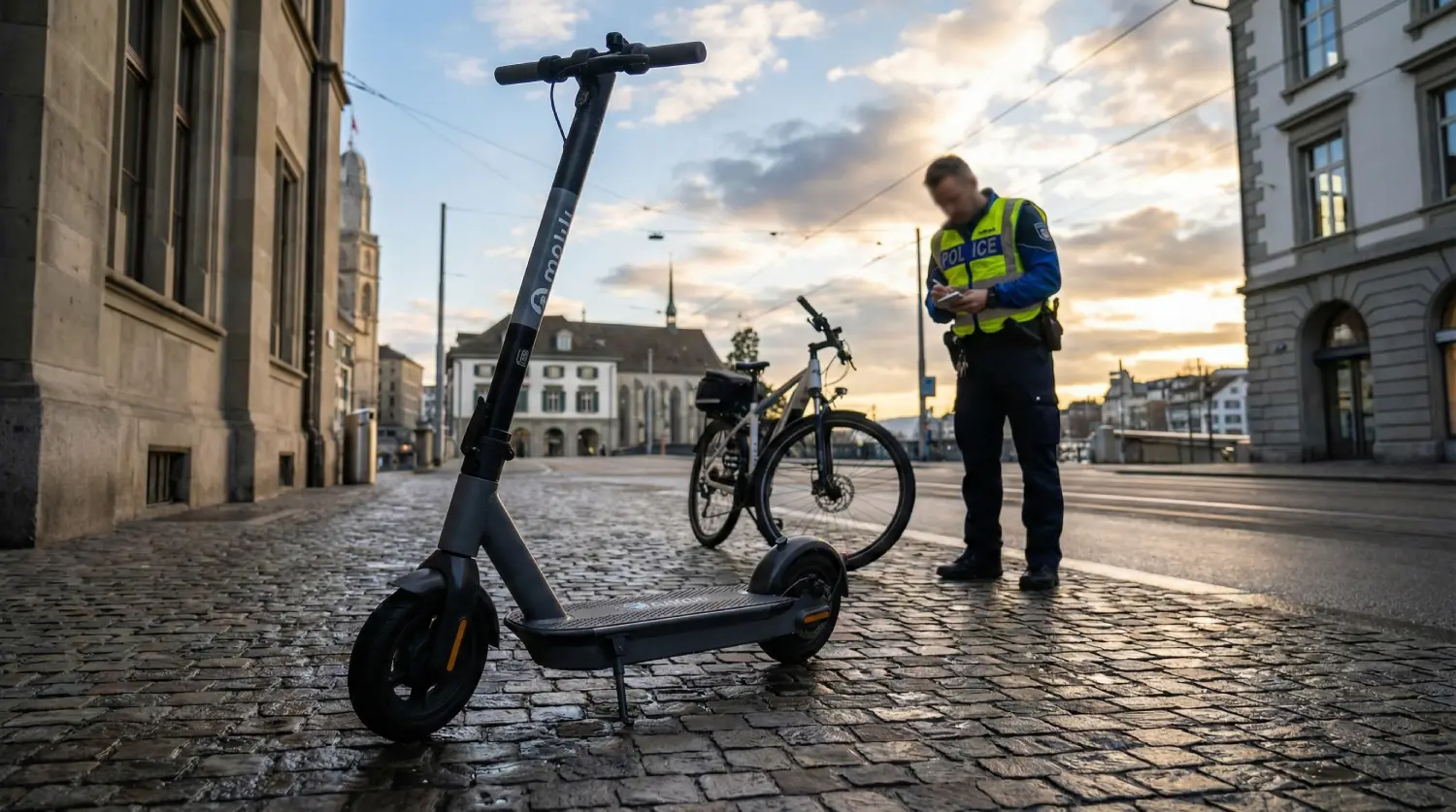
E-Scooter Regulations Electric kick-scooters are massively popular in cities like Zurich and Geneva, but tourists constantly get fined for misusing them. Swiss law categorizes e-scooters as "light motorcycles."
-
No Sidewalks: You are legally prohibited from riding an e-scooter on pedestrian sidewalks. You must use designated bicycle lanes or ride on the road.
-
Speed Limits: The maximum legal speed for an e-scooter is 20 km/h.
-
No Passengers: Riding tandem (two people on scooter) is strictly illegal and dangerous.
-
DUI Applies: The legal blood alcohol limit is 0.05%. Riding an e-scooter drunk will result in heavy fines and a potential ban from driving any vehicle.
International Driving Permits (IDP) If your home driver's license is not printed in English, French, German, or Italian, or if it is not in a standard credit-card format, you are legally required to carry an International Driving Permit alongside your original license.
Substance Regulations (Vaping, Alcohol & Meds)
Is Vaping Legal?
Yes, vaping is legal, but it is heavily regulated and expensive. Following the new Tobacco Products Act (which came into full force between 2024 and 2026), e-cigarettes and vapes are treated exactly like traditional cigarettes.
-
Age Limits: It is strictly illegal to sell vapes or e-liquids to anyone under 18 nationwide.
-
Where to Vape: You cannot vape indoors in public spaces, on public transport, or in train stations (except in designated smoking zones).
-
Heavy Taxes: A massive liquid tax was introduced recently, making purchasing e-liquids and disposable vapes in Switzerland incredibly expensive (taxes can be up to CHF 1 per milliliter). You are better off bringing your own personal supply for the trip.
Alcohol Restrictions
Switzerland has a relatively relaxed approach to public drinking compared to North America. It is perfectly legal to drink a beer by the lake or in a public park. The legal drinking age is 16 for fermented alcohol (beer, wine, cider) and 18 for spirits and hard liquor. However, public intoxication and disorderly conduct are not tolerated and will quickly draw police attention.
Medicine & Drugs
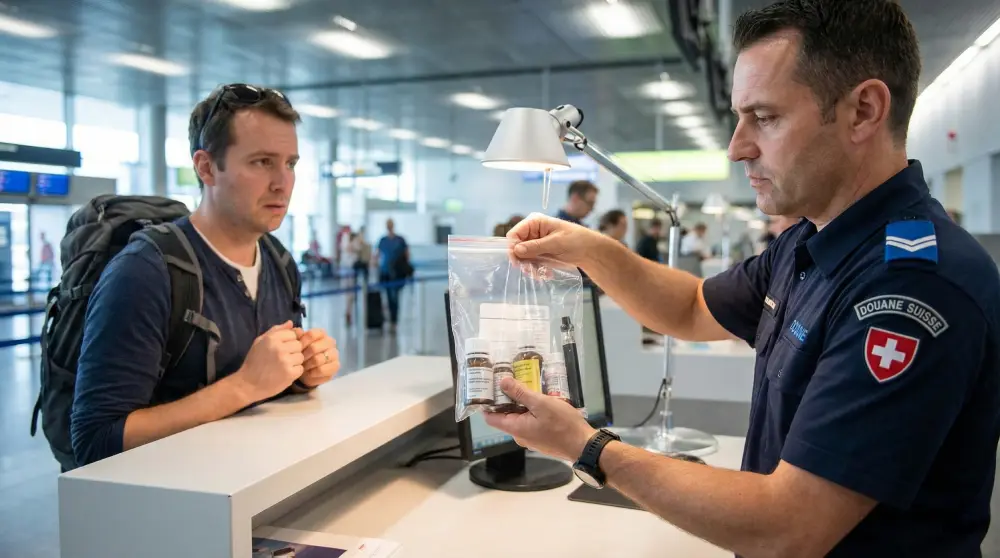
Switzerland strictly limits the importation of medication and restricted items. You are generally allowed to bring a 30-day supply of personal medication. If you require strong painkillers (opioids) or ADHD medication (like Adderall), you must carry a doctor's prescription translated into English or a Swiss national language, ideally accompanied by a Schengen certificate if arriving from Europe.
Cannabis containing less than 1% THC (CBD) is legal and sold openly. However, recreational marijuana with over 1% THC remains illegal, and possession of more than 10 grams can lead to fines and prosecution.
When entering the country, border guards are also ruthless about agricultural and food limits (especially the 1kg limit on meat). Make sure you review our Switzerland Airport Customs Rules: Alcohol, Meat & Limits before packing your bags.
Weird & Niche Laws
Switzerland has a few highly specific laws that sound like myths but are 100% real.

1. The Guinea Pig Law (Social Animal Protection) Under strict Swiss animal welfare laws, it is illegal to own just "social" animal. If you move to Switzerland and buy a guinea pig, parrot, or mouse, you are legally required to buy at least two so they do not get lonely. There are even rent-a-guinea-pig services designed to provide a companion if of your pets passes away.
2. Naked Hiking is Banned in Appenzell A decade ago, a bizarre trend of nude hiking emerged, primarily driven by foreign tourists. The canton of Appenzell Innerrhoden officially banned hiking in the nude. If you are caught hiking without clothes, you will be intercepted by police and fined on the spot. If you want to know the ideal seasons for regular, clothed outdoor activities, check out our Best Time to Visit Switzerland
3. Flushing the Toilet After 10 PM (The Apartment Myth vs. Reality) While there is no federal law banning you from flushing a toilet after 10:00 PM, noise regulations are built into almost every Swiss apartment rental contract. If you are staying in an Airbnb, do not take loud showers, run the washing machine, or stomp around in heavy shoes after 10 PM. Your neighbors will not hesitate to call the police or the landlord to report the noise disturbance.
Cultural Taboos (Don't Be Rude)
Staying out of jail is thing; staying off the locals' bad side is another.

-
Punctuality is a Religion: If a train is scheduled to leave at 14:03, it leaves at 14:03 and zero seconds. If you are meeting a Swiss guide or friend, arriving 5 minutes late is considered incredibly rude.
-
The Greeting Rule: Whenever you enter a small shop, bakery, or waiting room, it is culturally mandatory to greet everyone. A simple "Grüezi" (Swiss German), "Bonjour" (French), or "Buongiorno" (Italian) is expected. Say "Ade" or "Au revoir" when leaving.
-
Garbage Detectives: Switzerland takes recycling to an extreme level. You cannot just throw random trash into any bin. Trash bags are heavily taxed (you must buy specific, expensive municipal bags). If you illegally dump trash or mix recyclables into regular waste, municipal "garbage detectives" will actually sift through your trash to find a receipt or letter with your name on it to fine you.
-
Don't Talk About Money: Asking a Swiss person how much money they make is considered deeply offensive and vulgar.
Stay Connected to Stay Safe

Having reliable internet access in Switzerland is not just for posting photos of the Alps; it is a critical safety tool. You will need data to navigate the complex train systems (SBB Mobile app), translate German/French/Italian warning signs, and check local cantonal regulations on the fly.
Need data in Switzerland? Get an eSIM!
Choose the perfect data plan for your trip

Manage your eSIM in the app
Install, top up and track data.
Warning: Because Switzerland is NOT in the European Union, standard EU roaming regulations do not apply. Many tourists are hit with catastrophic roaming bills because they assumed their European data plan would cover them. We highly recommend reading Does EU SIM Work in Switzerland? to understand the risks.
To avoid hidden fees and ensure you always have access to maps and translation tools, skip the airport kiosks. You can learn exactly How to Get Internet in Switzerland to stay connected effortlessly.
The smartest and most secure option is to use a digital eSIM. It activates instantly and keeps you connected the moment you land. Be sure to check out the Best eSIM for Switzerland to find the perfect data pack for your trip.
Stay connected and safe by getting your Switzerland eSIM today
Summary Checklist (Don't Be That Tourist)
-
Do not speed: Radar cameras are hidden everywhere, and fines are financially devastating.
-
Do not ride e-scooters on sidewalks: Stick to the bike lanes and roads.
-
Do not make noise on Sundays: No recycling glass, mowing lawns, or loud music.
-
Do not assume your EU SIM works: You will face massive roaming charges; get an eSIM instead.
-
Do not forget the Autobahn Vignette: Buy the CHF 40 sticker before driving on the highway.
-
Do respect personal space and rules: Greet shopkeepers, be aggressively punctual, and sort your trash properly.