Download the App and manage your eSIMs easily
Create your order quickly
See your eSIM details
Track your remaining data
Download the App and manage your eSIMs easily
Create your order quickly
See your eSIM details
Track your remaining data
Switzerland lets you bring personal travel belongings tax-free, but purchases and gifts outside that exemption face a CHF 150 VAT threshold.

Sophie Callahan
Updated Nov 12, 2026
9 min read
Save 15% on your Roafly eSIM
Stay connected on your next trip. Use the code below at checkout.
View All DestinationsJump to section
👇Save 15% on your Roafly eSIM
Stay connected on your next trip. Use the code below at checkout.
View All Destinations
Manage your eSIM in the app
Install, top up and track data.
Food needs a separate check: meat and dairy from countries such as Great Britain, the USA and Turkey are generally prohibited, with specific exceptions. Establish whether an item may enter before calculating its allowance or paying through QuickZoll.
| Item | Current rule | Best action |
|---|---|---|
| Purchases and gifts | CHF 150 VAT allowance per person/day | Keep receipts |
| Personal travel belongings | Exempt when used during your visit and re-exported | Separate them from gifts |
| Food and fresh produce | Product and origin determine permission | Check ingredients and origin |
| Alcohol | 5 L up to 18% ABV + 1 L above 18%; age 17+ | Count each strength category |
| Tobacco and vapes | Shared allowance across product alternatives; age 17+ | Calculate mixed quantities proportionally |
| Medicines | Usually one month; controlled medicines need separate attention | Identify the medicine’s category |
| Cash | No routine Swiss declaration requirement | Answer customs questions truthfully |
These rules concern goods carried with you for personal use or as gifts. Postal deliveries and commercial imports follow different procedures.
Rules checked on 12 November 2026. Requirements can change; verify the linked official guidance before travel.
Your travel clothes, phone, laptop and sports equipment do not automatically become taxable because they are worth more than CHF 150. If you live abroad, personal effects you use during your Swiss stay and take away again can enter free of VAT and customs duty.
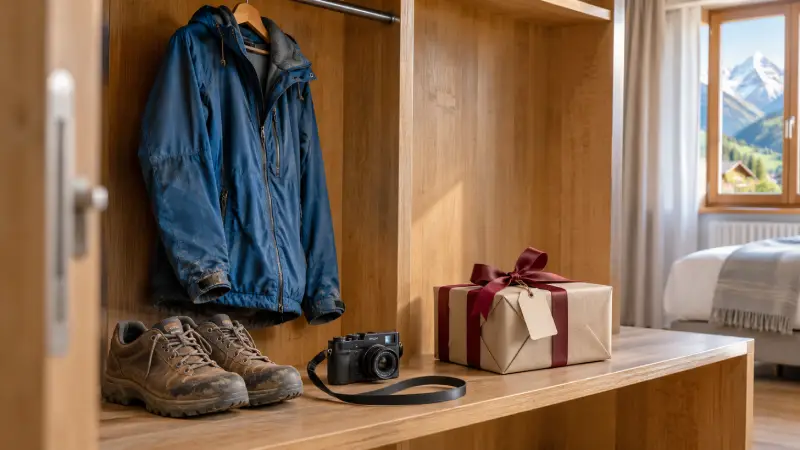
Gifts you leave with someone in Switzerland belong in the goods allowance instead. The same applies to other purchases outside the personal-effects exemption.
The VAT allowance is CHF 150 per person, per day, including children. Once the relevant total exceeds it, VAT applies to the whole value. Bringing a CHF 200 jacket as a gift, for example, produces CHF 16.20 in VAT at the standard 8.1% rate.
Keep receipts showing the purchase price and any separately identified foreign VAT, which can be deducted when determining the goods’ value. Gifts without a purchase receipt are assessed at market value. Individual items worth more than CHF 150 cannot be divided between companions to use several allowances.
The standard VAT rate is 8.1%; certain goods, including food and medicines, qualify for 2.6%. Quantity-based customs duties can also apply, even when the total value stays below the VAT threshold.
Buying something during your Swiss holiday raises a separate question: tax-free shopping in Switzerland concerns taking purchases out of the country, rather than bringing goods into it.
Food from the EU, Northern Ireland, Norway and Iceland can generally enter for your own consumption, subject to customs allowances and animal-disease restrictions. For permitted imports, these quantity allowances apply per person, per day:
Meat and relevant meat products: 1 kg in total.
Butter and cream: 1 kg/litre in total.
Edible oils, fats and margarine: 5 kg/litres in total.
The meat allowance excludes fish and game. Cheese is not part of the butter-and-cream quota. Its value still counts towards the VAT threshold when it forms part of your imported shopping.
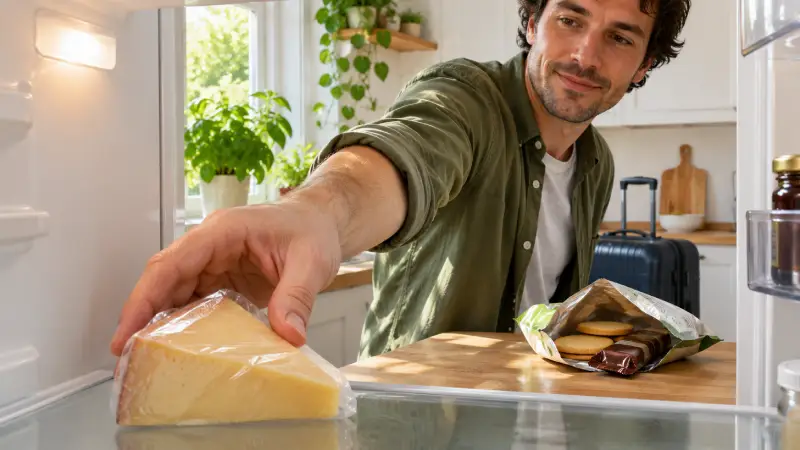
Great Britain, the USA, Canada, Turkey and other third countries follow stricter food import rules and exceptions. Meat, milk, dairy products and animal fats are generally prohibited. Vacuum-packing cheese or sealing a sausage does not change its category.
However, this is not a ban on every food containing a dairy ingredient. Chocolate, confectionery, bread, biscuits and pasta are permitted exceptions when they contain no meat, meat products or edible offal.
Powdered infant milk, infant formula and special medical foods also have an exception of up to 2 kg per person. These must be shelf-stable branded products in unopened packaging, unless already in use.
Import permission comes before the duty-free allowance. Paying duty cannot make prohibited meat admissible, and the 1 kg allowance is not permission to bring meat from any country.
Fresh fruit, vegetables, seeds and other plant material from outside the EU generally require a phytosanitary certificate and inspection, or may be prohibited. Even a small item packed as a snack or souvenir can fall under these rules.
Five fruits may enter without that certificate: bananas, coconuts, dates, durians and pineapples. Processed plant products, such as dried or frozen foods, follow different plant-health requirements.
Unless you specifically need to transport plants, leaving fresh produce and seeds at home is the simpler packing decision.
Alcohol and tobacco allowances apply to people aged 17 or over. This age condition concerns the customs allowance; it does not apply to the general CHF 150 allowance for children.
You may bring both 5 litres of drinks up to 18% ABV and 1 litre above 18% ABV duty-free per person, per day. Drinks containing no more than 0.5% alcohol fall outside these alcohol limits.
Excess quantities attract customs duty of CHF 2 per litre in the lower-strength band and CHF 15 per litre in the higher band. These are duties, not fines. Six litres of 12% wine, for example, leave one litre subject to CHF 2 duty; the separate VAT calculation depends on the value of your goods.
The tobacco allowance is a choice between product quantities, or a proportional combination:
250 units in total of cigarettes, cigars, heated-tobacco products or nicotine-containing e-cigarette cartridges.
250 g of other tobacco products.
250 ml of nicotine-containing e-liquid.
25 disposable e-cigarettes.
You cannot claim every full allowance together. For example, 125 cigarettes use half the allowance, leaving half of another category’s entitlement.
Vapes can be brought into Switzerland under the applicable customs rules. Flight safety is separate: e-cigarette devices belong in cabin baggage, must be switched off and must not be charged on board.
Permission to import a product also differs from where you may use it. Our guide to local laws in Switzerland covers the rules that matter after arrival.
Ordinary medicines may be brought in for your own use in quantities covering one month’s treatment. The amount follows your prescription or the dosage instructions. Swissmedic does not require a medical certificate or other documentation for this ordinary category, and the medicine does not have to be authorised for sale in Switzerland.
Medicines containing narcotic or psychotropic substances have a 30-day personal-treatment limit. Some sleeping medicines and strong painkillers fall into this category. Ask the dispensing pharmacist which rules apply to your medication.
Swissmedic recommends carrying controlled medicines in their original packaging in hand luggage and obtaining a certificate for each medicine. Its guidance on travelling with medicines provides different certificate templates for arrivals from Schengen and non-Schengen countries. Departure and transit countries may have their own requirements.
Staying longer does not increase the import quantity. Arrange further treatment supplies through a Swiss pharmacy or doctor. Medicines classified as doping agents require separate attention, and the personal-use allowance does not cover bringing medication for someone else.
Switzerland does not impose a general maximum on cash carried into, through or out of the country. Nor does it require a routine cash declaration to Swiss customs.
However, you must answer truthfully if officers question you. If you carry, or are suspected of carrying, CHF 10,000 or more, they can ask about your identity, the source of the money, its intended use and its beneficial owner. Amounts of CHF 10,000 or more are recorded in the customs information system.
The figure is therefore a disclosure-and-recording threshold during a check, rather than a cash limit. Other countries on your route may require a declaration even when Switzerland does not.
How much cash to carry for daily spending is a separate decision. Our guide to paying by cash or card in Switzerland explains the practical options.
Use QuickZoll to declare eligible personal purchases and gifts and pay the VAT or duties due. The app calculates allowances for you, and you do not need to use it when your goods are within the applicable limits and unrestricted.
You can enter purchases before your journey and pay up to 48 hours before crossing the border. During payment, select the two-hour window in which you will cross. Goods entry works offline; payment requires an internet connection. Keep the receipt available for inspection.
Since 2 June 2026, QuickZoll supports both the 8.1% standard VAT rate and the 2.6% reduced rate. Enter the goods’ values under the appropriate rates. If you put everything under 8.1% for convenience, that rate also applies to items otherwise eligible for the reduced rate.
Goods requiring permits, certificates or special controls cannot be cleared through QuickZoll. These need a staffed customs crossing.
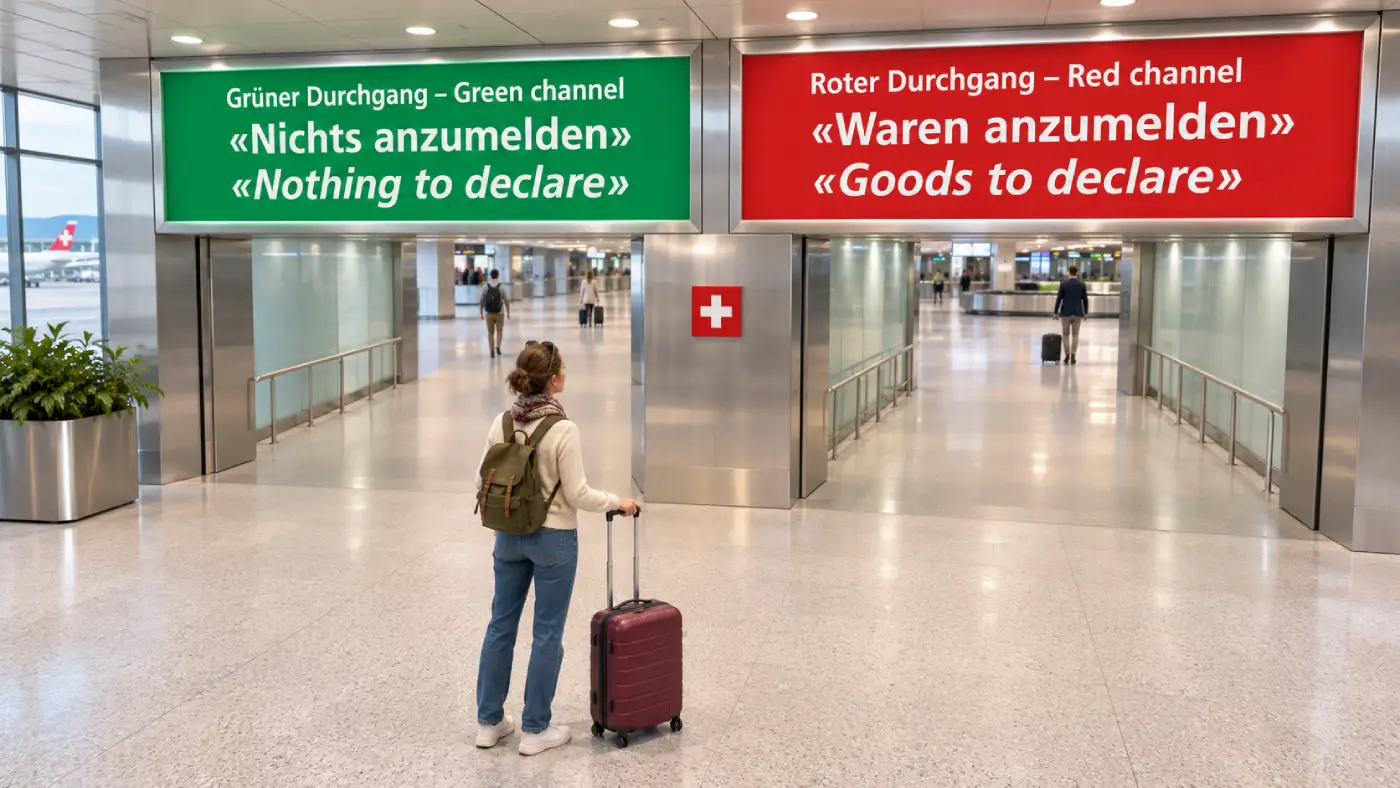
At airports, select the green channel when your goods are unrestricted and either within the allowances or already cleared through QuickZoll. Use the red channel when you need to declare goods or are unsure about their treatment. Green-channel passengers can still be inspected.
Arriving by train also requires you to declare relevant goods. At road crossings, follow the posted arrangements: written self-declaration is available at some unstaffed crossings, while others require eligible goods to be cleared through QuickZoll or remain within the allowances.
Passport and visa eligibility are separate from luggage clearance. Review the Switzerland entry requirements for the documents needed for your journey.
Prepare the details that help you make the right declaration:
Keep purchase receipts accessible and identify gifts separately from belongings you will take home.
Review food ingredients and origin before packing, including snacks bought during the journey.
Confirm your medicine’s category with the dispensing pharmacist and arrange any relevant travel certificate.
Complete eligible QuickZoll payments before crossing and retain the receipt.
Decide how to get internet in Switzerland before departure, and save tickets and accommodation details offline.
Once you have cleared customs, mobile data is useful for onward transport, maps and meeting your companions. If you are arranging data before departure, Roafly’s Switzerland eSIM provides prepaid connectivity for that part of the trip.
