Download the App and manage your eSIMs easily
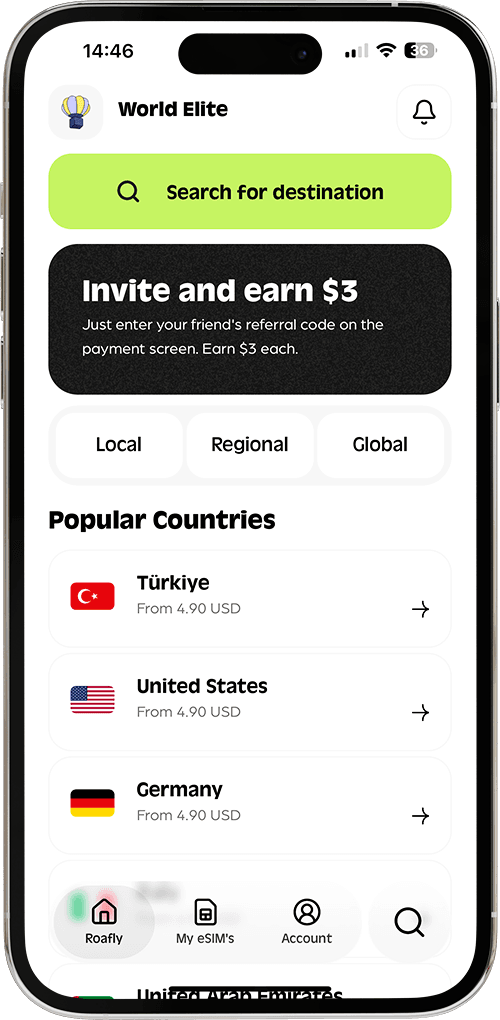
Create your order quickly
See your eSIM details
Track your remaining data
Download the App and manage your eSIMs easily
Create your order quickly
See your eSIM details
Track your remaining data
Poland’s entry checks can include how you will fund your stay, with different general thresholds for visits of up to four days and longer trips. Prepare your passport, bookings and onward plans around the journey you actually intend to make.

Lena Hartley
Updated Nov 17, 2026
8 min read
Save 15% on your Roafly eSIM
Stay connected on your next trip. Use the code below at checkout.
View All DestinationsJump to section
👇Save 15% on your Roafly eSIM
Stay connected on your next trip. Use the code below at checkout.
View All Destinations
Manage your eSIM in the app
Install, top up and track data.
Poland permits visa-free tourist visits for eligible passports; other visitors normally need a Schengen visa before departure. These requirements were checked on 17 November 2026 and cover ordinary passports used for short tourist trips.
Your itinerary matters as much as the Polish part of your holiday. Time spent in Germany, Czechia or other Schengen countries counts towards the same short-stay allowance, and your passport must cover your eventual departure from Schengen.
The groups below are examples, rather than a complete nationality list. Diplomatic and special passports, refugee travel documents and qualifying family members of EU citizens can follow different rules.
| Passport or existing permission | Tourist entry route | Main condition |
|---|---|---|
| EU, EEA or Swiss citizenship, including Germany, France, Norway and Switzerland | Travel under free-movement rules with a valid passport or accepted national identity card | The ordinary non-EU visitor’s 90/180-day allowance is a separate framework |
| Visa-exempt passports, including the United States, United Kingdom, Canada, Australia and Japan | Visit without obtaining a short-stay visa beforehand | Normally up to 90 days in any rolling 180-day period across Schengen; the UK example means a British citizen passport |
| Visa-required passports, including Türkiye, India, mainland China, South Africa and the Philippines | Obtain a Schengen short-stay visa before travelling, unless another exemption applies | The visa’s dates, permitted days, entries and territorial validity must cover your trip |
| Existing uniform Schengen visa valid for Poland | Use that visa for the visit | Respect its remaining days, entry allowance and validity |
| Valid residence permit or long-stay visa issued by another Schengen country | Travel with that document and your valid passport | Visits to other Schengen countries are generally limited to 90 days in any 180-day period |
Residence and nationality are different. Living in the UK or holding a US visa does not, by itself, replace a Schengen visa required for your passport.
Use the official Schengen visa guidance for the full nationality lists and application rules.
Non-EU visitors using the ordinary short-stay route need a passport that:
Was issued within the previous 10 years when entering Schengen.
Remains valid for at least three months after the intended departure from Schengen.
Use your final Schengen departure date, rather than the day you leave Poland. Flying from Warsaw to Paris continues the same Schengen trip.
EU, EEA and Swiss citizens travelling under free-movement rules use a valid passport or accepted national identity card; the ordinary third-country passport conditions above concern a different entry route.
Non-EU visitors subject to Poland’s proof-of-funds requirement use these general subsistence thresholds:
| Planned stay in Poland | Minimum funds |
|---|---|
| Up to four days | PLN 300 in total |
| More than four days | PLN 75 for every day of the planned stay |
Seven days therefore means PLN 525 under the general rule. Equivalent funds in a foreign currency can count; these figures are entry thresholds, rather than a recommended holiday budget or a requirement to carry that amount in cash.
Return travel is a separate cost. Carry your return or onward ticket, or evidence that you can fund the journey. Without a return ticket, additional minimum amounts apply according to the journey.
Documented prepaid stays and qualifying organised trips can use a reduced threshold of PLN 20 per day, with a minimum total of PLN 100. The prepaid-stay evidence covers accommodation and meals; an ordinary hotel reservation alone does not establish that exception.
The usual tourist visa is the Schengen short-stay visa, type C. Apply through Poland when it is your main destination. On a multi-country tourist itinerary, this normally means the country where you will stay longest; for equal-length stays without another main destination, apply through the country of first entry.
Applications normally go through the consulate responsible for where you legally reside, or its authorised application centre. Follow that mission’s appointment instructions. Completing a form through e-Konsulat is part of the application process, rather than a tourist eVisa approval.
Prepare the signed application, photograph, passport, accommodation details, evidence of funds, travel purpose and intended departure. Visa applications also require the relevant biometric submission, subject to exemptions. The passport needs at least two blank pages for the visa application.
Schengen visa applicants need travel medical insurance with at least €30,000 cover, valid throughout Schengen and covering emergency medical treatment and repatriation. Keep the policy documents with your travel papers and follow the consulate’s requirements for the period covered.
Submit the application no earlier than six months and normally at least 15 days before the journey. Standard processing is 15 days, with up to 45 days for cases requiring further examination. Allow time to obtain an appointment as well.
The standard fee is €90 for adults and €45 for children aged six to under 12. Reduced fees and exemptions apply to some applicants, and an application centre may charge a separate service fee.
Arrange the required visa before departure. Poland’s normal tourist process is an advance application, rather than a visa to buy when you arrive.
The Entry/Exit System (EES) became fully operational on 10 April 2026. It records entries and exits for eligible non-EU short-stay visitors at Schengen’s external borders, including passport information and biometric data.
EES is a border-registration process, so there is no advance EES visa application. Allow time for the registration procedure, particularly on your first visit under the system.
As of 17 November 2026, ETIAS is not operating and is not accepting applications. ETIAS is the separate travel-authorisation system intended for eligible visa-exempt travellers once it launches. It does not replace a Schengen visa for passport holders who need one.
ETIAS requirements for a later trip depend on the official launch date; check the current EES and ETIAS status before departure.
Changing flights without leaving an airport’s international transit area is different from entering Poland. Some nationalities, including Bangladesh, Nigeria and Pakistan, normally need an airport transit visa, type A, even for an airside connection, unless a qualifying document or status exempts them.
This visa only covers the international transit area. It does not let you enter Poland, collect baggage landside or visit Warsaw.
If your connection requires passing passport control, you need permission to enter Schengen. That includes continuing from Poland on a flight to another Schengen country. Confirm whether baggage collection, an airport change or your booking arrangements require entry before choosing the visa route.
Russian citizens face additional entry restrictions beyond the ordinary visa requirement. Entry through the covered border crossings is limited to specified permitted categories; a tourist Schengen visa alone is insufficient.
Entry into Poland from Belarus or Russia is also subject to route-specific restrictions. These concern the crossing being used, so passport-based visa exemption alone does not settle whether that route is available.
Review the Polish Border Guard’s current entry restrictions before booking either route. Permission to cross depends on your eligibility as well as the crossing’s operating status.
Travelling from another Schengen country does not start a fresh stay allowance. Keep your passport and any visa or residence document available for checks during the journey.
Border officers may ask for evidence of the purpose and conditions of your stay. Carry your accommodation address, booking or host details, onward plans and financial evidence alongside your original travel document and any required visa or residence permit. Keep relevant insurance documents available too.
Save booking confirmations offline before departure. Live access remains useful for updated transport information or contacting your accommodation; the guide to internet options in Poland covers local service, travel eSIMs and roaming.
If you want mobile data arranged before arrival, Roafly’s Poland eSIM provides data on a compatible, unlocked phone. If you prefer to buy locally after landing at WAW, check the options for buying a SIM at Warsaw Chopin Airport.
The ordinary short-stay limit is 90 days in any rolling 180-day period across Schengen, rather than 90 days in each country. Both entry and exit dates count.
Ten days in Germany followed by seven days in Poland use 17 Schengen days. Earlier visits still falling within the rolling window also count, and leaving briefly does not reset the allowance.
Visa holders must also respect the permitted duration and number of entries on the visa. Six months of visa validity can provide a window for travel without allowing six months of residence.
Extensions are exceptional. Humanitarian reasons, force majeure or important personal circumstances may justify a visa-extension application to the competent provincial authority; wanting a longer holiday is not a routine extension route. If a serious disruption threatens your lawful departure, contact the authority before your permission expires.
Choose your departure date using the earliest limit that applies: your remaining Schengen days, the visa’s permitted duration or its expiry date.
