

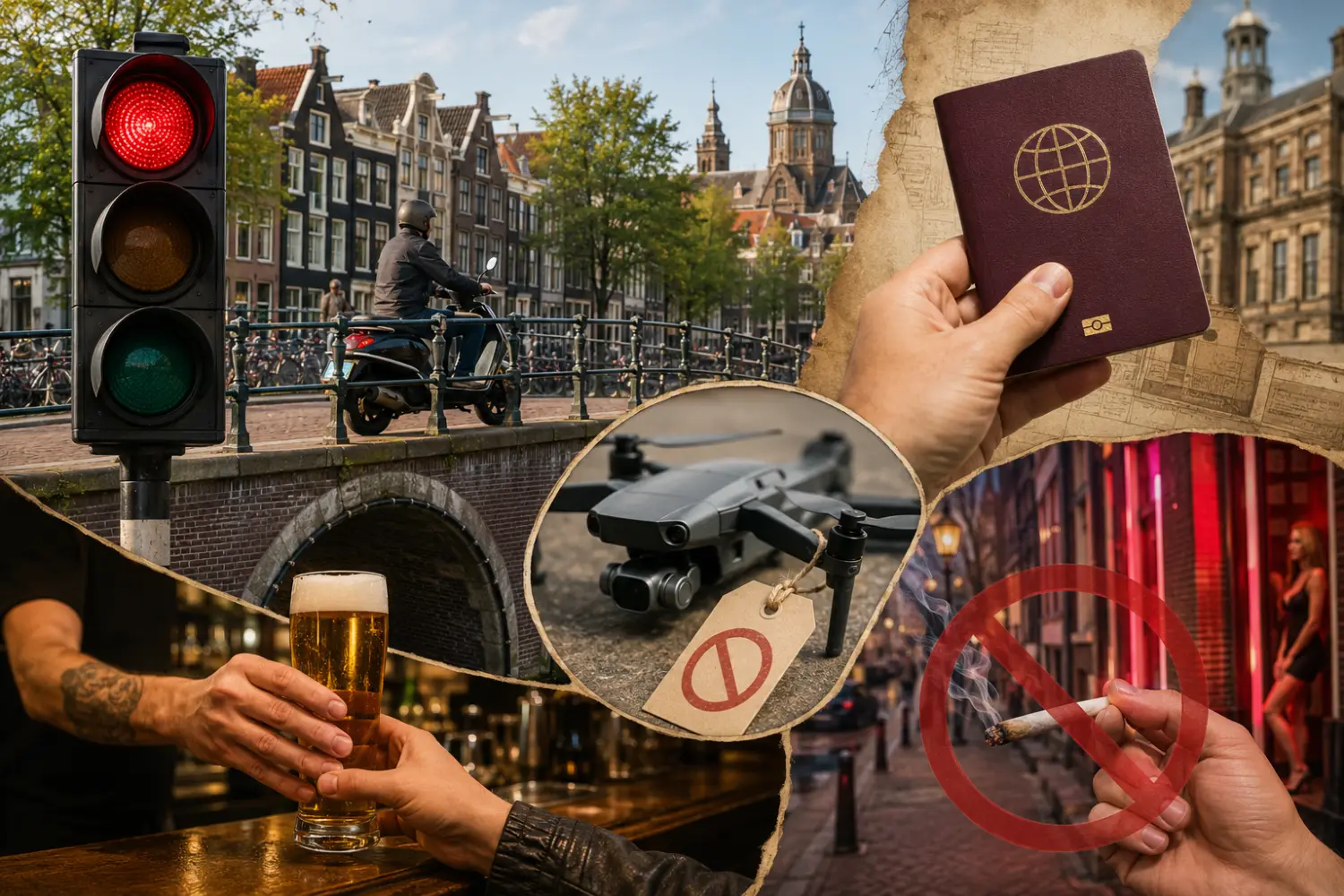

While the Netherlands is famously liberal, it operates on a strict system of rules, heavy bureaucracy, and social order. Ignorance of local legislation is never accepted as an excuse by Dutch police. From harsh financial penalties for walking in bike lanes to immediate confiscations of illegal electric scooters, tourists are held to the exact same strict standards as locals.
Scooters, Cycling & Traffic Laws: The Deadly Red Lanes
Electric scooters (e-scooters) with a throttle are largely illegal to ride on public roads in the Netherlands. Unless your specific e-scooter model has been explicitly inspected and approved by the Netherlands Vehicle Authority (RDW), you cannot ride it on streets, pavements, or cycle paths. Getting caught riding an unapproved e-scooter results in a €280 fine and the immediate confiscation of the vehicle.
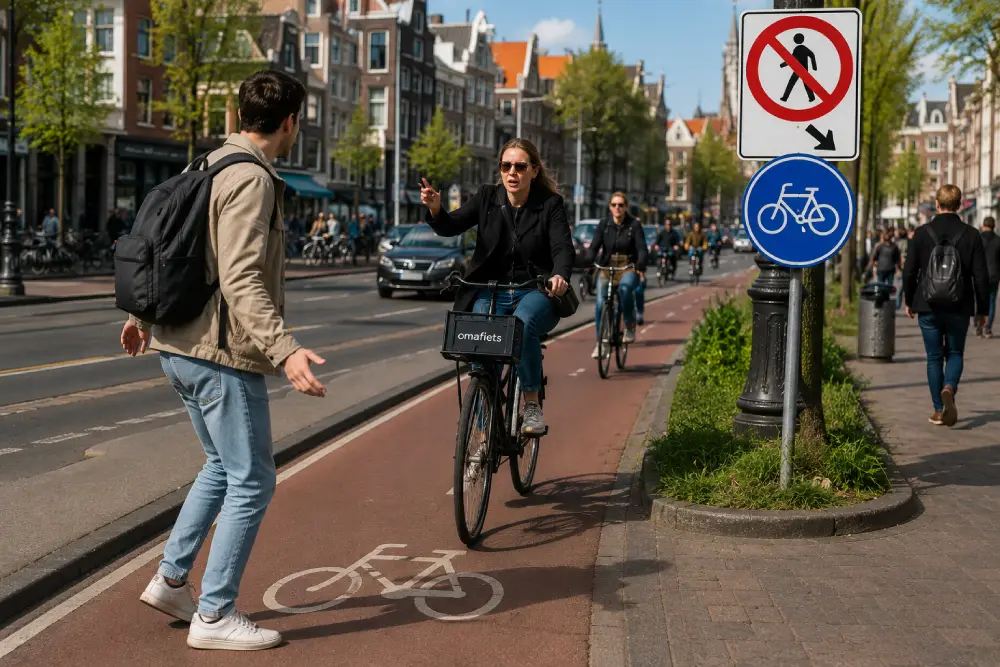
Cycling in the Netherlands is governed by strict traffic laws, not casual guidelines. Never walk in the designated red cycle paths, as cyclists have the absolute right of way and travel at high speeds. If a pedestrian causes an accident by wandering into a bike lane, they are held legally and financially liable for damages.
When renting a bicycle, be aware of the heavy fines attached to common cycling mistakes. Holding a mobile phone while cycling will result in an immediate €160 fine. Doing the exact same thing while driving a car will land you a staggering €440 fine.
Additional critical traffic rules include:
-
Mandatory Lights: Riding a bicycle at night without working front and rear lights carries a €70 fine.
-
No Red Lights: Running a red light on a bicycle will cost you €120.
-
Seatbelts: Everyone in a car must wear a seatbelt, and the fine for failing to do so is €180.
Smoking, Vaping & Cannabis: Navigating The Coffeeshop Rules
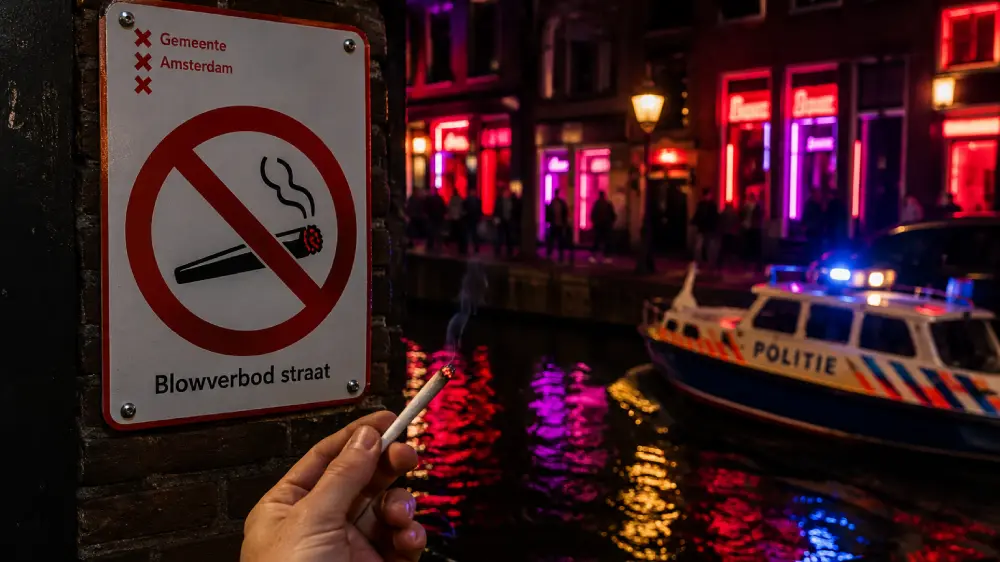
The Dutch government has grown exhausted by nuisance tourism, leading to strict new public consumption rules in 2026. While a proposed ban prohibiting tourists from entering coffeeshops was ultimately rejected, public consumption laws remain incredibly strict. Smoking cannabis on the streets of Amsterdam's Red Light District is entirely illegal and carries a strict €100 fine.
Do not assume you can smoke tobacco or vape wherever you please. Vaping and smoking regular cigarettes are banned in all indoor public spaces, restaurants, train stations, and bus stops. Dropping a cigarette butt on the street or in a canal is considered littering and carries a municipal fine of around €150.
If you plan on bringing tobacco products into the country, you must strictly adhere to import limits. Before you pack your bags, it is highly recommended to read up on the Netherlands Airport Customs Rules. Exceeding these allowances will result in your items being seized at the border alongside heavy tax penalties.
Narcotics & Prescription Meds: The Schengen Certificate Trap
The Netherlands classifies drugs into two distinct lists: hard drugs and soft drugs. While the sale of soft drugs (cannabis) is tolerated under strict conditions in licensed coffeeshops, hard drugs are entirely illegal. Carrying, buying, or selling substances like cocaine, MDMA, or heroin will result in immediate arrest and severe prison sentences.
Many tourists accidentally become drug smugglers by traveling with highly restricted prescription medications. Medications containing opiates, strong sleeping pills, or ADHD stimulants (like Adderall and Ritalin) fall under the Dutch Opium Act. To bring these legally, you must possess a valid Schengen Medical Certificate or a medical declaration approved by the Dutch embassy.
Without this official bureaucratic documentation, customs agents will confiscate your medication. In worst-case scenarios, tourists face international drug smuggling charges simply for carrying their daily prescription. Always check the official guidelines provided by the Dutch Customs Administration before traveling with pharmaceuticals.
Alcohol & Public Drinking: The 10 PM Curfew
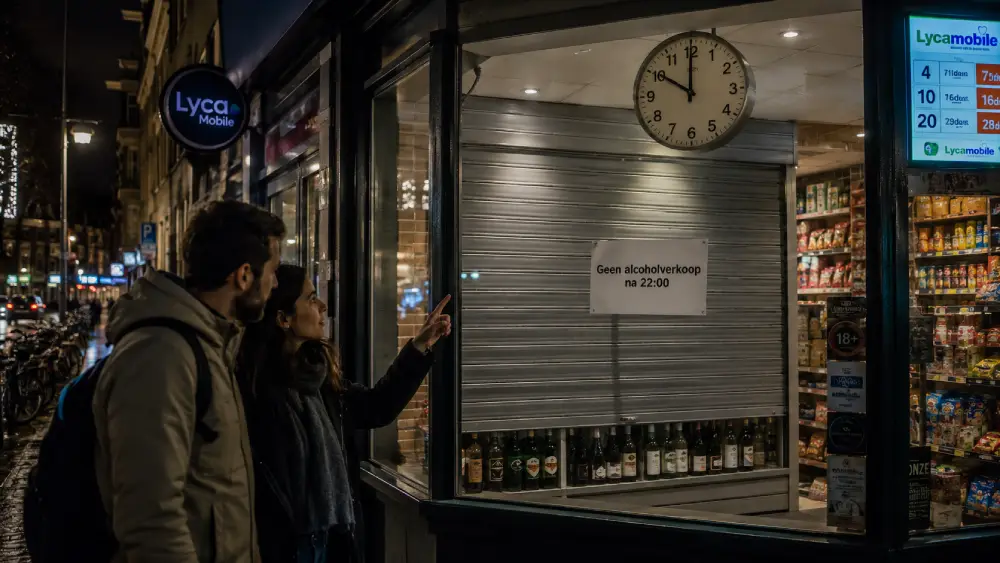
In a direct response to rising public disorder, Amsterdam implemented aggressive new alcohol laws starting in July 2026. It is now illegal for supermarkets, convenience stores, and liquor shops to sell alcohol after 10:00 PM in the city center. This rule aims to stop late-night street parties, meaning your 11:00 PM beer run is officially a thing of the past.
Drinking alcohol on the street is strictly forbidden in most city centers and tourist hotspots across the Netherlands. If police catch you with an open container of alcohol in areas like the Red Light District or Leidseplein, you will face a €110 fine. Licensed bars and hotel restaurants are exempt, allowing you to drink freely on their private premises.
Public intoxication is not tolerated and is heavily policed in tourist-heavy zones. Being visibly drunk to the point of causing a public nuisance can lead to an overnight stay in a holding cell. The city actively uses its "Stay Away" campaign to discourage rowdy bachelor parties and excessively drunk visitors.
Environmental & Photography Fines: Respecting Local Boundaries
The Netherlands values cleanliness and enforces heavy fines to keep its streets and historic canals pristine. Public urination, locally referred to as wildplassen, is heavily policed and will earn you an instant €150 fine. If you are caught urinating against a historic monument or a church, the fine can instantly double.
When visiting the Red Light District, you must respect strict privacy boundaries. It is strictly forbidden to photograph or record the sex workers standing behind the windows. Doing so is not illegal but often results in your phone being physically snatched and thrown into a canal by local security personnel.
Feeding urban wildlife is another fast way to receive an unexpected ticket. Many municipalities issue strict fines for feeding pigeons, ducks, or gulls in public squares to control vermin populations. Always dispose of your trash in designated bins to avoid immediate municipal littering fines.
Weird Rules & Cultural Taboos: Carry Your ID
Under the Dutch Compulsory Identification Act, everyone aged 14 and over must be able to prove their identity at any given moment. You are required to carry a physical, original, and valid form of photo ID at all times. A photocopy of your passport or a picture saved on your smartphone is legally invalid and carries a fine of up to €100.
Dutch culture highly values directness, but also respects the concept of gezelligheid (conviviality and coziness). Disruptive, loud, or obnoxious behavior in residential areas and on public transport is a major cultural taboo. Keep your voice down while riding the trains, especially in designated "Silent Carriages" where talking is strictly forbidden.
Respect the local queuing etiquette and never walk on the tactile paving lines meant for the visually impaired. Treating the city as an amusement park rather than a functioning residential area will quickly earn you the disdain of locals.
Drone Regulations: Strict EASA Compliance
The Netherlands adheres to the highly strict European Union Aviation Safety Agency (EASA) drone regulations. Any drone weighing over 250 grams or equipped with a camera must be officially registered before you fly. You must carry your operator registration number and affix it to the drone to avoid severe penalties.
Flying zones are heavily restricted across the country to protect privacy, aviation, and wildlife. You are strictly forbidden from flying over crowds, public events, or densely populated urban areas. The maximum allowed flight altitude is strictly capped at 120 meters above ground level.
Breaking no-fly zone rules will result in the confiscation of your drone and massive criminal fines. You cannot fly anywhere near controlled airspace, such as Schiphol Airport, or over military installations. Similarly, flying over protected nature reserves, known as Natura 2000 areas, is illegal without a specific permit.
Stay Connected to Stay Safe
Navigating local laws, translating Dutch street signs, and figuring out tram schedules require a constant and reliable internet connection. Being disconnected leaves you vulnerable to accidental fines, getting lost in unfamiliar zones, or falling for street scams. To prepare your phone before you travel, check out our guide on How to Get Internet in the Netherlands.
Need data in Netherlands? Get an eSIM!
Choose the perfect data plan for your trip

Manage your eSIM in the app
Install, top up and track data.
Having immediate access to digital maps and emergency services is a non-negotiable safety tool in Europe. A Netherlands eSIM helps you avoid tourist scams by letting you bypass overpriced physical SIM kiosks at the airport. You can instantly download your data plan and step off the plane completely connected to the local networks.
To find the perfect data package for your trip length and budget, check out our Best eSIM for Netherlands guide.
Summary Checklist (Don't Be That Tourist)
-
Do not ride unapproved e-scooters: e-bikes and specifically registered scooters are legal; everything else risks a €280 fine and confiscation.
-
Do not buy late-night alcohol: Supermarkets in Amsterdam are banned from selling alcohol after 10 PM.
-
Do not smoke weed on the street: Public cannabis consumption in the Red Light District carries a €100 fine.
-
Do not walk in the red bike lanes: Cyclists will not stop for you, and causing an accident makes you financially liable.
-
Do not travel without physical ID: Carrying an original passport or national ID card is a strict legal requirement.
-
Do not photograph window workers: Taking pictures in the Red Light District will likely result in your phone being destroyed.
Note: Travel laws and fines can change. This information is accurate as of July 2026. Always consult official local authorities before your trip.