


Last updated: September 2, 2026, 2:36 AM NPT
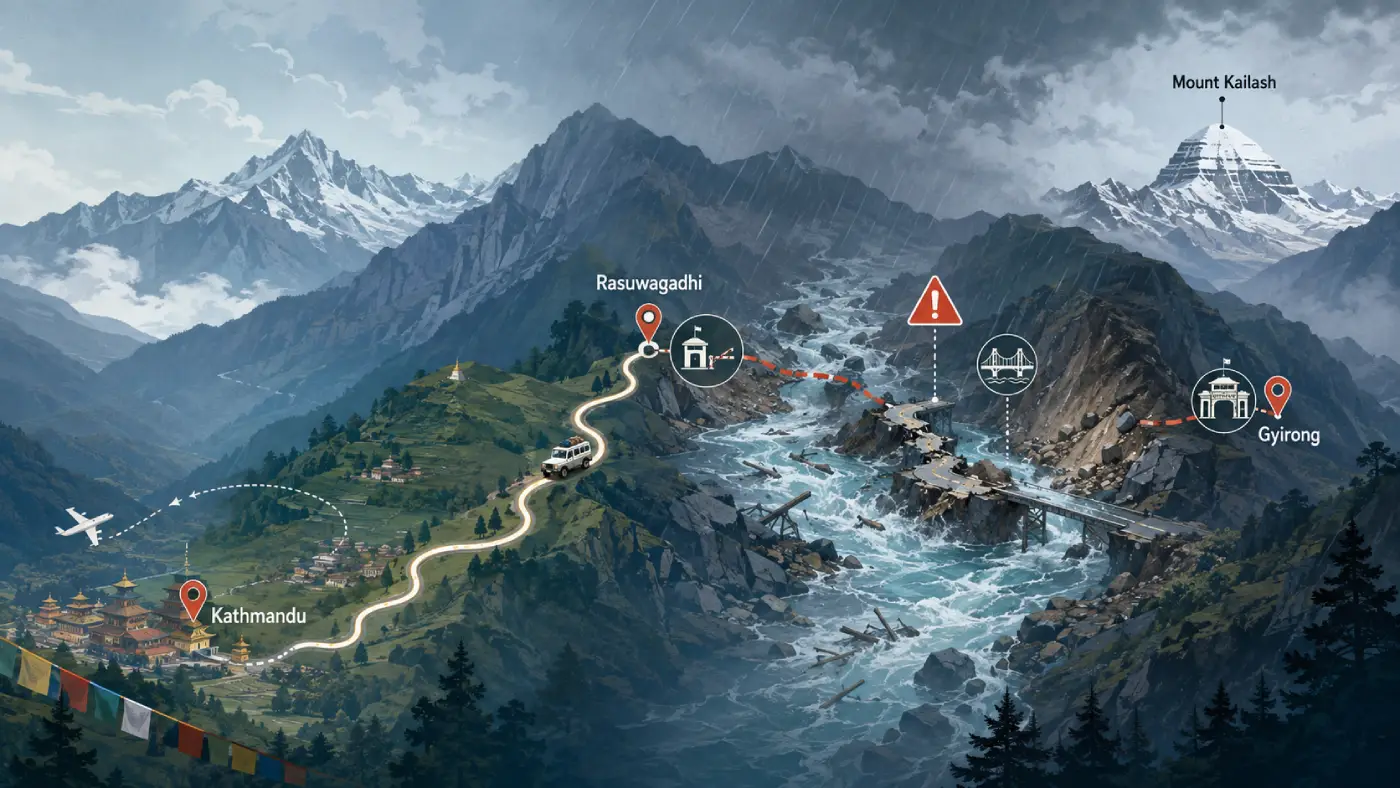
Travelers should not currently plan to use the Rasuwagadhi–Gyirong border crossing. The disruption is concentrated in Rasuwa and communities along the Trishuli river system rather than across all of Nepal, and Kathmandu’s main international airport remains operational.
What happened at the Nepal–Tibet border?
A major flood hit Nepal’s Rasuwa district on the morning of August 26, 2026, sending water, mud and debris through communities and transport infrastructure along the Nepal–China border.
Nepal’s Ministry of Home Affairs says the flood struck the Bhote Koshi River area at around 8:40 AM and caused severe damage in Rasuwa, with downstream effects in Nuwakot, Dhading and Gorkha districts.
The disaster also devastated the Gyirong border area on the Tibetan side. Roads, communications infrastructure and the border complex itself suffered extensive damage.
By September 1, Reuters reported that the confirmed death toll had risen above 1,000, while thousands of people remained missing, including hundreds of foreign nationals. Search and rescue operations were still continuing.
Because casualty and missing-person figures are changing, travelers should rely on authorities rather than older totals circulating.
Is the Rasuwagadhi–Gyirong border crossing open?
Travelers should treat the Rasuwagadhi–Gyirong crossing as unavailable for normal tourist travel at this time.
The crossing area and the roads serving it suffered major physical damage. Access has been restricted by destroyed or blocked roads, debris and rescue operations.
Australia’s official Nepal travel advice now recommends reconsidering travel within 50 kilometres of the Trishuli River in parts of Rasuwa, Nuwakot, Dhading, Nawalpur and Gorkha because of flooding, landslides, infrastructure damage and the continuing risk of further flooding.
There is currently no reliable reopening date for the Rasuwagadhi–Gyirong crossing.
Travelers should not head toward the border hoping that the road or immigration facilities will reopen by the time they arrive.
Is the Mount Kailash route from Nepal open?
The overland Mount Kailash route from Kathmandu through Rasuwagadhi and Gyirong is directly affected.
That does not mean every possible route to Mount Kailash is closed. However, travelers booked on an itinerary using the Nepal–Tibet land crossing should contact their tour operator before making any journey from Kathmandu.
Do not assume that an alternative route can automatically replace the Rasuwagadhi crossing. Kailash trips can involve Chinese entry requirements, Tibet travel permits, organized transport and route-specific logistics.
If your operator proposes a different itinerary, ask them to confirm:
-
which border crossing or airport will be used;
-
whether the required Tibet permits remain valid for the new route;
-
whether transport on both sides has been confirmed;
-
whether accommodation and connections are operating; and
-
whether your travel insurance covers the itinerary change or cancellation.
Until access is formally restored, travelers with an imminent Rasuwagadhi–Gyirong itinerary should prepare for postponement, rerouting or cancellation.
Which parts of Nepal are affected?
The most serious travel disruption is concentrated in Rasuwa and the Trishuli river corridor, with official warnings also covering parts of Nuwakot, Dhading, Nawalpur and Gorkha.
The UK government’s Nepal travel advice says roads, other transport links and communications infrastructure were severely damaged in the Rasuwa district and Nepal–China border area and warns that further flooding remains possible.
This is not a nationwide closure of Nepal.
Travelers elsewhere in the country should still monitor local weather and road conditions, particularly during the monsoon, but should not assume that an incident near the Tibet border means all major Nepal destinations are inaccessible.
Is Kathmandu Airport open?
Yes. Tribhuvan International Airport (KTM) in Kathmandu is operating.
The airport’s official flight information showed domestic and international arrivals and departures operating on September 1.
The main immediate problem for affected travelers is therefore not reaching Nepal by air. It is ground access toward Rasuwa, the Tibet border and the flood-damaged corridor.
Passengers should still check their individual flight with the airline before traveling, particularly if their itinerary includes domestic connections or charter arrangements related to trekking or pilgrimage trips.
What should travelers do now?
If you are currently in Nepal, avoid non-essential travel toward flood-affected parts of Rasuwa and do not approach damaged roads, riverbanks or rescue zones.
If you have a Mount Kailash trip departing through Rasuwagadhi soon, contact your operator before leaving Kathmandu and ask for the exact current routing rather than relying on the original itinerary.
Keep copies of your passport, permits, insurance details and operator contacts available offline. Communications have been disrupted in parts of the disaster zone, so mobile coverage should not be treated as an emergency guarantee in remote mountain areas.
For trips continuing elsewhere in Nepal, Nepal SIM Card for Tourists: Ncell vs NTC explains the main local connectivity options. Network availability remains highly location-dependent in Nepal’s mountains.
What remains uncertain?
The biggest uncertainty is how long it will take to restore safe road and border access around Rasuwagadhi and Gyirong.
Authorities are still dealing with damaged infrastructure, unstable terrain and the possibility of further floods, landslides and debris flows. A road being partially cleared for rescue traffic should not be interpreted as the border reopening to tourists.
The status of individual trekking routes and alternative Kailash itineraries can also differ from the status of the main border road. Travelers should therefore verify their exact route rather than relying on general statements that Nepal or Tibet is either “open” or “closed.”
Is Nepal safe to visit after the floods?
The disaster does not affect all of Nepal equally. The strongest current warnings are focused on Rasuwa, the Nepal–China border and areas near the Trishuli River. Check the conditions for your specific destination and route.
Can I travel from Kathmandu to Tibet through Rasuwagadhi?
Travelers should not currently plan on using the Rasuwagadhi–Gyirong crossing. The border area and its transport infrastructure have suffered severe damage, and there is no confirmed tourist reopening date.
Are flights to Kathmandu cancelled because of the floods?
There is no general closure of Tribhuvan International Airport. The official airport flight board showed domestic and international services operating on September 1.
Should I cancel a Mount Kailash trip?
If your itinerary uses Rasuwagadhi–Gyirong, contact the operator immediately. Whether you need to cancel, postpone or reroute depends on the operator’s confirmed alternative arrangements and your permits.
Update note: This article will need another operational check when Nepalese or Chinese authorities announce a change to road access or the Rasuwagadhi–Gyirong border crossing. Until then, travelers should regard the affected overland route as unavailable for normal tourist travel.