

'%3e%3ccircle r='134.55'/%3e%3cg id='c'%3e%3cg id='b'%3e%3cpath id='a' d='M0-152.9c8-.1 11-5.1 11-11.1 0-8-11-46.1-11-46.1S-11-172-11-164c0 6 3 11.1 11 11.1z'/%3e%3cuse xlink:href='%23a' transform='rotate(90)'/%3e%3cuse xlink:href='%23a' transform='rotate(180)'/%3e%3cuse xlink:href='%23a' transform='rotate(270)'/%3e%3c/g%3e%3cuse xlink:href='%23b' transform='rotate(22.5)'/%3e%3cuse xlink:href='%23b' transform='rotate(45)'/%3e%3cuse xlink:href='%23b' transform='rotate(67.5)'/%3e%3c/g%3e%3cuse xlink:href='%23c' transform='rotate(11.25)'/%3e%3c/g%3e%3cg fill='%23fec50c'%3e%3cpath d='M1056.467 711.467c-3.6.2-7.1.666-10.534 1.766-4.7.634-9.2 2.267-13.866 3.034l-1.867.3-3.133.3c.2.866.333 1.733.333 2.6 0 .9-.1 1.766-.333 2.5-.2.7-.834 1.566-1.334 2.1-.666.733-1.366 1.366-2.2 1.766-.8.4-1.7.567-2.6.634-.9.033-1.833 0-2.7-.334-.9-.3-1.733-.866-2.5-1.533-.933.233-1.9.4-2.8.5-.933.1-1.8.1-2.633 0-.933-.267-1.9-.567-2.8-.933s-1.767-.834-2.6-1.367c-3.4 2-7.2 3.9-9.267 7.4-1.166 1.6-1.4 3.433-1.666 5.333-.167 2.334.433 4.8 1.433 6.967.367.633.667-2.3 1.8-2.7 1.9-1.567 4.267-2.7 6.667-3.333 2.033-1.034 1.766.066.933 1.666-.2.834-1.333 4 .2 2.4 6.767-3 14.267-3.6 21.567-4.166 10.6-1.1 21.233-1.334 31.866-1.467 10 .133 20 .267 30 .633 4.767.134 9.567 1.2 14.267.4 1.133-.3 2.9-.366 3.567-1.033-2.134-1.233-4.634-1.267-7-1.567H1080.2c-5.3-.533-10.833-.6-15.833-2.6-1.334-.533-2.567-1.8-3.834-.433-1.9.667-3.933 1.133-5.933 1.267-3.5.266-7-.467-10.233-1.767 2.333-3.233 5.133-6.067 7.7-9.067-2.067-.333-4.067-.766-6.134-1.266 3.634-2.5 7-5.334 10.534-8z'/%3e%3cpath d='M1212.2 746.01c-7.245 4.35-12.775-3.362-18.831-5.675-4.325 2.349-4.729 10.208-8.77 13.93-4.835 5.502-10.76-1.537-10.319-6.965-5.782 4.874-8.706 15.922-18.057 14.446-4.43-3.615-7.721-11.201-11.106-2.564-2.76 4.222-10.11 10.23-13.916 3.854-1.178-5.63-4-12.25-7.063-3.308-2.102 6.325-8.85 10.978-15.379 8.209-3.574-2.922 2.865-13.727-1.684-12.958-6.8 4.495-10.753 15.658-20.242 14.764-3.685-4.136 2.236-11.144-1.806-15.735-4.77 6.123-10.063 15.089-18.315 15.735-3.988-3.232.157-12.501-2.39-13.873-8.467 5.078-17.401 14.128-28.05 11.294 4.15-15.873 21.49-21.442 36.073-22.68 25.089-3.084 51.484 2.586 75.624-6.47 3.9-2.373 13.35-5.739 9.985-11.243-2.98-4.347 7.753-2.647 8.785-7.724-.639-6.43 4.927-5.545 10.364-6.108 24.376-1.052 48.455 4.082 72.758 4.954 1.836 11.842-11.3 20.157-21.876 16.5-5.052.819-12.627-11.615-11.142-2.57-1.018 4.748-.305 11.018-4.643 14.189m-207.4-24.248c5.643 5.165 9.6-.973 14.875-3.216 17.692-6.085 33.128-16.719 48.346-27.344 9.22-7.63 17.214-17.525 29.597-20 24.155-7.303 49.832-6.417 74.08-13.157 18.465-25.28 49.826-34.299 76.097-48.83 5.899-1.833 8.178-6.688 10.062-12.048 10.028-15.83 23.689-29.857 39.845-39.439 7.644-4.177 16.764-6.582 25.418-4.672-.62 10.307-6.533 19.442-13.672 26.57 5.842-.128 10.863-3.819 16.767-3.611 2.023 10.578-9.4 16.114-15.478 22.7 3.385.787 16.353 1.768 9.286 5.159-9.005 6.25-19.289 10.541-27.602 17.799 7.67 1.378 8.544 3.008.745 5.782-4.222 2.862-12.341 3.862-13.126 9.437 5.794 3.561-2.669 7.097-5.933 8.255-6.242 1.454-12.798 4.165-4.507 8.907-3.136 4.738-9.865 5.749-15.356 5.28 1.666 5.37 4.078 11.379-2.892 13.748-15.624 11.81-33.96 20.402-53.6 22.367 24.535 1.886 49.806-2.668 70.772-16.011 2.768-3.273 17.282-6.79 9.164-9.542-3.822-1.59-12.016-3.357-12.57-6.271 11.355-7.006 25.664-4.514 37.88-8.676.316-3.955-9.292-2.855-12.874-3.755-8.543-.7-8.042-2.88.195-3.688 10.422-2.76 22.226-3.303 30.993-10.098-7.138-3.307-16.116-.396-23.732-3.096 12.911-5.65 28.142-6.217 39.726-14.704 5.277-5.87-6.76-4.036-10.267-3.893-7.15 1.245-10.456-2.178-2.332-5.149 13.87-10.227 31.433-16.87 41.176-31.697 2.308-3.319 5.433-13.319-1.928-9.722-9.68 3.219-18.198 14.101-29.228 10.735 21.733-16.844 42.413-36.02 57.267-59.33.768-6.723-9.785-7.45-12.532-2.172-13.963 13.454-26.6 29.335-44.477 37.77 17.121-16.525 31.276-36.092 43.626-56.372 2.648-6.032 9.764-13.286 5.902-19.983-6.225-5.153-14.013-.436-17.248 5.73-10.854 14.17-19.096 30.709-33.054 42.25 12.22-23.321 24.871-48.147 25.18-75.046-.038-5.538-1.15-13.694-8.67-12.66-5.962 1.069-4.546 9.992-7.004 14.505-5.411 18.377-7.951 38.279-19.05 54.37 2.497-14.933 6.866-30.5 3.512-45.58-1.567-6.739-12.45-3.84-11.048 2.83-13.002 65.86-57.194 123.46-114.99 156.78-26.464 14.973-56.023 24.626-86.096 29.002-8.09 1.771-16.84.732-24.572 3.49-18.736 14.367-30.08 38.407-53.802 45.935-10.632 5.284-24.496 6.356-32.098 16.233-.658 1.263-.8 2.727-.774 4.128'/%3e%3cpath d='M1075.8 654.95c-3.5 6.354-5.56 13.658-10.06 19.347-13.541-12.321-33.171-11.914-50.347-12.734-14.177-.757-29.594-2.065-40.563-12.176-11.539-9.452-20.958-21.724-33.852-29.393-11.769-3.2-23.633-7.204-33.095-15.271-20.22-16.482-31.8-40.937-51.558-57.933-3.767-3.708-8.209-6.581-12.429-9.727-4.01.977-2.195 9.631-7.102 5.22-2.67-1.9-9.348-2.085-9.95.569 6.041 7.96 12.088 17.049 12.925 27.23-4.12.422-11.445-.87-13.487.664 5.471 8.2 12.484 15.473 20.452 21.263-3.822.614-11.353.28-12.818 1.82 7.909 6.446 16.39 13.034 26.747 14.69 2.12 2.794-3.1 8.19 1.29 10.576 2.545 1.04 10.944 2.78 5.159 5.675-3.97 2.675-2.497 8.91 2.58 8.77 3.21 1.64 10.417 2.041 10.981 4.88-2.845 2.895-11.698 6.328-4.163 9.04 7.039 3.904 15.067 6.439 23.105 6.717-4.034 3.394-9.004 5.32-13.156 8.513 18.55 10.877 39.113 18.03 59.433 24.919 8.09 2.703 16.274 5.223 24.66 6.81-24.368-1.407-47.921-8.621-70.115-18.495-11.503-5.045-23.084-9.92-34.873-14.265 5.169-2.69 11.148-3.347 16.509-5.675-11.128-2.23-23.285-2.96-33.067-9.077 1.5-2.676 7.183-2.802 10.326-4.164 5.911-1.416 9.578-3.134 1.243-3.648-8.405-2.281-18.045-1.257-25.452-6.328.477-3.04 8.229-1.98 11.386-3.293 3.976-.683 8.396-1.255 11.573-3.93-12.994-5.387-29.99-1.57-40.168-13.045-2.347-4.372 7.289-.85 10.033-1.579 6.973 0 14.467 2.216 21.107-.595-18.934-8.313-39.215-16.095-53.655-31.471-1.603-2.472-6.407-9.225-2.531-10.06 11.239 1.487 19.374 13.753 31.396 11.844 1.597-2.153-6.984-5.681-9.126-8.758-17.528-15.041-34.54-31.364-46.825-51.066-.845-6.58 9.497-7.565 12.22-2.484 13.405 12.911 25.514 27.977 42.21 36.791 5.924 2.873-3.402-3.4-4.644-5.675-15.427-17.914-30.113-36.834-40.895-57.932-1.93-3.802-5.128-10.686.646-12.71 5.773-2.892 11.501 1.048 14.428 6.007 11.342 14.305 19.688 31.307 33.817 43.225-12.037-23.359-24.889-47.948-25.2-74.828.283-5.21.618-13.092 7.684-12.878 5.933-.9 4.996 6.696 6.94 10.318 5.846 19.747 8.395 41.121 20.122 58.556-2.59-14.649-6.403-29.735-3.87-44.627.584-4.89 6.089-6.37 9.682-3.414 2.905 7.11 3.51 15.89 6.157 23.491 15.06 51.52 48.875 96.832 92.941 127.24 36.292 24.891 79.362 39.75 123.32 42.341 3.97.346 7.956.466 11.932.71'/%3e%3ccircle cx='1020' cy='720.887' r='2.367'/%3e%3ccircle cx='1019.8' cy='720.507' r='.965' stroke='%2300afca' stroke-width='.381'/%3e%3c/g%3e%3cg fill='%23fec50c'%3e%3cg id='f'%3e%3cg id='e'%3e%3cpath d='M120 72.922s-9.61-8.076-12.874-4.025c-5.25 6.515 16.14 38.968 16.14 50.396 0 18.759-12.517 23.86-27.973 26.539-10.371 1.798-27.259-.752-27.259-.752 3.18-4.273 5.248-5.532 10.606-5.873-5.965-3.097-12.039-9.82-12.039-20.284 0-16.138 6.643-22.79 6.643-40.983 0-10.093-8.276-22.941-8.276-22.941 14.629 1.464 21.879 15.009 17.754 25.834 2.328.335 4.442-.19 6.258-1.91 1.07 3-.62 6.483-2.883 9.484 1.823.974 3.162.39 6.066-.21-.276 3.092-2.128 6.376-6.66 9.468 13.151-3.415 21.243 5.751 21.243 15.347 0 7.248-5.079 12.443-10.044 12.443-1.604 0-3.961-.661-5.29-1.654-.938 1.995-.455 4.665.51 6.66-3.638-.962-5.948-3.123-4.304-7.621-2.795-.257-5.018-1.201-6.53-3 1.532-1.963 3.857-3.093 6.53-3.001-2.035-4.2.233-6.55 3.538-8.456 0 0-2.102 8.456 3.265 8.456 2.413 0 4.612-.786 4.612-4.343 0-3.097-2.707-7.387-8.966-7.114-6.258.273-11.332 4.315-11.332 14.306 0 9.216 7.434 13.8 17.23 14.096 8.833.273 15.5-4.512 15.5-13.625 0-12.128-17.508-39.773-17.508-50.58 0-8.11 7.292-12.636 14.427-12.636 9.252 0 17.058 9.161 17.058 9.161l-5.435 6.815z'/%3e%3cpath id='d' d='M122.02 292.14c0 20.27-18.198 30.688-32.498 30.688-19.266 0-29.524-11.519-29.524-26.598 0-8.548 1.566-13.911 5.507-22.092 0 0 31.78-66.091 44.153-91.653 1.543-3.188 2.041-6.818 2.041-12.138 0-8.217-7.97-14.933-16.327-15.139-7.618-.19-15.918 7.102-15.918 15.412 0 10.093 5.236 14.593 10.612 14.593 6.616 0 9.252-2.72 9.252-7.365 0-3.237-1.563-4.637-3.81-4.637-5.674 0-4.081 7.638-4.081 7.638-2.818-.617-5.134-3.497-3.81-7.093a10.23 10.23 0 0 1-5.51-3.273c1.521-1.475 3.266-2.613 5.51-3-1.329-4.388.447-6.531 4.286-7.433-.775 1.687-.801 3.24-.544 4.705 6.043-1.719 15.306 1.016 15.306 11.456 0 10.365-7.194 19.093-20.681 16.912 3.208 1.534 4.84 4.673 5.17 8.183-2.45-.954-5.17-1.09-5.17-1.09 1.577 2.78 3.767 5.177 3.673 10.637-2.5-1.137-4.823-3.242-8.027-1.91 5.03 9.898-1.15 23.512-16.871 26.733 5.754-6.745 8.571-14.027 8.571-21.277 0-23.496-6.53-27.445-6.53-43.78 0-6.835 3.513-14.215 10.476-19.231v.273c-4.602-1.233-7.55-3.499-9.245-6.578 10.515-2.982 25.8-2.927 34.006.302 9.434 1.093 16.02 8.33 17.96 12.004 1.94 3.67 5.709 16.953 0 28.912-6.25 13.088-35.712 75.56-44.898 95.198-1.948 4.165-3.13 8.583-3.13 13.366 0 12.03 11.02 16.23 17.28 16.23 7.483 0 15.102-5.7 15.102-12.82 0-4.511-2.45-7.228-5.987-7.228-8.458 0-7.944 7.195-6.258 11.729-5.264-2.367-8.324-6.592-7.483-11.047-2.98-.409-5.817-1.822-8.435-4.774 2.06-2.6 4.572-4.567 8.435-4.637-1.687-6.912 2.94-9.835 7.483-11.456-1.437 5.073-2.38 10.911 6.258 10.911 6.3 0 11.258 1.091 14.15 5.183.17-5.456.68-27.005.68-27.005.364-8.098-10.838-7.867-17.958-5.456 2.687-9.327 8.198-14.37 20.952-13.093-3.096-1.295-6.395-4.208-6.395-9.82.002-7.593 6.162-16.005 10.206-18.492l2.022 79.051z'/%3e%3cuse xlink:href='%23d' transform='matrix(1 0 0 -1 0 645.08)'/%3e%3c/g%3e%3cuse xlink:href='%23e' transform='matrix(-1 0 0 1 240 0)'/%3e%3c/g%3e%3cuse xlink:href='%23f' transform='matrix(1 0 0 -1 0 1000)'/%3e%3c/g%3e%3c/svg%3e)
Customs rules at a glance
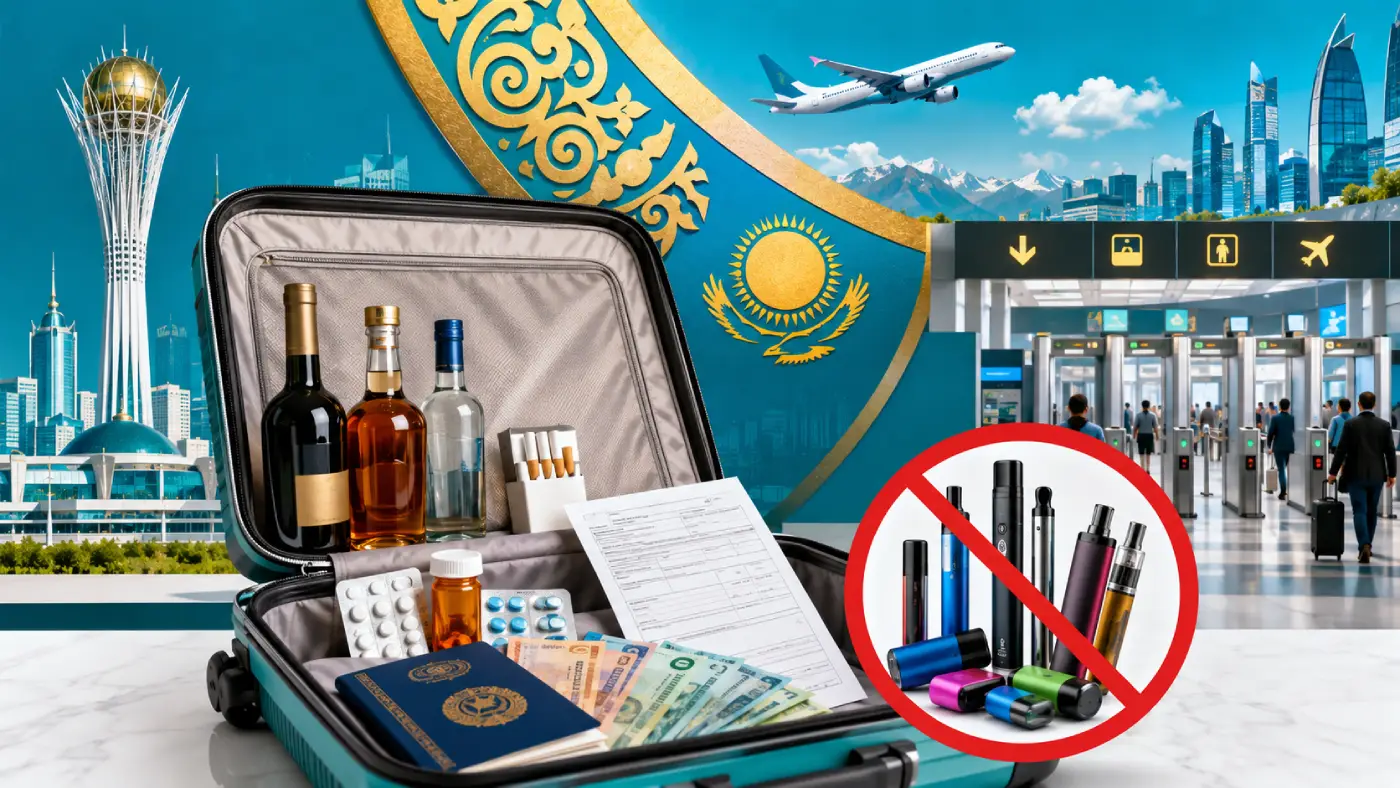
| Item | Can You Bring It? | Allowance or Declaration Rule | What to Do |
|---|---|---|---|
| Personal goods | Yes | By air: up to €10,000 in value and 50 kg duty-free when entering the EAEU from outside | Keep purchases for personal use and declare excess goods |
| Alcohol | Yes, for adults | Up to 3 litres per traveler aged 18 or over | Do not exceed the confirmed duty-free amount without checking customs |
| Tobacco | Yes, for adults | 200 cigarettes, 50 cigars or cigarillos, or 250 g of tobacco; alternatives may be combined up to 250 g | Use allowance per traveler aged 18 or over |
| Cash | Yes | More than US$10,000 equivalent must be declared; more than US$100,000 requires source-of-funds documents | Complete a passenger customs declaration |
| Medicines | Usually | Personal treatment may be permitted, but narcotic, psychotropic or unregistered medicines can require authorization | Verify the active ingredients and carry medical documents |
| Food | Depends | Veterinary, sanitary and phytosanitary controls vary by product and origin | Declare questionable animal products, plants, seeds and fresh produce |
| Vapes/e-cigarettes | No | Import of devices, liquids, cartridges and flavorings is prohibited, including for personal use | Do not bring them into Kazakhstan |
| Weapons and ammunition | Only with authorization | Permits and specialist controls apply | Obtain approval before travel or leave them at home |
Rules checked on July 25, 2026. Customs, tax, health, and biosecurity requirements can change; verify the linked official guidance before travel.
Which rules apply to your arrival?
Kazakhstan belongs to the Eurasian Economic Union, or EAEU, with Armenia, Belarus, Kyrgyzstan and Russia. The most important question is therefore whether you are entering the EAEU customs territory from a non-member country or traveling after your goods have already cleared customs elsewhere in the union.
Arriving from outside the EAEU
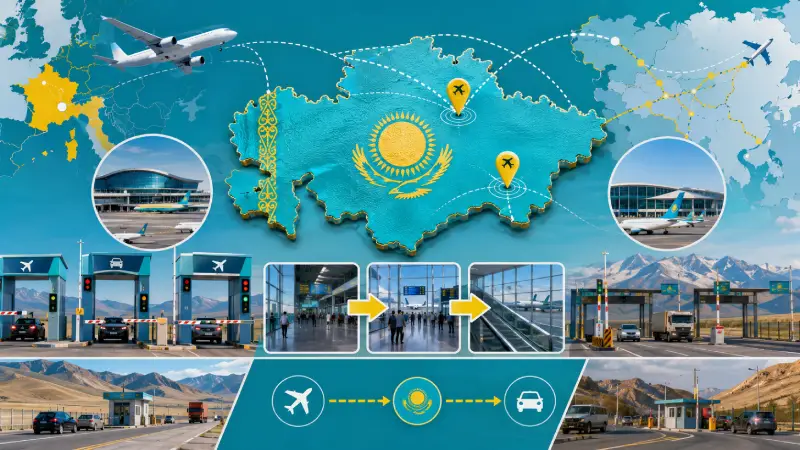
When flying directly from a non-EAEU country into Kazakhstan, the EAEU external-border allowances apply at your first customs point. For personal goods carried by air, the duty-free threshold is €10,000 in value and 50 kg. Alcohol and tobacco have separate quantitative limits and are not covered simply because the total value of your luggage is below €10,000.
Different personal-goods thresholds apply when entering by road, rail, water or on foot: €500 and 25 kg. Kazakhstan’s official personal-goods guidance confirms the current transport-based limits.
Arriving from another EAEU country
Ordinary union goods normally do not undergo a second external-border customs clearance when moving between EAEU members. However, this does not legalize nationally prohibited products. Kazakhstan’s vape-import ban and controls on weapons, medicines, plants and other restricted items can still apply.
Keep evidence that expensive goods were bought or properly cleared within the EAEU if their status may be questioned.
Connecting through another customs territory
When your journey enters the EAEU through another member state before continuing to Kazakhstan, you may complete external-border customs formalities at that first entry point. Follow the transfer instructions given by the airline and customs officials, particularly when collecting and rechecking baggage.
Major international gateways include Almaty International Airport (ALA), Nursultan Nazarbayev International Airport in Astana (NQZ) and Shymkent International Airport (CIT).
Red channel, green channel, and declarations
Where red and green channels are in use, choose green when you have no goods requiring a written declaration and are within every applicable allowance. Walking through green is treated as a customs statement, but it does not prevent baggage inspection.
Use the red channel when carrying declarable cash, excess goods, restricted items requiring documents, or anything whose status is uncertain. Ask an officer rather than assuming an unusual medicine, food product or high-value item is permitted.
A passenger customs declaration is required for specified goods, including cash and traveler’s checks above the declaration threshold. Completing a declaration does not automatically mean the goods are prohibited; it allows customs to assess the applicable documents, duties or restrictions.
Alcohol, tobacco, and personal-goods allowances
Travelers aged 18 or over may bring up to 3 litres of alcoholic beverages and beer into the EAEU in accompanied or unaccompanied baggage without customs duty. The official passenger guidance confirms this as a per-person allowance.
The confirmed tobacco allowance for each traveler aged 18 or over is of the following:
-
200 cigarettes
-
50 cigars or cigarillos
-
250 g of tobacco
-
An assortment of those products with a combined weight no greater than 250 g
These are alternatives rather than separate cumulative allowances. Heated-tobacco products should not be treated automatically as ordinary cigarettes, and Kazakhstan’s broader tobacco legislation has changed significantly. Check the exact classification before carrying heated-tobacco devices or sticks.
For other personal goods brought by air from outside the EAEU, the duty-free ceiling is €10,000 and 50 kg. Customs considers the nature, quantity and frequency of imports when deciding whether goods are genuinely for personal or family use. Repeated quantities of identical electronics, clothing or other new merchandise may be treated as commercial goods even when their purchase value falls below the passenger threshold.
Kazakhstan’s State Revenue Committee states that excess personal goods can be charged at 30% of the excess value, with a minimum charge linked to excess weight. This treatment does not override prohibitions or licensing requirements.
Cash, medicines, food, and other controlled items
Cash and monetary instruments
You may enter or leave the EAEU with cash. The threshold is not a maximum amount, but amounts above the threshold require formalities.
Cash and traveler’s checks totaling more than US$10,000 equivalent must be declared using the passenger customs declaration. Currency conversion is based on the exchange rate applicable when the declaration is submitted.
When the total exceeds US$100,000 equivalent, the declaration must be accompanied by documents showing the origin of the funds. Depending on the circumstances, relevant evidence may include banking, transaction, inheritance or other official records.
Kazakhstan also maintains a national restriction on exporting foreign-currency cash or foreign-currency monetary instruments above US$10,000 equivalent. This is separate from the general EAEU declaration rule and matters when departing Kazakhstan. Check the official cash guidance before carrying a large amount out of the country.
Medicines
Ordinary medicines for a traveler’s own treatment may be admissible, but Kazakhstan applies additional rules to unregistered medicines, medical devices, narcotic drugs, psychotropic substances and precursors. A prescription from another country does not automatically override Kazakhstan’s controlled-substance laws.
Before traveling, check every active ingredient rather than relying on the brand name. Carry the prescription or medical report that identifies the patient, medicine, dosage and treatment need. Where an import authorization is required, arrange it before departure through the relevant health or law-enforcement authority.
Kazakhstan provides an official authorization service for registered and unregistered medicines. The public guidance is primarily designed around regulated import cases and does not provide a single universal quantity for every traveler, so confirm unusual, injectable, refrigerated or controlled medicines directly.
Food, plants and animal products
Food admission depends on the product, country of origin and current veterinary, sanitary or phytosanitary measures. Meat, dairy products, fish, eggs and other animal-origin goods can be subject to veterinary controls. Plants, seeds, soil, bulbs, fresh fruit and vegetables may fall under plant-quarantine rules.
Retail packaging does not guarantee entry. Temporary animal-disease or plant-health restrictions may also change which countries or products are accepted. Declare food or agricultural products when required and consult Kazakhstan’s veterinary or plant-quarantine authority before carrying fresh, homemade or animal-origin items.
Other controlled categories include weapons and ammunition, explosives, narcotics, endangered species and CITES specimens, cultural property, certain radio-electronic equipment and materials prohibited under national law.
Vapes, e-cigarettes, and prohibited imports
Do not bring vapes or e-cigarettes into Kazakhstan.
Since June 20, 2024, Kazakhstan has prohibited the import of electronic consumption systems, commonly called vapes, along with associated flavorings and liquids. The State Revenue Committee expressly states that the purpose of import—commercial sale or personal use—does not change the prohibition.
The rule covers disposable and refillable vape devices, e-cigarettes, e-liquids, cartridges and flavorings intended for those systems. Do not assume that carrying used device, removing its packaging or placing it in hand luggage creates a personal-use exemption.
Kazakhstan’s official notice also addresses non-smoking tobacco products. Heated-tobacco devices and sticks are legally distinct from e-cigarettes, but they are affected by separate product controls and should be verified individually rather than treated as part of the ordinary cigarette allowance. Read the official vape-import warning before departure.
Other prohibited or tightly controlled imports can include:
-
Narcotic and psychotropic substances without authorization
-
Weapons, ammunition and explosives without permits
-
Certain non-smoking tobacco and nicotine products
-
Extremist or otherwise prohibited publications and media
-
Protected wildlife, plants and CITES specimens without documents
-
Cultural valuables subject to export or import controls
-
Goods that present veterinary, sanitary or phytosanitary risks
What happens if you exceed a limit or fail to declare?
Goods exceeding a duty-free value or weight limit may require a passenger declaration and customs payments. Customs can also assess whether the quantity is commercial rather than personal, request supporting documents, inspect baggage or hold restricted goods while their status is established.
Non-declaration or an inaccurate declaration can lead to administrative or criminal liability under Kazakhstan’s customs and criminal legislation. The exact outcome depends on the goods, quantity, value, intent and applicable law.
Vape import is not merely an excess-allowance issue. Kazakhstan’s official guidance identifies import as prohibited and states that criminal penalties can apply. Declaring a prohibited vape does not turn it into a permitted import.
Mobile internet after customs
Once you have cleared customs, mobile data can help with airport transport, maps, translation, accommodation messages and access to travel documents. Kazakhstan eSIM can provide a data-only option without relying on airport Wi-Fi or immediately visiting a local SIM shop.
Need data in Kazakhstan? Get an eSIM!
Choose the perfect data plan for your trip

Manage your eSIM in the app
Install, top up and track data.
Roafly country plans are data-only. Hotspot use draws from the data allowance you purchased and does not have a separate hotspot quota.
For more pre-arrival connectivity planning, see Best eSIM for Kazakhstan and How to Get Internet in Kazakhstan.
Arrival checklist
-
Identify whether Kazakhstan is your first entry point into the EAEU.
-
Leave vapes, e-cigarettes, liquids, cartridges and flavorings at home.
-
Keep alcohol within 3 litres per traveler aged 18 or over.
-
Use confirmed tobacco allowance per adult traveler.
-
Declare cash and traveler’s checks above US$10,000 equivalent.
-
Carry source-of-funds documents when the total exceeds US$100,000.
-
Check medicine ingredients and obtain any required authorization.
-
Declare excess goods and questionable food, plants or animal products.
FAQs
Can I bring alcohol into Kazakhstan?
Yes. A traveler aged 18 or over may bring up to 3 litres of alcoholic beverages and beer duty-free when entering the EAEU. Check with customs before exceeding that amount.
How many cigarettes can I take to Kazakhstan?
Travelers aged 18 or over may bring 200 cigarettes, 50 cigars or cigarillos, or 250 g of tobacco. An assortment is allowed when its combined weight does not exceed 250 g.
Can I bring a vape into Kazakhstan for personal use?
No. Kazakhstan prohibits importing vapes and e-cigarettes, including personal-use devices, liquids, cartridges and flavorings. Leave them behind.
Must I declare cash at a Kazakhstan airport?
Declare cash and traveler’s checks when the combined amount exceeds US$10,000 equivalent. More than US$100,000 equivalent also requires evidence showing the origin of the funds.
Can I bring prescription medicine?
Ordinary personal-treatment medicine may be allowed, but controlled or unregistered products can require authorization. Verify the active ingredient and carry your prescription or medical documentation.
Can I bring food into Kazakhstan?
It depends on the product and origin. Meat, dairy, other animal products, plants, seeds and fresh produce can be restricted or require veterinary or phytosanitary checks.
Final reminder
Check the latest official rules shortly before departure, especially for medicines, food, cash and nicotine products. Stay within the confirmed alcohol, tobacco and personal-goods allowances, declare uncertain items, and do not bring vapes or e-cigarettes into Kazakhstan.