

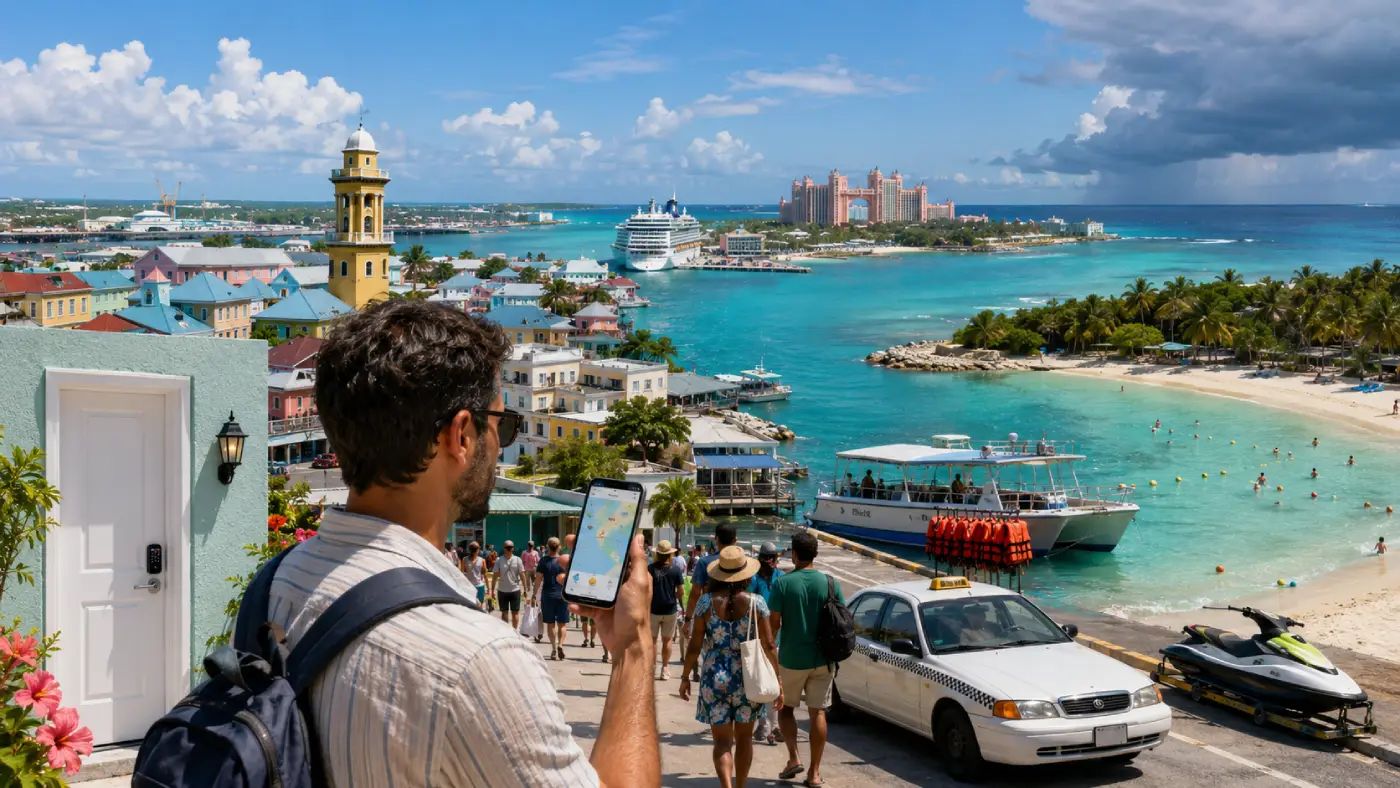

Crime receives much of the attention, especially in Nassau and Freeport. Yet poorly regulated water activities, isolated beaches, vacation-rental security and hurricane disruption can be just as important to your actual trip.
What the Current Bahamas Travel Advisory Means
The latest U.S. Department of State advisory, issued on July 28, 2026, keeps The Bahamas at Level 2: Exercise Increased Caution due to crime. The update did not raise the advisory level or add a new risk indicator.
Level 2 is not a recommendation to avoid The Bahamas. It means visitors should take more care than they might at home, particularly around crime, vacation rentals, beaches, boats and jet ski operators.
Canada’s current advisory and Australian guidance both advise a high degree of caution, while the UK provides detailed guidance without an equivalent numbered level. Those labels are not directly interchangeable, but each government highlights risks that visitors should take seriously.
Government advisories describe the precautions a destination requires. They do not predict what will happen to an individual tourist, and they should not be interpreted as proof that every island or neighborhood presents the same risk.
Nassau, Freeport and the Out Islands Are Different
Safety conditions vary considerably across The Bahamas.
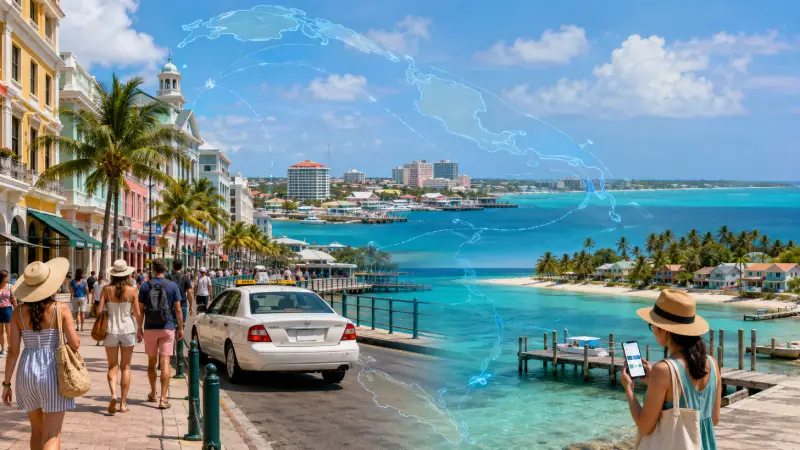
Most reported crime occurs in Nassau on New Providence and Freeport on Grand Bahama. The U.S. advisory specifically tells visitors to stay alert in Nassau’s Over-the-Hill area, south of Shirley Street, where gang violence has affected local communities.
That warning should not be expanded into a claim that every part of Nassau is unsafe. The UK travel guidance advises visitors to remain within main tourist areas, avoid poorly lit places and travel in groups after dusk. It also notes regular police patrols in downtown Nassau.
Grand Bahama requires similar awareness, including around Freeport’s tourist and resort areas. Robberies and theft can occur during the day as well as after dark, so resort surroundings should not be treated as automatically risk-free.
Crime rates are generally lower on the Family Islands, also known as the Out Islands. Remoteness creates a different concern, however: transport, emergency assistance and medical services may be less accessible than in Nassau or Freeport.
Recent public traveler discussions reflect that distinction. Visitors frequently describe uneventful stays in resorts, Paradise Island and established tourist districts, while repeatedly advising against unplanned walks through unfamiliar parts of Nassau after dark. Those experiences do not override official warnings, but they help explain why route and timing matter more than broad claims that the entire country is either safe or dangerous.
Crime Risks That Matter to Tourists
Armed robbery, burglary, theft, fraud and sexual assault appear in official guidance for Nassau and Freeport. Petty theft can also occur around tourist areas, cruise terminals, festivals and regattas.
Simple precautions reduce unnecessary exposure:
-
Keep passports, spare cards and excess cash secured at your accommodation.
-
Avoid displaying expensive jewelry, watches or large amounts of cash.
-
Use ATMs inside banks, airports, hotels or other controlled locations.
-
Watch your card while it is being handled and check for unauthorized transactions.
-
Lock windows, entrance doors and balcony doors at hotels and vacation rentals.
-
Do not open your accommodation door unless you know who is outside.
-
Stay calm and do not physically resist if confronted during an armed robbery.
Vacation rentals deserve extra attention, particularly detached properties without private security. Check recent reviews, door and window locks, exterior lighting and how you would contact the host during an emergency.
Night plans also need more structure. Avoid isolated beaches and poorly lit streets, arrange your return transport in advance and do not accept rides from strangers.
Drink spiking and sexual assault have been reported in hotels, casinos, bars, cruise settings, beaches and during jet ski activities. Keep drinks in sight, avoid accepting open drinks or other items from new acquaintances and leave with someone you trust if a situation starts to feel wrong.
Solo and women travelers are not automatically excluded from visiting The Bahamas. The practical margin for error becomes smaller at night, on deserted beaches, in unsecured accommodation and when accepting transport or activities from unknown individuals.
Water Activities Need More Attention Than Many Visitors Expect
Clear water and resort beaches can make marine activities feel routine. Official advice tells a more cautious story, particularly for independent jet ski rentals around New Providence and Paradise Island.
The U.S. advisory reports injuries, deaths and sexual assaults involving watercraft operators. Some operators may be unlicensed or uninsured, equipment standards vary, and weather forecasts are not always respected.
A separate U.S. Embassy jet ski safety alert advises Americans to avoid jet ski rentals in The Bahamas. U.S. government employees are prohibited from renting or using jet skis supplied by independent operators on New Providence and Paradise Island.
Skipping an independently offered jet ski ride is the clearest low-risk decision in those areas. Other boat, snorkeling or diving trips should be booked through an established operator that can confirm its registration, insurance, safety briefing and equipment standards.
Current Bahamian jet ski rules require renters to be at least 18, wear a life vest and avoid operating under the influence of alcohol or drugs. These requirements do not remove the need to assess the operator and equipment.
Swimming also requires judgment:
-
Do not swim alone or enter the sea after drinking alcohol.
-
Stay aware of jet skis and boats operating close to shore.
-
Check currents, visibility and marine forecasts before entering the water.
-
Be realistic about your health and swimming ability before snorkeling.
-
Avoid night swimming and water where bait is being used to attract marine life.
-
Follow beach closures, lifeguard instructions and local shark warnings.
Shark incidents have caused serious injuries and deaths in Bahamian waters, but sensational headlines are not useful planning tools. Local conditions, time of day, nearby fishing or baiting activity and official beach advice should guide the decision to enter the water.
Taxis, Buses and Driving
Registered taxis are usually the simplest option after dark or when traveling beyond a familiar tourist district. Taxis generally do not use meters, so confirm the fare and currency before getting in.
Local buses can be useful during the day, but UK guidance recommends extra care on buses traveling away from main tourist areas at night. Accommodation staff can help identify a suitable taxi company or arrange a known driver for the return journey.
Traffic moves on the left, although many vehicles are imported from the United States and have the steering wheel on the left. That combination can make visibility and turning less intuitive for foreign drivers.
Night driving and rural roads deserve additional caution. Avoid driving after drinking, allow extra space around other vehicles and do not stop to move suspicious objects blocking the road.
License requirements, cannabis restrictions and drone rules belong to a separate legal decision. Review the Bahamas rules on cannabis, drones and driving before renting a vehicle or packing equipment.
Hurricanes, Weather and Medical Care
Atlantic hurricane season normally runs from June 1 through November 30. Storms can disrupt flights, ferries, electricity, accommodation and access to smaller islands even without a direct landfall.
Check the Bahamas Department of Meteorology as the trip approaches and again before boat journeys or island transfers. Airline and accommodation messages also matter because departure plans may change before an official evacuation order.
Medical care is generally better equipped in Nassau and Freeport than on the Out Islands. Australia’s Bahamas travel advice warns that major emergencies may require evacuation to the United States and that treatment can be expensive.
Travel insurance should cover medical treatment, water activities you intend to book, trip disruption and emergency evacuation. Confirm exclusions before paying for diving, boating or other adventure activities.
Police, fire and medical emergencies can be reported by calling 911 or 919. The Royal Bahamas Police Force also publishes local and island-specific contact details.
Save accommodation, airline, insurance and transport contacts offline before departure. Access to maps and official weather pages is also useful; mobile data options for the Bahamas can be considered alongside roaming and local Wi-Fi.
A Sensible Safety Plan Before You Go
Good preparation does not require staying inside a resort. Check the advisory issued for your nationality shortly before departure, leave copies of your passport and insurance details with someone you trust, and make sure you know how to contact your insurer from abroad.
Cruise passengers can explore Nassau independently, but should know their route, return time and transport options. Resort guests can also leave the property; the important distinction is between planned travel in established areas and wandering through unfamiliar neighborhoods after dark.
So, Is the Bahamas Safe to Visit?
Yes, The Bahamas remains a realistic destination for ordinary tourists who accept the need for increased caution. Current advisories do not impose a blanket warning against travel, and risk is not distributed evenly across the islands.
Nassau and Freeport require the most awareness, especially at night and outside established tourist areas. Independent jet ski rentals, isolated beaches, unsecured vacation homes and approaching storms deserve particular attention.
These choices reduce avoidable exposure, but they do not remove the risks identified in official guidance. The goal is not to treat The Bahamas as dangerous everywhere, but to understand where casual holiday decisions carry consequences.