

'/%3e%3c/svg%3e)
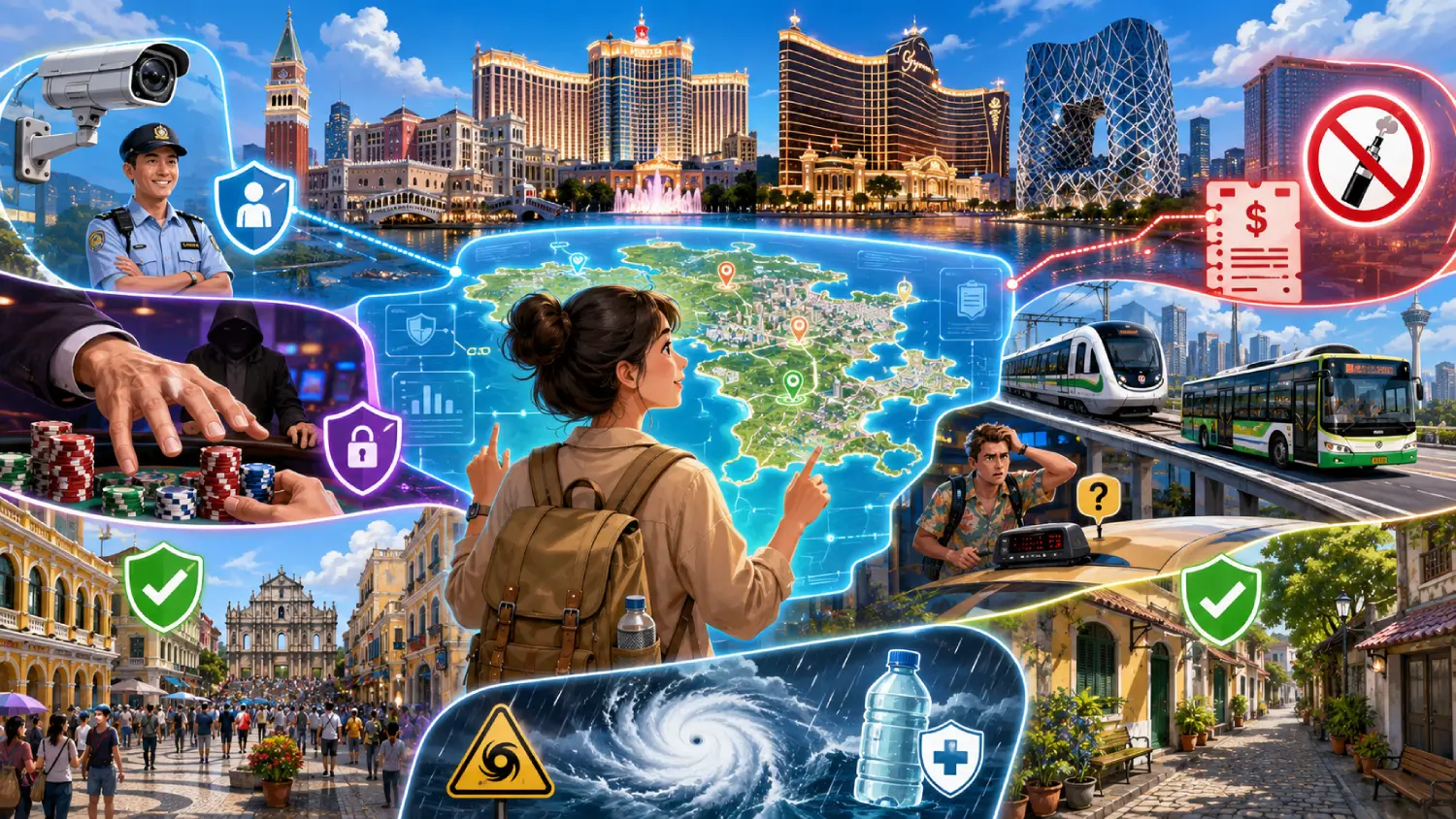
The short answer is yes, Macau is incredibly safe for tourists in 2026. The days of 1990s triad turf wars are long gone, replaced by extensive CCTV networks and strict government enforcement. Today, violent crime against tourists is virtually non-existent, but the sheer density of visitors has led to a spike in non-violent offenses like illegal money exchanges and casino-adjacent scams. Your main threats are no longer physical dangers, but rather financial traps, extreme weather, and strict local regulations.
The Current Reality: Casinos, Surveillance & Strict Laws
The Macau of 2026 operates under intense security and tight legal frameworks. The streets are blanketed with surveillance cameras, making violent crime highly unusual. The massive casino resorts employ extensive private security teams to ensure their high-rolling guests remain completely undisturbed.
While you won't encounter street gangs, there is a prominent underground economy centered around gambling. Recent years have seen a sharp crackdown on illegal money exchange rings operating near the major resorts. As a tourist, you will not be targeted by organized crime, but you might be approached by individuals offering shady currency swaps.
It is absolutely crucial to stay on the right side of local law enforcement. Ignorance is never an excuse, so familiarize yourself with Macau Tourist Bans & Laws before you arrive. Even minor infractions, like jaywalking or littering, are strictly enforced and carry hefty on-the-spot fines.
Regional Breakdown: Safe Zones vs. Areas to Avoid
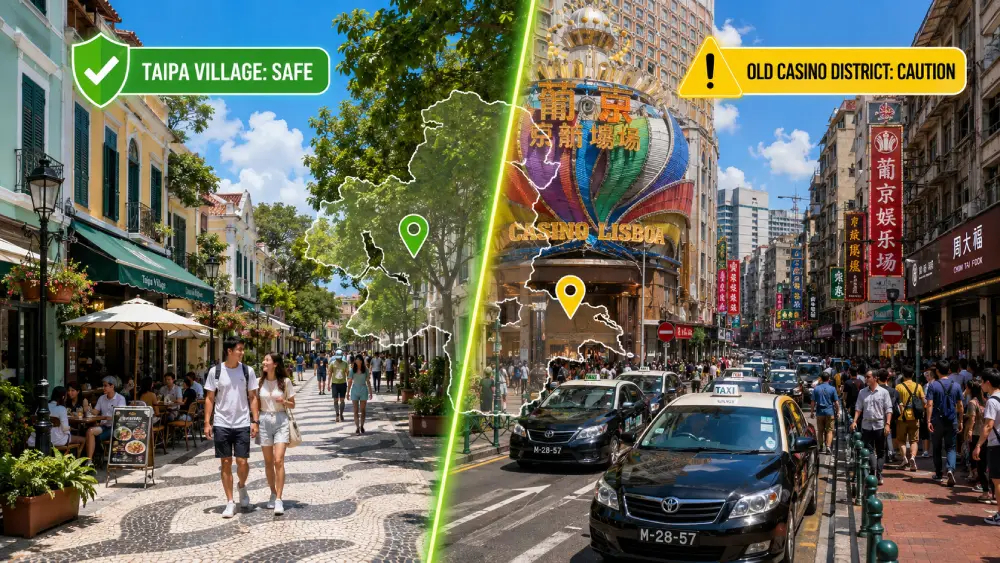
Macau is geographically tiny, making it very difficult to accidentally wander into a dangerous neighborhood. Almost every district is well-lit, heavily patrolled, and completely safe for tourists to explore at all hours. However, the vibe and minor risks change depending on the zone.
The Safest Tourist Hubs:
-
Cotai Strip: The epicenter of modern mega-resorts is heavily guarded and incredibly safe. You can walk between casinos late at night with zero issues.
-
Taipa Village: This charming, historic area is pedestrian-friendly, relaxed, and completely secure for daytime exploring and evening dining.
-
Senado Square & Ruins of St. Paul's: The historic center on the Macau Peninsula is safe but overwhelmingly crowded, making it a prime spot for opportunistic pickpockets.
Areas to Exercise Caution:
-
Border Gate (Portas do Cerco): This incredibly busy crossing into mainland China is chaotic and heavily congested. Keep a tight grip on your bags to deter opportunistic pickpockets in the massive crowds.
-
Older Casino Districts (Macau Peninsula): The streets around the older, legacy casinos can feel a bit gritty late at night. You are perfectly safe, but you may encounter more aggressive touts and illegal currency exchangers.
-
Red Light Spillover Zones: Some streets near specific older casinos have a high concentration of sex workers and persistent promoters. It is more annoying than dangerous, but families may want to avoid lingering in these specific pockets after dark.
Transportation Safety: Taxis, Buses & The Light Rail
Getting around Macau is generally cheap and highly secure. The Macau Light Rapid Transit (LRT) is pristine, efficient, and completely safe for all passengers. Public buses are also incredibly reliable, though they get claustrophobically packed during rush hour, requiring you to guard your pockets closely.
Taxis are where tourists face the most friction in Macau. While physically safe, rogue taxi drivers are infamous for scamming foreigners, especially late at night. Common tactics include refusing to use the meter, demanding flat rates that are triple the normal fare, or claiming they have no change.
To protect yourself, always insist on the meter before closing the door. If a driver refuses, simply step out and find another cab immediately. Alternatively, stick to the free casino shuttle buses, which run continuously between major resorts, ferry terminals, and the airport.
Tourist Scams: The New Threat on the Casino Floor

The massive wealth flowing through Macau attracts a specific breed of highly skilled scammer. These operators rely on your distraction, confusion, or greed.
Watch out for these common 2026 traps:
-
The Casino "Expert": A friendly stranger sidles up to you at the tables, offering unsolicited advice or claiming to have a foolproof winning system. They are ultimately trying to hustle you for free chips or demand a cut of your winnings.
-
Illegal Money Changers: People lingering outside casinos will offer you incredible exchange rates to avoid bank fees. These transactions are illegal, heavily targeted by police, and frequently involve counterfeit currency.
-
Fake Wi-Fi Networks: Scammers set up open, unsecured networks in hotel lobbies to steal your banking credentials when you log in. This is a massive risk in heavily touristed areas.
-
Bait-and-Switch Touts: Promoters on the street will offer cheap massages, spa treatments, or dining deals to get your attention. inside the establishment, the prices magically inflate, and aggressive staff will demand immediate, exorbitant payment.
Women’s Safety & Solo Travel
Macau is exceptionally safe for female travelers. Women can confidently walk alone at night, whether returning to their hotel on the Cotai Strip or strolling through Taipa Village. The intense police presence and ubiquitous cameras act as a massive deterrent to any form of street harassment.
Catcalling and aggressive machismo culture are essentially non-existent here. You might be approached by casino promoters or restaurant touts, but a firm "no" is universally respected. Drink spiking is incredibly rare, but standard nightlife rules still apply: never leave your drink unattended in crowded mega-clubs.
Be mindful of the local laws regarding what you can bring into the territory as a solo traveler. Customs checks are incredibly thorough, so review the Macau Airport Customs Rules to ensure your personal items don't result in immediate fines or confiscation at the border.
Health, Tap Water & Extreme Weather
Your biggest physical threat in Macau is not crime, but the environment. Typhoon season runs from May to October, bringing violent winds, massive storm surges, and severe street flooding. The government takes these storms incredibly seriously, and casinos will literally lock their massive doors to keep people safely inside during high-level alerts.
The summer months are also dangerously hot and overwhelmingly humid. Heatstroke and dehydration are common tourist ailments, especially when hiking to the Guia Fortress or exploring the historic center on foot. Always carry water and severely limit strenuous outdoor activities during the midday sun.
Can you drink the tap water? While the local government claims it is technically safe, the heavy chlorination and old pipe infrastructure mean it is highly recommended to stick to boiled or bottled water. Dengue fever is also an occasional risk, so aggressively apply mosquito repellent if you are exploring the greener, natural areas of Coloane.
The Ultimate Safety Tool: Staying Connected
Having reliable internet access in Macau is not a luxury; it is a critical safety tool. You need seamless data to navigate the winding streets of the historic center, verify taxi routes to avoid overcharging, and receive real-time government typhoon alerts. Searching for public Wi-Fi leaves you vulnerable to data theft and disconnects you when you need help the most.
Need data in Macau? Get an eSIM!
Choose the perfect data plan for your trip

Manage your eSIM in the app
Install, top up and track data.
You can easily secure your connection the moment you land. A Macau eSIM keeps your banking apps completely secure and ensures you never have to hunt for a compromised public network. For a complete breakdown of your connectivity options, read our dedicated guide on How to Get Internet in Macau.
To compare the most reliable local networks and avoid overpaying at airport tourist kiosks, make sure to check out our Best eSIM for Macau.
Official Travel Advisories (2026 Update)
The global consensus is that Macau is a low-risk destination, though recent political shifts have prompted updated warnings regarding digital privacy and local laws.
-
United States (State Department): Advises travelers to exercise increased caution due to the arbitrary enforcement of local laws. They specifically warn that travelers may face enhanced scrutiny or requests to unlock personal digital devices by authorities.
-
Canada: Recommends taking normal security precautions overall. They highlight the strict enforcement of minor laws and strongly warn travelers about the severe impacts and disruptions caused by the annual typhoon season.
-
United Kingdom (FCDO): Advises standard precautions for visitors. They emphasize the absolute zero-tolerance drug policies and warn tourists to be extremely careful with personal belongings in crowded areas to avoid petty theft.
The Verdict: Is Macau Safe?
Macau is undeniably of the safest tourist destinations in Asia for 2026. The extreme surveillance and strict policing have effectively eradicated violent street crime, allowing you to focus purely on enjoying the incredible food, history, and mega-resort entertainment. Your primary concerns should simply be dodging late-night taxi scams, avoiding shady illegal money changers, and rigorously respecting the heavy-handed local laws.
Golden Rules for 2026:
-
Never exchange money on the street: use official banks, hotel cashiers, or verified ATMs inside the major casinos.
-
Demand the taxi meter: If a driver refuses to use the meter or asks for a flat rate, get out and find another cab immediately.
-
Respect the weather warnings: If a severe typhoon alert is issued, stay indoors and follow all hotel instructions.
-
Guard your pockets in crowds: Keep your valuables completely secure when exploring the Ruins of St. Paul's or crossing the Border Gate.
-
Leave the vapes at home: E-cigarettes and vaporizers are strictly banned, and bringing them in will result in massive, unnegotiable fines.
Note: Travel safety situations can change rapidly. This information is accurate as of May 2026. Always exercise street smarts and consult official advisories before your trip.