Download the App and manage your eSIMs easily
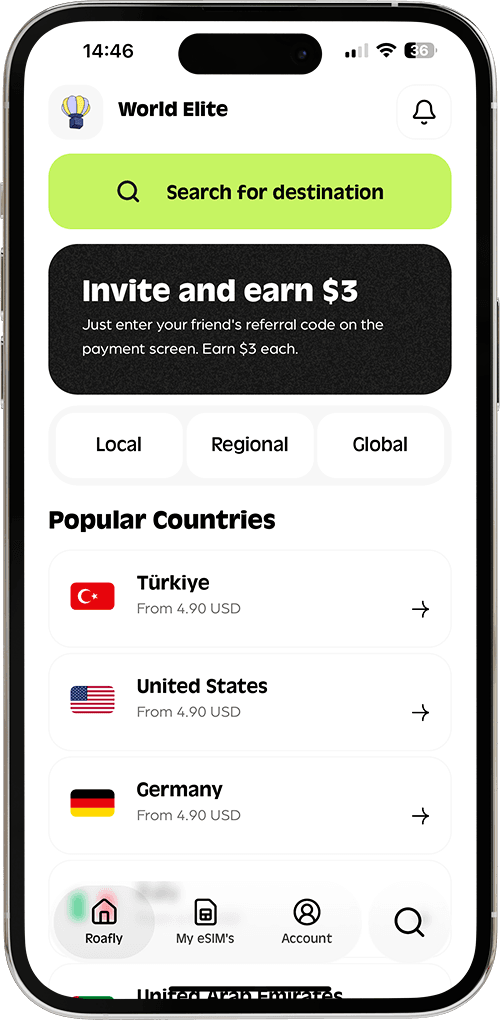
Create your order quickly
See your eSIM details
Track your remaining data
Download the App and manage your eSIMs easily
Create your order quickly
See your eSIM details
Track your remaining data
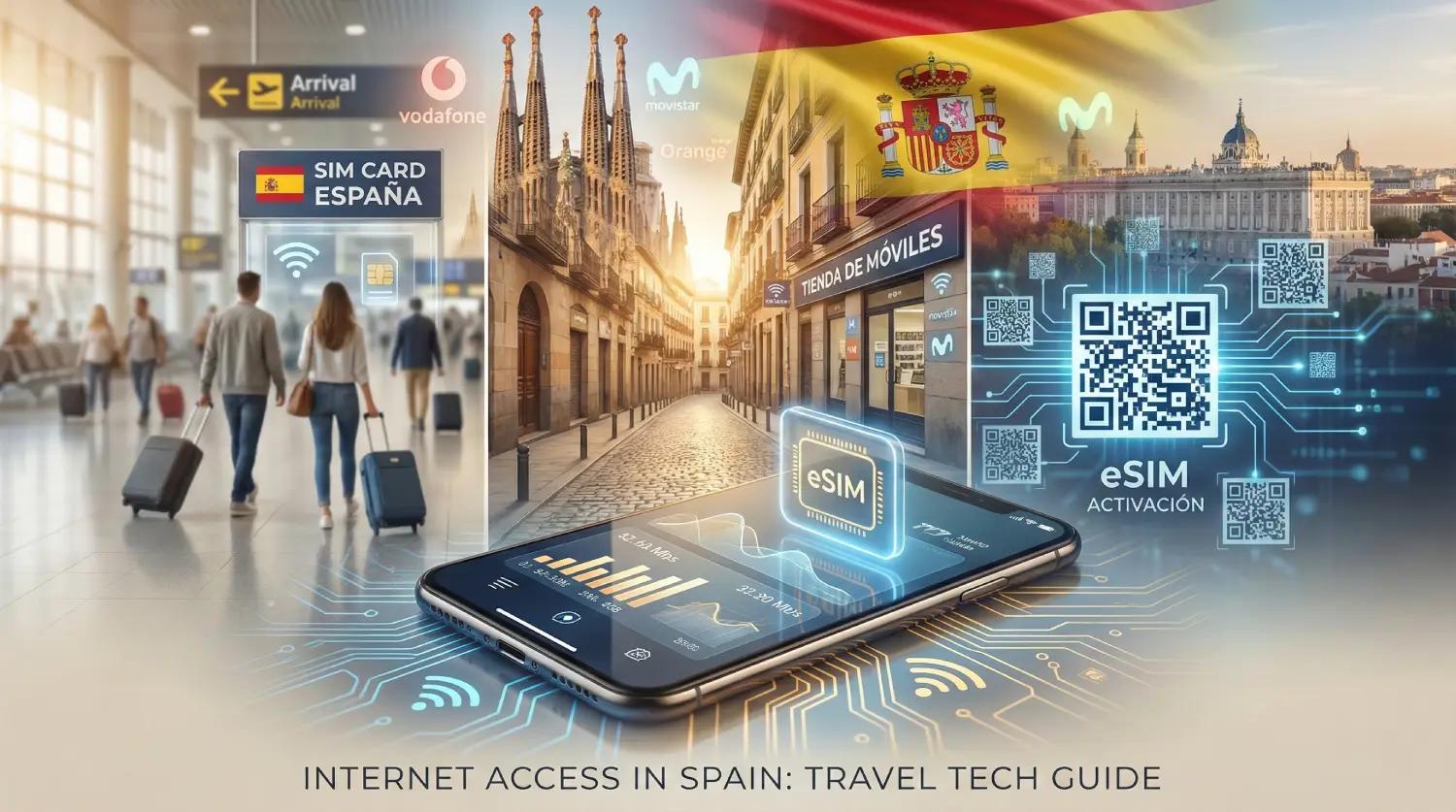
Staying connected in Spain is essential for navigation, communication, banking, and sharing your travel experiences. Whether you’re arriving at a Spanish airport or planning your trip from home, there are several excellent ways to get reliable internet. This guide walks you through the easiest options—including local prepaid SIM cards, Spain eSIMs, pocket Wi-Fi, airport and public Wi-Fi—so you can be online without surprises.
Orange, Movistar
Instant delivery
From 3.90 USD

Sophie Callahan
Updated Jan 28, 2026
8 min read
Jump to section
👇Best for most trips
Orange, Movistar

Spain
10 GB · 30 days
Enough for maps, bookings and everyday travel.
Hotspot supported
$14.00
From 3.90 USD
Travelers in Spain have several different ways to access mobile internet, each designed for different travel styles and needs. Before deciding which option works best for your trip, it helps to understand what’s available and how these options differ in terms of convenience, setup, and cost.
Airport SIM cards are sold at major Spanish airports and provide quick access to mobile data after landing, usually at higher prices.
Local tourist SIM cards can be purchased from mobile operator stores or phone shops in cities, often offering larger data packages at better value.
eSIMs allow you to activate mobile data digitally without using a physical SIM card, making them ideal for travelers who want to be connected immediately upon arrival.
Pocket Wi-Fi devices provide shared internet access for multiple devices through a portable router.
Airport and public Wi-Fi networks are widely available but are best suited for short, non-critical usage.
Each of these options has its own setup process and limitations, which is why it’s important to look at them individually before choosing how you’ll stay connected during your time in Spain.
Choose the perfect data plan for your trip

When you touch down at major airports like Madrid-Barajas (MAD) or Barcelona-El Prat (BCN), you’ll find several kiosks, convenience stores, and mobile shops selling local prepaid SIM cards. These are typically Spanish SIM cards from major networks, valid throughout Spain and often with EU roaming included.
Airport SIM prices in Spain are generally higher than buying in the city. At major airports such as Madrid-Barajas, prepaid tourist SIM cards typically fall into the following ranges:
Around 40 GB of data for €20–€22 (approximately $22–$24 USD)
80–100 GB data packages usually priced around €25–€30 (approximately $27–$33 USD)
Exact pricing and data allowances vary depending on the operator and the airport kiosk. Another important limitation is availability — many SIM card shops at Spanish airports close in the early evening, which can make it difficult to buy a physical SIM if your flight arrives late.

If you prefer better prices and more options, buying a SIM card once you reach the city is usually cheaper and gives you more flexibility. Most major Spanish mobile operators such as Vodafone, Orange, Movistar, and Yoigo all offer prepaid tourist SIM or “prepago” plans. Prices typically start around €10 (~$11 USD) for basic data plans, up to €30–€40 for larger data allowances.
Typical local prepaid SIM starter prices you might find in store or city kiosks include:
Base prepaid SIM with approx. 40–50 GB data from ~€10 (~$11 USD)
Larger 100 GB+ prepaid data bundles from €20–€30 (~$21–$32 USD)
To purchase a physical SIM card in Spain, you’ll usually need to present your passport in store as part of a standard registration process.
If your phone supports eSIM, this is one of the easiest ways to get internet in Spain without hunting for physical cards or dealing with airport queues.
Roafly eSIM gives you instant connectivity as soon as you land. You install your data plan digitally via direct install, QR code, or manual setup—no physical SIM swap needed.
Here are the current Roafly eSIM Spain packages shown in the image:
| Data | Validity | Price (USD) |
|---|---|---|
| 1 GB | 7 days | $3.90 |
| 2 GB | 15 days | $5.50 |
| 3 GB | 30 days | $7.50 |
| 5 GB | 30 days | $9.90 |
| 10 GB | 30 days | $14.00 |
| 20 GB | 30 days | $20.00 |
| 50 GB | 30 days | $34.90 |
These are Roafly Spain eSIM prices and are up to date as shown.
Roafly works on local Spanish networks (Vodafone and Orange) with strong coverage across urban and rural areas alike. Being digital, it’s ideal for travelers who want connectivity the moment they arrive without visiting a store.
If you’re visiting Spain often or want flexible plans, also check our Best eSIM for Spain guide for deeper comparisons and plan recommendations.
Pocket Wi-Fi is a portable router that provides internet for multiple devices at once and can be a good option for families or remote work trips.

You can rent these devices at airports or order online pre-trip for pickup upon arrival.
Typical daily rates vary, but expect around €5–€10 per day for modest data limits.
Some packages include unlimited data but throttle speeds after a daily threshold.
Pocket Wi-Fi gives you shared connectivity for phones, tablets, and laptops—great if you’re traveling as a group or need stable internet to work while moving between cities.
Many airports, cafés, hotels, and public places in Spain offer free Wi-Fi. This is fine for light browsing, quick emails, or messages, but there are a few things to remember:
Speed and reliability vary widely.
Public Wi-Fi is generally unsecured—avoid sensitive activities like online banking unless you use a VPN.
To stay connected throughout your day (especially navigation maps or ride-hailing apps), having a dedicated SIM or eSIM connection is far more dependable.
Spain has a well-developed mobile network infrastructure, with strong 4G and expanding 5G coverage across the country. Most travelers will experience reliable mobile internet in cities, coastal regions, and major transport routes. However, coverage quality can still vary depending on the operator and location.
Below are the main mobile network operators in Spain and what travelers should expect in terms of coverage.

Vodafone offers one of the strongest overall mobile networks in Spain. Its coverage is excellent in major cities such as Madrid, Barcelona, Valencia, and Seville, as well as along coastal tourist destinations. Vodafone also performs well in suburban and many rural areas, making it a solid choice for travelers moving between cities. 4G is widely available, and 5G coverage continues to expand in urban centers.

Orange has very similar coverage quality to Vodafone and is particularly strong in cities and densely populated areas. Travelers spending most of their time in urban environments or popular tourist regions will generally experience fast and stable connections. Orange’s 4G network is reliable nationwide, while 5G is mainly concentrated in large cities and regional hubs.
Movistar has the widest geographic coverage in Spain, especially in rural and remote areas. It is often considered the most reliable network outside major cities, including inland regions and smaller towns. While Movistar’s speeds in cities are competitive, its biggest advantage is consistent signal availability across the country, including less-traveled areas.
Yoigo focuses primarily on urban and suburban coverage. It performs well in large cities and metropolitan areas but relies on network sharing agreements in rural regions. For travelers staying mostly in cities, Yoigo coverage is generally sufficient, but it may not be as consistent in remote areas compared to Vodafone, Orange, or Movistar.
In practice, most travelers in Spain will have a smooth mobile internet experience regardless of the major network used, especially in cities and tourist hotspots. High-speed 4G is widely available, and 5G is increasingly accessible in urban areas. Coverage may weaken in mountainous regions or sparsely populated inland zones, where network availability depends more heavily on the operator.
Choosing a solution that connects to strong national networks ensures stable internet access whether you’re navigating city streets, using ride-hailing apps, or traveling between destinations.
Here’s how to decide based on your travel style:
Short trips of a few days: An eSIM like Roafly or a prepaid SIM card with a small data plan is often easiest. Roafly’s 1–5 GB plans are affordable and activate instantly.
Longer stays (1–4 weeks): Bigger prepaid data bundles from local operators (40–100 GB+) or Roafly’s 20–50 GB plans keep you connected without topping up constantly.
Group travel or remote work: Pocket Wi-Fi might be worth renting for shared connectivity on the go.
Budget-only online access: Use airport and café Wi-Fi for casual browsing—but pair with a mobile plan for true freedom and coverage.
Buy your eSIM or pre-order your SIM card before departure to avoid airport lines and shops that often close early.
Always carry your passport when purchasing a local SIM card in Spain.
If you plan to roam within Europe as well, be sure to check roaming allowances included in your plan.
Dual-SIM capable phones let you keep your home number and a Spain data plan at the same time.
Stay connected effortlessly on your Spain trip with reliable mobile data options. For quick setup and traveler-friendly eSIM plans, start with a Roafly eSIM that suits your stay duration and data usage.
Check the latest Roafly eSIM packages for Spain and stay online from touchdown to takeoff!
Best for most trips
Orange, Movistar
Spain
10 GB · 30 days
Enough for maps, bookings and everyday travel.
Hotspot supported
$14.00
From 3.90 USD

Manage your eSIM in the app
Install, top up and track data.
Choose the perfect data plan for your trip
Manage your eSIM in the app
Install, top up and track data.
