
Portugal has excellent 4G and expanding 5G coverage, competitive prepaid pricing, and strong infrastructure across cities and tourist regions. This guide explains all practical ways to get internet in Portugal, including airport SIM cards, local SIMs, eSIMs, and pocket WiFi, with clear prices, pros and cons, and expert tips.
Internet Options for Travelers in Portugal
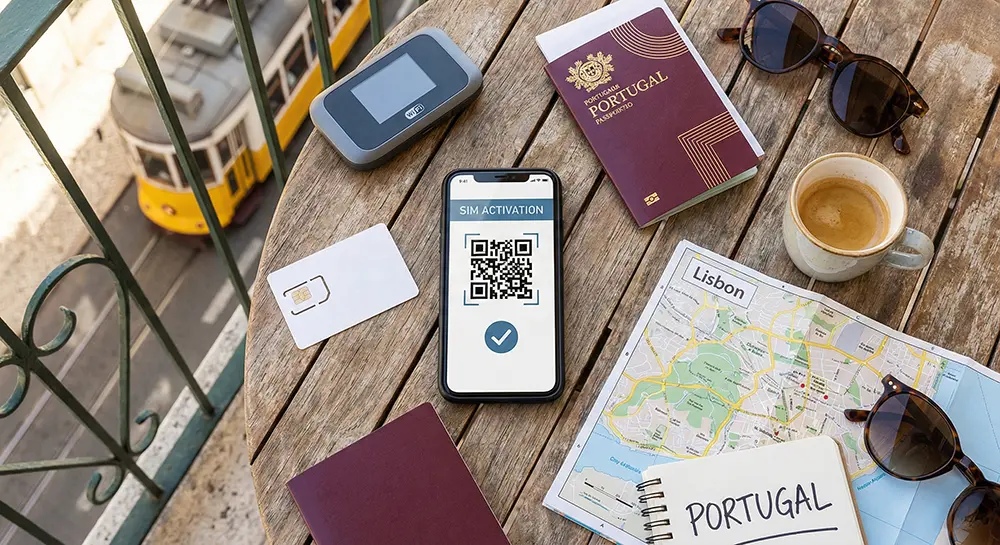
Travelers visiting Portugal have several practical ways to stay connected, depending on their budget, trip length, and convenience expectations. The most commonly used internet options include:
-
Airport SIM cards:
Available immediately after landing at major airports like Lisbon and Porto. These are convenient for instant access but usually slightly more expensive than city options. -
Local prepaid SIM cards:
Sold in mobile operator stores and electronics shops across cities. They offer better value and larger data allowances, especially for longer stays. -
eSIM solutions:
Ideal for travelers with compatible phones who want instant setup without visiting a store or swapping physical SIM cards. Activation can be done before arrival. -
Pocket WiFi (portable hotspots):
Best suited for families or groups traveling together, allowing multiple devices to connect through a single rental device. -
Free public WiFi:
Widely available in cafés, hotels, airports, and public spaces, but often unreliable, slower during peak hours, and not recommended for secure activities.
In the following sections, each option is explained in detail with up-to-date pricing, where to buy, and who it is best suited for, so you can choose the most efficient way to get internet in Portugal.
Need data in Portugal? Get an eSIM!
Option 1: Buying a SIM Card at Portugal Airports
If you want internet immediately after landing, airport SIM cards are the fastest option. Lisbon Airport (LIS) and Porto Airport (OPO) both have SIM kiosks, vending machines, and telecom counters in arrival halls.
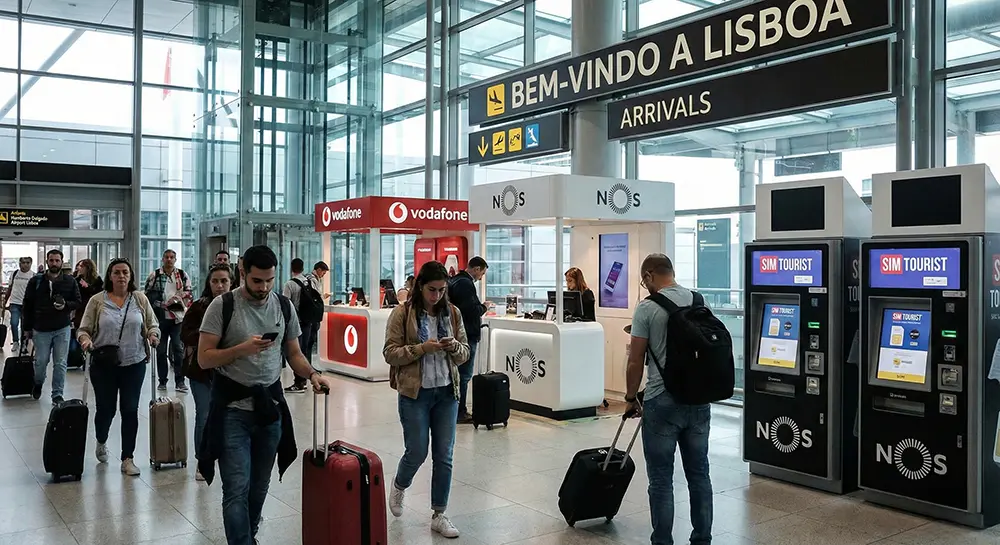
Where to Buy Airport SIM Cards
-
Arrivals hall kiosks
-
Currency exchange counters selling SIMs
-
SIM vending machines (24/7 availability)
Airport SIM Prices in Portugal (2026)
| Provider | Data | Validity | Price |
|---|---|---|---|
| Vodafone | 10 GB + calls/SMS | 30 days | €25 |
| Vodafone | Unlimited (Portugal only) | 30 days | €35 |
| Lycamobile | 25 GB | 30 days | €10 |
| Vodafone Traveller | 20 GB | 30 days | €20 |
Airport prices are typically 10–20% higher than city stores, but still reasonable by European standards.
Pros and Cons of Airport SIMs
Pros
-
Instant connectivity
-
No travel into the city required
-
Staff-assisted setup
Cons
-
Slightly higher prices
-
Limited plan selection
-
Some kiosks close late at night
Airport SIMs work well for short stays or late arrivals who need navigation immediately.
Option 2: Buying a Local SIM Card in Portugal Cities
For better value, buying a SIM card in the city is the most cost-effective option. Local prices are lower, and promotions are more common.
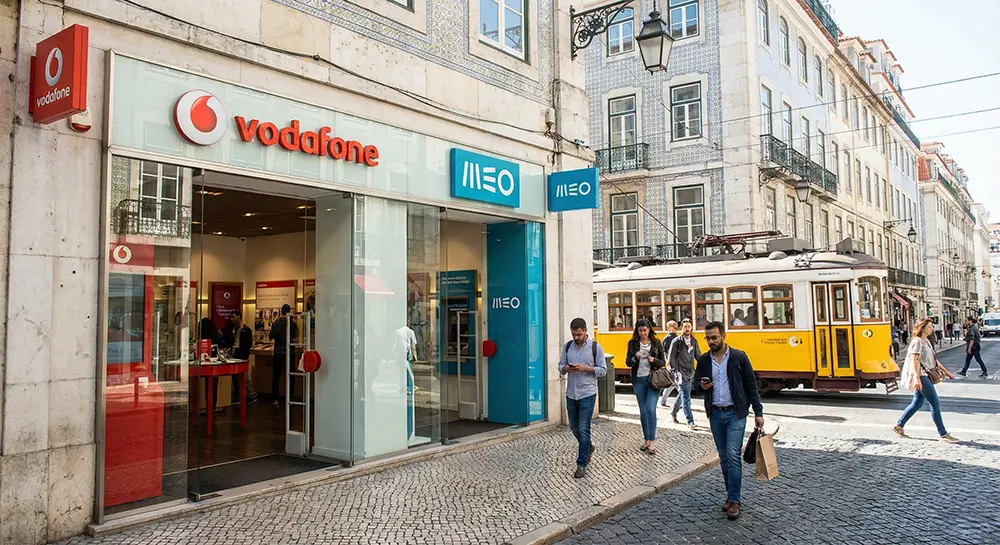
Where to Buy Local SIM Cards
-
Official Vodafone, MEO, or NOS stores
-
Electronics retailers like Worten
-
Mobile kiosks in shopping centers
-
Supermarkets (limited options)
Local SIM Card Prices in Portugal
| Provider | Data | Validity | Price |
|---|---|---|---|
| MEO | 10 GB | 7 days | €3 |
| NOS | Unlimited | 15 days | €15 |
| Vodafone | Unlimited | 15 days | €15 |
| Lycamobile | 50 GB | 30 days | €5 |
| Lycamobile | 150 GB | 30 days | €7 |
Local SIM cards often include calls and SMS and may require passport registration. Activation usually takes a few minutes.
Who Should Choose a Local SIM
-
Travelers staying more than 7–10 days
-
High data users
-
Digital nomads or remote workers
The main downside is needing to visit a store after arrival.
Option 3: Using an eSIM in Portugal (Best for Convenience)
For travelers with eSIM-compatible phones, an eSIM is the most seamless way to get internet in Portugal. There’s no need to buy a physical SIM card, visit a mobile store, or provide passport details. Everything can be set up digitally before you even leave home.
An eSIM is especially practical for short trips, multi-country European travel, or anyone who wants to be online the moment they land.
Why Choose an eSIM for Portugal
Using an eSIM in Portugal comes with several clear advantages:
-
Buy and install before departure, without relying on airport shops or store opening hours
-
Instant activation upon arrival, as soon as your phone connects to a supported network
-
No SIM card swapping, keeping your primary SIM active for calls or banking
-
Access to major Portuguese networks, ensuring stable coverage across cities and tourist regions
-
Ideal for short stays and frequent travelers, thanks to flexible data packages
For travelers who value speed, simplicity, and predictability, eSIMs remove most of the friction associated with staying connected abroad.
Roafly Portugal eSIM Packages
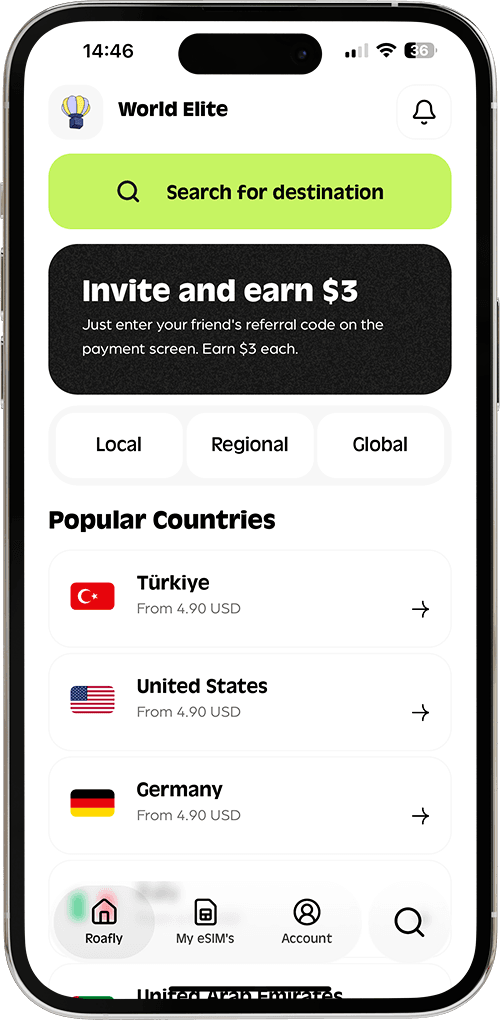
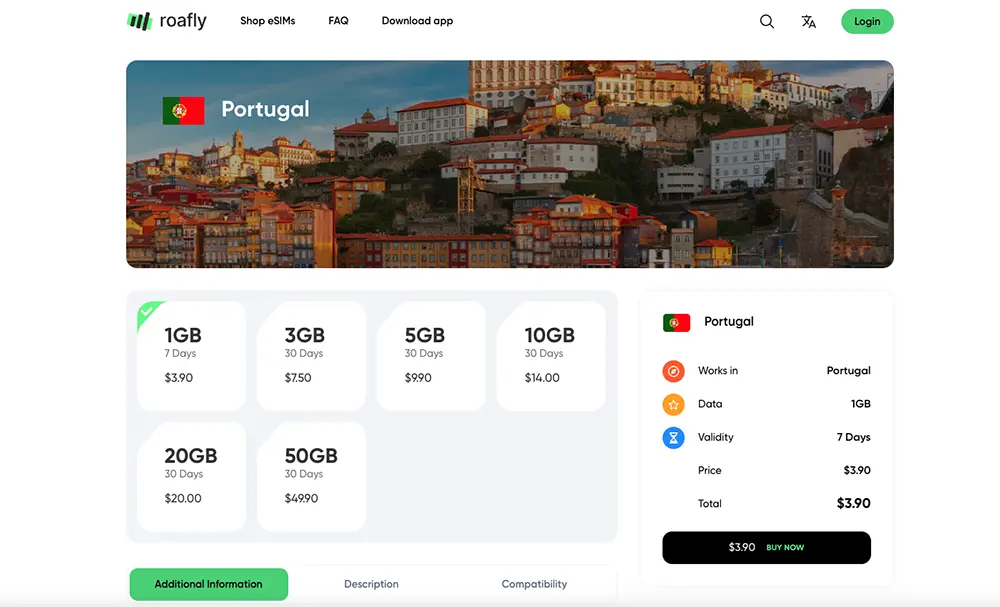
Roafly offers flexible, data-only eSIM plans designed specifically for travelers visiting Portugal. These plans connect automatically to the strongest available local networks, including Vodafone, MEO, and NOS, helping ensure reliable coverage across urban areas, coastal destinations, and major transport routes.
If you’re looking for a reliable Portugal eSIM, Roafly’s plans are designed to cover everything from short city breaks to longer stays, without contracts or hidden fees.
Need data in Portugal? Get an eSIM!
Available Roafly Portugal eSIM Plans (USD):
-
1 GB / 7 days – $3.90
-
3 GB / 30 days – $7.50
-
5 GB / 30 days – $9.90
-
10 GB / 30 days – $14.00
-
20 GB / 30 days – $20.00
-
50 GB / 30 days – $49.90
Roafly eSIM Features
-
Data-only plans
-
Mobile hotspot supported
-
No ID verification required
-
Works on iOS and Android
-
Easy setup via QR code or direct install
-
Validity starts when connected to a network
Roafly eSIMs are ideal for travelers who want fast setup, predictable pricing in USD, and reliable performance without dealing with local stores.
Option 4: Pocket WiFi (Portable Hotspots)
Pocket WiFi devices create a personal WiFi network using a local SIM card. They are popular among families or groups traveling together.

Pocket WiFi Pricing in Portugal
-
€5–10 per day
-
Weekly rentals available
-
Usually supports 5–10 devices
Pros and Cons of Pocket WiFi
Pros
-
Multiple devices connected
-
Good for groups
-
Stable connection
Cons
-
Daily rental cost adds up
-
Extra device to carry
-
Needs charging
Pocket WiFi is cost-effective for groups but less practical for solo travelers.
Free WiFi in Portugal: Is It Enough?
Portugal offers free WiFi in:
-
Cafés and restaurants
-
Hotels and hostels
-
Airports and train stations
-
Shopping malls and public spaces
While convenient, public WiFi is:
-
Often slow during peak hours
-
Unreliable outside city centers
-
Not secure for banking or work
Free WiFi works as a backup but should not be your main connection.
Comparing Internet Options in Portugal
| Option | Cost | Convenience | Best For |
|---|---|---|---|
| Airport SIM | Medium | High | Short stays |
| Local SIM | Low | Medium | Long stays |
| eSIM | Low–Medium | Very High | Most travelers |
| Pocket WiFi | High | Medium | Groups |
| Free WiFi | Free | Low | Occasional use |
Mobile Coverage and Network Quality in Portugal
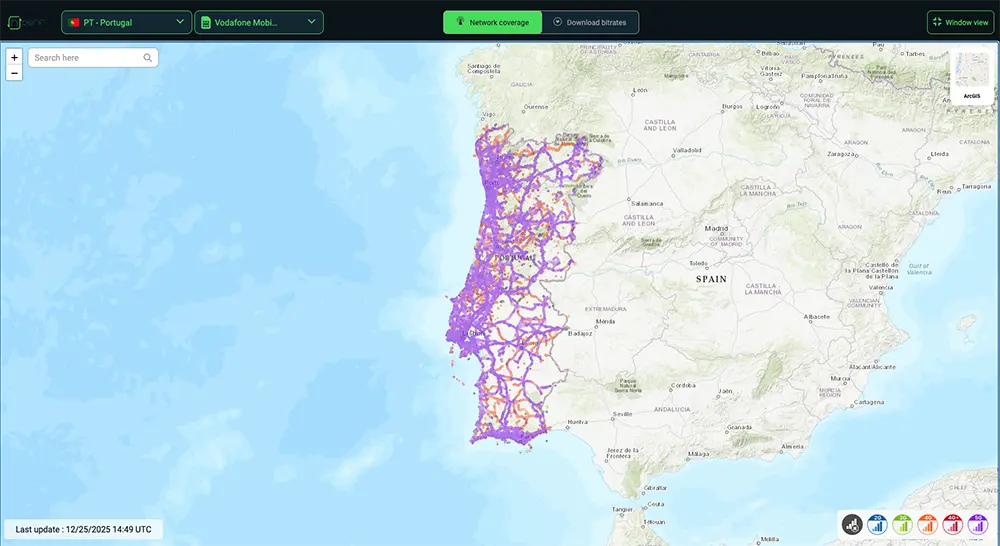
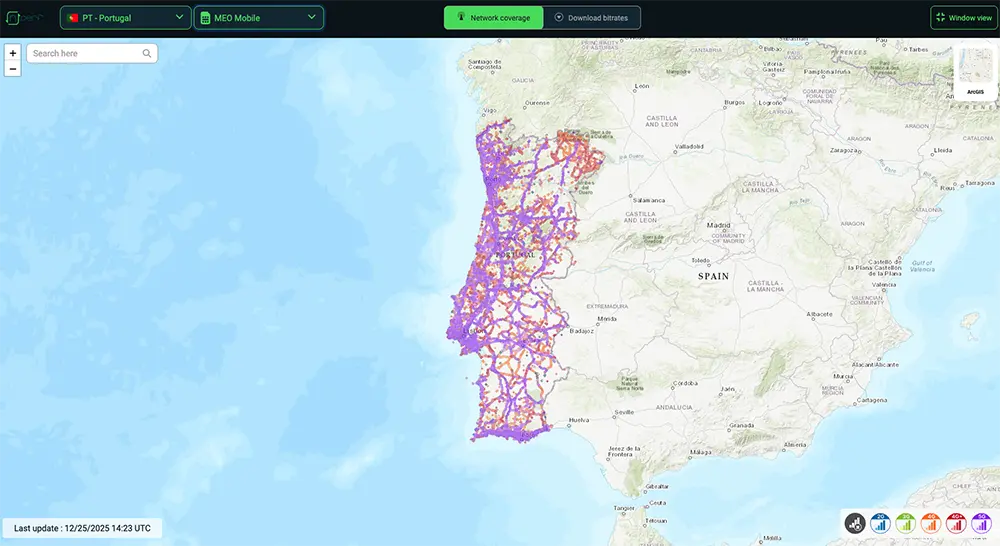
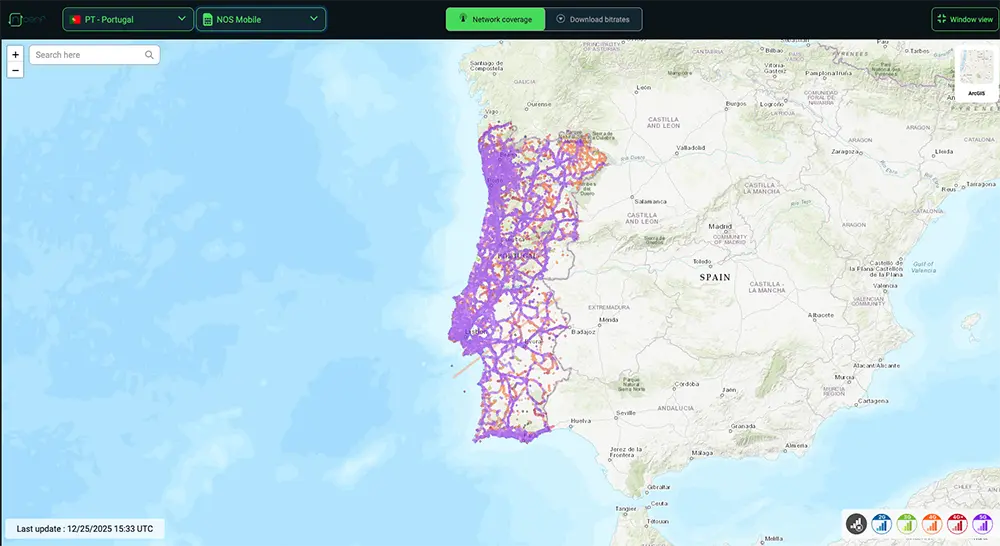
Portugal offers strong and reliable mobile coverage across the country, supported by three main network operators: Vodafone Portugal, MEO, and NOS. All three provide nationwide 4G coverage and rapidly expanding 5G networks, especially in urban and tourist-heavy regions. However, coverage quality and performance can vary slightly depending on location and network congestion.
Below is a detailed breakdown of each operator’s coverage strengths and limitations.
Vodafone Portugal Coverage
Vodafone is generally considered the strongest network in Portugal in terms of overall performance and consistency.

-
Urban areas:
Excellent coverage and high speeds in Lisbon, Porto, Faro, Braga, Coimbra, and Setúbal. 5G is widely available in city centers, business districts, and major transport hubs. -
Coastal and tourist regions:
Very reliable along the Algarve coast, including Lagos, Albufeira, Faro, and Portimão. Popular beach destinations and resorts have stable 4G and growing 5G support. -
Rural and inland areas:
Stronger than average coverage compared to other operators, especially in central Portugal and mountainous regions. Some very remote villages may drop to 3G, but coverage is still usable. -
Speed and reliability:
Consistently fast 4G speeds and stable 5G performance. Vodafone handles network congestion well during peak tourist seasons.
Best for: Travelers who prioritize speed, reliability, and coverage in both cities and remote areas.
MEO Coverage
MEO provides excellent nationwide coverage and is particularly strong in residential areas and inland regions.

-
Urban areas:
Solid 4G coverage in major cities with expanding 5G availability. Speeds are generally stable, though slightly lower than Vodafone in very crowded zones. -
Inland and rural regions:
MEO performs exceptionally well outside city centers. Coverage is strong in smaller towns, countryside areas, and less touristy regions. -
Coastal areas:
Reliable coverage along the coast, though 5G availability may be more limited compared to Vodafone in some resort areas. -
Speed and reliability:
Very consistent 4G speeds. 5G rollout is ongoing but not as aggressive as Vodafone’s in high-traffic tourist locations.
Best for: Travelers planning road trips, countryside stays, or longer visits outside major cities.
NOS Coverage
NOS offers competitive coverage and strong performance in cities, with slightly more variability in remote areas.

-
Urban areas:
Good 4G coverage in Lisbon, Porto, and other large cities. 5G is available in many urban zones but can be inconsistent depending on exact location. -
Tourist hotspots:
Performs well in popular destinations, including parts of the Algarve and major coastal cities. -
Rural areas:
Coverage can be less reliable in sparsely populated inland regions, where speeds may drop to 3G. -
Speed and reliability:
Good overall speeds in cities, but network congestion may occur during peak travel seasons.
Best for: City-focused travelers who mainly stay in urban areas and popular tourist destinations.
Overall Coverage Summary
-
4G coverage: Nearly nationwide across all three operators
-
5G availability: Strong in cities, expanding along transport routes and tourist regions
-
Rural coverage: Vodafone and MEO perform slightly better than NOS
-
Tourist areas: All networks provide reliable service in major destinations
For most travelers, any of the three networks will provide dependable connectivity. However, coverage consistency improves when your connection can automatically switch between networks, especially when traveling between cities, coastal areas, and inland regions.
Final Recommendation
For most travelers, eSIMs provide the best balance of convenience, cost, and reliability. Local SIM cards offer excellent value for longer stays, while airport SIMs work well for immediate access. Pocket WiFi is best for groups, and free WiFi should only be supplementary.
If Portugal is just the beginning of your trip, a Europe eSIM lets you stay connected across multiple countries without changing plans or SIM cards. Check the latest Europe eSIM packages and travel seamlessly beyond Portugal.