Download the App and manage your eSIMs easily
Create your order quickly
See your eSIM details
Track your remaining data
Download the App and manage your eSIMs easily
Create your order quickly
See your eSIM details
Track your remaining data
Guatemala’s tourist entry rules, checked on 5 November 2026, start with your passport’s visa category. Many nationalities can visit without a visa for up to 90 days; others need a consular visa or prior immigration approval. Qualifying foreign visas and residence can change the route.

Lena Hartley
Updated Nov 5, 2026
9 min read
Save 15% on your Roafly eSIM
Stay connected on your next trip. Use the code below at checkout.
View All DestinationsJump to section
👇Save 15% on your Roafly eSIM
Stay connected on your next trip. Use the code below at checkout.
View All Destinations
Manage your eSIM in the app
Install, top up and track data.
Your itinerary matters too. Time already spent in the CA-4 region can reduce the stay available in Guatemala, while a flight connection can introduce separate document requirements. Establish your entry route before booking the full trip.
Guatemala divides foreign nationals into three visa categories. The examples below refer to ordinary passports and the starting position before any qualifying visa or residence exception.
| Category | Ordinary-passport examples | What to arrange |
|---|---|---|
| A — visa-exempt | United States, United Kingdom, Canada, Germany, Australia, Turkey | No advance Guatemalan tourist visa; bring the required entry documents. |
| B — consular visa | India, Philippines, Egypt | Apply through a Guatemalan embassy or consulate unless you qualify for an exemption. |
| C — consulted visa | China, Pakistan, Nigeria | Obtain immigration approval through the consulted-visa process, unless an exception changes your category. |
These are representative examples, not complete country lists. Check Guatemala’s official country classification for your nationality. Diplomatic, official and other special passports can have different treatment.
Tourist admission is normally limited to a maximum of 90 days initially. The immigration officer determines your authorised stay, so read the entry stamp rather than assuming that every arrival receives the full period.
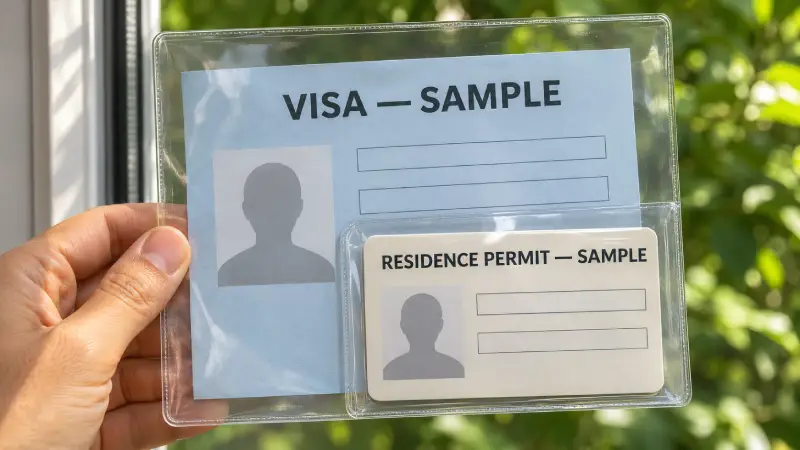
Guatemala treats a qualifying foreign visa and a residence permit differently. Under its current visa regulation:
Category B nationals with a valid US, Mexican, Canadian or Schengen visa move to Category A. They are exempt from obtaining a separate Guatemalan visa.
Category C nationals with one of those valid visas move to Category B. They still need a Guatemalan consular visa.
Category B or C nationals with valid residence in a Category A country can receive Category A treatment if they document three continuous years of residence there. A residence card alone does not establish that period.
The practical consequence is significant: an Indian passport holder with a qualifying valid US visa can use the visa exemption, while a Pakistani passport holder with the same foreign visa follows the consular route. Do not treat all “visa-required” passports as one group.
Carry the original documents supporting the exception you intend to use.
Guatemala’s embassy in Washington gives visa-exemption instructions for holders of a valid physical US Green Card. Its guidance requires the original card and excludes Green Card extensions.
The general immigration regulation separately sets the three-year residence condition described above. If you cannot document that period and intend to rely on a Green Card, obtain confirmation from the Guatemalan consulate for your passport and documents before booking. Do the same if your card has expired and you hold extension paperwork.
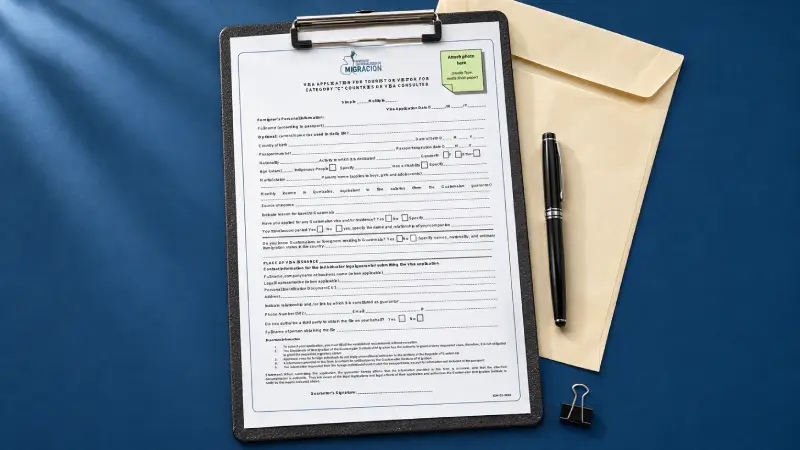
Category B applications go through a Guatemalan diplomatic or consular mission. Prepare the application form, passport, travel itinerary and financial evidence. The standard requirements include recent income or bank records and an international credit card, or a debit card supported by bank statements. The mission may request an interview or additional documents.
Consular visa fees are US$50 for a single-entry visa and US$150 for a multiple-entry visa. Follow the application office’s payment instructions; payment methods vary between missions.
Category C applicants must meet the IGM visa application requirements. These include a registered Guatemalan guarantor, passport documentation, criminal-record documentation and evidence of the visit’s purpose. Immigration approval precedes issuance through the diplomatic or consular mission.
Complete any required visa process before departure. The electronic traveller declaration is separate from the visa application and cannot replace it at the airport.
Visa validity differs from the time you may remain after entry. Multiple-entry visas valid for several years still come with a separate limit on each authorised stay.
Passport-validity instructions differ across official guidance for different travellers. Use the guidance relevant to your passport and visa route.
| Traveller | Published passport guidance |
|---|---|
| US citizen | The US State Department requires a passport that is valid on arrival. |
| British citizen | FCDO guidance requires six months remaining from arrival and two blank pages. |
| Canadian citizen | Canadian guidance requires six months remaining beyond the planned departure from Guatemala. |
These are the respective governments’ instructions to their own travellers. Guatemala’s visa-issuance rules separately require a passport with at least six months’ validity. If yours is close to expiry, confirm the applicable consular, airline and transit-country requirements before paying for non-refundable travel.
Beyond your passport and any required visa, keep the following accessible:
Evidence of departure: a return ticket or another transport arrangement demonstrating how you will leave Guatemala.
Accommodation details: a hotel reservation or the name, address and contact details of your host.
Financial evidence: documents or funds demonstrating that you can support the visit, if requested by immigration.
Exemption documents: the foreign visa or residence evidence on which your admission route depends.
An invitation, where relevant: particularly when the visit relies on a host or organisation rather than a hotel booking.
Answer questions about your purpose and itinerary accurately. Your onward journey can be by land, so keep the appropriate bus or shuttle booking available if that is how you intend to leave. Plan transport in Guatemala alongside your accommodation dates.
Download key reservations before departure. If you want mobile data for updated bookings and pickup messages, compare the best eSIM for Guatemala before choosing a provider and allowance.
Minors travelling alone, with one parent or with another adult need the relevant parental or guardian permission. Arrange a notarised consent document in Spanish before travel. Ask the Guatemalan consulate about the documentation needed for sole custody, a deceased parent or other circumstances affecting who can authorise the journey.
Yellow fever vaccination certificates are required for travellers aged one or older arriving from countries with a risk of yellow fever transmission. This includes airport transits or layovers longer than 12 hours in a risk country.
Check the whole itinerary, including connections, when arranging the certificate. This is a route-dependent entry requirement, not a vaccination requirement for every visitor.
If you are flying into Guatemala, complete the official electronic traveller declaration, known as the Declaración Jurada Regional de Viajero or DJRV. Complete the departure declaration before your flight out as well.
Enter your actual travel details and save the confirmation QR code on your phone. Keep an offline copy or printout ready for the immigration and customs process. Completing the form before reaching the airport saves you having to enter the information during arrival procedures.
The DJRV collects immigration and customs information. It is not an eVisa, an ETA or permission to enter. Your passport, visa category and supporting documents still determine your admission route.
Goods and baggage declarations have their own rules. Use our Guatemala customs guide to prepare for that part of arrival, including items that need declaration or may be restricted.
Your QR code should remain available without internet. For access to new reservation messages and onward travel information, decide how to get internet in Guatemala before departure.
On an unlocked, eSIM-compatible phone, Roafly’s Guatemala eSIM provides mobile data for maps and booking messages after arrival. Install it while you have an internet connection before travelling.
Guatemala, El Salvador, Honduras and Nicaragua belong to the CA-4 arrangement. For a tourist travelling under the shared allowance, the stay begins with the first admission to the region. Crossing between member countries does not restart the clock.
Suppose your initial admission allows 90 days and you spend 25 days in Guatemala, then 20 in Honduras. You have used 45 days of that allowance; returning to Guatemala does not create another 90-day stay.
Keep three things separate:
Your permitted stay: the period granted on entry or through an approved extension.
Your visa’s validity and entry conditions: these govern use of the visa, not an unlimited continuous stay.
Each country’s admission rules: CA-4 membership does not make every nationality’s visa treatment identical across the region.
British citizens, for example, can visit Guatemala without a tourist visa but need a visa for Honduras under the current rules. Check each destination on a multi-country itinerary against your passport.
Use an official border crossing and complete the immigration formalities even when continuing within CA-4. Make sure your entry is recorded and that you understand the remaining authorised period. If an expected stamp is missing, resolve it with immigration promptly rather than leaving the problem until departure.
Choose your crossing and travel time with Guatemala’s regional safety risks in mind. Immigration eligibility and a sensible overland route are separate planning decisions.
Mexico and Belize are outside CA-4. Their entry requirements must be assessed separately, and leaving the region should not be treated as a promise of a new Guatemalan stay on return.
During the visit, also account for Guatemala’s tourist laws, including rules affecting vaping products and other regulated items.
Guatemala’s current visa regulation allows one tourist extension for a period equal to the stay originally granted, with a maximum total stay of 180 days from entry. Apply before your existing permission expires; an extension must be approved.
The extension application requires:
The completed tourist-extension form.
Your valid passport showing the latest entry stamp.
A departure ticket, an international credit card or the required registered-guarantor documentation.
Proof of payment.
The application filing fee is US$25, paid in quetzales at the applicable official exchange rate. IGM’s current service instructions require at least six months’ passport validity for the extension. Additional documentation applies to applications for minors.
If you have already received an extension elsewhere in CA-4, bring those records so IGM can establish your remaining entitlement. Do not add a fresh Guatemalan extension to a regional allowance you have already used.
Before leaving, complete the applicable departure declaration and keep your passport, any extension approval and onward-entry documents together. Overstaying can result in a fine and departure delays. If you have paid an overstay fine, retain the original receipt for the exit check.
