


Status: Confirmed
Last updated: 27 July 2026, 15:00 CEST
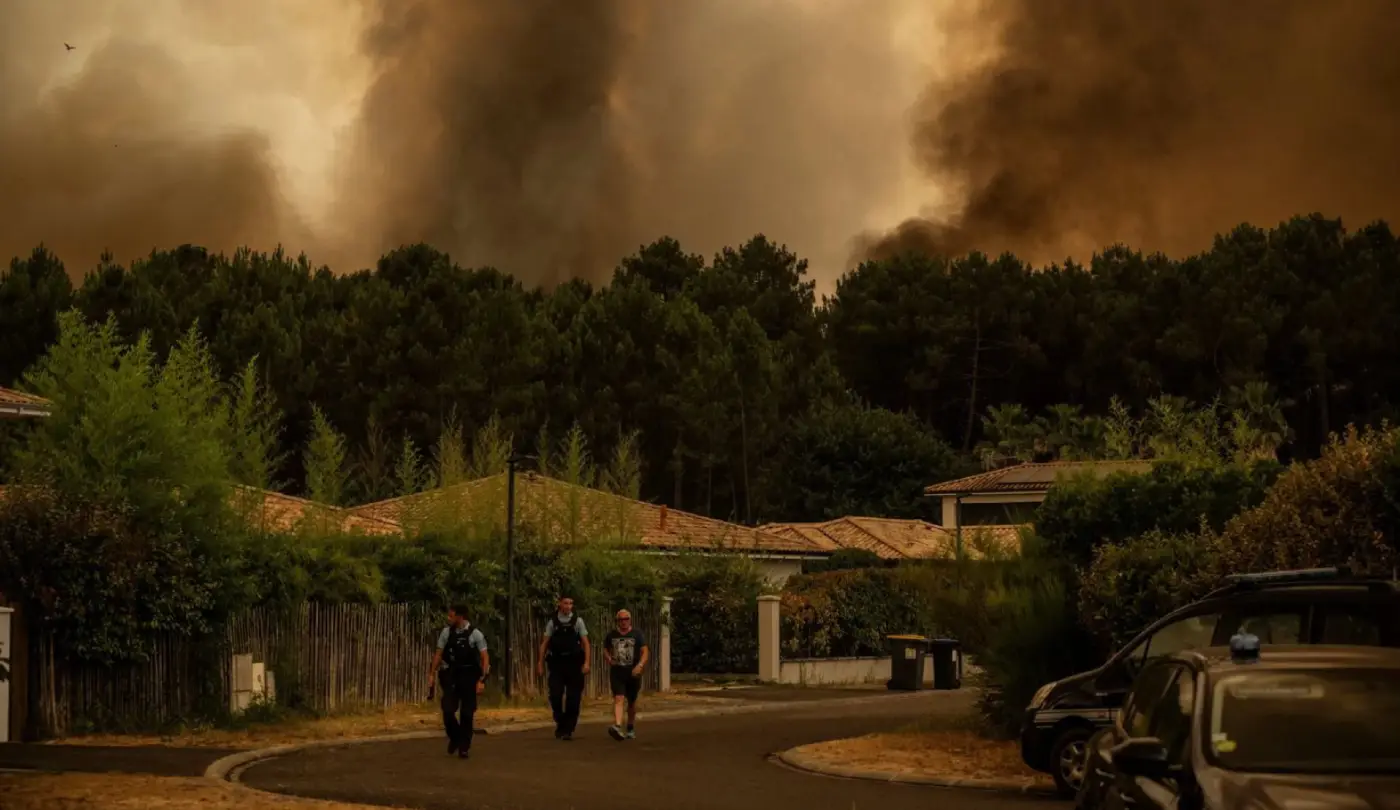
Large wildfires have forced extensive evacuations in southwestern France and parts of Madrid, Ávila, Toledo and Castellón in Spain. Bordeaux Airport remains operational, but road closures, evacuation orders and changing local conditions may affect travelers heading to Gironde, the Atlantic coast and fire-affected parts of central Spain.
Travelers should not cancel trips to France or Spain solely because of national headlines. Check the exact municipality, access route and transport service involved before departure, and do not enter an evacuation or emergency-response zone.
What changed?
A major wildfire in southwestern France stopped expanding overnight before 27 July, but authorities warned that the emergency was not over. Around 220,000 people had been forced to leave their homes during the wider southwestern France emergency, with the most serious disruption concentrated in Gironde and areas near Bordeaux and the Atlantic coast.
Preventive evacuations affected communities west of Bordeaux, including areas around the Arcachon Basin and Cap Ferret. Travelers with accommodation in Gironde should confirm directly with their hotel, campsite or rental provider before traveling.
In Spain, the national government declared an emergency of national interest in the Community of Madrid and Ávila on 24 July before extending it to Toledo on 25 July. According to Spain’s Interior Ministry, 59,896 people had been evacuated and another 29,867 had been instructed to remain indoors across more than 45 communities in Madrid, Ávila and Toledo.
Official traffic information on 27 July also listed multiple wildfire-related road closures in Madrid, Ávila, Toledo and Castellón.
These are regional emergencies rather than nationwide closures. Central Bordeaux, central Madrid and destinations outside the affected areas may continue operating normally, although smoke, emergency traffic and transport changes can extend beyond the immediate fire perimeter.
Which travelers and areas are affected?
France
The clearest travel impact is in Gironde and nearby parts of southwestern France.
Travelers should pay particular attention to:
-
Communities under evacuation or access restrictions west of Bordeaux
-
The Arcachon Basin and Cap Ferret area
-
Campsites, holiday parks and forest accommodation in Gironde
-
Journeys using local roads through active fire-response areas
-
Trips to Bordeaux Airport from western Gironde or the Atlantic coast
Do not enter a closed road or evacuated community, even when a navigation app suggests that the route remains available. Emergency restrictions can change faster than commercial mapping services.
Travelers should also distinguish Bordeaux city from the wider Gironde department. An emergency affecting forest communities or coastal resorts does not necessarily mean that central Bordeaux is under the same restrictions.
Spain
The main confirmed disruption covered in this update concerns western Madrid, Ávila, Toledo and Castellón rather than Spain as a whole.
Travelers should check conditions carefully when visiting:
-
Rural communities west and southwest of Madrid
-
Ávila province
-
Toledo province
-
Inland areas of Castellón
-
Mountain, forest and countryside accommodation
-
Routes connecting Madrid with affected rural destinations
Spain’s Directorate-General for Traffic should be checked immediately before driving. Roads may be closed because of flames, smoke, emergency operations or the movement of firefighting vehicles.
A route that was open earlier in the day may later be restricted or reserved for emergency services. Travelers should not attempt to bypass barriers or use minor roads to avoid an official closure.
Are airports and flights operating?
Bordeaux Airport
Bordeaux Airport said on 26 July that the airport remained operational and commercial flights were operating normally. The airport was prioritizing departing flights while also supporting the regional emergency response.
Bus and tram services continued, although the tram was operating without intermediate stops between Mérignac Soleil and the airport.
Passengers should still check their individual flight through their airline’s app or website before leaving for the airport. A functioning airport does not guarantee that every flight will operate on time, particularly when aircraft movements, crew positioning or surface transport are affected.
Travelers arriving from western Gironde or the coast should allow additional time and follow official directions rather than attempting to bypass roadblocks.
Hotels in the evacuated area around the airport were also closed by prefectural order. Because Bordeaux Airport’s terminals close overnight, passengers cannot use the airport as emergency accommodation and should arrange lodging outside the evacuation zone.
Madrid-Barajas Airport
Travelers arriving through Madrid-Barajas should check their individual flight before departure. However, the main confirmed disruption covered in this update concerns roads and communities west of Madrid and in Ávila and Toledo.
Passengers using Madrid as an arrival point before continuing by car should verify the second part of their journey separately. An operating flight does not mean that every rural road, town or accommodation remains accessible.
The same principle applies to travelers flying into airports serving Valencia or other eastern destinations before driving into inland Castellón.
What should travelers do?
Check four sources before departure: your airline, your airport, the official road authority and the local emergency authority for your destination.
In France, follow updates from local authorities and Bordeaux Airport. In Spain, use the DGT traffic service and announcements from Spain’s Interior Ministry.
Contact your accommodation provider before setting out, especially when staying at a campsite, holiday park, rural hotel or rental property near a forested area. Ask whether the property remains accessible and whether local evacuation or shelter-in-place instructions apply.
Keep your phone charged and enable emergency alerts. Download booking confirmations, identity documents and essential travel information before departure in case mobile networks become congested.
Do not travel toward a fire area to collect belongings or inspect a property unless local authorities explicitly permit access. Contact the accommodation provider or local authorities instead.
Travelers with asthma, heart conditions or sensitivity to smoke should take additional precautions and seek medical advice when air quality deteriorates. Smoke may affect places outside the formal evacuation zone.
Contact your airline, accommodation provider or travel insurer before making a voluntary cancellation. Refund and rebooking rights depend on whether the booked service has been cancelled, made inaccessible or remains available.
What remains uncertain?
Fire boundaries, evacuation orders and road closures may change because of wind, heat and firefighting operations.
The fact that a wildfire has stopped expanding does not mean it has been extinguished, officially brought under control or declared safe. Roads and communities may remain closed after the immediate spread has slowed.
Travelers should rely on the latest local instructions for their exact destination rather than assuming that conditions are identical across Gironde, Madrid, Ávila, Toledo or Castellón.
Frequently asked questions
Is Bordeaux Airport closed?
No. Bordeaux Airport said on 26 July 2026 that it remained operational and that commercial flights were operating normally.
Passengers should nevertheless check their individual flight and allow additional time to reach the terminal, particularly when traveling from western Gironde or the Atlantic coast.
Is Madrid Airport affected?
Travelers should check their individual flight with the airline or airport operator.
The main confirmed disruption in this update concerns roads, evacuations and communities west of Madrid and in Ávila and Toledo rather than a general airport shutdown.
Should I cancel a trip to France or Spain?
Not automatically. France and Spain are large countries, and most destinations are not inside the active fire zones.
Check the precise location of your accommodation, the access route and the latest official instructions before changing your plans.
Can I drive through an area affected by wildfire?
Only when the road is officially open and authorities have not advised against travel.
Never drive around barriers or rely exclusively on a navigation app in an emergency area. Smoke, firefighting vehicles and sudden changes in wind direction can make an apparently open route unsafe.
Update note: This guide covers the July 2026 wildfire emergency rather than providing continuous live updates. It will be revised when a major change affects airports, roads, evacuations or access to tourist destinations.