


The useful distinction is deception: someone misrepresenting an official fee, their identity or what you agreed to buy. An expensive taxi or resort shop does not automatically qualify. Broader questions about where to stay and travel risks belong in our Dominican Republic travel safety guide.
E-ticket websites: check the official form before paying
The Dominican Republic’s e-ticket is the electronic entry and exit form used for travel to and from the country. Completing the government form is free. The Dominican immigration authority has warned about websites impersonating official services and requesting payment.
Use the official e-ticket portal rather than selecting a result simply because its name looks governmental. If a website requests card details for a supposed government processing fee, stop before submitting them.
Paid third-party assistance needs a separate judgment. Someone can charge an openly disclosed fee to help complete a form that is available free elsewhere. The warning signs are pretending to be the government, hiding the service charge or telling you that payment is compulsory.
Before entering passport or payment details, check:
-
Whether you reached the form through an official government link.
-
Whether the website clearly identifies who operates it.
-
Whether a payment request is being presented as an official requirement.
Save your completed confirmation so you can retrieve it without searching again at the airport. Our Dominican Republic entry requirements guide covers the wider arrival requirements.
If you already paid, keep the receipt, website address and any confirmation received. The reporting section below explains how to raise a payment issue.
Punta Cana airport transfers: verify the operator before paying again

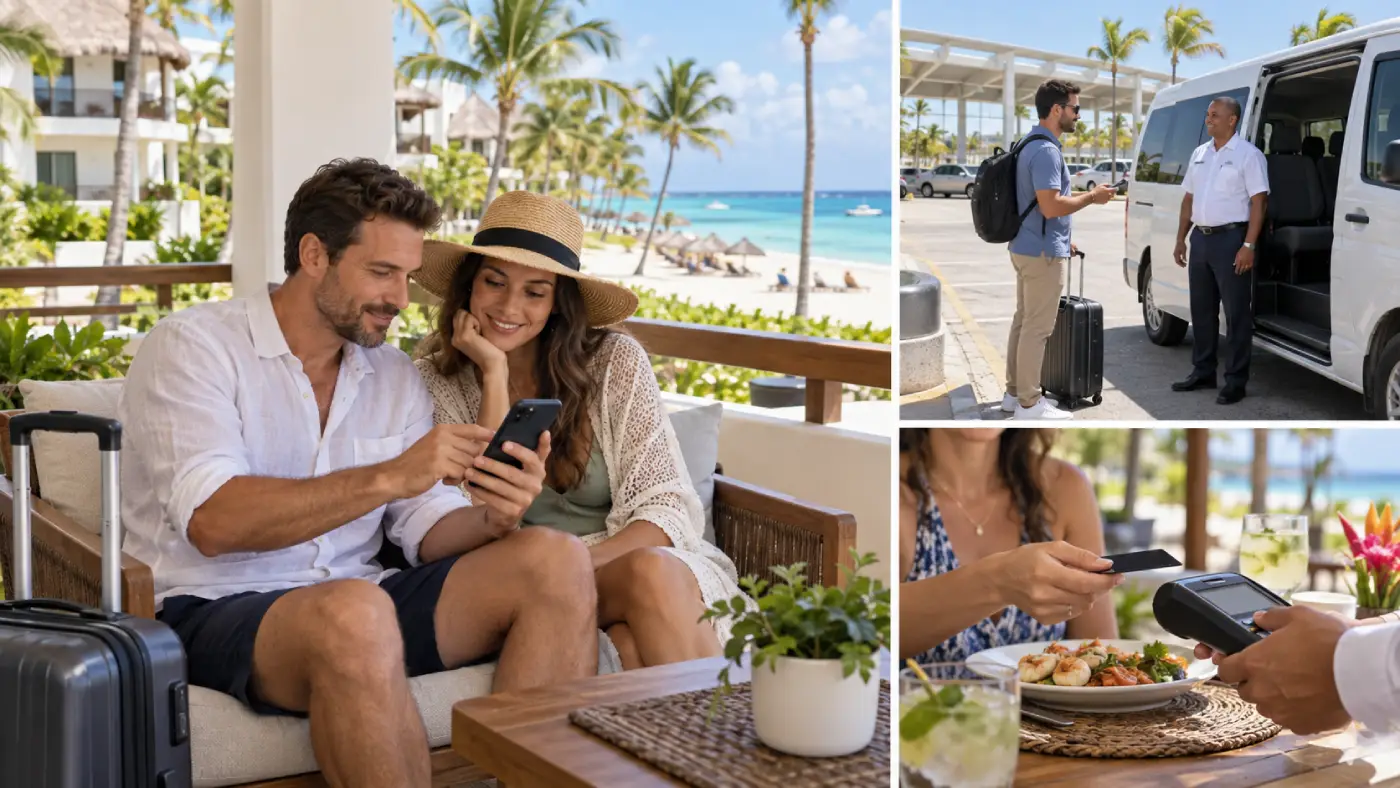
Keep your transfer confirmation, meeting instructions and provider’s contact details together before landing at Punta Cana. If someone approaches offering help, verify that they represent your booked operator before handing over luggage or following them to a vehicle.
Some visitors describe being directed toward an additional paid ride despite having a transfer booked. These airport experiences include uncertainty over booking records and requests for payment before departure. Such accounts do not establish that every failed pickup is deliberate fraud, but they show why independent confirmation matters.
If you are told your transfer is unavailable, contact the provider using the details in your own booking. Ask them to confirm the situation and any replacement arrangement directly. Avoid relying solely on a phone call made by the person selling you another ride.
Before boarding, establish:
-
Operator: Does the company match your reservation?
-
Destination: Is the driver taking you to the exact hotel or address?
-
Payment: Is this your prepaid transfer or a separate purchase?
-
Total: If you are buying another ride, what is the full fare, currency and payment method?
Dominican taxis are generally unmetered. Canada’s travel advice recommends agreeing the fare before departure and using official airport taxi stands; an airport information desk can help if you are unsure which service is official.
Compare taxis and airport transfers in the Dominican Republic before choosing your arrival transport. Save the booking offline, and consider Dominican Republic eSIM plans if you want mobile data on a compatible phone to message the provider or retrieve reservation details.
If a fare dispute becomes threatening, prioritize reaching a staffed public place and getting assistance. Keep any receipt or messages without escalating the confrontation.
Card and ATM fraud: watch the transaction as well as the machine
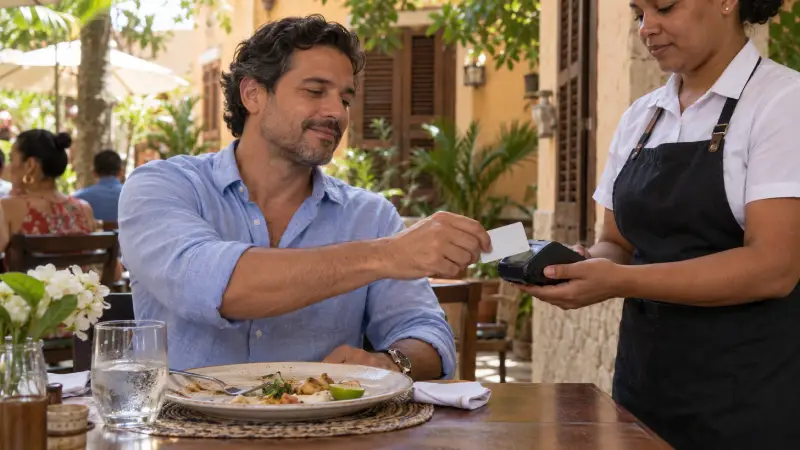
Card cloning and identity theft are recognized risks in the Dominican Republic. Keep your payment card visible while a transaction is processed, and check the amount and currency before approving it.
At an ATM, cover the keypad when entering your PIN and avoid a reader with unusual fittings or visible damage. Prefer a machine inside a bank or another established business. These precautions reduce exposure; appearance alone cannot establish that a machine is secure.
Review account activity during the trip. Keep receipts so you can distinguish a purchase you made from an unfamiliar charge.
If you spot an unauthorized transaction, contact your bank or card issuer through its official app or the number on your card. Ask about blocking or replacing the card and disputing the transaction. The steps for seeking repayment are covered below.
Romance scams and urgent requests for money
Romance scams can begin through an conversation before a trip. The U.S. State Department’s Dominican Republic guidance warns about people claiming a romantic interest or inventing an injury or arrest involving a loved to obtain money.
The warning sign is the request and the pressure around it. Be cautious if someone you barely know turns affection into an urgent financial obligation, asks you to keep the payment secret or discourages you from checking the story.
Pause before sending anything. Contact a supposedly injured or detained friend or relative using a number you already had. If a person claims to represent an embassy, police service or lawyer, find that institution’s contact details independently rather than using the number supplied in the message.
The same U.S. guidance reports robberies involving people met through dating apps. Meet new acquaintances in public places and avoid being drawn into a secluded setting.
Retain the conversation and transaction details if you need to report the request.
What to do after a suspected scam
Your immediate response depends on whether the problem is a disputed purchase, an unauthorized payment or a threat to your safety.
If you are threatened, move toward a staffed public place when you can do so safely. Do not resist a robbery or confront someone to recover money. Ask hotel reception, airport staff or another responsible person nearby to help you contact the authorities.
Call 911 in an emergency. Tourist police assistance is available through POLITUR at +1 809-222-2026. The government’s tourist assistance service also lists 809-200-3500 as a local toll-free line and states that the assistance service is free. If your phone cannot place the call, ask staff to call for you.
Preserve evidence and report the problem
Keep booking confirmations, receipts, messages, payment records and the seller’s stated contact details. Write down where and when the incident happened while you remember it. Save material you already have; do not put yourself at risk trying to collect more.
Report suspected crime to Dominican authorities before leaving the country. UK government guidance explains that a formal local report is needed for an investigation. Your embassy or consulate can help explain the process and provide relevant assistance.
Be cautious about unsolicited offers to “fix” a case near a police station. Canada specifically warns about unethical legal intermediaries in tourist areas, particularly Punta Cana. If you need a lawyer, ask your embassy or consulate about a local lawyer list and agree the scope and fees in writing.
Contact the company that handled your payment
The FTC’s guidance for people who paid a scammer recommends contacting the relevant bank, card issuer, payment app or transfer company promptly and asking whether the payment can be reversed.
Explain whether you authorized the payment, were misled into making it or discovered a transaction you did not make. Include the amount, date, merchant details and supporting messages. A missed transfer, a misleading fee and card theft may require different handling.
If you entered an account password on a suspicious website, change it through the genuine service and enable two-factor authentication. Change it on any other account where you reused it.
Recovery is not guaranteed. Keep your case reference and copies of everything submitted so you can follow up without reconstructing the incident.