


Even a short stay leaves room for variety. Try a Dominican breakfast, make time for local lunch, and check what the kitchen serves that day before committing to a particular dish.
Start with mangú, la bandera and sancocho
Mangú and los tres golpes
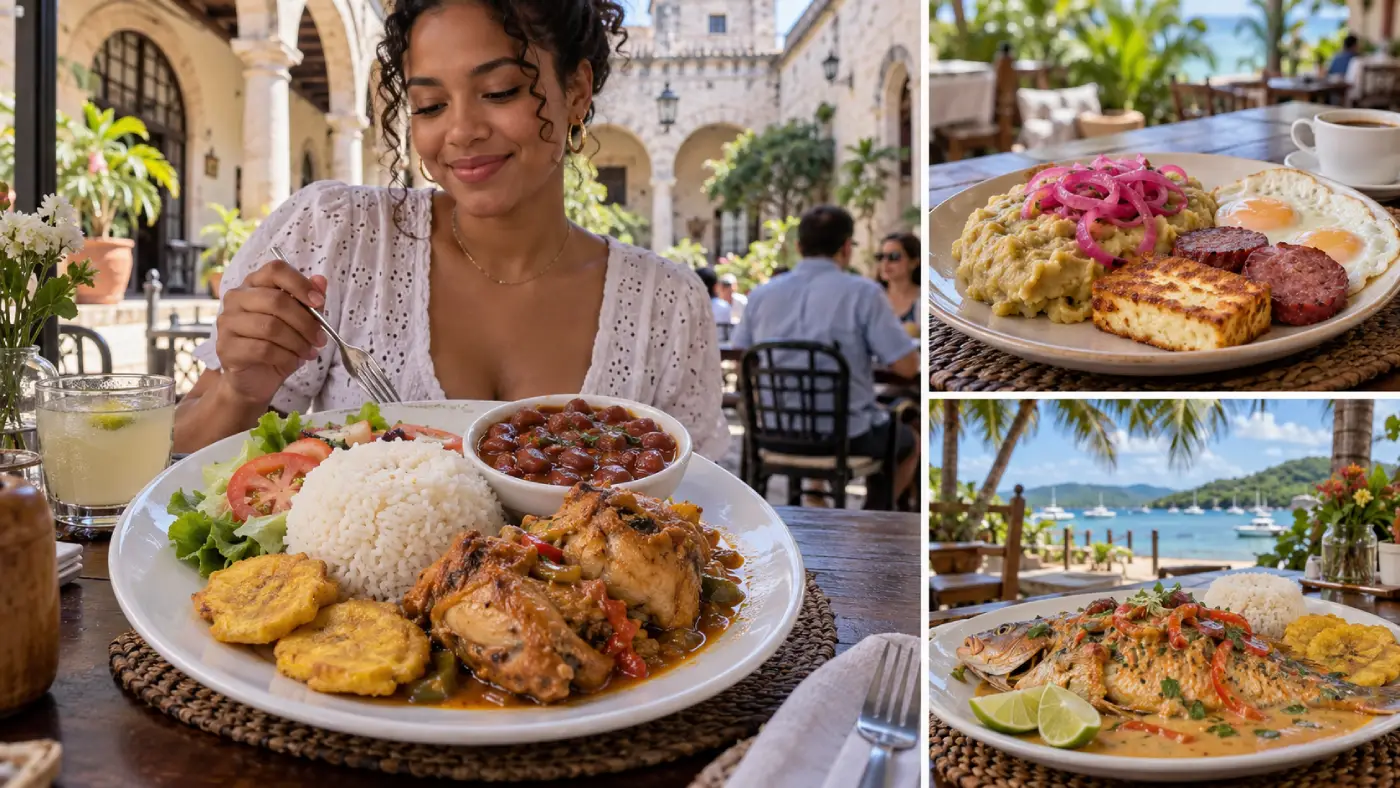
Mangú is boiled green plantain mashed with water and fat, commonly oil or butter, and often topped with red dressed with vinegar. Ordering mangú con los tres golpes adds the familiar trio of fried cheese, fried salami and eggs. Dominican cookery writer Clara González explains the dish and its usual accompaniments.
The plantains are green and starchy, so expect a savory breakfast. If the complete plate feels substantial, ask whether you can order mangú with just eggs or cheese. Check the cooking fat separately if you avoid dairy or animal products.
La bandera for lunch
La bandera dominicana brings together white rice, stewed beans and meat, commonly chicken, beef or pork. The Dominican tourism ministry describes these core components; the available meat and accompanying sides depend on the kitchen.
At a lunch counter, ask what is ready and what comes with the plate. “¿Qué incluye?” means “What does it include?” Confirm whether the beans, salad, plantains or drink are included before adding extras.
Sancocho when it is on the menu
Sancocho is a substantial stew of meat, tubers and vegetables. Yuca, green plantain and auyama squash are characteristic ingredients, and white rice is a usual accompaniment.
The celebrated sancocho de siete carnes is an elaborate seven-meat version. Simpler beef or beef-and-chicken versions also belong to Dominican cooking. Ask which meats the kitchen uses, especially if you avoid pork, and check availability before visiting specifically for it.
Street snacks and plantains prepared another way
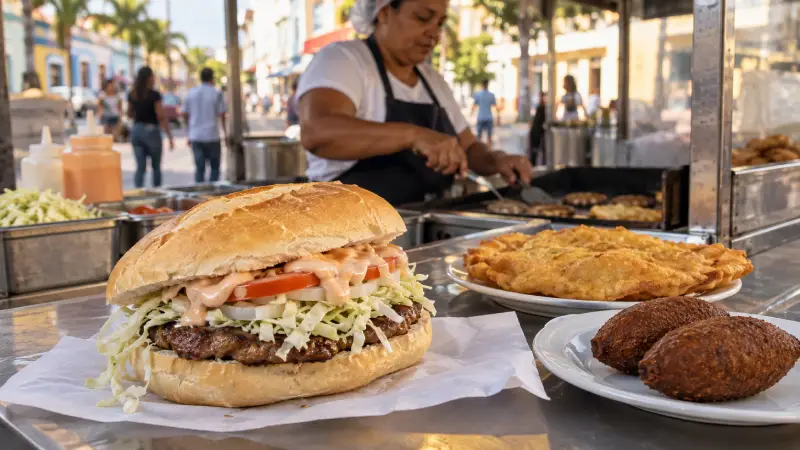
Chimi, short for chimichurri, is the Dominican burger. Its familiar combination is a seasoned beef patty with cabbage,, tomato and a pink sauce, served in bread such as pan de agua. Street stands prepare their own versions; the Dominican chimi tradition is especially associated with evening eating.
Two smaller snacks are useful names to recognize:
-
Yaniqueque: fried wheat-flour dough, usually served as a crisp, flat piece.
-
Quipe or kipe: a fried bulgur-wheat snack, commonly containing beef. Confirm the filling if you have dietary restrictions.
Mofongo deserves a separate meal if you want to compare plantain dishes. Mangú starts with boiled plantains; mofongo uses fried plantains mashed with seasonings such as garlic and, commonly, pork cracklings. Restaurant variations can include chicken, cheese or seafood. Check both the mash and any broth or sauce: changing the topping does not necessarily change the ingredients underneath.
Follow your route to regional specialties
Several everyday dishes appear across the country, but Dominican regional cooking gives you good reasons to vary your order.
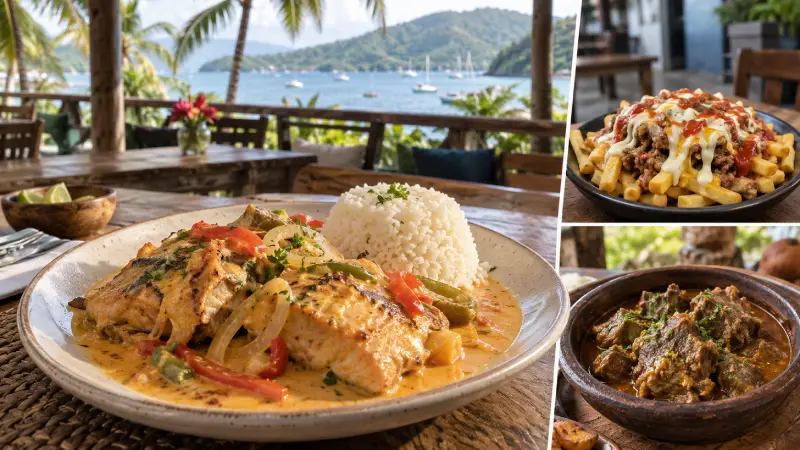
Samaná: Look for pescado con coco, fish cooked in a coconut-milk sauce with ingredients such as, peppers and garlic. Moro de guandules con coco combines rice, pigeon peas and coconut milk. These dishes are associated with Samaná, although you can encounter them elsewhere.
The northwest, or La Línea: Chivo liniero is a regional goat stew seasoned with oregano and other aromatics, sometimes with considerable chili heat. Ask “¿Es picante?” if that matters to you.
Santiago and the Cibao: Yaroa offers a different kind of meal. Its base is either French fries or mashed ripe plantain, topped with meat, melted cheese, mayonnaise and ketchup. The two main yaroa versions make the base worth specifying when you order.
Along the coast, fried fish with tostones is another option. Before agreeing to a whole fish, confirm the species, size, whether the price is per fish or by weight, and which sides are included.
If food will shape your itinerary, compare where to stay in the Dominican Republic before booking your bases. Decide whether you want meals within walking distance or are comfortable arranging transport to restaurants.
Sweet beans, coffee and fruit drinks
Habichuelas con dulce is a sweet, creamy bean dessert especially associated with Lent and Easter. Its usual ingredients include beans, dairy milk, coconut milk, sweet potato, raisins and spices, often with small milk cookies or cassava bread alongside. This seasonal Dominican dessert is worth asking about, but availability outside that period varies.
Coffee makes a simple finish to a meal. On a drinks menu, chinola means passion fruit; you may see it on its own or blended with other fruits. Ask for “sin azúcar añadida” if you want no added sugar, and check whether a drink is made fresh or already sweetened.
Finding Dominican meals during your trip
Search for comida criolla or a comedor when looking for local cooking, then inspect the actual menu or counter. Ask about the day's lunch, the available meat choices and the full plate price. The name of a business alone does not tell you its menu, quality or hygiene.
Santo Domingo has restaurants with published Dominican menus, including Adrian Tropical, whose prices provide examples below. Treat named venues as starting points for checking dishes and costs rather than a ranking.
During an all-inclusive stay in Punta Cana, ask which Dominican dishes are being served and whether specialty restaurants require reservations or supplements. Check the location and return journey before booking a meal outside the property; a restaurant described as being in “Punta Cana” may still require transport from your hotel.
Save restaurant locations and download Spanish for offline translation. Mobile data through a Dominican Republic eSIM can help you open current menus and contact restaurants while you are out.
Menu prices, tax and the final bill
Published menu prices offer a useful reference when tied to a specific restaurant. These examples were checked in September 2026 at Adrian Tropical in Santo Domingo:
| Dish | Listed price | Detail to check |
|---|---|---|
| Mangú, yuca or green bananas with los tres golpes | RD$419 | Breakfast menu, 7–11 a.m.; prices vary after 11 a.m. |
| Sabrococho, the restaurant's sancocho | RD$499 | Served with rice |
| Mofongo | RD$394 | Standard version; substitutions and additions can cost extra |
The restaurant's breakfast menu and main menu state that taxes are excluded. These are restaurant examples, not countrywide averages or street-stall prices.
Before ordering, ask “¿El precio incluye impuestos y servicio?” — “Does the price include taxes and service?”
The standard ITBIS tax rate is 18%. Separately, the 10% legal service charge, often called propina legal, applies to food and drink consumed on the premises. Pro Consumidor states that this charge must not be added to takeaway or delivery orders.
Any additional voluntary tip is separate. Read the bill before leaving extra money, and confirm the payment method before ordering at a small establishment.
Ordering around dietary needs
Plantains, rice and beans can form the basis of a meat-free meal, but their preparation needs checking. Beans may contain meat or stock; mangú can contain butter; mofongo commonly contains pork cracklings. Ask about the complete preparation, including sauces and accompaniments.
Useful questions include:
-
“¿Las habichuelas llevan carne o caldo de carne?” — Do the beans contain meat or meat stock?
-
“¿Lo preparan con mantequilla o con aceite?” — Do you prepare it with butter or oil?
-
“¿Lleva cerdo o manteca de cerdo?” — Does it contain pork or lard?
-
“¿Pueden prepararlo sin carne, pescado, leche, queso ni huevo?” — Can you prepare it without meat, fish, milk, cheese or egg?
Quipes, yaniqueques and chimi bread contain wheat. Habichuelas con dulce commonly contains dairy, and its cookie garnish may introduce wheat too.
With a food allergy or coeliac disease, explain the specific ingredient and ask about shared oil, utensils and preparation surfaces. Carry a clear Spanish translation of your requirements and speak to staff directly. A menu translation or an omitted topping cannot establish that a meal is safe for you; if the kitchen cannot clarify its preparation, choose somewhere else.
Water, ice and freshly cooked food
The UK's Dominican Republic health advice states that tap water is not drinkable. Use sealed bottled water or water reliably treated for drinking, and check the water used in ice and freshly mixed drinks. Skip ice if its source is uncertain.
Look for food cooked thoroughly and served hot. Be cautious with dishes left standing in the heat, raw seafood and salads whose washing water you cannot verify. TravelHealthPro's food and water guidance also emphasizes clean hands and freshly prepared food; these checks apply to buffets as well as street stands.
Before heading out for dinner, review the Dominican Republic safety advice and plan your return to your accommodation.