

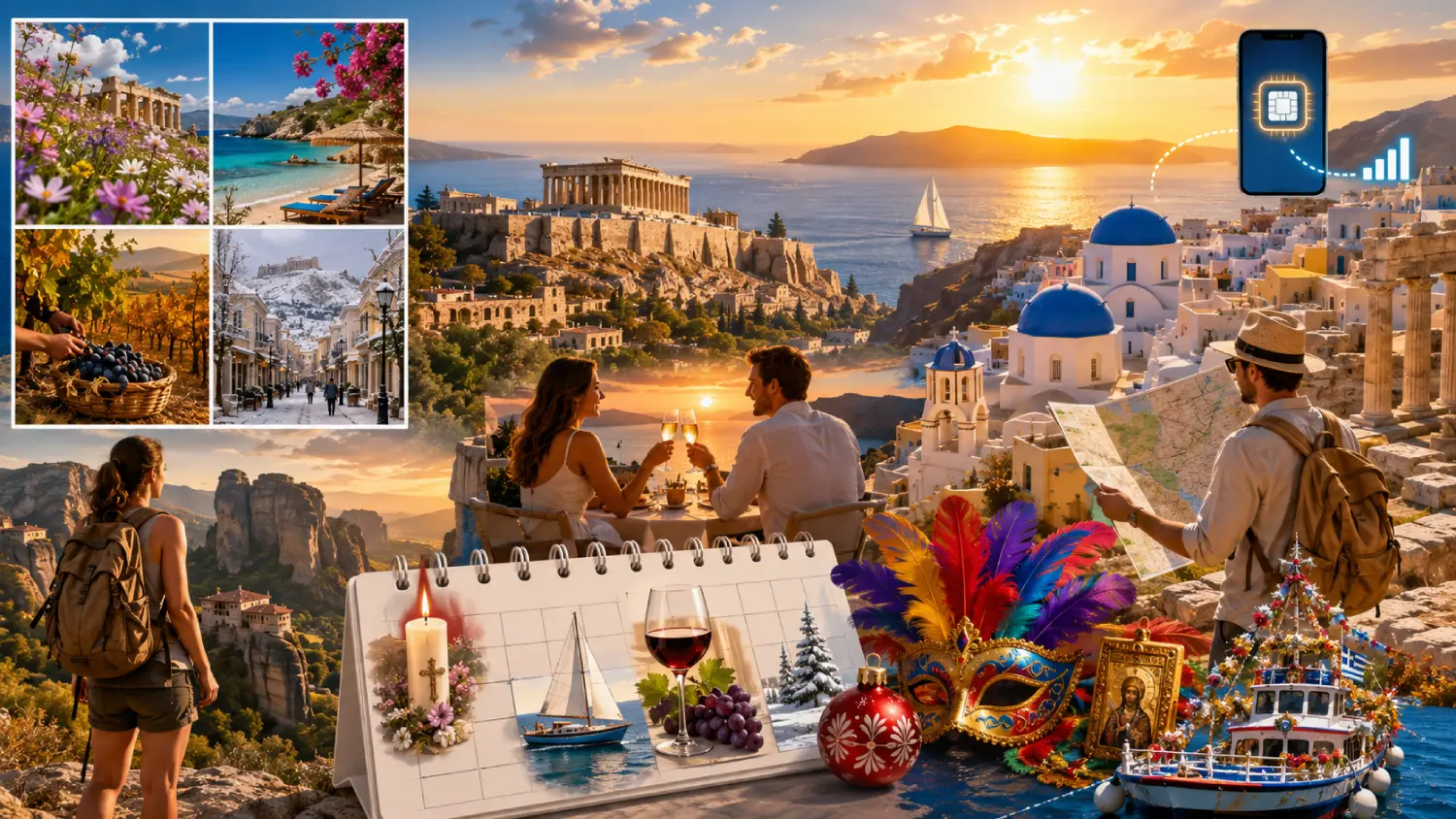

If you are just looking for the quick, practical takeaway for your 2026 trip, here is the cheat sheet:
-
Best Overall Time for First-Timers: May, June, and September. You get guaranteed beach weather, warm seas, and full ferry schedules without the suffocating peak crowds.
-
Best Time for Budget Travelers: March, April, and late October to November. Flights and luxury hotels often drop their rates by 40% to 50%.
-
Best Time to Avoid Crowds: April and October. You can still island-hop, but you will not have to battle thousands of cruise ship passengers for a dinner reservation.
-
Best Time for Pure Beach & Party Vibes: July and August. This is peak season, bringing guaranteed blazing heat, world-class DJs, and the liveliest atmosphere across the Cyclades.
Greece by Season: What You Really Get
Greece experiences four distinct seasons, but the travel calendar is usually split into the low, shoulder, and peak seasons. Here is exactly what you can expect across the mainland and the islands in 2026.
| Season (Months) | Typical Conditions | Crowds | Costs | Best For |
| Spring (Mar - May) | Mild, blooming wildflowers, sea is still cold | Low to Moderate | Budget-friendly | Exploring ancient ruins, hiking, authentic local festivals |
| Summer (Jun - Aug) | Hot, sunny, dry (Meltemi winds in August) | Very High (Peak) | Very Expensive | Beach clubs, island hopping, nightlife, swimming |
| Autumn (Sep - Nov) | Warm days, cooler nights, sea is perfectly warm | Moderate to Low | Moderate | Wine tasting, relaxed island stays, avoiding extreme heat |
| Winter (Dec - Feb) | Cool, rainy, some snow in the mountains | Minimal | Cheapest | City breaks in Athens, skiing up north, quiet local life |
Regional Differences (Microclimates & Geography)
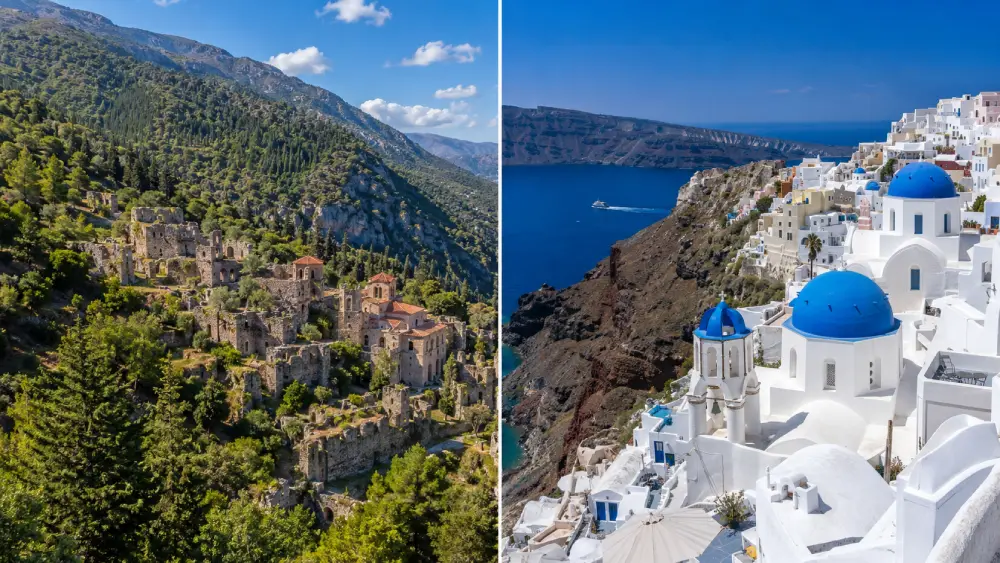
Greece is not just big island with identical weather. The geography ranges from high alpine mountains to arid, wind-swept archipelagos. Your "best time" will shift depending on which specific region you plan to explore.
Athens and the Mainland
Athens is a sprawling, concrete-heavy city that acts as an oven during July and August. Temperatures regularly exceed 35C (95F), making afternoon sightseeing at the Acropolis nearly impossible. The absolute best time to explore the capital and mainland historical sites like Delphi or Meteora is during the spring (April and May) or autumn (September and October). If you do go in summer, plan your outdoor tours for 8:00 AM sharp.
The Cyclades (Santorini, Mykonos, Paros, Naxos)
These are the iconic postcard islands, and they thrive on a very strict seasonal schedule. From late October to late April, many hotels, beach bars, and ferry routes shut down completely. The prime window to visit is between late May and early October. Be aware of the Meltemi winds—strong, dry northern winds that blow relentlessly through the Cyclades in July and August, sometimes causing ferry cancellations.
The Ionian Islands (Corfu, Zakynthos, Kefalonia)
Located on the western side of Greece, the Ionian islands are noticeably greener and more lush than the Cyclades. This is because they receive significantly more rainfall during the winter and early spring. The sea takes a bit longer to warm up here, making July, August, and September the optimal months for swimming and boating. The summer heat is generally more humid, but you avoid the intense Meltemi winds found in the Aegean.
Crete
Crete is Greece’s largest island and sits furthest to the south, giving it the longest tourist season in the country. You can comfortably visit Crete from early April all the way through November. Because it has major cities (like Chania and Heraklion) and a massive local population, it does not completely shut down in the winter. It is the ultimate destination for late-season sunseekers.
Month-by-Month Cheat Sheet
-
January: Cold, damp, and quiet. Great for exploring Athens museums without lines, but island ferries are sparse. Keep an eye on local customs if you are traveling now; review the Greece Tourist Bans & Laws to ensure a smooth winter trip.
-
February: Still very much winter, though the famous Apokries (Carnival) season begins. Best for budget mainland trips, but completely dead on the resort islands.
-
March: Spring starts to peek through. Wildflowers bloom across the Peloponnese. It is still too cold for swimming, but excellent for hiking and archaeological tours.
-
April: A spectacular month for culture. In 2026, Orthodox Easter falls on April 12, bringing massive celebrations, fireworks, and roasted lamb to every village. Ferries start running more frequently.
-
May: The golden month. Everything is open, the islands are lush, and temperatures hit a perfect 25C (77F). It is the absolute best time for an active, crowd-free island-hopping trip.
-
June: Summer has officially arrived. The Aegean Sea is warming up beautifully, and the evening air is perfect for outdoor dining. Crowds are building, but have not reached their peak.
-
July: Peak season begins. Expect scorching days, crowded beaches, and premium prices. Book your ferries and hotels months in advance if traveling now.
-
August: The busiest and hottest month. Half of Europe is on vacation in Greece, and the Meltemi winds are at their strongest. It is perfect for wild nightlife, but exhausting for quiet relaxation.
-
September: The smart traveler's secret. The sea is incredibly warm from the summer sun, but the massive August crowds have gone home. Prices begin to drop, and the weather is sublime.
-
October: The season winds down. Early October is fantastic for Crete and Rhodes. By late October, storms roll in and the Cyclades begin to shutter their doors for winter. If you are doing heavy shopping before the season ends, check out the Greece VAT Refund: Exact Tax-Free Rules & Steps.
-
November: Olive harvest season begins. The islands are mostly closed to tourists, but it is a beautiful, atmospheric time to rent a car and drive through the mountainous mainland.
-
December: Crisp weather and festive holiday lights in Athens and Thessaloniki. It is not a beach holiday, but it offers a wonderfully authentic, cozy Greek experience. Before packing your winter gear, brush up on the Greece Airport Customs Rules.
Best Time to Visit by Traveler Type
For Island Hopping & Beaches
If your dream is to rent a sunbed, swim in crystal-clear water, and hop between islands, June, July, August, and September are your target months. To avoid paying top-tier premium prices, focus heavily on the first half of June or the second half of September. The water is pristine, all ferry routes are active, and every beachside taverna is serving fresh seafood.
For Sightseeing & Ancient History
Hiking up to the Acropolis in 40C heat is miserable. For history buffs wanting to explore Delphi, Olympia, Mycenae, and Knossos, the absolute best windows are April to May and October to November. The mild temperatures allow for full days of outdoor exploration. Plus, having fewer crowds means you can actually take photos of the Parthenon without hundreds of selfie sticks in your frame.
For Budget Travelers
To experience luxury for less, aim for the deep shoulder seasons: April and late October. Flights are significantly cheaper, and you can often find five-star hotels slashing their rates by half. While you might sacrifice prime beach weather, the savings are massive. If you are worried about off-season safety, rest assured that Greece remains highly secure; you can read more in our guide on Is Greece Safe for Tourists to Travel?.
For Honeymoons & Romance
Couples seeking romantic sunsets without elbowing their way through crowds should book their trips for late May, early June, or September. You get all the perks of peak season—open restaurants, warm weather, luxury catamaran cruises—but with a much more intimate, relaxed atmosphere. Santorini and Milos are particularly magical during these specific weeks.
Festivals & Special Dates to Plan Around (2026)
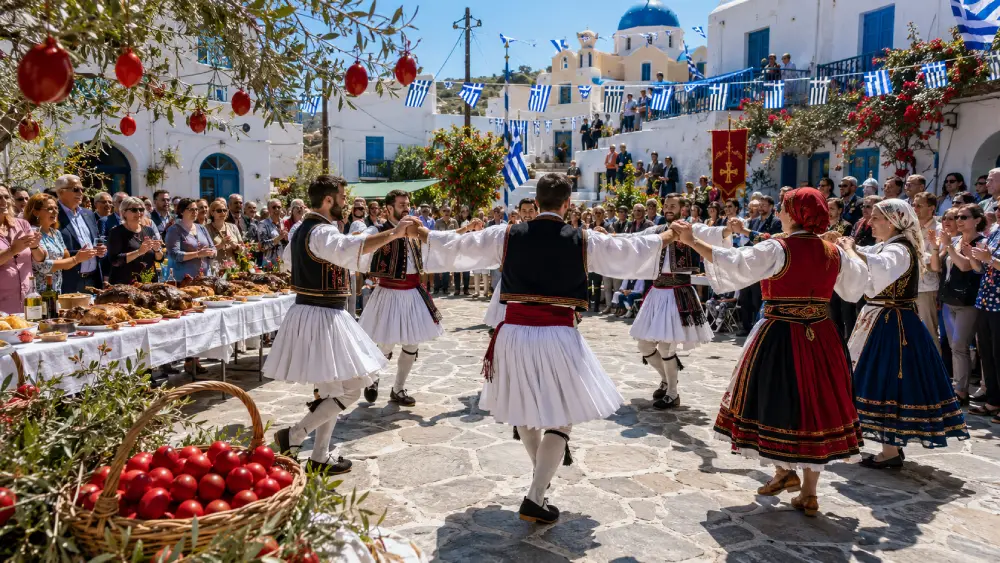
Greece runs on a vibrant calendar of religious and cultural festivals. If you are traveling during these periods in 2026, you need to book your accommodation and transport well in advance.
Orthodox Easter (April 12, 2026):
This is the single biggest holiday in Greece, far surpassing Christmas. The entire week leading up to it (Holy Week) is filled with solemn processions, candlelit church services, and unique local traditions. Easter Sunday itself is a massive feast of roasted lamb and wine. It is an incredible cultural experience, but domestic travel is heavily congested as Greeks return to their home villages.
Apokries / Carnival (February - March 2026):
The three weeks leading up to Clean Monday are filled with parties, parades, and masquerades. The city of Patras hosts of the largest Carnival parades in Europe. If you are visiting the mainland during this time, expect a festive, chaotic, and incredibly fun atmosphere.
The Assumption of the Virgin Mary (August 15):
Known as "Panagia," this is the peak of the Greek summer holidays. It is a massive religious and national holiday where seemingly the entire country heads to the islands. Ferries are packed to absolute capacity, and hotel prices are at their yearly high. If you are traveling around August 15, you absolutely must secure all reservations months ahead of time.
A Quick Note on Staying Connected
Navigating Greece requires seamless internet access. Whether you are frantically checking live ferry schedules at the port of Piraeus, using Google Maps to find a hidden beach in Naxos, or translating a local taverna menu, relying on spotty hotel Wi-Fi will ruin your day.
Need data in Greece? Get an eSIM!
Choose the perfect data plan for your trip

Manage your eSIM in the app
Install, top up and track data.
The smartest and most efficient way to stay is by using a Greece eSIM. You simply download it before you leave home, and the moment your plane lands in Athens, you have instant, fast data without the hassle of swapping tiny plastic SIM cards. It is the modern travel essential. If you want a deep dive into your connectivity options, check out our post on How to Get Internet in Greece, or jump straight to the top recommendations in the Best eSIM for Greece.
FAQ: Best Time to Visit Greece
What is the cheapest month to visit Greece?
January and February are the absolute cheapest months, as it is the dead of winter. For a balance of cheap prices and decent weather, November and March offer the best budget-friendly windows.
When is the best time to visit Santorini and Mykonos?
Late May, June, and September. You will enjoy spectacular weather, fully operational restaurants, and warm seas, while avoiding the crushing crowds and extreme prices of July and August.
Are the Greek islands open in the winter?
Large islands with local populations, like Crete, Rhodes, and Corfu, remain somewhat active. However, the smaller Cyclades (like Santorini, Mykonos, and Paros) practically shut down from November to April, with very few hotels and restaurants open.
When is the water warm enough to swim in Greece?
The sea is generally warm enough for comfortable swimming from early June through late October. The water is actually at its warmest in September, as it has had the entire summer to heat up.
What are the Meltemi winds?
The Meltemi are strong, dry northern winds that blow across the Aegean Sea, primarily affecting the Cyclades during July and August. They can provide relief from the heat, but they can also make beaches unpleasantly sandy and occasionally cause ferry delays.
Is Greece too hot in August?
Yes, it can be. Mainland temperatures frequently hit 35C to 40C (95F to 104F). The islands feel slightly cooler due to sea breezes, but the midday sun is still intensely strong.
Does it rain a lot in Greece?
Summer (June to August) is famously dry with almost zero rain. The rainy season occurs during the winter months, primarily from November through February, particularly on the Ionian islands and the mainland.
Do ferries run year-round?
Main routes (like Athens to Crete or Athens to Paros/Naxos) run year-round to serve locals. However, high-speed tourist catamarans and inter-island hopping routes are drastically reduced or completely suspended between November and April.