


'/%3e%3c/svg%3e)
Quick Answer: The Best Months to Visit Barbados
-
Best Overall Months (Ideal Weather & Open Attractions): December through April deliver the ultimate Caribbean beach weather with minimal rainfall, lower humidity, and cool trade winds. All major tours, water sports operators, and seasonal fine dining establishments are fully open and operating at peak capacity.
-
Best Months for Budget Travelers (Lowest Rates): May, June, September, and October offer dramatic savings on luxury villas, boutique hotels, and rental vehicles. During these transition and low-season months, accommodation rates frequently drop by 30% to 50% compared to peak winter prices.
-
Months to Avoid or Prepare For (Extreme Heat/Monsoons/Heavy Crowds): August through October mark the peak of the tropical wet season, bringing higher humidity, intense afternoon downpours, and elevated tropical storm activity across the region. Additionally, mid-December through mid-January sees massive tourist crowds, requiring reservations made months in advance.
Barbados by Season: Weather, Crowds & Costs
Barbados operates on two distinct climatic periods—the dry season and the wet season—punctuated by pleasant shoulder months that bridge the gap. While temperatures remain remarkably stable between 24°C and 31°C year-round, changes in rainfall, humidity, and atmospheric pressure dramatically alter the on-island experience and pricing structures.
| Season (Months) | Typical Weather | Crowd Levels | Cost Estimates | Best For |
|
High Season (December – April) |
Sunny, dry, low humidity, refreshing trade winds (28°C–30°C) | Heavy; crowded beaches and popular dining spots | Peak pricing; highest hotel and flight rates | Sailing, luxury beach getaways, winter sun, and nightlife |
|
Shoulder Season (May – June) |
Warm, rising humidity, occasional brief showers (29°C–31°C) | Moderate; relaxed atmosphere with minimal queues | Moderate; excellent hotel discounts and flight deals | Snorkeling, turtle watching, balanced budgets, and calm seas |
|
Low Season (July – November) |
Hot, humid, short heavy rain showers, storm potential (30°C–31°C) | Low; quiet resorts, though crowded during Crop Over | Budget-friendly; deepest resort discounts of the year | Cultural festivals, surfing, green landscapes, and low prices |
Regional Microclimates & Geographical Shifts
Although Barbados is a relatively compact island measuring just 21 miles long and 14 miles wide, its geography creates noticeable microclimates. The island's position as the easternmost Caribbean country exposes its coasts to vastly different oceanic forces and weather conditions. Understanding these regional shifts allows travelers to choose the right coastal base for their preferred activities regardless of the month.
The West Coast (The Platinum Coast)
The sheltered western coastline facing the Caribbean Sea is famous for its calm, crystal-clear water and gentle shoreline. During the dry season from December to April, the water resembles a swimming pool, making it the premier destination for paddleboarding, swimming, and luxury resort stays. Even during the wetter months, the West Coast experiences fewer heavy swells than other regions, though summer runoff can temporarily affect water visibility near shore.
The South Coast
Running from Hastings to Oistins, the South Coast serves as the vibrant mid-point between calm western waters and rough eastern Atlantic swells. This region benefits from constant coastal breezes that keep temperatures comfortable throughout the humid summer months. The ocean here features lively shore breaks that appeal to windsurfers and recreational bodyboarders year-round.
The East Coast (Atlantic Coast)
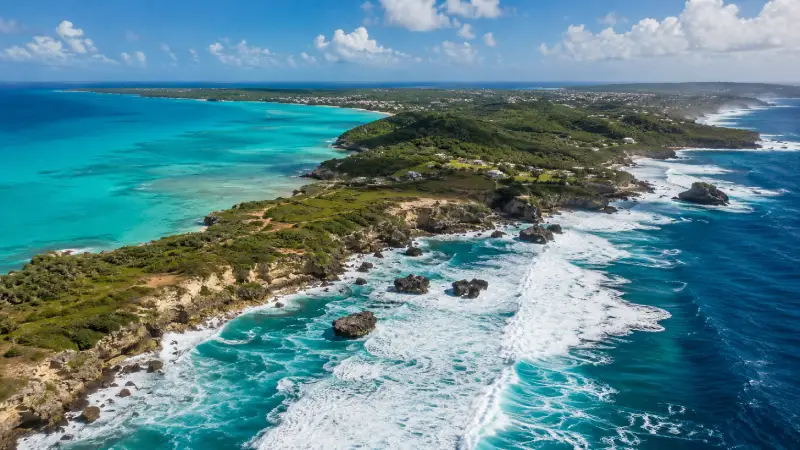
Facing the open Atlantic Ocean, the rugged eastern coast around Bathsheba is raw, dramatic, and significantly cooler due to relentless ocean trade winds. Powerful currents make swimming dangerous here, but the world-famous "Soup Bowl" wave surge attracts international surfers, especially between October and March. Rainfall is often higher along the eastern hills, keeping the vegetation lush and verdant throughout the year.
The Interior & Northern Cliffs
The central highlands, including St. Thomas and the parishes surrounding Hunte's Gardens, receive considerably more rainfall than coastal strips. High elevation creates cooler evening air, but afternoon tropical downpours during the wet season can develop quickly. Up at the northern tip around the Animal Flower Cave, crashing waves create spectacular cliffside views that peak in intensity during winter swell events.
Month-by-Month Guide to Barbados
January in Barbados
January offers quintessential Caribbean weather, characterized by warm sunshine, daytime highs around 28°C, and minimal rainfall. Gentle trade winds keep humidity low, making conditions comfortable for island island-wide road trips and beach lounging. Because this is peak winter season, visitor numbers are high, so booking restaurants and catamarans early is essential.
February in Barbados
As the driest month of the entire year, February delivers clear blue skies and immaculate beach conditions. Average daily temperatures hover at a pleasant 29°C with low humidity and very rare rain showers. The island hosts the popular Holetown Festival this month, celebrating local Bajan heritage with street parades, crafts, and live music.
March in Barbados
March continues the streak of glorious, sun-drenched weather with extended daylight hours and ocean water that is delightfully warm. Humidity levels remain low, making it an exceptional time for hiking coastal trails or visiting tropical botanical collections. Tourist crowds remain steady, but prices begin to level off slightly following the peak February surge.
April in Barbados
April serves as an ideal transitional month that marks the end of the strict dry season while retaining near-perfect weather. Temperatures average 30°C, and rainfall remains light, consisting mostly of quick morning showers that clear in minutes. Visitors can often secure lower resort rates during late April while still enjoying pristine, calm swimming conditions along the West Coast.
May in Barbados
May is of the ultimate sweet spots for visiting Barbados, balancing low crowds with reliable spring sunshine. Temperatures rise to 31°C, and while brief tropical showers become more frequent, they rarely interrupt full day trips. This month also signals the start of the critically important sea turtle nesting season along the western and southern shores.
June in Barbados
June introduces the official start of the Caribbean wet season, bringing higher humidity and stronger ocean winds. Heavy showers occur more regularly, but they typically pass quickly, leaving several hours of intense sunshine behind. June also marks the official kickoff of the months-long Crop Over Festival, filling the island with calypso tents and cultural events.
July in Barbados
In July, temperatures hold around 31°C with noticeable humidity and frequent afternoon rain showers. Despite the moisture, the island experiences high energy as Crop Over celebrations ramp up across Bridgetown and the South Coast. Hotel prices drop noticeably, making July an attractive target for budget travelers who do not mind tropical rain.
August in Barbados
August is a hot, humid month that features Grand Kadooment Day, the massive carnival finale of the Crop Over Festival. Thousands of revelers parade in elaborate sequined costumes, making early August an unforgettable time for cultural immersion. the festival concludes, tourist numbers drop sharply, and the island settles into a quiet, laid-back atmosphere.
September in Barbados
September is traditionally the quietest and most humid month on the island, experiencing higher rainfall and calm wind patterns. Because this falls within the peak period for regional tropical storm activity, some smaller hotels and restaurants close for annual maintenance. However, travelers visiting in September enjoy empty beaches, private-feeling resorts, and the absolute lowest room rates of the year.
October in Barbados
October brings lush green landscapes as the island reaches its annual rainfall peak. Rain usually falls in short, dramatic downpours rather than all-day gray skies, allowing plenty of time for sunshine between storms. Ocean temperatures are at their warmest, making October popular for scuba diving when marine life is active and water temperatures exceed 28°C.
November in Barbados
November acts as a welcome bridge out of the rainy season, bringing dropping humidity and increasing sunshine. The island celebrates both the Barbados Food & Rum Festival and National Independence Day on November 30th. Travel costs remain reasonable before the mid-December holiday rush, making early November a smart choice for value-seekers.
December in Barbados
December transforms the island into a sun-soaked winter sanctuary, with rainfall dropping rapidly and refreshing trade winds returning. Temperatures settle at a comfortable 29°C, creating perfect conditions for holiday beach vacations. Mid-to-late December sees maximum crowd levels and peak hotel rates, so early booking is critical.
Best Time to Visit by Traveler Type
For Beach & Swimming Enthusiasts
If pristine white sand, crystal-clear water, and tranquil sea conditions are your top priorities, schedule your visit between January and April. During these winter and early spring months, the Caribbean sea along the West Coast is exceptionally calm and turquoise, offering ideal conditions for paddleboarding and swimming with sea turtles. Ocean visibility for snorkeling is also at its annual peak during this dry window.
For Sightseeing & Cultural Exploration
Culture seekers should target February or August to catch the island at its liveliest. February features dry, breezy weather that makes touring historical sites like St. Nicholas Abbey or George Washington House pleasant without overwhelming heat. Alternatively, visiting in early August allows you to experience Grand Kadooment Day, immersing you in traditional Bajan music, cuisine, and masquerade parades.
Before arriving for island tours, travelers should review the official guide on Barbados Tourist Bans & Laws to avoid accidental fines regarding camouflage clothing or public conduct regulations.
For Budget Travelers & Deal Seekers
Travelers looking to stretch their vacation budget without compromising on tropical warmth should plan for May, June, or November. During these shoulder periods, luxury resorts offer major rate reductions, airlines run seasonal flight promotions, and top-tier dining spots are easy to reserve. Rain showers are generally short, meaning you still get plenty of beach time for a fraction of peak winter prices.
When organizing budget trips, reviewing the Barbados Airport Customs Rules ensures you understand duty-free allowances before landing at Grantley Adams International Airport.
For Wildlife & Outdoor Hiking
Nature enthusiasts and eco-travelers will find May through October particularly rewarding. This stretch coincides with the hawksbill and green sea turtle nesting season, offering rare opportunities to witness nesting females or hatchlings emerging on southern beaches. Additionally, island vegetation, botanical sanctuaries, and gullies turn vibrant green following tropical summer showers.
Key Festivals & Annual Events to Plan Around
Barbados hosts several high-profile annual festivals that draw international visitors and cause local accommodation prices to spike. Planning around these key dates allows you to either join the festivities or avoid the associated crowd surges.
-
Holetown Festival (February): Held on the West Coast, this week-long festival commemorates the arrival of the first English settlers in 1627. The streets come alive with steel pan concerts, traditional dance performances, antique car parades, and craft markets.
-
Crop Over Festival (June to Early August): Dating back to the 1780s to celebrate the sugar cane harvest, this is Barbados' premier cultural event. The celebration spans several weeks of calypso competitions and street parties, culminating in the massive Grand Kadooment parade on the first Monday of August.
-
Barbados Food & Rum Festival (October/November): Known as the culinary capital of the Caribbean, Barbados celebrates its world-famous rum distilleries and local chefs during this delicious multi-day event. International foodies flock to the island for beach parties, rum tastings, and gourmet dinners prepared by celebrity chefs.
Staying Connected: Why Reliable Data Matters Year-Round
Navigating Barbados smoothly requires access to real-time mobile data regardless of when you travel. Reliable connectivity allows you to track live bus schedules, monitor sudden tropical rain radar updates during the wet season, and locate off-the-beaten-path beach rum shacks. Having seamless internet also ensures you can safely navigate rental cars along narrow inland parish roads without getting lost.
Using a digital Roafly Barbados eSIM allows travelers to connect to local high-speed mobile networks the moment their plane touches down at Grantley Adams International Airport. By setting up data before departure, visitors avoid expensive international roaming fees from home carriers and bypass lengthy queues at airport SIM card counters.
To understand all available options for staying across the island, check out the comprehensive breakdown in How to Get Internet in Barbados. For a detailed comparison of mobile network performance, data packages, and carrier coverage, read the dedicated guide on Best eSIM for Barbados. Furthermore, staying connected aids personal safety when exploring remote eastern beaches; read [Is Barbados Safe for Tourists? Petty Crime, Night Driving Risks & Scams] for essential security advice.
Need data in Barbados? Get an eSIM!
Choose the perfect data plan for your trip

Manage your eSIM in the app
Install, top up and track data.
FAQ: Best Time to Visit Barbados
What is the rainiest month in Barbados?
October is historically the rainiest month in Barbados, receiving an average of roughly 178mm of precipitation. Rain during this time typically falls in brief, heavy afternoon downpours rather than continuous, days-long storms.
Is Barbados at high risk for hurricanes?
Barbados sits on the far eastern edge of the Caribbean island chain, placing it outside the primary hurricane belt. While tropical storms can bring high winds and rain between July and November, direct hurricane hits are rare compared to islands further north.
When is the cheapest time to fly to Barbados?
The cheapest flight deals and hotel rates are found during the low season months of September and October, as well as the shoulder months of May and June. Booking mid-week flights during these periods yields the maximum savings.
Can you swim in Barbados year-round?
Yes, sea temperatures around Barbados remain delightfully warm year-round, ranging between 26°C and 29°C. However, the West and South coasts offer the safest, calmest swimming conditions, especially from December through May.
Is it worth visiting Barbados during the wet season?
Visiting during the wet season (July to November) is worth it for travelers seeking discounted luxury stays, quiet beaches, and cultural events like Crop Over. Because tropical showers clear quickly to reveal sunshine, you still get plenty of daylight for outdoor activities.
How far in advance should I book for the peak winter season?
For travel between mid-December and February, it is advisable to book accommodations, flights, and popular tours 6 to 12 months in advance. Top resorts and private West Coast villas fill up very quickly for Christmas, New Year, and winter sun getaways.