Download the App and manage your eSIMs easily
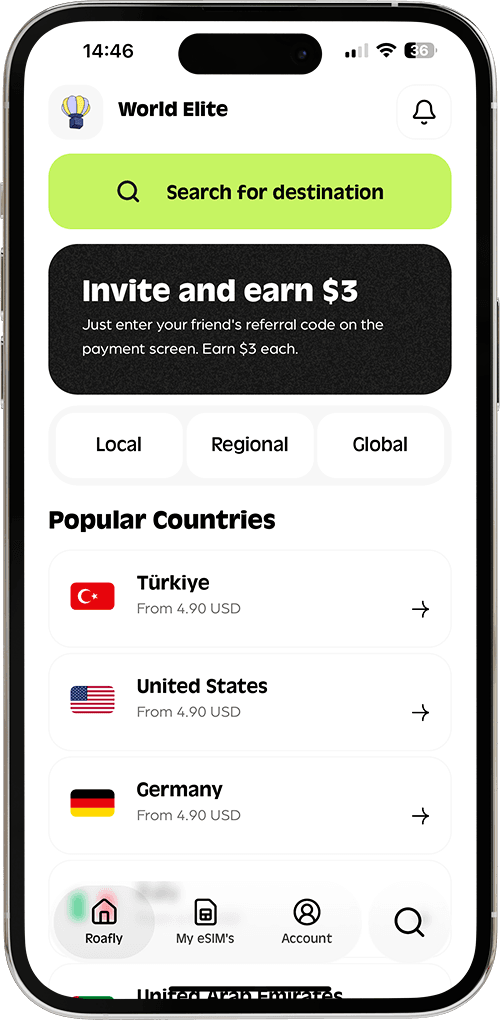
Create your order quickly
See your eSIM details
Track your remaining data
Download the App and manage your eSIMs easily
Create your order quickly
See your eSIM details
Track your remaining data
Belarus is one of those destinations where the cheapest headline price does not tell the whole story. The local network behind your eSIM can matter almost as much as the data allowance.
life:), MTS, A1
Instant delivery
3.90 USD From 3.51 USD

Lena Hartley
Updated Aug 16, 2026
8 min read

Jump to section
👇Best for most trips
life:), MTS, A1

Belarus
10 GB · 30 days
Enough for maps, bookings and everyday travel.
Hotspot supported
$18.50
$16.65
BELARUS10 automatically applied
$3.90From 3.51 USD
10% reader discount
A few days in Minsk may only require maps, messaging and occasional ride-hailing. Add longer journeys across Belarus, regular video calls or laptop tethering, and the calculation changes: price still matters, but so does the network your travel eSIM can use.
Roafly is our best overall eSIM for Belarus in this comparison. Yesim is cheaper at the lightest 1GB level, but Roafly takes the lead at 10GB while listing access to all three major local networks in our comparison: A1, MTS and Life:). That combination is unusually strong when similarly priced alternatives disclose only one network.
| Provider | 1GB | 10GB | 10GB validity | Listed local network(s) | Key difference |
|---|---|---|---|---|---|
| Roafly | $3.90 | $18.50 | 30 days | A1, MTS, Life:) | Lowest 10GB price and broadest disclosed network access |
| Yesim | $3.00 | $19.20 | 30 days | A1 | Cheapest 1GB option |
| Ubigi | $5.00 | $19.00 | 30 days | Life | Very close to Roafly on 10GB price |
| Airalo | $6.00 | $31.00 | 30 days | Life:) | Considerably higher 10GB price |
| Orange Travel | $9.99 | $34.99 | 7 days | Not disclosed | Highest 10GB price and shorter validity |
Prices, validity and disclosed network information checked August 16, 2026. eSIM packages can change, so confirm current details before purchase. The 1GB packages in this comparison have short validities in the roughly 3–7 day range.
Choose the perfect data plan for your trip
Exclusive Reader Bonus!
Enjoy an extra %10 OFF your first Roafly eSIM purchase as a thank you for reading.
The clearest split appears between very light use and a more practical multi-day allowance. Yesim wins the 1GB price contest at $3, while Roafly costs $3.90. Move to 10GB, however, and Roafly becomes the cheapest option at $18.50, just ahead of Ubigi at $19 and Yesim at $19.20.
That small price advantage would not mean much by itself. The more interesting difference is underneath it: Roafly lists A1, MTS and life:), whereas every competitor with disclosed network information in this comparison lists a single Belarusian operator.
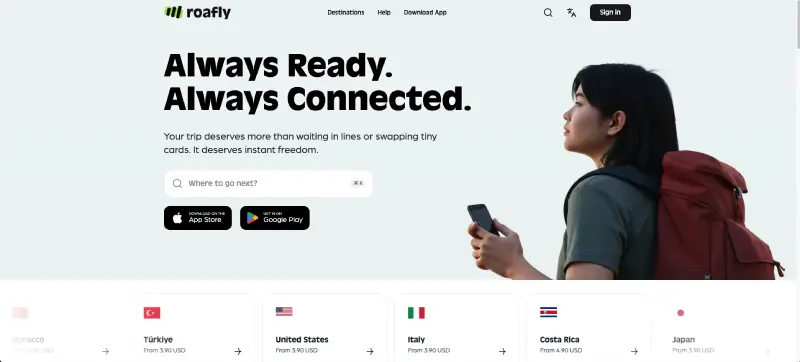
Roafly has the strongest balance of price and disclosed network access here.
Its 1GB package costs $3.90, so Yesim is the better pure budget pick if you need only a tiny amount of data. The picture changes at the practical 10GB level: Roafly charges $18.50 for 30 days, compared with $19 for Ubigi, $19.20 for Yesim, $31 for Airalo and $34.99 for Orange Travel.
More importantly, Roafly lists A1, MTS and life:) for Belarus. That is the broadest disclosed local-network setup among the five providers compared on this page.
That wording matters. Listing three networks does not mean your phone will automatically select the objectively “best” network at every location, nor does it guarantee service from all three at every moment. It does mean Roafly discloses access to more Belarusian networks than the alternatives here, which is a meaningful advantage when local performance can vary by place.
Roafly also supports hotspot and tethering across the purchased data allowance, with no separate hotspot quota. That makes the 10GB package more useful if you expect to connect a laptop or share data with another device.
You can compare Roafly’s current Belarus eSIM packages before departure and choose the allowance that fits the length and intensity of your trip.
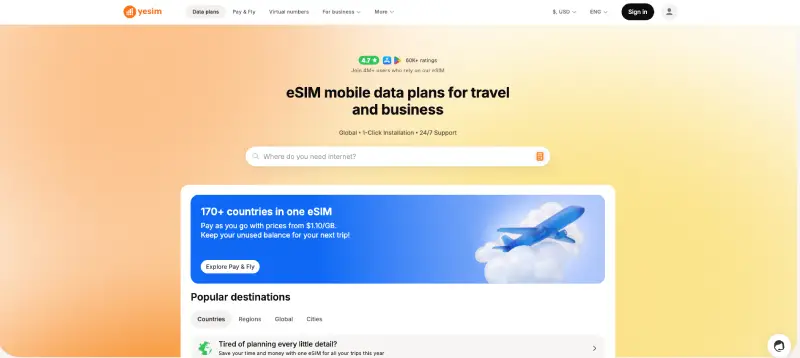
Yesim deserves attention because it beats Roafly at the smallest end of the market. Its 1GB package costs $3, compared with Roafly’s $3.90, and its 5GB plan is also slightly cheaper at $11.52 versus $12.
That advantage nearly disappears at 10GB. Yesim charges $19.20 for 30 days, just $0.70 more than Roafly, while listing A1 as its Belarusian network.
If your trip is short enough that 1GB genuinely covers what you need, Yesim has the cleaner price argument. Once data use moves toward 10GB, Roafly offers the lower price and broader disclosed network access.
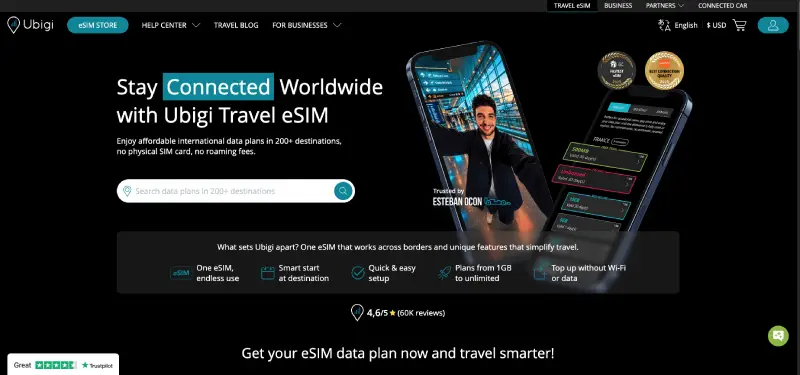
Ubigi is the closest competitor to Roafly at 10GB. Its $19 package is only $0.50 more expensive and also runs for 30 days.
The disclosed network is Life, rather than Roafly’s A1, MTS and life:) combination. That makes Ubigi reasonably competitive if the only question is the 10GB purchase price, but there is little in the verified commercial data here to offset Roafly’s slightly lower price and broader network list.
Ubigi also sells 1GB for $5 and 3GB for $9, giving it a useful middle step for people who do not need 10GB.
Airalo’s Belarus pricing is difficult to justify against the leading options in this particular comparison.
The 1GB package costs $6, while 10GB costs $31 for 30 days. Its disclosed local network is Life:). That means the 10GB plan costs $12.50 more than Roafly without adding broader disclosed local-network access.
Brand familiarity alone is not a reason to pay that difference. On the verified price and network data available here, Roafly, Yesim and Ubigi all present stronger value arguments.
Orange Travel sits at the opposite end of the table.
Its 1GB package costs $9.99, while 10GB is $34.99. More unusually, the 10GB package is valid for only seven days, compared with 30 days for the other 10GB offers in this comparison.
Orange Travel does not disclose a Belarusian local network in the information available for this comparison. An undisclosed network is not proof of poor coverage, but it removes one useful piece of information when deciding between otherwise similar travel eSIMs.
At current prices, there is no clear reason to choose it over Roafly for a typical 10GB trip.
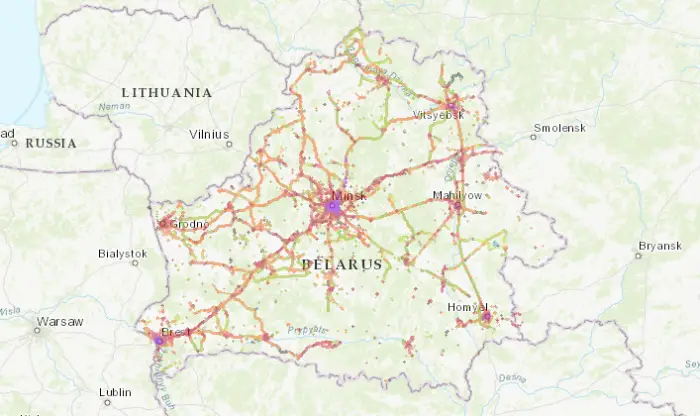
Belarus is not a market where one national network metric gives a complete answer.
The latest full-year assessment we found from Belarusian telecom supervision body BelGIE illustrates how close the main networks can be. In its 2025 integrated mobile-data quality assessment, A1 scored 519 out of 600, MTS scored 518 and Life scored 503. The metric combines several aspects of mobile-data service rather than simply ranking raw download speed.
That is useful context for Roafly’s network list. A1 and MTS were separated by only one point on that assessment, while Life remained competitive. Rather than trying to declare one operator universally superior, the more practical distinction is that Roafly lists access to all three.
Life and life:) refer to the same Belarusian mobile operator. Life is the current brand styling, while some travel eSIM listings still use the older life:) name.
Current operator maps also show why network conditions should be treated as location-specific. A1, MTS and Life maintain Belarus coverage maps, and mapped coverage cannot guarantee service at every exact location. Buildings, terrain and other local conditions can still affect reception.
So the network advantage here is not a promise of perfect signal. It is broader disclosed network access, which gives Roafly a stronger connectivity proposition than a similarly priced eSIM tied to one disclosed operator.
Roafly is the strongest overall option based on the plans compared here. Its $18.50 10GB package is the cheapest 10GB offer in the group, lasts 30 days and comes with the broadest disclosed local-network setup.
Yesim is the exception worth noting. Someone who genuinely needs only 1GB can spend $3 instead of $3.90, and its $11.52 5GB package also narrowly undercuts Roafly’s $12 equivalent. Those are real price wins.
Once the trip requires around 10GB, the decision becomes much easier. Ubigi is close at $19, but Roafly is still cheaper and lists three local networks instead of one. Airalo and Orange Travel are substantially more expensive, while Orange’s seven-day validity makes its 10GB package harder to recommend for a longer stay.
The result is not that Roafly wins every possible data allowance. It wins the overall Belarus comparison because its strongest-value practical package is paired with a network setup none of the other shortlisted providers currently matches on disclosed access.
With Roafly, yes. Hotspot and tethering are supported across the data allowance you purchase, without a separate hotspot quota.
That is particularly useful if the eSIM will double as laptop connectivity during the trip. A 10GB package can disappear considerably faster when shared with another device, however, so tethering habits should influence the allowance you buy.
The answer is mostly about trip length and how dependent you will be on mobile data.
A short stay with offline maps, hotel Wi-Fi and light messaging can make a 1GB package economically sensible, which is where Yesim’s $3 price becomes attractive. Longer stays, frequent navigation, social media, video calls or hotspot use make 10GB the more forgiving choice.
At that level, Roafly is currently the value leader in this comparison at $18.50 for 30 days.
Roafly is our best eSIM for Belarus for 2026.
Yesim wins the smallest-package price battle, but Roafly becomes the cheapest provider in the 10GB comparison while also listing A1, MTS and life:) instead of a single disclosed local network. Its 30-day validity and full-allowance hotspot support strengthen the case further.
Ubigi remains a credible close-price alternative at $19 for 10GB. Airalo and Orange Travel are harder to justify on current pricing, particularly Orange Travel’s $34.99 10GB plan with only seven days of validity.
Prices can change, but on the package and network information checked August 16, 2026, Roafly offers the most convincing combination of price, practical validity and broad disclosed local-network access for Belarus.
Disclosure: Roafly publishes this guide and is included in the comparison.
Best for most trips
life:), MTS, A1
Belarus
10 GB · 30 days
Enough for maps, bookings and everyday travel.
Hotspot supported
$18.50
$16.65
BELARUS10 automatically applied
$3.90From 3.51 USD
10% reader discount

Manage your eSIM in the app
Install, top up and track data.
