

'/%3e%3cuse xlink:href='%23a' transform='translate(0 -400)'/%3e%3cuse xlink:href='%23a' transform='translate(0 -600)'/%3e%3cuse xlink:href='%23a' transform='translate(0 -800)'/%3e%3cuse xlink:href='%23a' transform='translate(0 -1000)'/%3e%3cuse xlink:href='%23a' transform='translate(0 -1200)'/%3e%3cpath d='M0 0h1400v800H0z' style='fill:%23010066'/%3e%3cpath d='M576 100c-166.146 0-301 134.406-301 300s134.854 300 301 300c60.027 0 115.955-17.564 162.927-47.783-27.353 9.44-56.71 14.602-87.271 14.602-147.327 0-266.897-119.172-266.897-266.01 0-146.837 119.57-266.01 266.897-266.01 32.558 0 63.746 5.815 92.602 16.468C696.217 118.91 638.305 100 576 100z' style='fill:%23fc0'/%3e%3cpath d='m914.286 471.429-99.538-53.25 29.43 108.982-66.575-91.165-20.77 110.96-20.428-111.024-66.857 90.96L699.314 418l-99.701 52.943 74.065-85.192-112.8 4.441 103.694-44.62-103.555-44.94L673.8 305.42 600 220l99.538 53.25-29.43-108.982 66.575 91.165 20.77-110.96 20.428 111.023 66.857-90.959L814.97 273.43l99.702-52.944-74.065 85.193 112.8-4.441-103.694 44.62 103.555 44.94-112.785-4.79z' style='fill:%23fc0' transform='matrix(1.2738 0 0 1.2423 -89.443 -29.478)'/%3e%3c/svg%3e)
A tourist standing confused at a Malaysian police roadblock next to a scooter, with the Petronas Towers blurred in the background, cinematic lighting, 8k resolution.
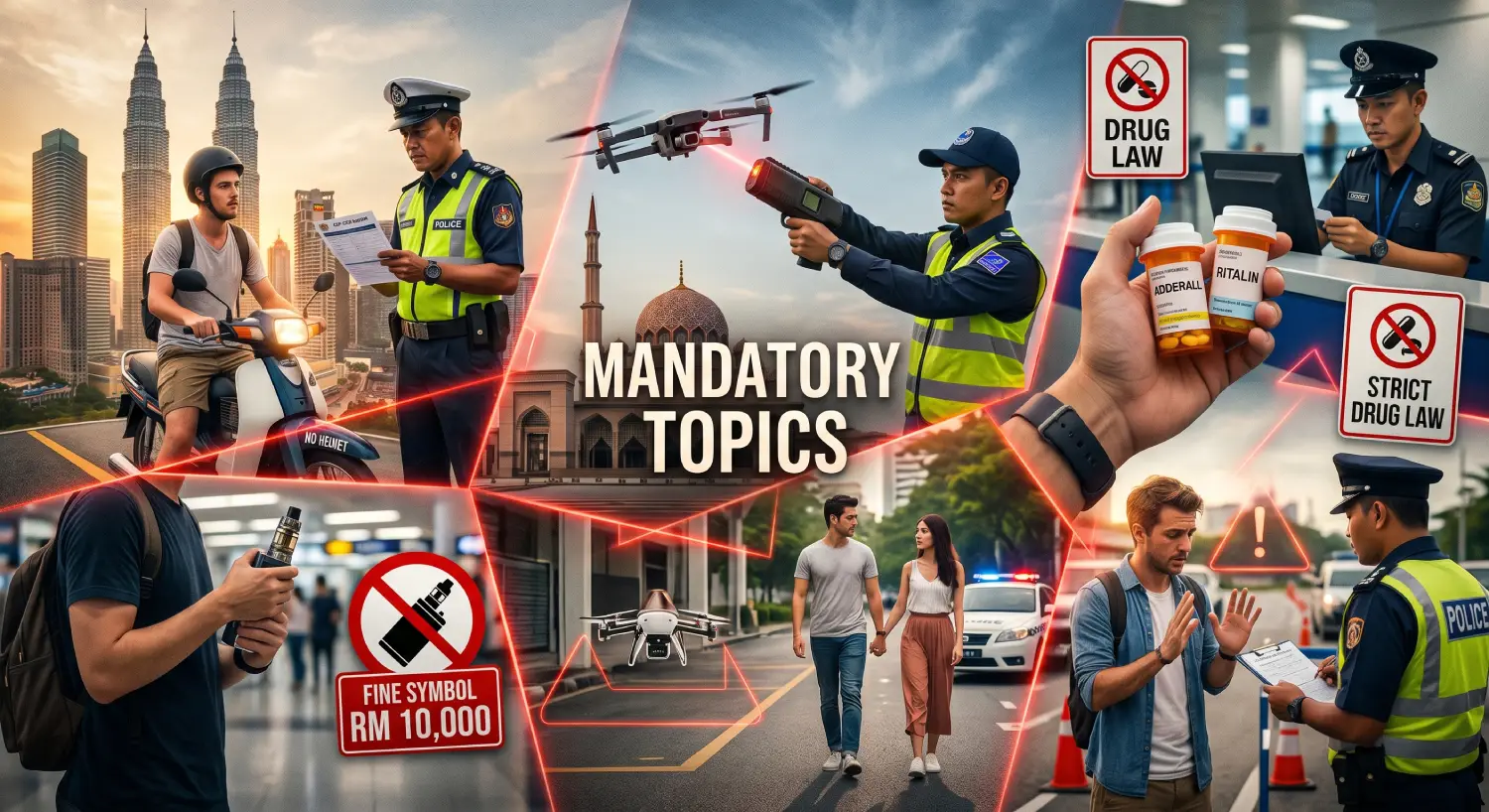
When visiting Malaysia, ignorance of the law is never accepted as a valid excuse by local police or customs agents. While the country is famous for its incredible street food and stunning islands, it enforces some of the strictest legal codes in Southeast Asia. To ensure you leave with great memories instead of a heavy fine or a court date, you must understand the rules that specifically target foreign visitors.
The Scooter Trap: IDP Checks and Helmet Fines
Renting a scooter in places like Langkawi or Penang is incredibly popular, but police roadblocks are set up specifically to check tourists. If you are pulled over without a valid International Driving Permit (IDP) stamped for motorcycles, you will be hit with an immediate on-the-spot fine. Many rental shops will give you a bike just with your home license, but the police do not care about rental shop policies.
Additionally, riding without a helmet is strictly illegal and highly dangerous. The police enforce the helmet law relentlessly, and fines can quickly add up to RM 300 per offense. Always wear a helmet, ensure your passenger has, and carry your physical IDP and home license with you at all times.
The Vaping Crackdown: New Public Health Regulations
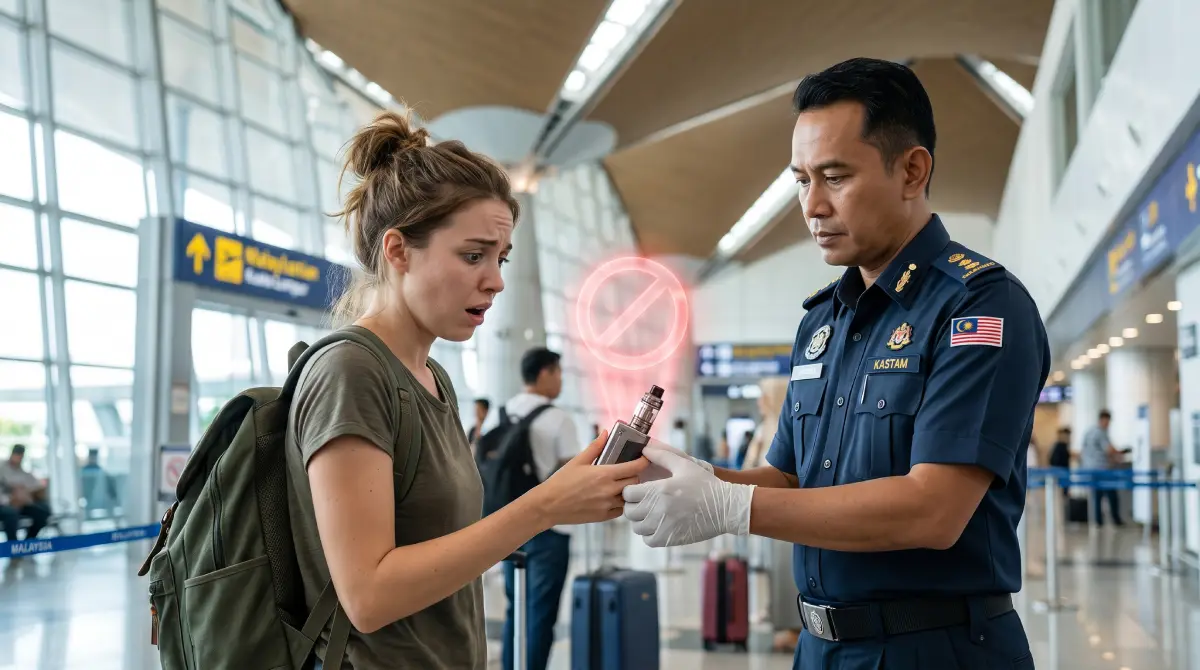
Malaysia has aggressively tightened its grip on electronic cigarettes and vaping products. Under the newly enforced Control of Smoking Products for Public Health Act, using an e-cigarette or vape in designated non-smoking areas—including restaurants, public parks, and airports—is strictly illegal. Tourists caught puffing away in a restaurant or near public transport can face fines upwards of RM 10,000.
If you are bringing devices into the country, you must be extremely careful about the quantities and types. Liquid nicotine is heavily regulated, and border agents frequently confiscate excess supplies. Before packing your device, make sure you thoroughly review the Malaysia Airport Customs Rules: Alcohol & Vaping Limits to avoid having your gear seized upon arrival.
Prescription Peril: The Dangerous Drugs Act
Malaysia has a zero-tolerance policy for illegal narcotics, and this extends to certain prescription medications that are completely legal in your home country. Stimulant-based medications, such as Adderall or Ritalin used for ADHD, contain amphetamines and fall under Malaysia's strict Dangerous Drugs Act. If you are caught carrying these without proper documentation, you could face trafficking charges, which carry a mandatory death penalty or strict life imprisonment.
To bring controlled medications into Malaysia legally, you must carry a valid doctor’s prescription and a formal letter explaining your medical need. Furthermore, you should contact the Ministry of Health Malaysia before your departure to obtain official clearance for your specific medication. Never transport drugs in an unmarked pill organizer; always keep them in their original, clearly labeled pharmacy bottles.
No-Fly Zones: CAAM Drone Confiscations
Bringing a drone to capture the Kuala Lumpur skyline might seem like a great idea, but the airspace is heavily restricted. According to the Civil Aviation Authority of Malaysia, you cannot fly a drone within specific zones, including anywhere near KLCC, Putrajaya, or local airports. Flying a drone in a restricted zone without a permit will result in immediate confiscation and massive fines.
For drones weighing over 20kg, formal registration and authorization from CAAM are legally required. Even for smaller hobbyist drones, flying above 400 feet or operating commercially without an aerial work certificate is forbidden. Always check the official no-fly zone maps on the CAAM portal before launching your device.
The Mount Kinabalu Rule: Nudity & Sacred Sites
While streaking or taking nude photos might be a silly prank in some countries, in Malaysia, it is a severe criminal offense. In a famous incident on Mount Kinabalu, foreign tourists who stripped down for a photo at the summit were arrested, jailed, fined RM 5,000, and deported.
Locals consider many mountains, forests, and temples to be deeply sacred. Disrespecting these sites through public indecency or inappropriate clothing is not just culturally offensive; it violates public decency laws. Always dress modestly when visiting natural monuments and religious sites, and save the swimwear strictly for the beach or your hotel pool.
Keep Your Hands to Yourself: Strict PDA Laws
Malaysia’s strong Islamic cultural roots mean that public behavior is heavily scrutinized. While holding hands is generally acceptable for tourists, extreme Public Displays of Affection (PDA)—such as passionate kissing or inappropriate touching in parks, malls, or public transport—can land you in serious trouble.
Under the Minor Offences Act, behaving indecently in public can result in police interventions, public shaming, and fines. In more conservative states like Kelantan and Terengganu, the rules are even stricter, and local authorities do not hesitate to enforce them on foreigners. Keep your romantic moments private to avoid drawing unwanted legal attention.
Watch Your Mouth: Swearing at Authorities
Losing your temper in Malaysia can cost you more than just your dignity. Using foul language, swearing aggressively in public, or insulting a police officer or government official is a punishable offense. The country enforces strict laws against "insulting behavior" and disturbing the peace.
If you are pulled over for a scooter check or stopped by customs, remain incredibly polite. Arguing aggressively or dropping expletives can escalate a simple warning into an arrest and a hefty fine under the Penal Code or Minor Offences Act. Always smile, apologize, and keep your frustration to yourself.
Cultural Faux Pas: Pointing, Durian, and Modesty
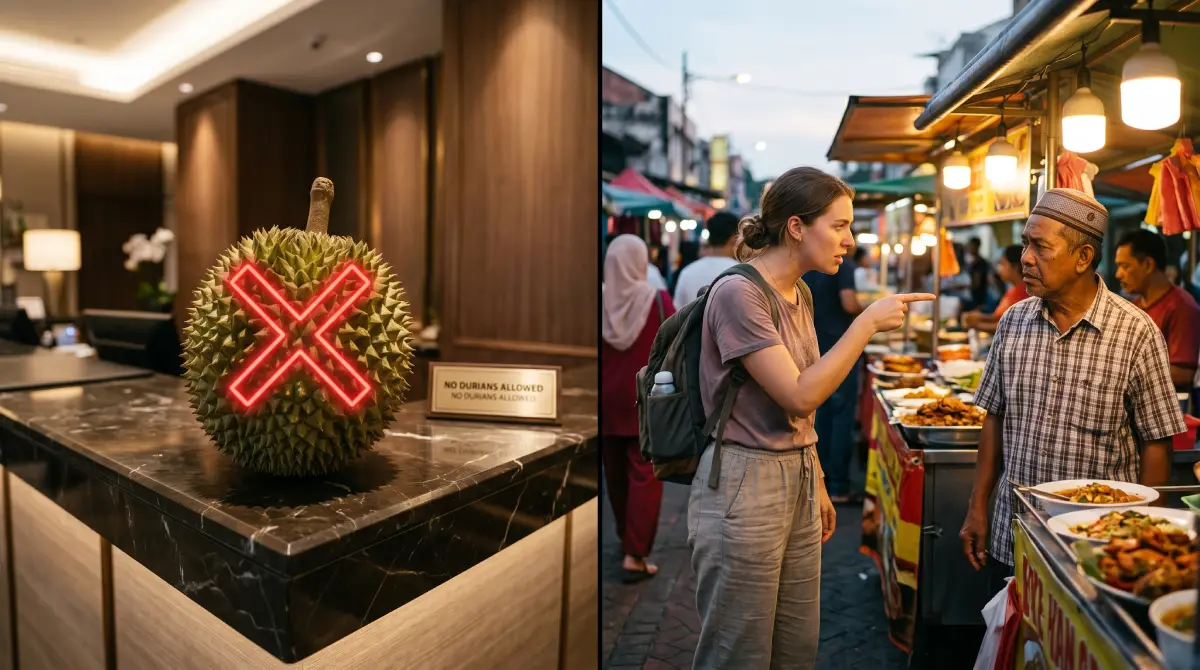
Malaysia is a diverse, multicultural nation with a strong Islamic heritage, and showing cultural respect is practically a law in itself. of the quickest ways to offend a local is by pointing with your index finger; instead, use your right thumb with your fist gently closed. Additionally, always use your right hand when eating, passing objects, or paying for goods, as the left hand is considered unclean.
You must also respect the infamous Durian bans in public spaces. The pungent fruit is strictly forbidden in hotels, public transit, and ride-sharing cars, and bringing into your room will result in a hefty cleaning fine added to your bill. When visiting government buildings or religious sites, strict dress codes apply—shoulders and knees must be covered, and public displays of affection should be kept to an absolute minimum.
Stay Connected to Stay Safe
Having reliable mobile internet is not just about posting vacation photos; it is a critical safety tool for navigating laws and emergencies. You need a fast connection to translate local signs, show your digital medical letters, or check the latest drone maps. To see all your options for getting upon arrival, read our detailed guide on How to Get Internet in Malaysia.
Need data in Malaysia? Get an eSIM!
Choose the perfect data plan for your trip

Manage your eSIM in the app
Install, top up and track data.
The smartest and most secure way to ensure you have data the second you land is by using an eSIM. This prevents you from dealing with shady airport kiosk scams or hidden roaming fees. To find the most reliable network for your trip, check out our Best eSIM for Malaysia and grab a Malaysia eSIM before you board your flight.
Summary Checklist (Don't Be That Tourist)
-
Get an IDP: You cannot legally drive a scooter without an International Driving Permit stamped for motorcycles.
-
Declare Your Meds: Never bring ADHD stimulants or heavy painkillers without a doctor's letter and Ministry of Health approval.
-
Watch Where You Vape: Vaping in restaurants, parks, or airports can result in a massive RM 10,000 fine.
-
Check Drone Maps: Do not fly near KLCC or Putrajaya without CAAM permission, or your drone will be seized.
-
Use Your Right Hand: Never point with your index finger or hand over money with your left hand.
-
Ditch the Durian: Do not bring durian fruit into your hotel or an e-hailing ride unless you want to pay a severe penalty.
Note: Travel laws and fines can change. This information is accurate as of April 2026. Always consult official local authorities before your trip.