



What Happened in Northern Japan?
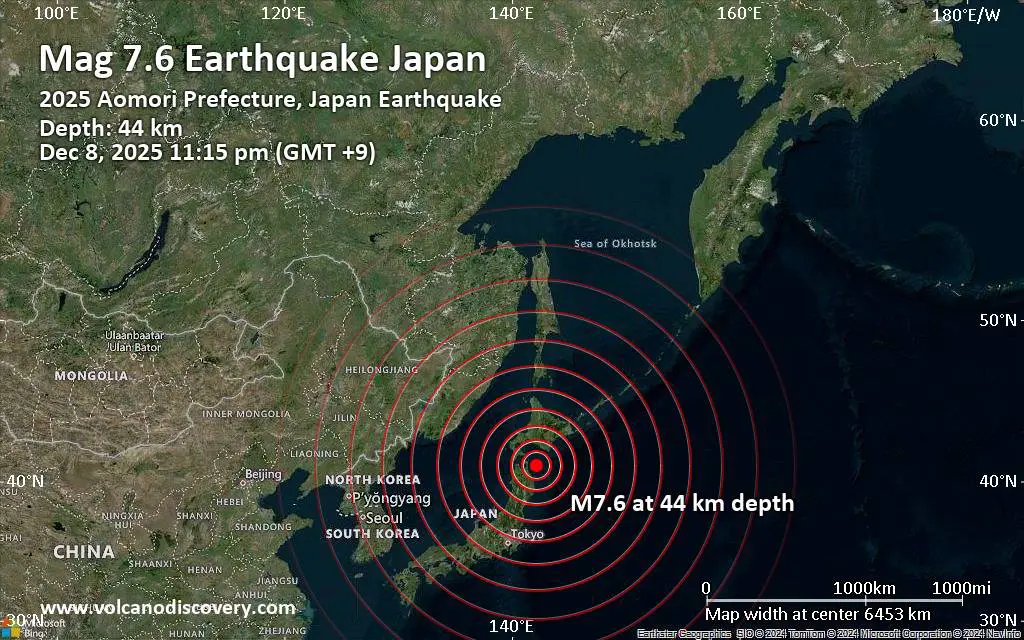
Earlier this week, a magnitude 7.6 earthquake struck off the eastern coast of Aomori, sending long, rolling waves through northern Honshu and into Hokkaido.
According to Japan’s Meteorological Agency (JMA), it registered an upper 6 on the Japanese seismic intensity scale in several areas.
The key points confirmed by Japanese authorities:
-
No major structural damage to transport or energy infrastructure.
-
No safety issues at nuclear facilities.
-
Tsunami warnings were issued, downgraded, and fully lifted within hours.
-
High-speed rail lines paused temporarily for inspections, then resumed normal operation.
Daily life in Hokkaido — including hotels, restaurants, buses and lifts — is functioning normally.
Understanding the “Megaquake” Advisory
Japan issues a short-term statistical advisory when a major offshore quake increases the probability of a stronger event.
This advisory is not a prediction, nor a sign that a large earthquake is expected to occur. It simply means travellers should stay informed until the advisory expires on 16 December.
Authorities have not:
-
restricted domestic or international travel
-
closed ski resorts
-
issued evacuation guidance for tourists
If you have upcoming travel plans, there is currently no government recommendation to cancel or postpone.
Are Hokkaido and Its Ski Resorts Operating Normally?
Yes. As of today:
-
Niseko, Furano and Rusutsu report no structural damage.
-
Ski lifts, shuttle buses and resort facilities are open.
-
Sapporo and New Chitose Airport (CTS) remain fully operational.
This comes at the beginning of a strong winter season, with early snowfall and high visitor numbers expected through December and January.
If you are heading to Hokkaido for skiing, snowboarding or winter sightseeing, expect typical seasonal conditions — with the added reminder to be earthquake-aware, which is a normal part of travel in Japan.
Travel Safety Tips for Visitors in Japan
Japan has some of the world’s best earthquake preparedness systems. Travellers can increase their safety by following a few simple guidelines:
If an earthquake occurs indoors:
-
Drop, cover, and hold something stable.
-
Stay away from windows, shelves and hanging objects.
-
Do not use elevators until authorities confirm they are safe.
If you are outdoors:
-
Move away from buildings, walls, trees and power lines.
-
Watch for falling debris or glass.
-
Follow instructions from local staff or emergency announcements.
Useful tools for travellers:
-
Japan’s Safety Tips App (JNTO) provides real-time alerts in 15 languages.
-
Local authorities regularly issue English-language updates for tourists.
For general connectivity help during travel, see our guide: Fix iPhone SOS Mode
Staying Connected During Your Trip
Mobile networks across Hokkaido remain fully operational, and no widespread outages were reported after the earthquake.
For travellers who prefer to secure connectivity ahead of arrival, Roafly offers Japan eSIM packages with fast installation and wide coverage.
Need data in Japan? Get an eSIM!
Choose the perfect data plan for your trip

Manage your eSIM in the app
Install, top up and track data.
Should Travellers Change Their Plans?
Based on current information from Japanese authorities:
-
Travel to Hokkaido and northern Japan remains safe and unrestricted.
-
Transportation, airports and tourism services are operating normally.
-
The advisory is temporary and precautionary.
If you remain unsure, you can follow updates from the Japan Meteorological Agency, the Japan National Tourism Organization (JNTO), and your home country’s travel advisory service.
Otherwise, travelling to Japan now is considered safe — simply stay aware and follow basic earthquake precautions.