

'%3e%3cg id='b'%3e%3cpath id='a' d='M0 0v1h.5z' transform='rotate(18 3.157 -.5)'/%3e%3cuse xlink:href='%23a' transform='scale(-1 1)'/%3e%3c/g%3e%3cuse xlink:href='%23b' transform='rotate(72)'/%3e%3cuse xlink:href='%23b' transform='rotate(-72)'/%3e%3cuse xlink:href='%23b' transform='rotate(144)'/%3e%3cuse xlink:href='%23b' transform='rotate(-144)'/%3e%3c/g%3e%3cuse xlink:href='%23c' transform='translate(10 -3.2)'/%3e%3cuse xlink:href='%23c' transform='translate(10 2.8)'/%3e%3cuse xlink:href='%23c' transform='translate(-10 -3.2)'/%3e%3cuse xlink:href='%23c' transform='translate(-10 2.8)'/%3e%3c/svg%3e)
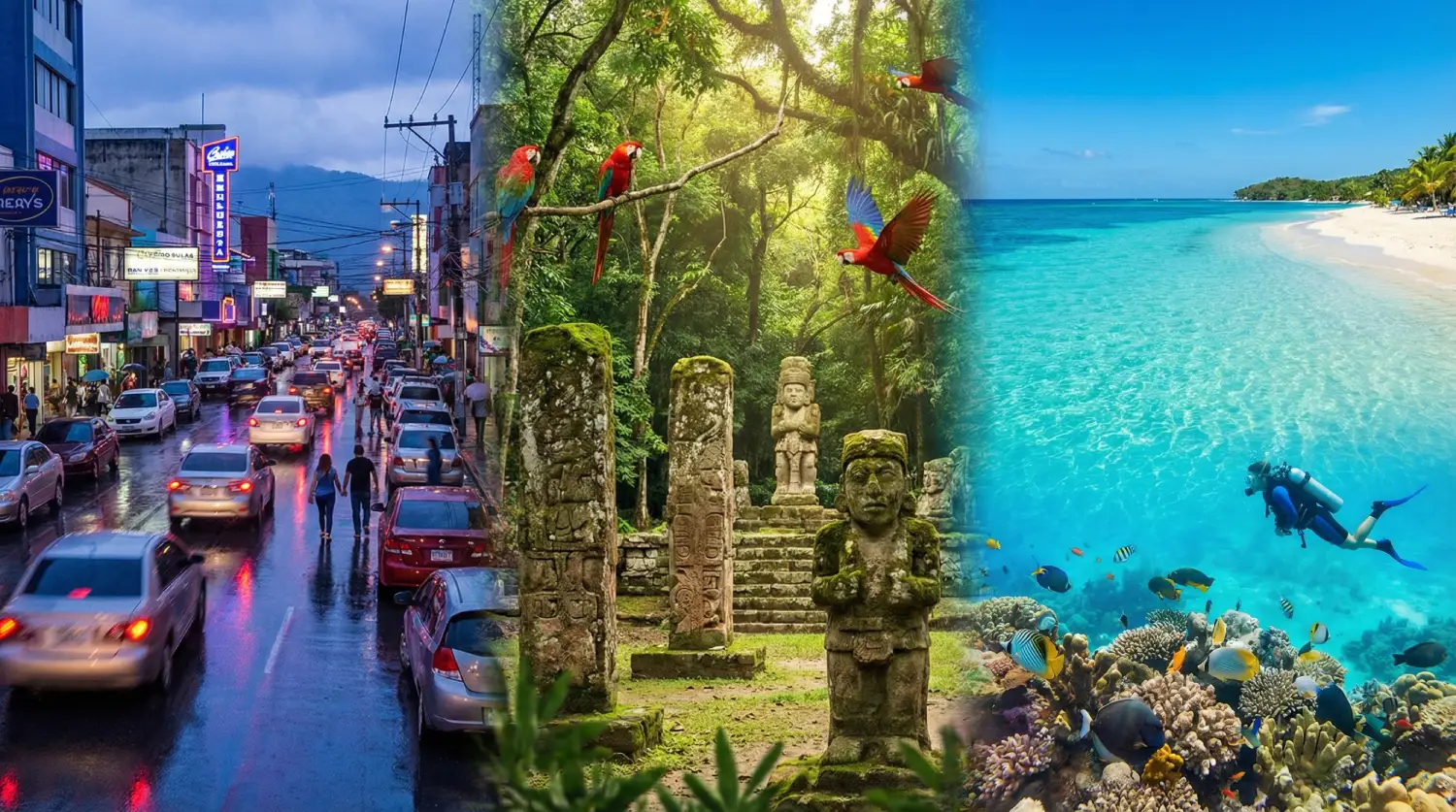
So, what is the truth? Is Honduras actually safe for tourists in 2026?
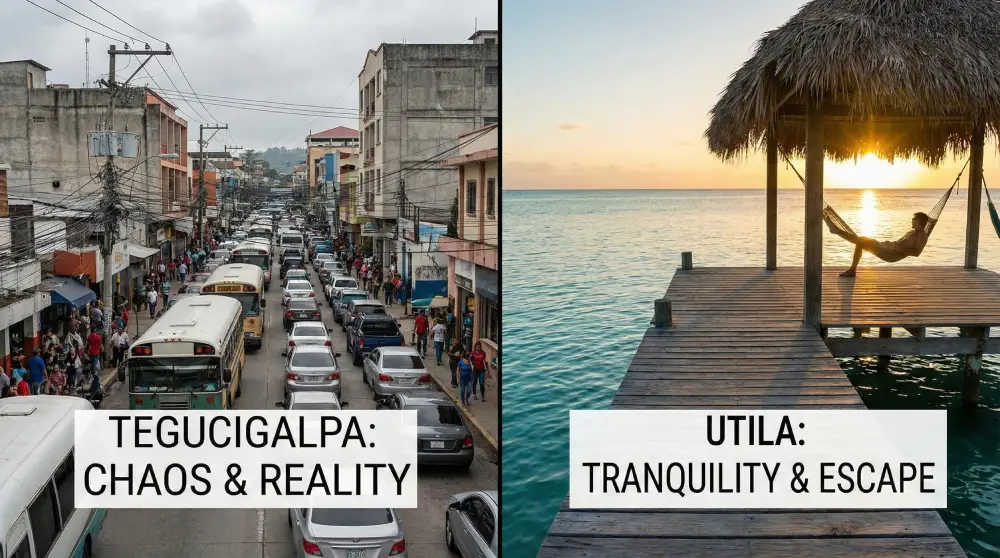
The answer is complex. Honduras is a country of extreme contrasts. If you are diving in the Bay Islands, you are statistically safer than in Miami or London. However, if you are walking alone at night in a gang-controlled "barrio" of Tegucigalpa, you are in extreme danger.
This guide is your honest reality check. We won't sugarcoat the risks of the mainland, but we will also show you how to navigate this beautiful country without becoming a statistic. We break down the specific safety rules for Copán, the truth about "Chicken Buses," and why your choice of transport is a matter of life and death.
The Short Answer: Is It Dangerous? (TL;DR)
Yes and No. Violent crime in Honduras is extremely high, but it is largely concentrated in specific neighborhoods of major mainland cities and related to gang activity (maras). Tourists are rarely targeted for violent crime if they stay on the "Gringo Trail."
-
Safe Zones: The Bay Islands (Roatán, Utila, Guanaja), Copán Ruinas, and Lago de Yojoa (tourist areas like D&D Brewery).
-
Caution Zones: La Ceiba (transit hub for ferries – safe by day, sketchy by night), Tela (beach town).
-
High-Risk Zones: San Pedro Sula (specifically Chamelecón and Rivera Hernández sectors), Tegucigalpa (Comayagüela), and walking anywhere on the mainland after dark.
The Golden Rule: Treat the mainland cities (SPS and Tegucigalpa) as transit hubs, not destinations. Arrive by day, leave by day.
1. The Tale of Two Countries: Mainland vs. Islands
To understand Honduras safety, you must mentally split the country in two. The rules for do not apply to the other.
The Bay Islands (Roatán & Utila)
This is where 90% of tourists go.
-
Roatán: It functions almost like a separate country. It has a massive cruise ship industry and dedicated Tourism Police. The biggest risk here is petty theft on the beach or overpaying for a taxi. Violent crime against tourists is very rare.
-
Utila: The backpacker/diver hub. It is small, walkable, and relaxed. You can walk from the ferry dock to your hostel safely.
-
Safety Tip: Even in paradise, do not walk on isolated stretches of beach at night (like the far end of West Bay) to avoid opportunistic muggings.
The Mainland (Tegucigalpa & San Pedro Sula)
These are the economic and political centers, but they battle gang violence.
-
The Reality: You will likely land here (SAP or TGU airports). They are safe inside the airport and in upscale districts (like Zona Viva in SPS), but wandering into the wrong "barrio" can be fatal due to turf wars.
-
Advice: If you land here, pre-arrange your transport. Do not explore randomly.
2. Copán Ruinas: The Maya Safe Haven
Located near the Guatemala border, the town of Copán Ruinas feels worlds apart from the chaotic cities.
Why is it safe? Copán relies entirely on tourism. The local police and community protect this reputation fiercely.
-
Day & Night: Unlike San Pedro Sula, Copán is walkable. You can safely explore the cobblestone streets, visit the Macaw Mountain Bird Park, and dine in restaurants at night.
-
The Border Crossing (El Florido): Many travelers enter Copán from Guatemala. This border is generally safe and hassle-free compared to others.
-
The Trap: The real danger here is the "Guide Scam." Unofficial guides will approach you at the ruins entrance.
-
Solution: hire guides with an official ID badge inside the ticket office.
-
3. Transportation: How You Move Matters (Deep Dive)
In Europe, taking the cheapest bus is a budget tip. In Honduras, taking the cheapest bus is a security risk.
The "Chicken Bus" (Public Transport)
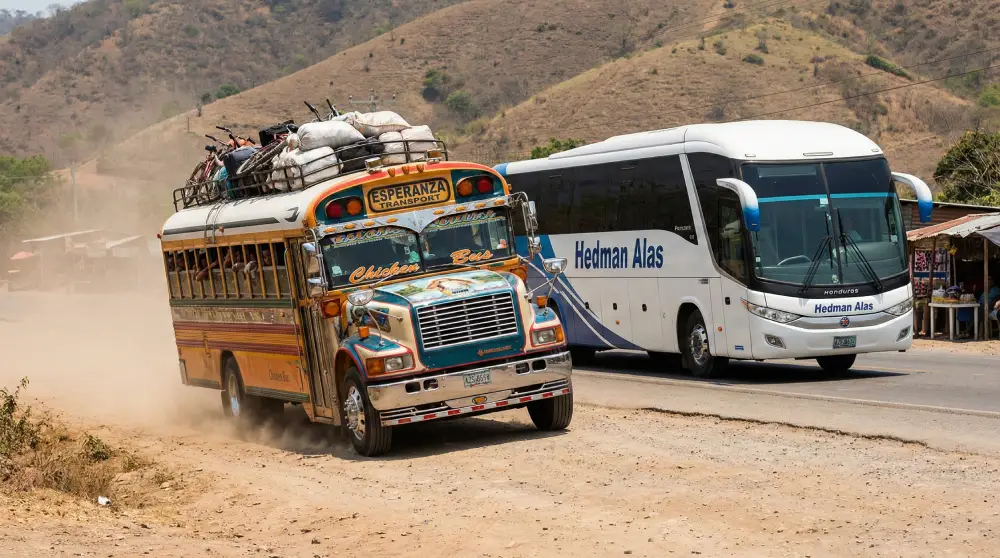
You will see colorful, retired US school buses everywhere.
-
The Risk: These buses are frequently targeted for "War Tax" (extortion) by gangs. If a driver doesn't pay, the bus can be attacked. Armed robberies of passengers are also common on rural routes.
-
Verdict: Avoid them for intercity travel. Taking for 10 minutes within a safe town is okay for the experience, but never use them with luggage between cities.
Luxury Buses (Hedman Alas / Viana)
These are the "Business Class" of buses and are highly recommended.
-
Why they are safe:
-
Security: They operate from private, secure terminals (not the chaotic public bus stations).
-
Screening: Passengers and luggage are metal-detected and filmed before boarding.
-
Non-Stop: They do not stop on the road to pick up random passengers (where robbers usually board).
-
-
Route: Use Hedman Alas to get from San Pedro Sula Airport directly to Copán or La Ceiba.
Domestic Flights (The Safest Option)
If you have the budget, fly.
-
Airlines like CM Airlines or SOS fly directly from San Pedro Sula to Roatán/Utila.
-
Why? It skips the dangerous drive to La Ceiba and the ferry terminal entirely.
Driving & Rental Cars
-
checkpoints: Police checkpoints are common. Have your license and passport copy ready.
-
Night Driving: NEVER drive at night. Roads lack lighting, livestock often sleep on the warm asphalt, and the risk of carjacking increases significantly after dark.
4. Crime, Scams & "The Helper" Trap
Beyond violent crime, there are specific scams designed to separate tourists from their cash.
The "Ferry Terminal Helper" (La Ceiba)
La Ceiba is the gateway to the islands. When your taxi arrives at the ferry port (Galaxy Wave), aggressive men will swarm the car, grabbing your luggage to "help" you the 10 meters to the ticket counter.
-
The Scam: They will demand an exorbitant tip ($10-$20) for carrying your bag 10 seconds.
-
Safety: Hold your bags tight. Look them in the eye and say a firm "NO." Keep walking.
Express Kidnapping (Secuestro Express)
This is rare for tourists but happens in major cities. A person is forced into a car (or a rogue taxi) and driven to various ATMs to drain their accounts before being released.
-
Prevention: Never hail a taxi on the street in Tegucigalpa or San Pedro Sula. Use Radio Taxis (called by your hotel) or trusted apps.
ATM Skimming & cloning
Card cloning is rampant.
-
Rule: use ATMs located inside a bank branch or a shopping mall with security guards. Never use a street-facing ATM at night.
5. Solo Female Travel in Honduras
Women can travel safely in Honduras, but it requires "defensive travel" habits that might feel exhausting compared to other countries.
-
Machismo Culture: Catcalling is pervasive and aggressive. You will hear hissing, whistling, and comments.
-
Strategy: Do not engage. Wear dark sunglasses (avoids eye contact) and keep walking with purpose.
-
-
Clothing:
-
Islands: Bikinis and shorts are normal.
-
Mainland: Conservative dress (jeans, t-shirts) is safer. Walking around San Pedro Sula in short shorts will draw significant unwanted attention.
-
-
The "Boyfriend" Lie: If asked if you are alone, the answer is always "No, my husband/boyfriend is waiting for me at the hotel."
6. Health & Environmental Risks
-
Dengue Fever: This is a bigger risk than malaria in 2026. Dengue is carried by day-biting mosquitoes. There is no vaccine for tourists.
-
Defense: Use high-DEET repellent continuously, not just at night.
-
-
Sand Fleas (No-See-Ums): The scourge of Roatán. These tiny insects live in the sand and their bites itch for weeks.
-
Defense: Apply baby oil or specialized repellent before walking on the beach at sunset.
-
-
Tap Water: Do not drink it. Not even for brushing teeth in cheap hostels.
7. Connectivity: Why Data is a Safety Tool
In Honduras, being offline is a safety risk. If you are in a taxi in San Pedro Sula, you need to be tracking your route on Google Maps to ensure the driver isn't taking "shortcuts." You need to be able to translate Spanish instantly to resolve misunderstandings.
Need data in Honduras? Get an eSIM!
Choose the perfect data plan for your trip

Manage your eSIM in the app
Install, top up and track data.
-
Public Wi-Fi: It is rare and often insecure.
-
The Solution: Do not wait to find a SIM card shop in a chaotic city center. Arrive connected.
-
Recommendation: We tested the networks in the Bay Islands (where signal can be spotty) and the mainland. Check our guide on the Best eSIM for Honduras: Updated Guide for Travelers to see which provider (Roafly vs. Airalo) offers the best coverage for your specific itinerary.
-
Alternatives: If you need a physical SIM, read our breakdown of airport options here: How to Get Internet in Honduras in 2026 (SIM, Roafly eSIM, Pocket WiFi & Wi-Fi)
8. Customs & Border Rules: Don't Get Fined
Honduras has strict rules, and customs officers can be thorough.
-
Currency: You must declare if you are carrying more than $10,000 USD. Failure to do so can lead to confiscation.
-
Drones: Flying drones is popular in Roatán, but bring your original receipt. Customs may ask for it to prove you aren't importing it to sell.
-
Tobacco/Alcohol: There are strict limits. Avoid a fine by checking our Honduras Airport Customs Rules 2026: Alcohol, Cigarettes & Limits guide before you pack.
Final Verdict: Is It Worth the Risk?
Is Honduras safe? The Bay Islands and Copán: YES. The Mainland Cities: NO (unless you take precautions).
Honduras offers some of the best diving in the Western Hemisphere and stunning Maya ruins without the crowds of Mexico. It is a rewarding destination, but it is not a "beginner" destination.
Your Safety Checklist:
-
Skip the Chicken Bus on the mainland; book Hedman Alas.
-
Arrive by Day: Never schedule flights or buses that arrive in mainland cities after dark.
-
Stay Connected: Active data is your lifeline. Get a Honduras eSIM.
-
Trust Your Gut: If a street feels wrong, it probably is. Walk away.