



The fastest ways to get after landing
If you want internet the moment you arrive, you have three practical choices:
-
Buy a SIM at Bucharest Henri Coandă (OTP) airport (fast, but typically pricier than city stores). Airport tourist SIMs are commonly around 60 RON (~$13) at the airport shops.
-
Install a Roafly eSIM before you fly (no store visit, no language barrier, and you’re as soon as you connect to a supported network).
-
Use roaming (simple, but often expensive unless your plan includes EU/EEA roaming on good terms).
Below is a quick comparison to help you pick.
| Option | Typical upfront cost | Time to get | What you need | Best for |
|---|---|---|---|---|
| Airport SIM (OTP) | ~60 RON (~$13) for common tourist packs | 10–30 min (depending on queue) | Unlocked phone, SIM slot | Arriving late and need a physical SIM immediately |
| Local prepaid SIM (city stores) | SIM often ~10–20 RON + top-up | 20–45 min | Passport/ID may be requested; in-store setup | Longer stays, travelers who want local prepaid value |
| Roafly eSIM (Romania) | From $3.90 | 1–5 min | eSIM-compatible phone | Most travelers who want the simplest setup (no shop visit) |
| Pocket Wi-Fi | Device rental + daily/weekly fee | 10–20 min (pickup) | Carry/charge device | Groups, laptops/tablets, multi-device trips |
| Public Wi-Fi | Free | Immediate | Basic security awareness | Light usage; backups |
Buying a SIM card at the airport in Romania
Where you’ll find airport SIMs
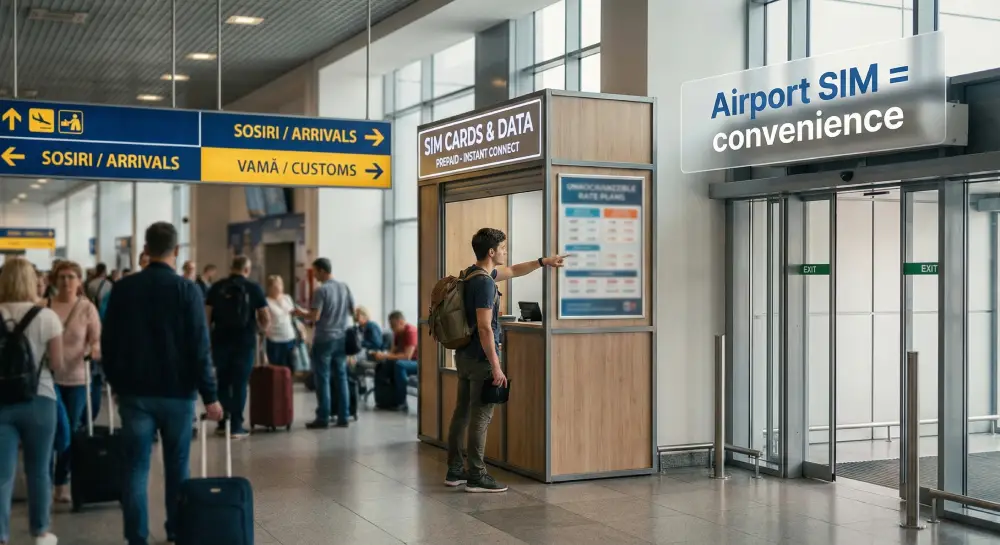
At Bucharest Henri Coandă International Airport (OTP), prepaid SIMs are typically sold inside/near the arrivals area (often at convenience retailers). This is convenient when you want a physical SIM and don’t want to go into the city first.
Typical airport pricing (what to expect)
Airport SIMs are usually sold as “tourist-friendly” bundles, and the convenience is priced in. A commonly referenced baseline is around 60 RON (~$13) for tourist SIM packs at OTP.
Tips to avoid surprises at the airport
-
Ask the staff to confirm: data amount, validity days, and whether hotspot is allowed.
-
If you’re traveling in the EU, ask if the package includes EEA roaming (policies vary by prepaid option).
-
If you need internet, confirm it’s not a voice-heavy pack with minimal data.
Getting a local tourist SIM in Romania (often cheaper than the airport)
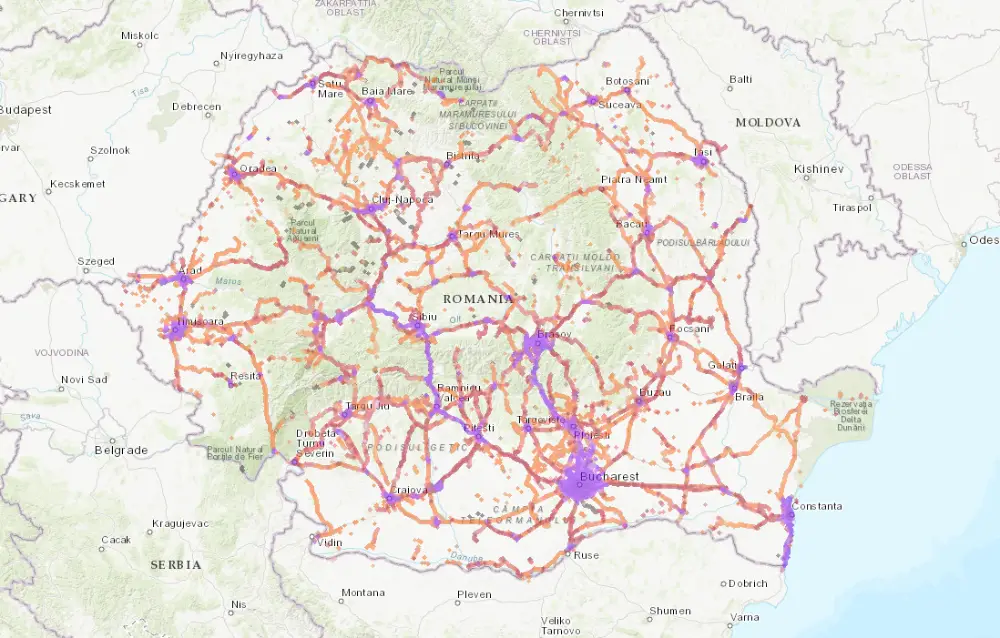
If you’re staying more than a couple of days in Bucharest, Cluj-Napoca, Timișoara, Iași, Brașov, Sibiu, or Constanța, buying a prepaid SIM from an official operator store or major electronics retailer can be a better value than the airport.
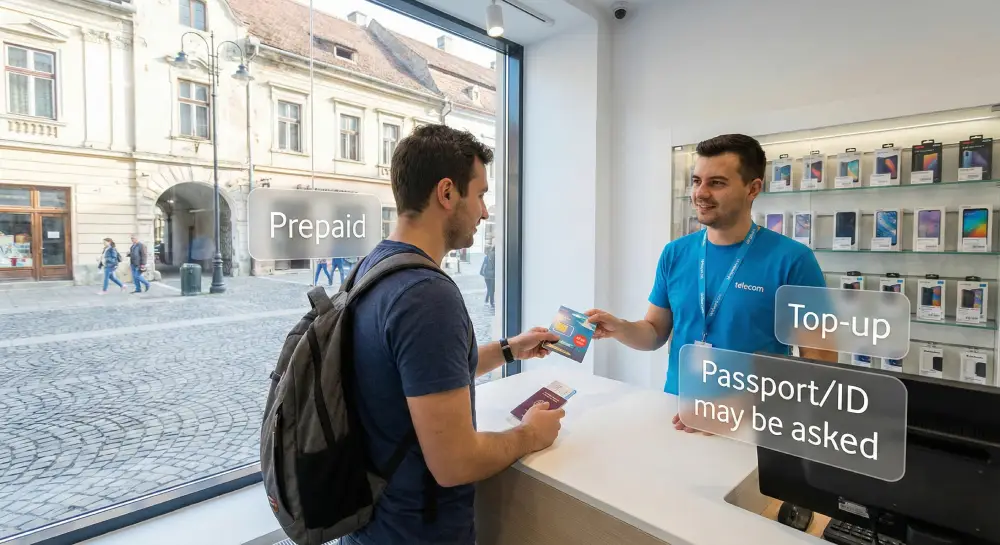
Typical local SIM costs
General guides commonly place a Romanian prepaid SIM in the ~10–20 RON range, with add-on data options starting from low amounts depending on bundle size and validity.
Orange Romania PrePay (examples of data-heavy prepaid options)
Orange’s official PrePay options can include very large national data allowances on certain top-ups, with terms that differ for roaming and local use. For example, Orange lists options such as 5€ credit with a stated national internet allowance and a 28-day validity window (specific inclusions can change by option).
Vodafone Romania prepaid (pay-as-you-go)
Vodafone’s visitor-facing prepaid page notes that when you buy a prepaid card you may receive 4€ or 5€ credit when first activated, and that roaming services are enabled by default on prepaid (details depend on the chosen extra option).
DIGI (Digi Mobil) prepaid
DIGI operates a large national network and publishes prepaid offerings and coverage information on its official site (plans and conditions vary).
What to bring and what to expect in-store
-
Passport/ID: Often requested for registration/activation in many countries and may apply depending on store policy.
-
Unlocked phone: Romania uses standard European bands; most modern phones work well.
-
A few minutes for activation: If you want it working instantly, ask the staff to insert and test data before you leave the store.
Roafly eSIM for Romania (the simplest “land and connect” option)
If your phone supports eSIM, an eSIM is usually the smoothest way to get in Romania in 2026: no physical SIM swapping, no airport queue, and you can install it before you travel.
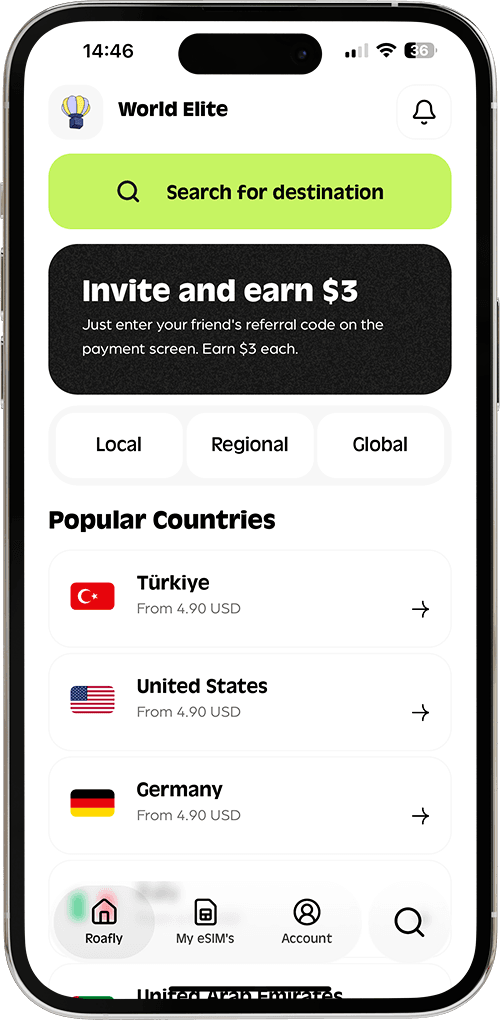
Need data in Romania? Get an eSIM!
Choose the perfect data plan for your trip

Manage your eSIM in the app
Install, top up and track data.
Roafly Romania eSIM key points:
-
Works in Romania
-
Plan type: Data-only
-
Mobile hotspot: Available
-
eKYC (ID verification): Not required
-
Activation policy: Validity starts when the eSIM connects to a supported network
-
Supported networks listed: Vodafone, Orange, Digi.Mobil
Roafly Romania eSIM packages and prices (USD)
-
1GB / 7 Days — $3.90
-
2GB / 15 Days — $5.00
-
3GB / 30 Days — $7.50
-
5GB / 30 Days — $9.90
-
10GB / 30 Days — $14.00
-
20GB / 30 Days — $20.00
-
50GB / 180 Days — $59.90
How to install and activate (3 common methods)
Roafly supports the typical eSIM installation flows:
-
iOS & Android Direct Install
-
QR Code (works on iOS and Android)
-
Manual install (backup method if QR isn’t convenient)
Quick setup checklist (to avoid the most common issues)
-
Make sure your phone is carrier-unlocked and eSIM-capable.
-
Install the eSIM before you fly (on stable Wi-Fi).
-
On arrival, turn on the eSIM line and set it for mobile data.
-
If you land and see no data, the fastest fix is usually toggling airplane mode or re-checking data line settings. If you ever run into this, the Roafly guides on fixing eSIM no service after landing and I installed my eSIM but I have no internet can help you troubleshoot quickly.
For a deeper breakdown of plans and what to choose, you can also reference the Roafly post on the best eSIM for Romania.
Which Roafly plan should you choose?
A practical way to pick is to match your trip length and habits:
-
Light users (maps, messages, occasional browsing): 1–3GB
-
Typical city traveler (maps + social + ride-hailing + some streaming): 5–10GB
-
Remote work days, frequent video calls, heavy social/short-form video: 10–20GB
-
Long stays or multi-trip coverage window: 50GB / 180 days
If you want to avoid overbuying, a data usage calculator can help you estimate needs based on your daily habits.
Pocket Wi-Fi in Romania (when it makes sense)
Pocket Wi-Fi is a portable router that connects to a mobile network and shares internet to your phone/laptop/tablet over Wi-Fi.
Pros
-
One connection for multiple devices
-
Good for groups (couples, families, teams)
-
Useful if some travelers have non-eSIM phones or locked devices (depending on rental provider requirements)
Cons
-
You must carry and charge an extra device
-
Rental costs can exceed a simple eSIM for solo travelers
-
If the device dies, everyone loses internet at
When pocket Wi-Fi is worth it
-
You’re traveling with 3+ devices that need constant data (laptop + phone + tablet)
-
You’re a group and want to split the cost
-
You’re doing long driving days and want a shared connection
Airport Wi-Fi and public Wi-Fi in Romania (useful, but don’t rely on it)
Airport Wi-Fi
Most major airports provide Wi-Fi, but the quality can vary by terminal congestion and time of day. It’s fine for messaging, ride-hailing, and quick maps—just don’t make it your plan if you need reliable navigation immediately after landing.
Public Wi-Fi (cafés, hotels, malls)
Romania has plentiful public Wi-Fi, especially in cities. It’s great for:
-
Uploading photos
-
Video calls from your hotel
-
Large downloads you don’t want to do on mobile data
Basic security rules
-
Avoid logging into sensitive accounts on unknown networks unless you use a trusted VPN.
-
Turn off auto-join for public Wi-Fi.
-
Use your mobile hotspot (from your eSIM/SIM) when you need privacy.
A simple “best choice” recommendation by traveler type
-
Short city break (2–5 days): Roafly eSIM (quick, no stores)
-
Longer trip (1–4 weeks) with lots of local use: local prepaid SIM (if you don’t mind store setup)
-
Digital nomad / heavy data: Roafly 10–20GB plan (or higher, depending on your workload)
-
Family or group with many devices: pocket Wi-Fi or Roafly eSIM + hotspot sharing (if your devices can tether)
Check the latest eSIM packages for Romania and choose a plan that matches your trip length and data habits.