Download the App and manage your eSIMs easily
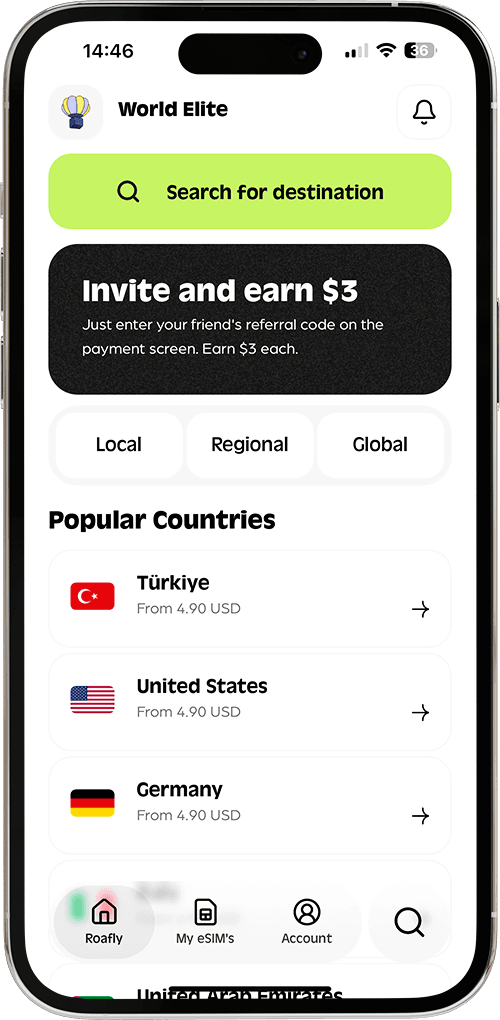
Create your order quickly
See your eSIM details
Track your remaining data
Download the App and manage your eSIMs easily
Create your order quickly
See your eSIM details
Track your remaining data
Staying connected in Hong Kong is usually easy, but the best option depends on how long you are staying, how much data you need, and whether you want to sort everything out before you land. The good news is that Hong Kong has strong mobile infrastructure, airport SIM availability, public Wi-Fi, and simple eSIM options, so most travelers can get online within minutes.
csl, SmarTone
Instant delivery
From 3.90 USD

Sophie Callahan
Updated Mar 14, 2026
9 min read

Jump to section
👇Best for most trips
csl, SmarTone

Hong Kong
10 GB · 30 days
Enough for maps, bookings and everyday travel.
Hotspot supported
$14.00
From 3.90 USD
If you want the fastest answer, an eSIM is usually the most convenient choice for short trips and city travel. If you prefer buying something after arrival, Hong Kong International Airport and local stores both offer prepaid SIM cards. Pocket Wi-Fi and public Wi-Fi can also work, but they are usually better as backups than your main connection.
Most travelers use one of five options:
| Option | Typical price | Best for | Main drawback |
|---|---|---|---|
| Airport tourist SIM | Around HK$88 to HK$118 | Travelers who want to buy after landing | Usually more expensive than planning ahead |
| Local prepaid SIM | From about HK$28 to HK$78+ | Budget travelers and longer stays | Requires buying and setting up locally |
| eSIM | From $3.90 with Roafly | Travelers who want data ready before arrival | Needs an eSIM-compatible phone |
| Pocket Wi-Fi | Around US$3.85 per day from common rental listings | Families or groups sharing one connection | Another device to carry and charge |
| Airport or public Wi-Fi | Free | Quick access right after arrival | Less private and less reliable for full-day use |
Airport and local SIM pricing was checked against current Hong Kong tourism, airport, carrier, and booking sources in March 2026.
Choose the perfect data plan for your trip
If you would rather wait until you land, Hong Kong International Airport is one of the easiest airports in Asia for getting connected. The airport officially lists SIM card and pocket Wi-Fi sales in the passenger terminals, with shops including 7-Eleven, RELAY, and Travelex Worldwide Money, plus rental counters such as Uroaming and Shuang WIFI in the Arrivals Hall.
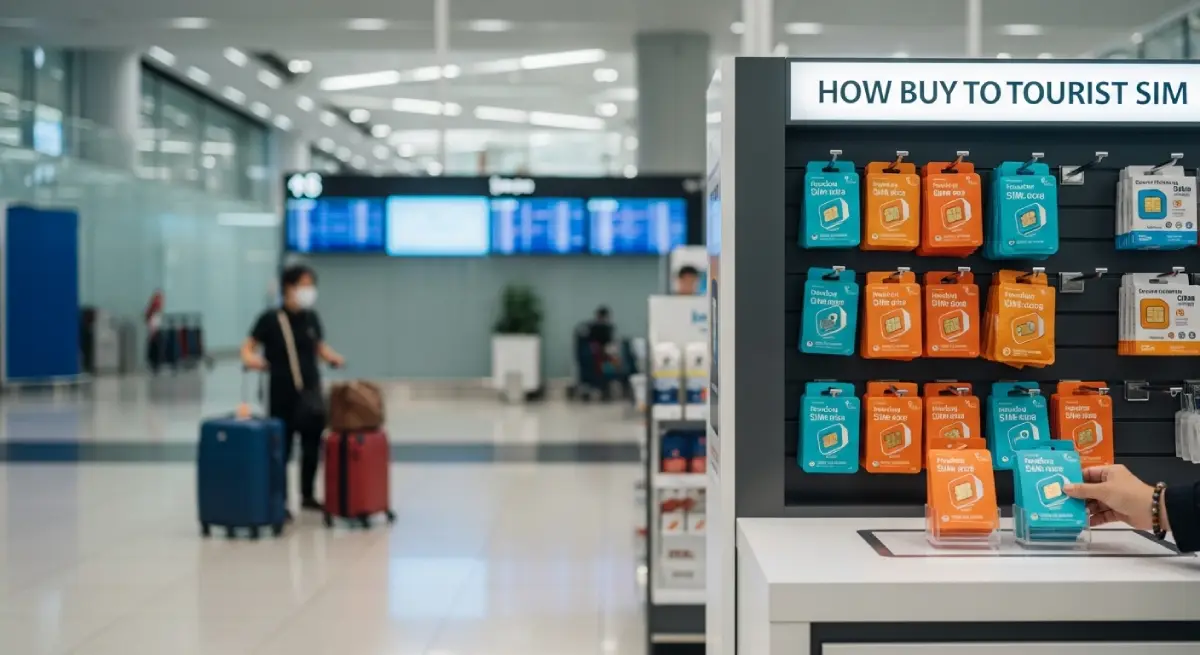
That means you can land, clear immigration, collect your luggage, and usually arrange internet before you head into the city. This is a practical option for travelers who do not want to install anything in advance.
In pricing terms, tourist SIM products sold for Hong Kong visitors commonly start around HK$88 for a 7-day package and HK$118 for a 15-day package through the Discover Hong Kong tourist SIM offering.
Airport SIMs are convenient, but they are not always the cheapest route. You are paying for easy access and immediate setup. For a short city break, that may be worth it. For a longer stay, local prepaid options or an eSIM often give you better value.
Airport SIMs are a reasonable fit if:
you want a physical SIM after landing
your phone does not support eSIM
you only need connectivity for a one-week trip
you do not mind paying a little more for convenience
For most travelers, the main advantage is speed. The main downside is that airport plans are not usually the lowest-cost option available in Hong Kong.
If you do not mind buying your SIM after arrival from a local shop, Hong Kong has several prepaid choices. This route can be cheaper than buying a tourism-branded airport SIM, especially if you are staying longer or only need moderate data.

Here is a simple snapshot of current local and tourist prepaid pricing.
| SIM option | Current listed price | Notes |
|---|---|---|
| CMHK tourist SIM, 1 day | HK$28 | Short-stay prepaid option |
| CMHK tourist SIM, 3 days | HK$48 | Useful for stopovers and weekend trips |
| SoSIM prepaid SIM | HK$33 | Entry-level local prepaid option |
| SoSIM travel add-on | HK$55 | 5GB for 5 days |
| SoSIM travel add-on | HK$78 | 7GB for 30 days |
| Discover Hong Kong tourist SIM | HK$88 | 7-day airport-style tourist option |
| Discover Hong Kong tourist SIM | HK$118 | 15-day tourist option |
These prices come from current carrier and official tourism listings.
A local SIM can make sense if you are staying for several weeks, want to top up locally, or prefer a physical SIM over an eSIM. It can also be useful if your phone has only one eSIM slot already in use.
Still, there are a few trade-offs. You need to find a store, compare packages on the spot, and do the SIM swap yourself. That is not difficult in Hong Kong, but it is less convenient than landing with data already active.
For most tourists, the biggest question is not whether local SIM cards work well. They do. The real question is whether you want to spend travel time buying one after arrival instead of having data ready beforehand.
For most travelers in 2026, eSIM is the most efficient way to get internet in Hong Kong. You buy the plan before departure, install it on your phone, and connect shortly after landing. There is no need to queue at an airport counter, swap out your main SIM, or carry an extra device.
If you want a full comparison of what to look for, our best eSIM for Hong Kong guide covers the key things travelers usually compare before choosing a plan.
Roafly is the eSIM option here, and the current Hong Kong plans are:
| Roafly Hong Kong eSIM | Validity | Price |
|---|---|---|
| 1GB | 14 days | $3.90 |
| 2GB | 14 days | $5.50 |
| 3GB | 30 days | $7.50 |
| 5GB | 30 days | $9.90 |
| 10GB | 30 days | $14.00 |
| 20GB | 30 days | $20.00 |
| 50GB | 30 days | $34.90 |
Roafly’s Hong Kong eSIM works on CMHK, is data-only, supports hotspot use, does not require eKYC ID verification, and starts its validity period when the SIM first connects to a supported network.
That setup is especially useful in Hong Kong because coverage is generally strong across the city. Hong Kong’s 5G coverage has already exceeded 99% overall according to OFCA, and CMHK says its 5G network covers more than 99% in major districts.
Hong Kong is compact, fast-moving, and heavily mobile-first. You will probably rely on maps, ride-hailing, restaurant searches, messaging apps, digital payments, and attraction bookings throughout the day. In that kind of trip, having data active the moment you arrive is simply easier.
eSIM is usually the best fit if:
you want internet as soon as the plane lands
you do not want to remove your home SIM
you want to use hotspot from your phone
you want a simple prepaid data setup without local paperwork
For a short leisure trip, the 3GB, 5GB, or 10GB range is often enough. For remote work, hotspot use, or longer stays, the 20GB or 50GB plans are safer.
Pocket Wi-Fi is still available in Hong Kong, especially through airport pickup services and rental counters. Hong Kong International Airport officially lists pocket Wi-Fi rental points in the terminal, and common booking listings currently show entry pricing around US$3.85 per day for Hong Kong rentals.
This option can work well for:
families sharing one connection
small groups traveling together
travelers with older phones that do not support eSIM
people carrying multiple Wi-Fi-only devices
But for solo travelers, pocket Wi-Fi is usually less convenient than an eSIM or local SIM. You need to carry it, charge it, avoid losing it, and return it at the end of the trip. Battery life also becomes a real issue if you are out all day using maps and hotspot sharing.
Pocket Wi-Fi is no longer the default recommendation for most travelers. It is more of a niche solution now, best suited to groups rather than individuals.
You can use free Wi-Fi in Hong Kong, but it should be treated as a backup rather than your main internet plan.
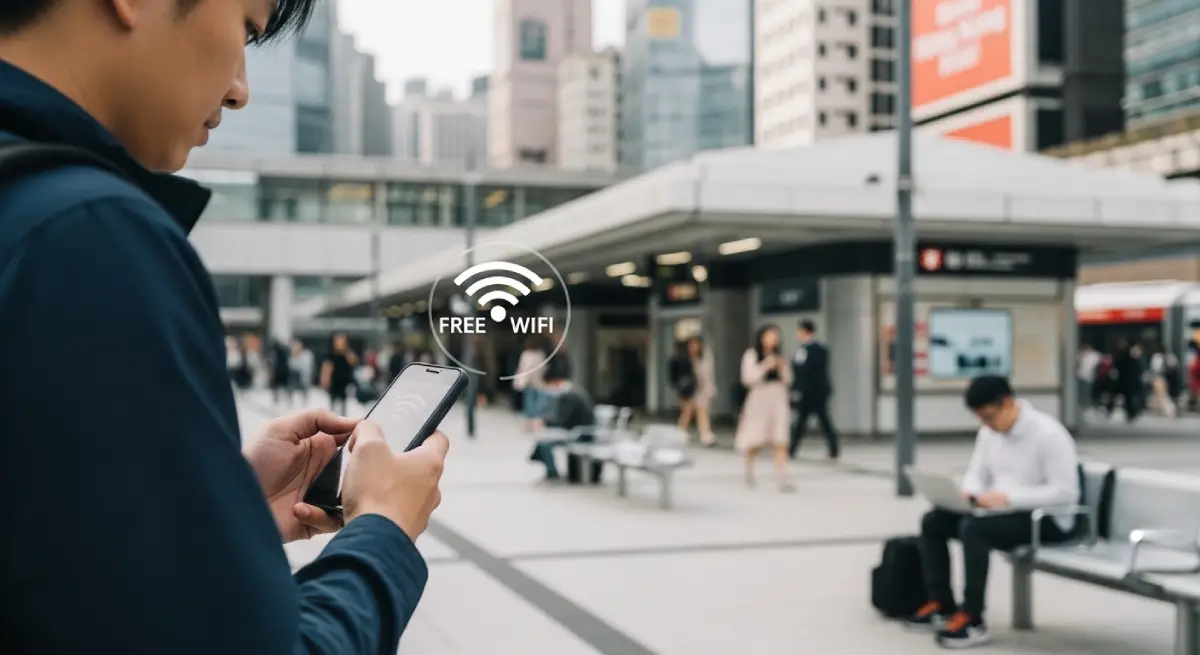
At Hong Kong International Airport, free wireless internet is available in most seating and public areas, and the airport says no registration is required. That makes it useful right after landing for checking messages, confirming your hotel route, or contacting your driver.
Beyond the airport, Hong Kong also has several public Wi-Fi options:
the official Wi-Fi.HK hotspot scheme lists public hotspot locations across the city
MTR offers free Wi-Fi in all stations, with 15 minutes per session and up to 10 sessions per device per day
Airport Express passengers can also use free in-train Wi-Fi
Public Wi-Fi is helpful, but it is not ideal for full-day travel. Signal quality can vary, sessions can be time-limited, and it is not the best option for privacy-sensitive activity like banking, work logins, or repeated app payments.
That is why most travelers still need their own mobile data, even in a city with good public connectivity. Free Wi-Fi is excellent for topping up access. It is not the best foundation for a whole trip.
The best answer depends on your trip style.
If you are in Hong Kong for three to five days, an eSIM is usually the simplest answer. You can set it up before departure and skip the airport shopping step completely.
A local prepaid SIM can be cheaper if you are happy buying it after arrival and managing the setup yourself. Entry-level pricing around HK$28 to HK$33 is hard to ignore for light users.
Pocket Wi-Fi can still be useful when several people want to share one device. Just remember that you are trading convenience for flexibility.
Roafly is the cleanest option if you want data working quickly without standing in line, swapping physical SIMs, or hunting for a store after landing.
If you are wondering how to get internet in Hong Kong in 2026, the easiest route for most travelers is an eSIM set up before departure. Airport SIM cards are easy to find, and local prepaid SIMs can be cheaper, but both require time after arrival. Pocket Wi-Fi still has a place for groups, while airport and public Wi-Fi are best used as backup tools rather than your main connection.
Check the latest eSIM packages for Hong Kong before your trip so you can land in Hong Kong with data ready from the first minute.
Best for most trips
csl, SmarTone
Hong Kong
10 GB · 30 days
Enough for maps, bookings and everyday travel.
Hotspot supported
$14.00
From 3.90 USD

Manage your eSIM in the app
Install, top up and track data.
Choose the perfect data plan for your trip
Manage your eSIM in the app
Install, top up and track data.
