Download the App and manage your eSIMs easily
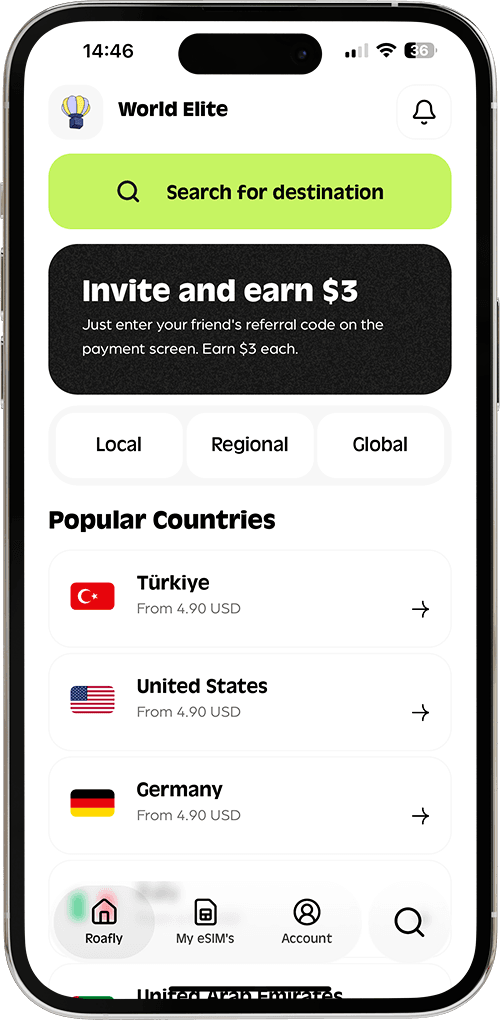
Create your order quickly
See your eSIM details
Track your remaining data
Download the App and manage your eSIMs easily
Create your order quickly
See your eSIM details
Track your remaining data
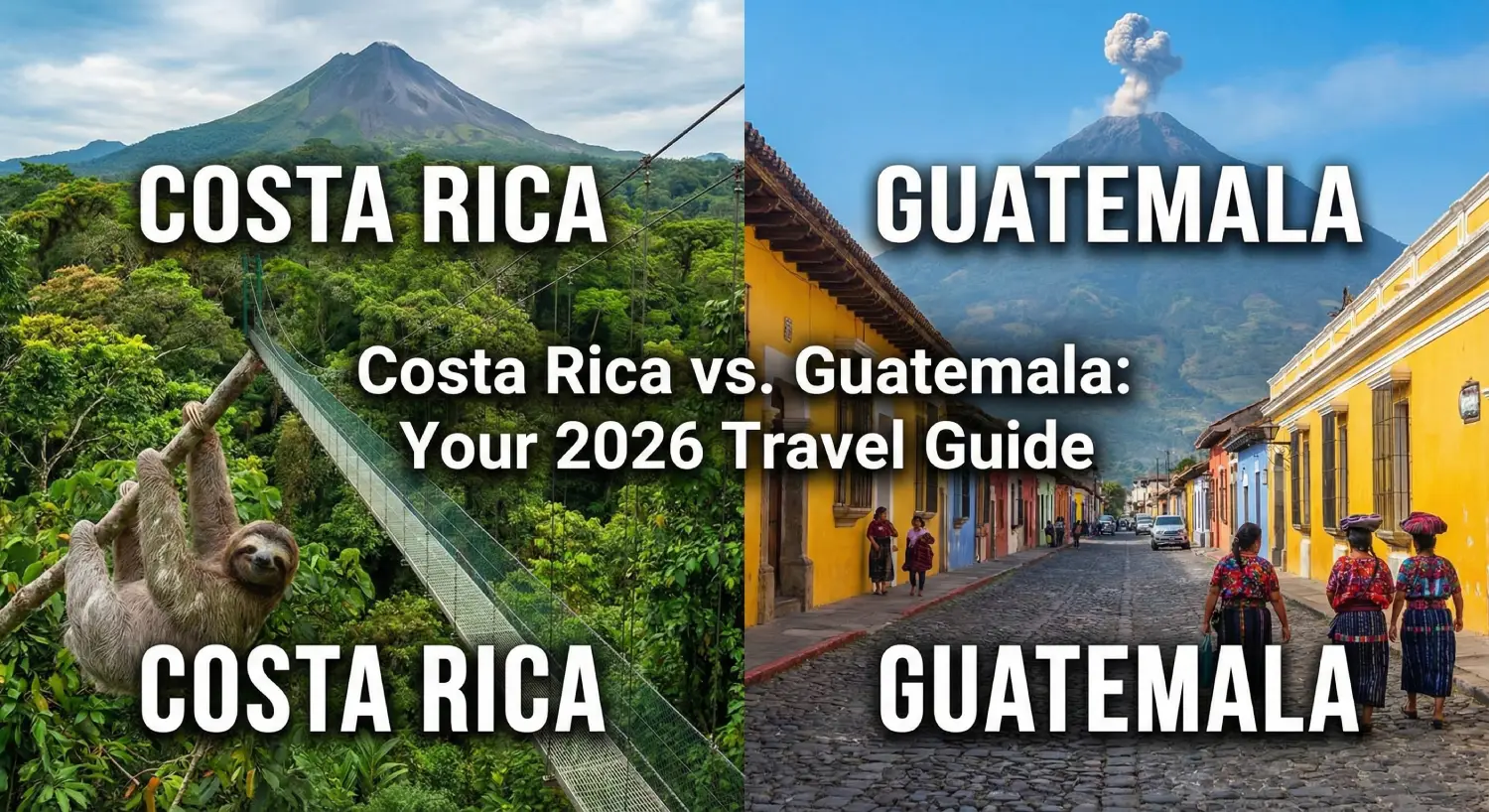
Choosing between Costa Rica and Guatemala is one of the toughest decisions for travelers heading to Central America. While they are neighbors, they offer completely different experiences. Costa Rica is the polished, eco-tourism capital of the world, famous for its "Pura Vida" lifestyle and biodiversity. Guatemala, on the other hand, is the rugged, cultural heart of the Mayan world, offering dramatic landscapes and a raw, authentic atmosphere.
Kölbi (ICE), Liberty
Instant delivery
From 4.90 USD

Lena Hartley
Updated Jan 9, 2026
8 min read
Jump to section
👇Best for most trips
Kölbi (ICE), Liberty
Costa Rica
10 GB · 30 days
Enough for maps, bookings and everyday travel.
Hotspot supported
$24.90
From 4.90 USD
For travelers planning a trip in 2026, the choice often comes down to budget, comfort levels, and what kind of adventure you are seeking. Are you looking for a relaxing resort stay with wildlife spotting, or a culturally immersive backpacking trip through colonial towns and ancient ruins?
In this comprehensive guide, we compare everything from budget and safety to food and internet connectivity to help you decide: Costa Rica or Guatemala?
The biggest difference lies in how these countries feel when you step off the plane.
Costa Rica: The "Pura Vida" Lifestyle Costa Rica feels like a vast, protected national park. It is green, clean, and built for tourism. The vibe is laid-back but organized. The phrase "Pura Vida" (Pure Life) isn't just a slogan; it's a way of life. You will find English spoken almost everywhere, from the cloud forests of Monteverde to the surf towns of Santa Teresa. It is the perfect destination if you want to see wildlife (sloths, monkeys, toucans) without struggling with chaotic logistics. It feels safer, cleaner, but also more "Americanized" than its neighbors.
Guatemala: The Cultural Heart Guatemala offers a deep dive into indigenous culture. It feels more adventurous, colorful, and less westernized. In places like Lake Atitlán or Chichicastenango, you will hear local Mayan dialects (like Kaqchikel or K'iche') spoken as often as Spanish. The atmosphere is chaotic and deeply spiritual. You’ll see traditional clothing, bustling markets, and ceremonies that date back centuries. It is less about relaxation and more about exploration and understanding a complex history.
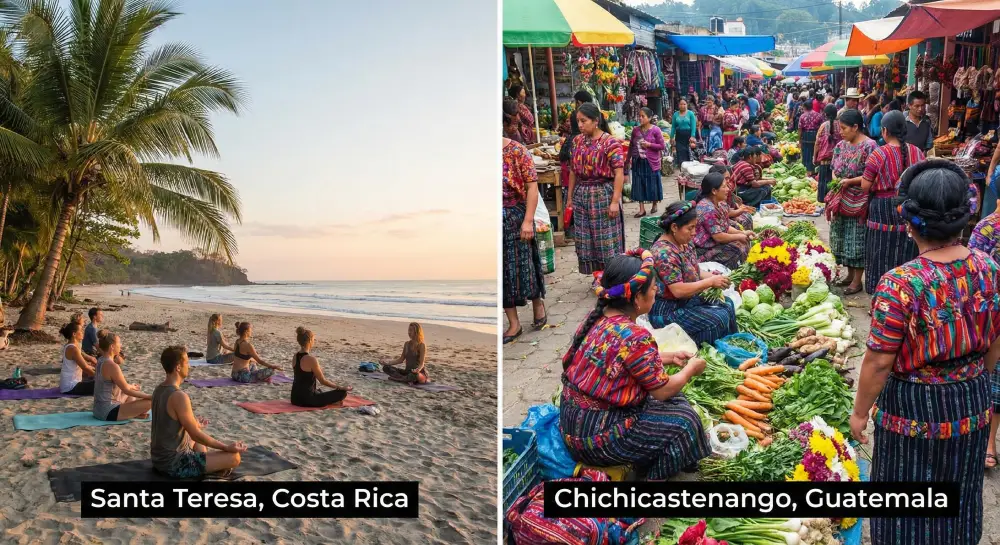
Your budget might make the decision for you. There is a significant price gap between the two destinations in 2026.
Costa Rica ($$$) Costa Rica is the most expensive country in Central America. Due to its popularity and high standard of living, prices for food, tours, and shuttles are comparable to the United States or Western Europe.
Accommodation: A dorm bed costs $20-$30 USD. Mid-range hotels start at $100+ USD.
Food: A local meal (Casado) is $8-$12 USD. Restaurant meals are $20+ USD.
Tours: Zip-lining or guided park tours often cost $50-$100 USD per person.
National Park Fees: High ($15–$30 USD per park entrance).
Guatemala ($$) Guatemala is significantly more affordable. Your money goes much further here, allowing you to stay in boutique hotels and eat well for a fraction of the price.
Accommodation: Hostels are high quality and cost $10-$15 USD. Beautiful boutique hotels can be found for $50-$70 USD.
Food: Street food is $2-$4 USD. A nice sit-down dinner is $10-$15 USD.
Activities: Hiking a volcano or visiting ruins is generally cheaper than similar activities in Costa Rica.
Regardless of which country you choose, roaming charges can destroy your budget. US carriers often charge $10/day for international data. Smart travelers switch to eSIMs to avoid these fees.
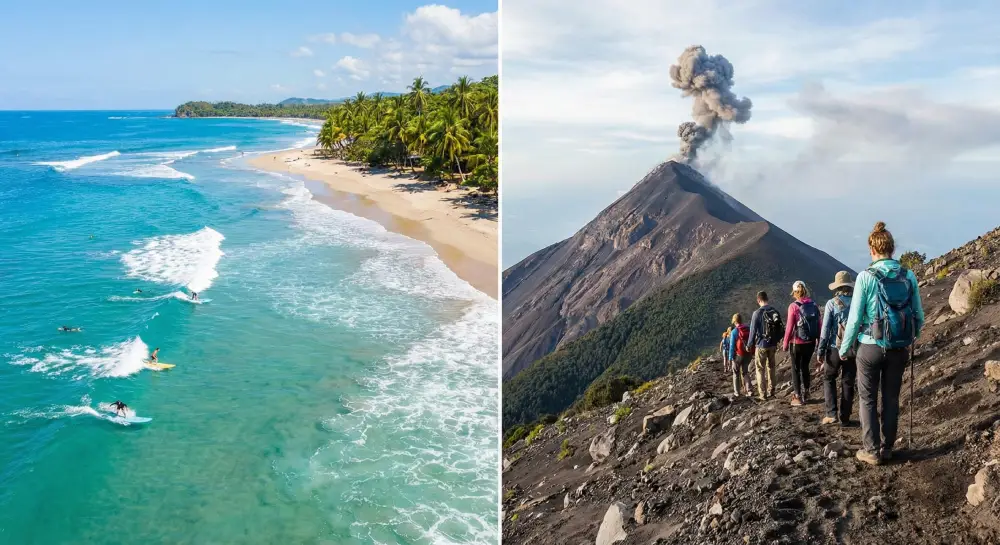
Costa Rica: Biodiversity and Beaches Costa Rica is all about nature conservation. It holds 5% of the world's biodiversity in a tiny landmass.
Beaches: Incredible coastlines on both the Pacific (sunset/surf) and Caribbean (calm/snorkeling) sides. Manuel Antonio and Puerto Viejo are highlights.
Wildlife: You are almost guaranteed to see sloths, howler monkeys, scarlet macaws, and sea turtles.
Adventure: Famous for zip-lining in Monteverde and surfing in Santa Teresa.
Guatemala: Volcanoes and Culture Guatemala is defined by dramatic geology and history.
Volcanoes: Hiking the Acatenango Volcano to watch the neighboring Fuego Volcano erupt is a bucket-list experience you cannot do in Costa Rica.
Lakes: Lake Atitlán is considered one of the most beautiful lakes in the world, surrounded by volcanoes and Mayan villages.
Ruins: Tikal National Park offers some of the most impressive Mayan ruins in the world, deep in the jungle.
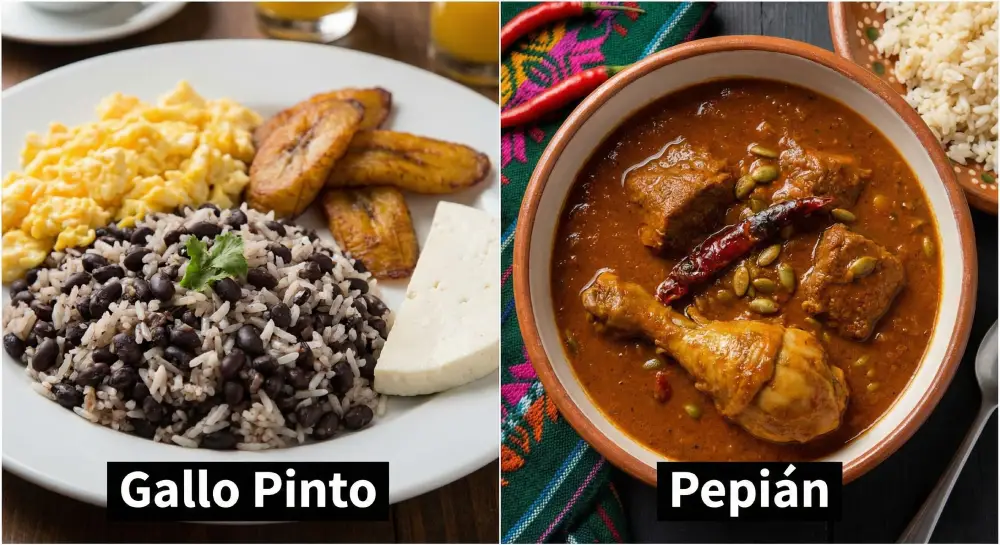
Costa Rica Costa Rican food is simple and mild. The staple is Gallo Pinto (rice and beans mixed together), served with eggs or meat.
Casado: The typical lunch plate with rice, beans, salad, plantains, and a protein (fish/chicken).
Salsa Lizano: The ubiquitous sauce you’ll put on everything.
Verdict: Fresh and healthy, but can get repetitive after a week.
Guatemala Guatemalan cuisine is richer, spicier, and more complex, influenced heavily by Mayan traditions.
Pepián: A rich, spicy meat stew and the national dish.
Kak'ik: A traditional turkey soup.
Coffee: Guatemala produces some of the best coffee in the world, especially around Antigua and Atitlán.
Verdict: More flavorful and varied than Costa Rican cuisine.
This is a crucial factor for families or first-time solo travelers.
Costa Rica has a well-established tourism infrastructure. Tourist shuttles (shared vans) connect every major destination effortlessly. Hotels have high standards (AC, hot water is standard). Renting a car is a very popular option, giving you freedom to explore.
Navigation Tip: Roads can be winding and lack signage. You will need reliable GPS.
Guatemala is rawer. Public transport often consists of "chicken buses" (refurbished US school buses), which are fun, colorful, and cheap, but also crowded and slow. Tourist shuttles are available but take longer due to mountainous terrain and speed bumps. Renting a car is less common due to aggressive driving habits and road conditions.
Navigation Tip: If you travel between cities like Lanquin (Semuc Champey) and Antigua, expect long travel days (8-10 hours).
Both countries are hotspots for digital nomads, but the reliability varies.
Costa Rica for Remote Work: Costa Rica is very nomad-friendly. Towns like Santa Teresa, Nosara, and Puerto Viejo are filled with co-working spaces and cafes with fiber optics. However, power outages can occur in the rainy season.
Local SIMs: Getting a SIM card (Kolbi, Liberty) is easy but requires a passport registration process at a store.
Coverage: Excellent in towns, spotty in dense rainforests.
Guatemala for Remote Work: Antigua and Lake Atitlán (Panajachel, San Pedro) are the main hubs. The internet speeds have improved drastically in recent years, but are generally slower than Costa Rica.
Local SIMs: Tigo and Claro are the main providers. Street vendors sell SIMs, but activation can sometimes be tricky with language barriers.
Coverage: Good in tourist hubs, non-existent on volcano hikes or remote jungle treks.
For a hassle-free experience in either country, setting up your internet before you fly is the best option. For detailed setup instructions, you can check our guide on how to get mobile internet in Costa Rica or learn about the best eSIM for Guatemala.
Both countries have two distinct seasons: Dry and Rainy (Green).
Dry Season (High Season): December to April. This is the best time for beach days and hiking. Prices are highest during Christmas and Easter (Semana Santa).
Rainy Season (Green Season): May to November. It usually rains in the afternoons. The landscape is lush green, and prices drop.
Note: In Costa Rica's Caribbean side (Puerto Viejo), September and October are actually the driest months, unlike the rest of the country.
Costa Rica is statistically the safest country in Central America. It has no army and focuses on education and healthcare. Violent crime against tourists is rare. However, petty theft (leaving bags on the beach or in unlocked cars) is common. It is the ideal destination for solo female travelers and families with children.
Guatemala has a reputation for being dangerous, but the reality for tourists is different. While Guatemala City has high crime rates, the tourist bubble (Antigua, Atitlán, Flores) is generally safe. Travelers are advised not to walk alone at night on deserted roads and to stick to official transportation.
Safety Tip: In both countries, staying connected is a key part of safety. Having data to check Uber, Google Maps, or translate Spanish phrases is essential.
Best for most trips
Kölbi (ICE), Liberty
Costa Rica
10 GB · 30 days
Enough for maps, bookings and everyday travel.
Hotspot supported
$24.90
From 4.90 USD
| Feature | Costa Rica | Guatemala |
| Best For | Wildlife, Beaches, Relaxation | Culture, Hiking, History |
| Budget Level | High ($$$) | Low/Medium ($$) |
| Vibe | "Pura Vida" (Laid-back, Nature) | Indigenous, Colorful, Raw |
| Top Activity | Ziplining in Cloud Forests | Hiking Acatenango Volcano |
| Internet Speed | Fast (4G/5G widely available) | Good in cities, spotty in remote areas |
| Food Quality | Simple, Mild | Spicy, Complex, Flavorful |
| Ease of Travel | Easy / Beginner Friendly | Moderate / Adventure Required |
The decision ultimately depends on what kind of traveler you are.
Choose Costa Rica if:
You want a relaxing, stress-free vacation.
You are traveling with young children or as a first-time solo traveler.
You love beaches and want to see sloths and monkeys easily.
You have a higher budget and prefer comfort.
Choose Guatemala if:
You want a cultural adventure and history (Maya ruins).
You enjoy hiking volcanoes and dramatic mountain scenery.
You are traveling on a tighter budget.
You want a more authentic, less "touristy" experience.
Many travelers actually combine both! If you have 3 weeks, you can travel overland from Antigua down to the beaches of Costa Rica. If you plan to do a multi-country trip, make sure your phone is ready for the journey.
Choose the perfect data plan for your trip

Manage your eSIM in the app
Install, top up and track data.
Choose the perfect data plan for your trip
Manage your eSIM in the app
Install, top up and track data.