

'/%3e%3cuse xlink:href='%23a' transform='rotate(72 0 0)'/%3e%3cuse xlink:href='%23a' transform='rotate(-72 0 0)'/%3e%3cuse xlink:href='%23a' transform='scale(-1 1) rotate(72)'/%3e%3c/g%3e%3c/defs%3e%3cpath fill='%23012169' d='M0 0h1200v600H0z'/%3e%3cpath stroke='%23FFF' stroke-width='60' d='m0 0 600 300M0 300 600 0' clip-path='url(%23b)'/%3e%3cpath stroke='%23C8102E' stroke-width='40' d='m0 0 600 300M0 300 600 0' clip-path='url(%23c)'/%3e%3cpath stroke='%23FFF' stroke-width='100' d='M300 0v300M0 150h600' clip-path='url(%23b)'/%3e%3cpath stroke='%23C8102E' stroke-width='60' d='M300 0v300M0 150h600' clip-path='url(%23b)'/%3e%3cuse xlink:href='%23d' fill='%23FFF' transform='matrix(45.4 0 0 45.4 900 120)'/%3e%3cuse xlink:href='%23d' fill='%23C8102E' transform='matrix(30 0 0 30 900 120)'/%3e%3cg transform='rotate(82 900 240)'%3e%3cuse xlink:href='%23d' fill='%23FFF' transform='rotate(-82 519.022 -457.666) scale(40.4)'/%3e%3cuse xlink:href='%23d' fill='%23C8102E' transform='rotate(-82 519.022 -457.666) scale(25)'/%3e%3c/g%3e%3cg transform='rotate(82 900 240)'%3e%3cuse xlink:href='%23d' fill='%23FFF' transform='rotate(-82 668.57 -327.666) scale(45.4)'/%3e%3cuse xlink:href='%23d' fill='%23C8102E' transform='rotate(-82 668.57 -327.666) scale(30)'/%3e%3c/g%3e%3cuse xlink:href='%23d' fill='%23FFF' transform='matrix(50.4 0 0 50.4 900 480)'/%3e%3cuse xlink:href='%23d' fill='%23C8102E' transform='matrix(35 0 0 35 900 480)'/%3e%3c/svg%3e)
Because New Zealand is the ultimate outdoor destination, your entire itinerary hinges on critical factor: The weather.
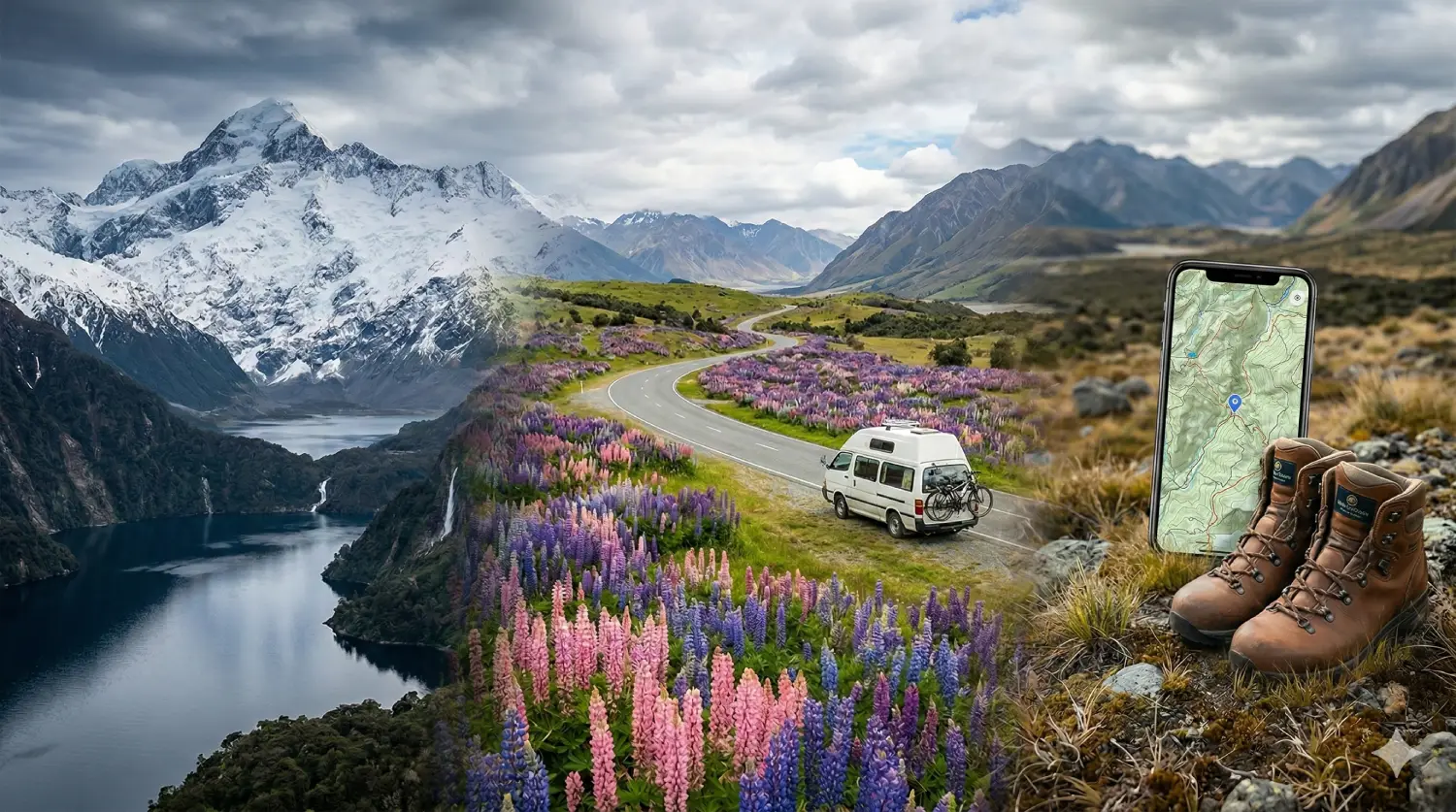
Unlike booking a city break to Paris or New York where you can just hide in a museum if it rains, a trip to New Zealand is spent entirely in the elements. If you choose the wrong month, that scenic helicopter flight over Franz Josef Glacier will be grounded by fog, the hiking trails will be closed by avalanches, and you will be shivering in your rental van.
Furthermore, if you are flying in from the United States, Canada, or Europe, you are facing a massive geographical reality check: The seasons are completely flipped. This comprehensive guide will break down the absolute best (and worst) times to visit New Zealand in 2026. We will explore the massive climate differences between the North Island and the South Island, exactly when to avoid the peak season prices, and how to pack for the infamous "four seasons in day."
1. The Golden Rule: The Seasons Are Upside Down
Let’s get the most crucial piece of planning out of the way first. Because New Zealand sits firmly in the Southern Hemisphere, its seasons are the exact opposite of North America and Europe.
-
Summer: December, January, February
-
Autumn (Fall): March, April, May
-
Winter: June, July, August
-
Spring: September, October, November
If you book a trip in July hoping for a warm beach vacation in Coromandel, you are going to be greeted with freezing rain and winter coats. Conversely, if you want to escape the freezing New York winter in January, New Zealand is experiencing its absolute warmest, sunniest days.
"Four Seasons in Day"
There is a famous local saying in New Zealand: "If you don’t like the weather, wait ten minutes." Because it is a narrow island nation surrounded by the vast Pacific Ocean and the turbulent Tasman Sea, the weather changes with terrifying speed. You can start a hike in brilliant sunshine, be pelted by freezing hail at the summit, and walk back down in a warm, humid breeze. Layering your clothing is not just a suggestion here; it is a survival requirement, regardless of the month you visit.
2. The Four Seasons of Aotearoa: A Detailed Breakdown
Summer (December – February): The Peak Rush
-
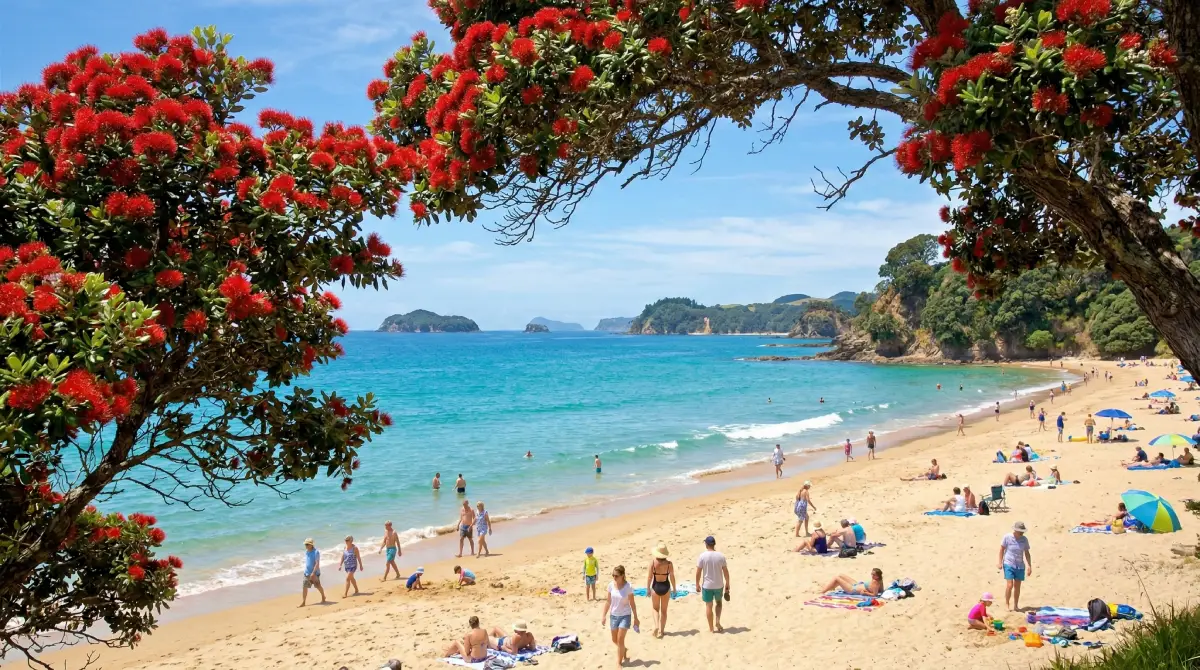
The Vibe: Long, glorious, sun-drenched days. In the deep south (like Queenstown or Te Anau), the sun doesn't set until nearly 10:00 PM, giving you endless hours for outdoor activities.
-
The Highlights: This is the ultimate time for hiking the "Great Walks" (like the Milford Track or Routeburn Track), swimming with dolphins in Kaikoura, and exploring the beaches of the Bay of Islands.
-
The Catch: It is incredibly crowded and expensive. Kiwis (New Zealand locals) take their own summer holidays from late December through January. Campervans, hotels, and ferry tickets between the islands sell out months in advance. Prices are at their absolute highest.
-
Best For: First-time visitors who want guaranteed hiking access and don't mind paying a premium.
Autumn (March – May): The Photographer’s Dream
-
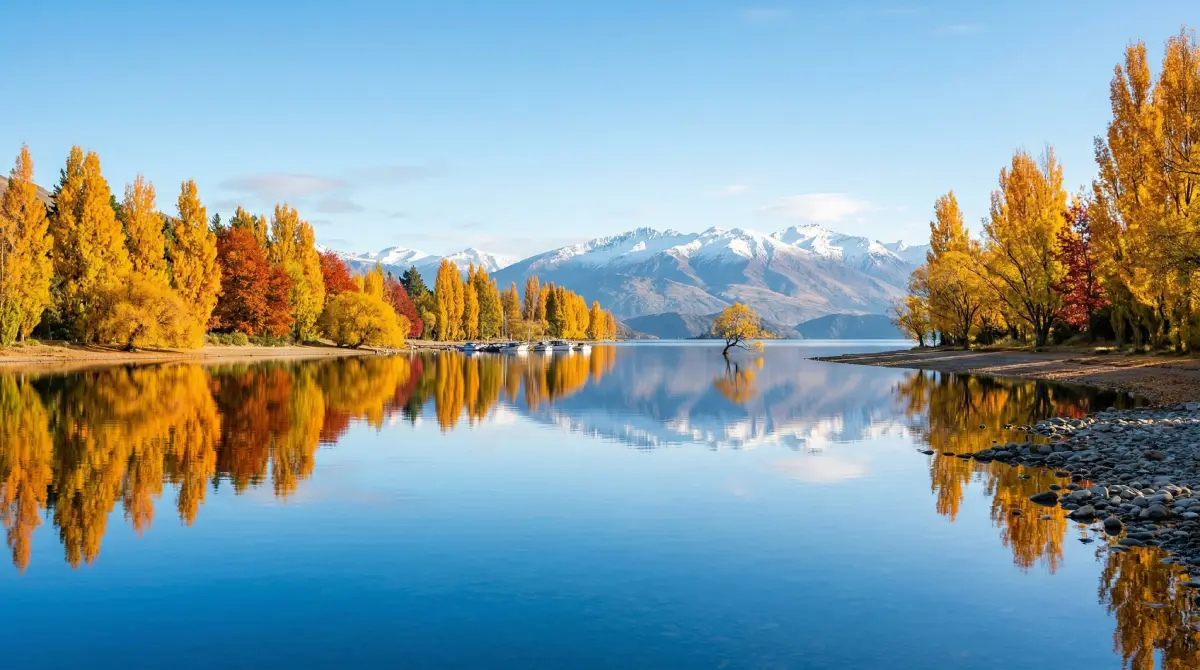
The Vibe: The chaotic summer crowds have gone home, the blazing heat softens to a comfortable crispness, and the landscapes transform into a sea of gold, orange, and red.
-
The Highlights: This is widely considered the absolute best time to visit New Zealand. The weather is historically very stable, particularly in March and April. The autumn foliage in the South Island—specifically around Arrowtown, Wanaka, and Queenstown—is breathtaking. You get all the benefits of summer hiking but with half the crowds and significantly cheaper campervan rental rates.
-
The Catch: By late May, the first winter snows begin to dust the mountain peaks, and the nights become bitterly cold if you are sleeping in a non-insulated van.
Winter (June – August): The Alpine Playground
-
The Vibe: Cold, crisp, and dramatic. The Southern Alps are blanketed in thick snow, turning the South Island into a winter wonderland.
-
The Highlights: This is ski season. Queenstown and Wanaka become booming winter resort towns. It is the best time for snowboarding at Cardrona or the Remarkables. Interestingly, the North Island remains relatively green (though very wet), and geothermal areas like Rotorua look incredibly atmospheric in the cold winter air.
-
The Catch: Many high-altitude hiking trails are closed due to extreme avalanche risk. Driving requires carrying snow chains, and daylight hours are very short. Unless you are going specifically for winter sports, a South Island road trip can be logistically difficult.
Spring (September – November): Waterfalls and Wildflowers
-
The Vibe: The snow begins to melt, the rivers roar to life, and the country turns vibrantly green.
-
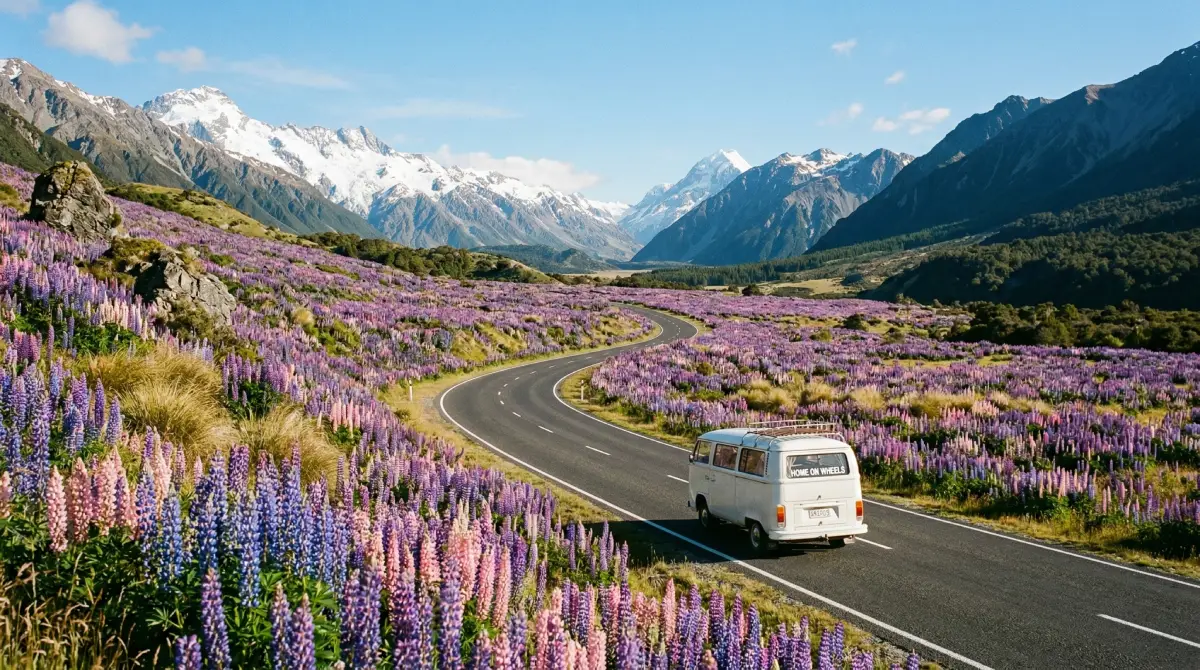
The Highlights: This is the season of new life. You will see thousands of newborn lambs in the countryside. In November, the shores of Lake Tekapo explode with the brilliant pinks and purples of blooming Lupin flowers—one of the most photographed sights in the country. "White water rafting" is at its absolute best because the melting snow fills the rivers.
-
The Catch: Spring is the most unpredictable season. High winds are common, and "spring showers" can wash out outdoor plans for days at a time.
3. North Island vs. South Island: The Weather Divide
You cannot treat New Zealand as single climate zone.
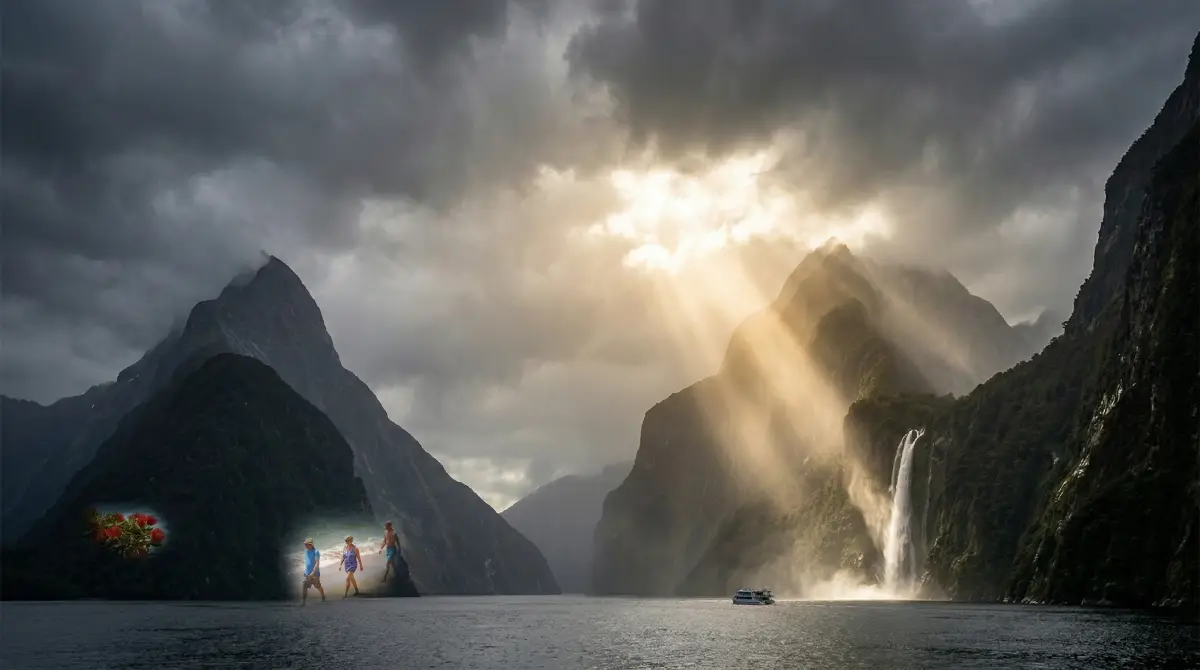
The North Island (Auckland, Rotorua, Wellington): This island is largely subtropical. It rarely sees snow (except on the peaks of volcanoes). The summers are warm and humid, and the winters are mild but incredibly rainy. If you are doing a winter trip, the North Island is much easier to navigate in a campervan.
The South Island (Queenstown, Christchurch, Fiordland): This island is defined by the massive Southern Alps mountain range. The weather is dramatic and alpine. In the summer, the sun is fierce (New Zealand has a very thin ozone layer, so you will burn in 10 minutes without SPF 50+). In the winter, temperatures plunge well below freezing, and roads like the Lindis Pass or Milford Road frequently close due to heavy snow and ice.
4. Month-by-Month Cheat Sheet
-
January: Peak summer. Perfect for beaches, but extremely busy and expensive.
-
February: The hottest and driest month. Ideal for hiking and camping.
-
March: Early Autumn. The crowds thin out, but the weather remains spectacular. (Highly Recommended).
-
April: Beautiful autumn foliage in the South Island. Mild days, chilly nights.
-
May: Transition to winter. High-altitude trails begin to close.
-
June: Winter begins. Ski fields open in Queenstown. Very quiet in the North Island.
-
July: Peak winter. Excellent for skiing, but expect road closures and freezing temperatures.
-
August: Late winter. Snow is at its deepest.
-
September: Early spring. Melting snow makes for massive, dramatic waterfalls in Milford Sound.
-
October: Spring weather sets in. Very green, but expect frequent rain showers.
-
November: The Lupin flowers bloom in the South Island. A fantastic "shoulder season" month before the summer rush. (Highly Recommended).
-
December: Summer begins. Prices spike dramatically around Christmas and New Year.
5. Crucial Preparation: Laws, Bans & Biosecurity
Picking the right month is important, but preparing for New Zealand's incredibly strict border and environmental laws is what will actually save your trip.
New Zealand protects its unique ecosystem (which evolved without native land mammals) with a ferocious intensity. It is not like flying into Europe.
The Customs Trap: When you land at Auckland International Airport, your hiking boots, camping gear, and luggage will be rigorously inspected. If you have a single apple in your backpack from your flight, or if there is dried mud on the bottom of your hiking boots, you will be hit with an instant $400 NZD fine, or even denied entry. Before you pack, you must memorize our guide on New Zealand Airport Customs Rules
Tourist Bans and "Freedom Camping": If you plan to rent a campervan, you cannot just park it anywhere and sleep. Due to severe environmental damage in the past, New Zealand has aggressively cracked down on illegal "freedom camping." Fines are massive, and local councils patrol nightly. Furthermore, the country enforces the "Tiaki Promise" (a commitment to care for the land). To ensure you don't accidentally break local laws or offend the indigenous Māori culture, read our breakdown of New Zealand Tourist Bans & Laws
6. Connectivity in the Wild: Don't Get Stranded
New Zealand's landscapes are vast, rugged, and incredibly remote. you drive outside of major cities like Auckland or Christchurch, the cell towers vanish quickly.
Need data in New Zealand? Get an eSIM!
Choose the perfect data plan for your trip

Manage your eSIM in the app
Install, top up and track data.
If you are navigating the winding alpine roads of the West Coast, or trying to find a designated campsite before dark in Fiordland National Park, you cannot afford to be offline.
Relying on physical maps is outdated, and hoping for a Wi-Fi signal at a rural gas station is a recipe for disaster. You need reliable data to:
-
Check the MetService app for sudden severe weather warnings.
-
Check the NZTA (Transport Agency) for instant road closures due to rockfalls or avalanches.
-
Use the CamperMate app to find legal campsites, public toilets, and dump stations.
Instead of paying ridiculous daily roaming fees to your home provider, or wasting your first precious hours in Auckland standing in line for a local Spark or NZ physical SIM card, the smartest strategy is to arrive connected.
For a complete breakdown of all your internet options at the airport versus local providers, review our guide: How to Get Internet in New Zealand
The Ultimate Travel Hack: Download a travel eSIM before your flight. The second your plane lands in Auckland or Queenstown, your phone will instantly lock the strongest local 4G/5G networks. Skip the queues, avoid the roaming shock, and hit the road immediately. Compare the top data plans for your itinerary in our guide: Best eSIM for New Zealand
👉 Ready for the ultimate road trip? Grab your New Zealand eSIM right now and ensure you are never lost in the wild.
Final Verdict: When Should You Go?
If you want the absolute perfect balance of stable weather, lower prices, minimal crowds, and stunning natural beauty, the "Shoulder Seasons" are the indisputable winners. * The Best Time Overall: Book your trip for March or April (Autumn) or November (Spring).
You will avoid the sweltering heat and the chaotic summer traffic jams, saving hundreds of dollars on campervan rentals while still enjoying the full majesty of the New Zealand outdoors.
Pack your rain jacket, scrub your hiking boots spotless, download your eSIM, and get ready for the greatest road trip of your life. Kia Ora!