

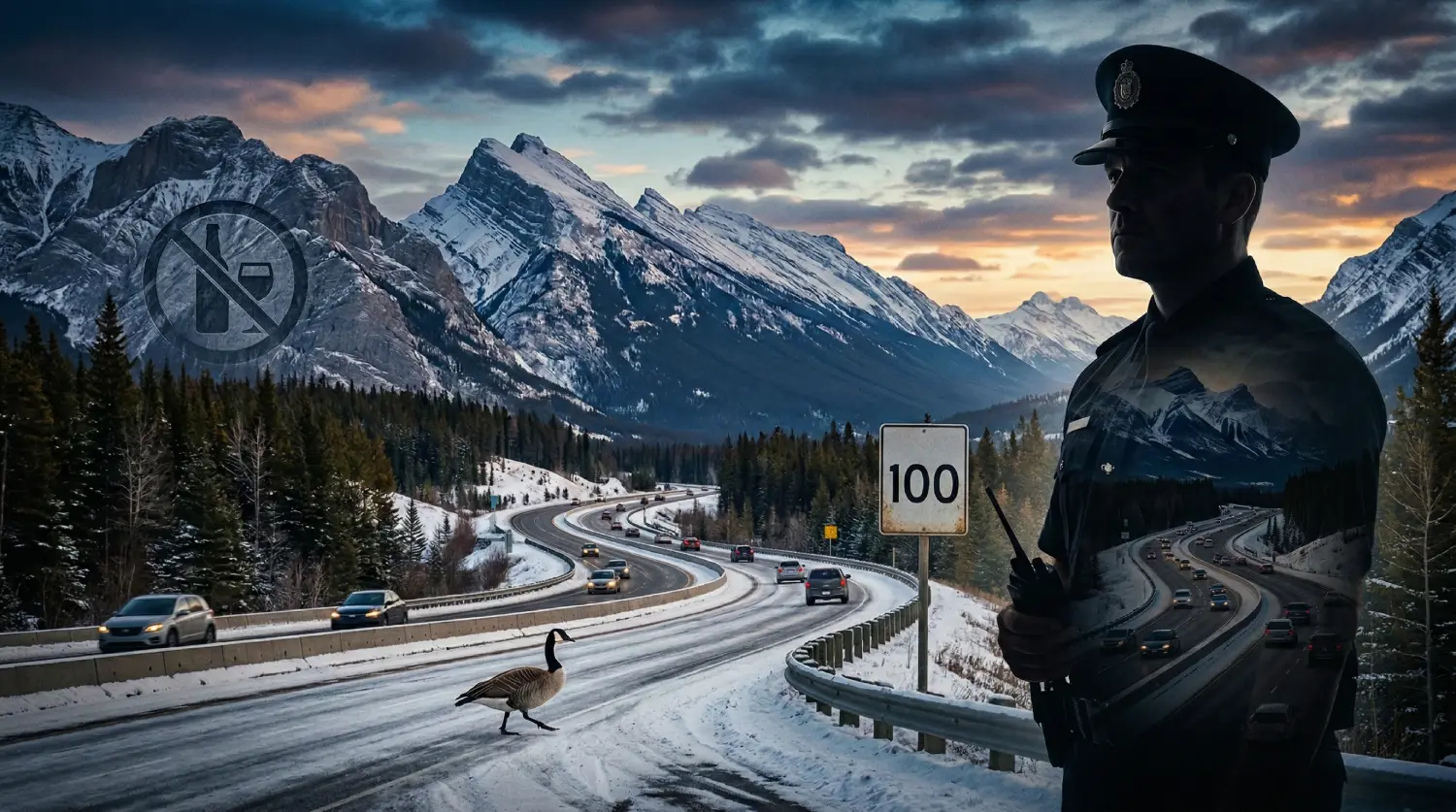

Canada is an incredibly safe and welcoming destination for millions of travelers, but the "I didn't know" excuse holds zero weight with the Royal Canadian Mounted Police (RCMP) or border agents. Because Canada operates under a mix of federal laws and highly varied provincial regulations, what is completely legal in Alberta might result in a hefty fine in Quebec. Tourists often fall into the trap of assuming Canada's laws are identical to those of the United States or Europe. They are not. If you want to avoid a ruined vacation, heavy penalties, or a long interrogation at customs, you need to understand the absolute legal boundaries before you land.
The "Big Red Line": DUIs and Border Contraband
If there is thing you must take seriously when visiting Canada in 2026, it is how the country handles Driving Under the Influence (DUI) and border declarations.
Canada treats a DUI (often called impaired driving) as a highly serious criminal offense. If you have any record of a DUI in your home country—even if it was a misdemeanor ten years ago—you can be deemed criminally inadmissible to Canada. This means border agents at the airport or land crossing will deny you entry and send you on the next flight home. If you are caught driving impaired while inside Canada, you face immediate arrest, mandatory minimum fines starting in the thousands of dollars, and deportation.
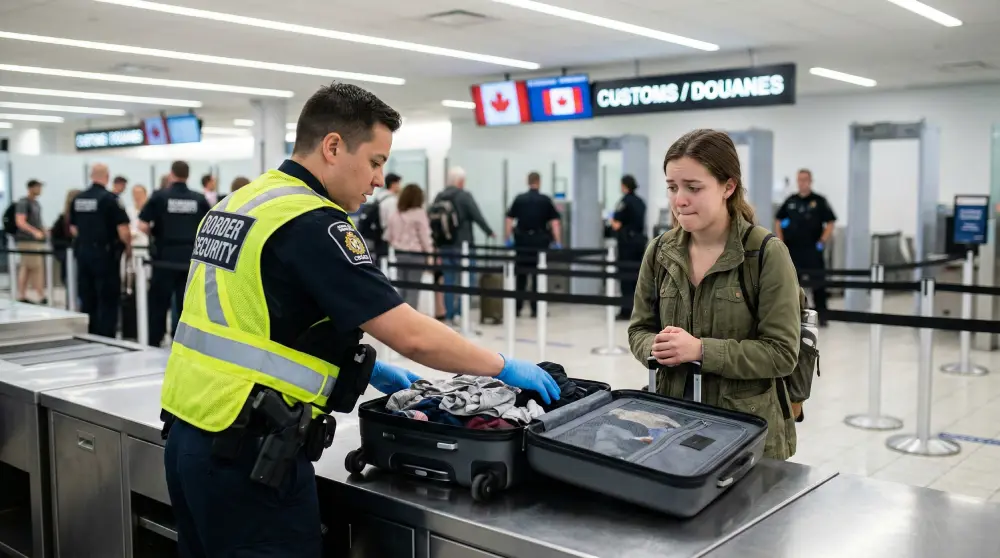
Furthermore, the Canada Border Services Agency (CBSA) is notoriously strict regarding what you bring into the country. Firearms, pepper spray, and certain knives are strictly prohibited, and Americans crossing the land border are frequently arrested for "forgetting" a handgun in their glovebox. Bringing in undeclared food, plants, or animal products can result in immediate fines of up to $1,300 CAD. To ensure you don't accidentally break the law upon arrival, you should thoroughly review the Canada Airport Customs Rules before packing your bags. Always declare everything. For official border guidelines, always refer directly to the Canada Border Services Agency (CBSA).
Traffic & Scooter Rules (The Tourist Trap)
Driving in Canada is an excellent way to see the country's vast landscapes, but the traffic laws are rigidly enforced, and the climate dictates strict vehicle rules.
-
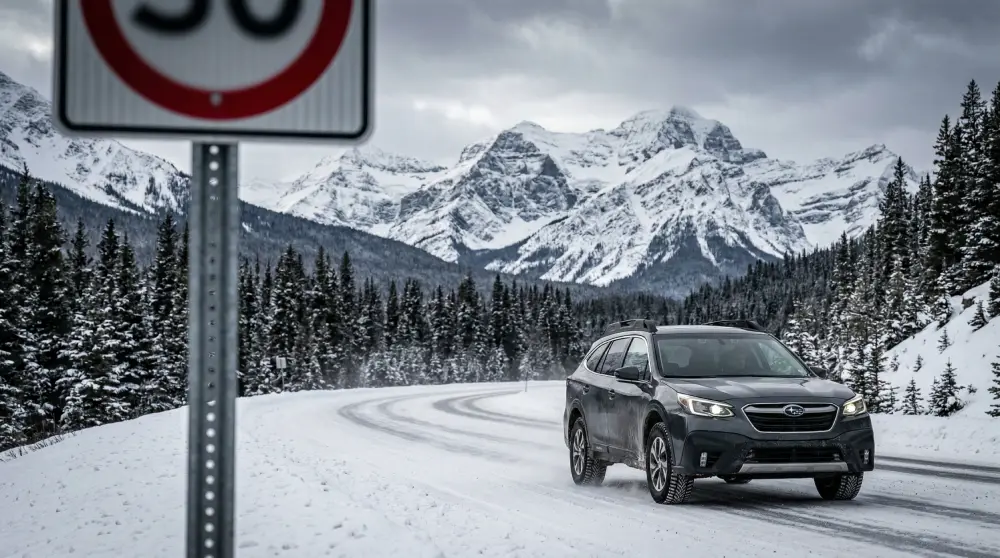
The Metric System: Unlike the US, Canada uses the metric system. Speed limits are in kilometers per hour (km/h). Doing 100 mph when the sign says 100 km/h will result in a severe "stunt driving" charge, immediate vehicle impoundment, and a suspended license.
-
Distracted Driving: Holding your phone while driving, even while stopped at a red light, is universally illegal across all provinces. Fines exceed $300 CAD and come with strict penalties. Use a hands-free mount.
-
Right Turn on Red: Generally, you are allowed to turn right on a red light after coming to a complete stop. However, this is strictly illegal on the island of Montreal, and doing so is a classic tourist mistake that local police actively watch for.
-
Winter Tires: If you are renting a car between December and March, be aware of provincial laws. In Quebec, and on many mountain highways in British Columbia, winter tires with the official "mountain snowflake" symbol are legally mandatory. Driving without them can result in fines and turn away at police checkpoints.
Substance Regulations (Vaping, Alcohol & Meds)
Because provinces govern their own health and safety standards, the rules change depending on where you are standing.

Is Vaping Legal?
Yes, vaping is legal in Canada, but it is heavily regulated in 2026. You cannot vape indoors in public spaces, on public transit, or within a certain distance (usually 9 meters) of doorways to public buildings. Furthermore, many provinces (like Quebec and British Columbia) have instituted strict flavor bans and nicotine caps. You may find that tobacco and mint flavors are available for purchase, and bringing massive quantities of non-compliant vapes through customs can lead to confiscation.
Alcohol Restrictions
The legal drinking age in Canada is 19 in most provinces, but it is 18 in Alberta, Manitoba, and Quebec. Do not assume you can buy alcohol anywhere. In provinces like and British Columbia, alcohol sales are primarily controlled by government-run stores (like the LCBO or BC Liquor Stores) with strict operating hours. Public drinking is generally illegal. Walking down the street or sitting on a beach with an open beer will quickly earn you a fine ranging from $100 to $300 CAD, depending on the municipality.
Medicine & Drugs
Cannabis has been federally legal in Canada for years, but there is a massive legal trap for tourists: It is a serious federal crime to carry cannabis across the Canadian border. This applies whether you are entering or leaving Canada, even if you are traveling to or from a US state where cannabis is also legal. Do not bring it in, and do not take it out. Additionally, over-the-counter medications in your home country might require a prescription in Canada. Always bring medications in their original, clearly labeled pharmacy packaging.
Weird & Niche Laws
Canada has a few specific laws protecting its wildlife and nature that tourists frequently overlook:
-
Bear Spray is a Weapon: If you are hiking in the Rockies (Banff, Jasper), carrying bear spray is highly recommended. However, carrying bear spray in an urban environment (like downtown Vancouver or Toronto) is illegal. It is classified as a prohibited weapon under the Criminal Code of Canada if not used explicitly for wilderness protection.
-
National Park Fire Bans: During the summer, much of Canada is under strict fire bans due to wildfire risks. Igniting a campfire in a National or Provincial Park during a ban is not a slap on the wrist; fines can exceed $25,000 CAD, and you can be held legally liable for the cost of fighting the fire if it spreads.
-
Protecting the Canada Goose: It is a federal offense under the Migratory Birds Convention Act to harm, capture, or tamper with the nests of Canada Geese. Even if they are aggressively blocking a sidewalk, you must walk around them.
Cultural Taboos (Don't Be Rude)
Bien que ce ne soit pas strictement illégal, violer ces normes culturelles vous étiquetera instantanément comme un touriste irrespectueux :
-
Le pourboire est obligatoire : Tout comme aux États-Unis, le personnel de service au Canada dépend des pourboires. Ne laisser aucun pourboire ou un petit pourboire est considéré comme très offensant. Le taux standard pour un bon service dans les restaurants, bars et pour les guides touristiques est de 15 % à 20 %.
-
Couper la file : Les Canadiens prennent très au sérieux le fait de faire la queue. Que vous attendiez un bus, un café ou un télésiège, couper la file entraînera des réprimandes vocales de la part des habitants.
-
Manquer de respect envers les terres autochtones : Lorsque vous visitez des zones éloignées, des parcs nationaux ou des centres culturels, vous êtes souvent sur les territoires traditionnels des Premières Nations, des Inuits ou des Métis. Suivez toutes les directives affichées, ne touchez jamais et ne grimpez pas sur des monuments ou des totems sacrés, et respectez les zones marquées comme privées ou restreintes.
Restez connecté pour rester en sécurité
Naviguer sur de vastes distances, traduire les panneaux routiers en français au Québec ou vérifier les alertes d'incendie de forêt actives nécessite une connexion Internet fiable dès votre arrivée. Compter sur le Wi-Fi public est un risque majeur pour la sécurité si vous êtes bloqué sur une autoroute isolée ou si vous devez prouver vos déclarations numériques aux agents des frontières.
Pour éviter des frais d'itinérance exorbitants, trouver le meilleur eSIM pour le Canada est essentiel. Un eSIM vous permet de vous connecter instantanément aux meilleurs réseaux canadiens sans avoir à chercher un magasin physique. Si vous vous demandez comment obtenir Internet au Canada, le meilleur moyen est de télécharger votre forfait avant de prendre l'avion.
Sécurisez votre connexion et voyagez en toute sécurité en obtenant votre eSIM Canada dès aujourd'hui.
Besoin de données pour votre voyage à destination de Canada ? Optez pour une eSIM !
Choisissez le forfait de données idéal pour votre voyage

Gérez votre eSIM dans l’application
Installez, rechargez et suivez votre consommation de données.
Liste de vérification récapitulative (Ne soyez pas ce touriste)
-
Ne traversez jamais la frontière avec du cannabis : C'est un crime fédéral, même si vous volez vers une destination légale.
-
Déclarez tout à la douane : Évitez des amendes massives pour des aliments, de l'alcool ou des objets défensifs cachés comme le spray au poivre.
-
Laissez le téléphone de côté pendant que vous conduisez : Les lois sur la conduite distraite sont strictement appliquées avec de lourdes amendes.
-
Respectez l'âge légal pour boire et les règles publiques : Ne buvez pas dans les parcs publics ou sur les plages, sauf si cela est explicitement autorisé par la signalisation locale.
-
Obéissez au système métrique : Les limites de vitesse sont en km/h, pas en mph.
-
Donnez 15-20 % : Les travailleurs de l'industrie des services dépendent des pourboires ; ne pas en donner est une grande offense culturelle.