

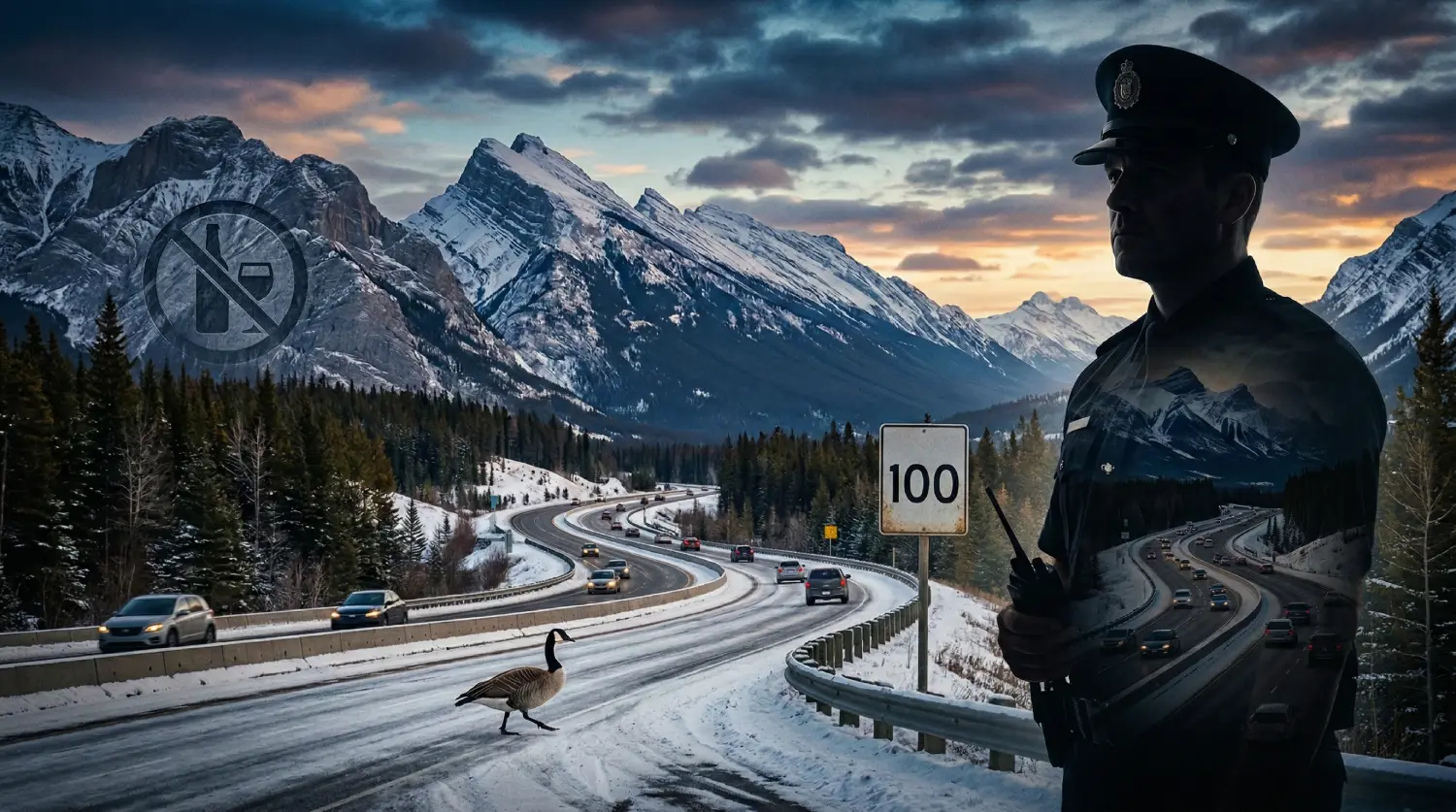

Canadá es un destino increíblemente seguro y acogedor para millones de viajeros, pero la excusa de "no lo sabía" no tiene peso alguno ante la Real Policía Montada de Canadá (RCMP) o los agentes fronterizos. Debido a que Canadá opera bajo una mezcla de leyes federales y regulaciones provinciales muy variadas, lo que es completamente legal en Alberta podría resultar en una multa considerable en Quebec. Los turistas a menudo caen en la trampa de asumir que las leyes de Canadá son idénticas a las de los Estados Unidos o Europa. No lo son. Si quieres evitar unas vacaciones arruinadas, fuertes sanciones o un largo interrogatorio en la aduana, necesitas entender los límites legales absolutos antes de aterrizar.
La "Gran Línea Roja": DUI y Contrabando Fronterizo
Si hay algo que debes tomar en serio al visitar Canadá en 2026, es cómo el país maneja Conducir Bajo la Influencia (DUI) y las declaraciones fronterizas.
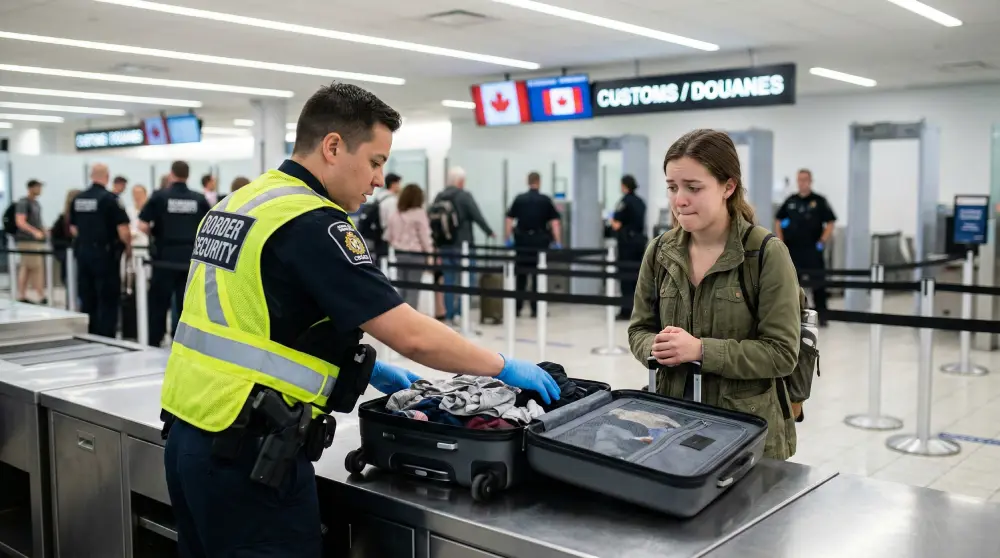
Canadá trata un DUI (a menudo llamado conducción en estado de ebriedad) como un delito criminal muy serio. Si tienes cualquier registro de un DUI en tu país de origen—incluso si fue un delito menor hace diez años—puedes ser considerado criminalmente inadmisible en Canadá. Esto significa que los agentes fronterizos en el aeropuerto o en el cruce terrestre te negarán la entrada y te enviarán en el próximo vuelo de regreso a casa. Si te atrapan conduciendo bajo los efectos del alcohol mientras estás en Canadá, enfrentas arresto inmediato, multas mínimas obligatorias que comienzan en miles de dólares y deportación.
Además, la Agencia de Servicios Fronterizos de Canadá (CBSA) es notoriamente estricta respecto a lo que traes al país. Las armas de fuego, el gas pimienta y ciertos cuchillos están estrictamente prohibidos, y los estadounidenses que cruzan la frontera terrestre son frecuentemente arrestados por "olvidar" una pistola en su guantera. Traer alimentos, plantas o productos animales no declarados puede resultar en multas inmediatas de hasta $1,300 CAD. Para asegurarte de no romper la ley accidentalmente al llegar, debes revisar a fondo las Reglas de Aduana del Aeropuerto de Canadá antes de empacar tus maletas. Siempre declara todo. Para las pautas oficiales de la frontera, siempre consulta directamente a la Agencia de Servicios Fronterizos de Canadá (CBSA).
Reglas de Tráfico y Scooters (La Trampa Turística)
Conducir en Canadá es una excelente manera de ver los vastos paisajes del país, pero las leyes de tráfico se aplican rigurosamente, y el clima dicta estrictas reglas para los vehículos.
-
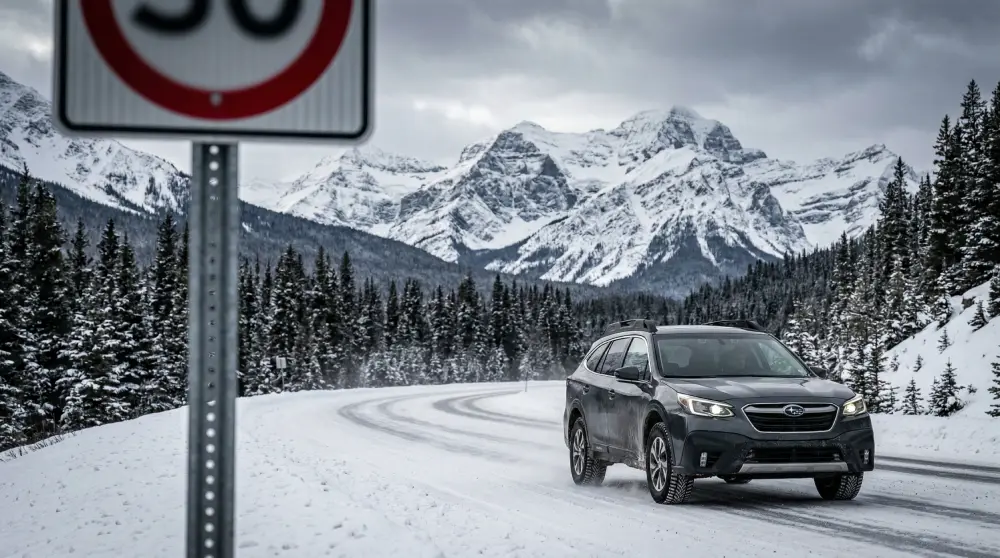
El Sistema Métrico: A diferencia de los EE. UU., Canadá utiliza el sistema métrico. Los límites de velocidad están en kilómetros por hora (km/h). Conducir a 100 mph cuando el letrero dice 100 km/h resultará en un cargo severo de "conducción temeraria", incautación inmediata del vehículo y suspensión de la licencia.
-
Conducción Distraída: Sostener tu teléfono mientras conduces, incluso cuando estás detenido en un semáforo en rojo, es ilegal en todas las provincias. Las multas superan los $300 CAD y vienen con sanciones estrictas. Usa un soporte manos libres.
-
Giro a la Derecha en Rojo: Generalmente, se te permite girar a la derecha en un semáforo en rojo después de detenerte por completo. Sin embargo, esto es estrictamente ilegal en la isla de Montreal, y hacerlo es un error clásico de los turistas que la policía local observa activamente.
-
Winter Tires: If you are renting a car between December and March, be aware of provincial laws. In Quebec, and on many mountain highways in British Columbia, winter tires with the official "mountain snowflake" symbol are legally mandatory. Driving without them can result in fines and turn away at police checkpoints.
Substance Regulations (Vaping, Alcohol & Meds)
Because provinces govern their own health and safety standards, the rules change depending on where you are standing.

Is Vaping Legal?
Yes, vaping is legal in Canada, but it is heavily regulated in 2026. You cannot vape indoors in public spaces, on public transit, or within a certain distance (usually 9 meters) of doorways to public buildings. Furthermore, many provinces (like Quebec and British Columbia) have instituted strict flavor bans and nicotine caps. You may find that tobacco and mint flavors are available for purchase, and bringing massive quantities of non-compliant vapes through customs can lead to confiscation.
Alcohol Restrictions
The legal drinking age in Canada is 19 in most provinces, but it is 18 in Alberta, Manitoba, and Quebec. Do not assume you can buy alcohol anywhere. In provinces like and British Columbia, alcohol sales are primarily controlled by government-run stores (like the LCBO or BC Liquor Stores) with strict operating hours. Public drinking is generally illegal. Walking down the street or sitting on a beach with an open beer will quickly earn you a fine ranging from $100 to $300 CAD, depending on the municipality.
Medicine & Drugs
Cannabis has been federally legal in Canada for years, but there is a massive legal trap for tourists: It is a serious federal crime to carry cannabis across the Canadian border. This applies whether you are entering or leaving Canada, even if you are traveling to or from a US state where cannabis is also legal. Do not bring it in, and do not take it out. Additionally, over-the-counter medications in your home country might require a prescription in Canada. Always bring medications in their original, clearly labeled pharmacy packaging.
Weird & Niche Laws
Canada has a few specific laws protecting its wildlife and nature that tourists frequently overlook:
-
Bear Spray is a Weapon: If you are hiking in the Rockies (Banff, Jasper), carrying bear spray is highly recommended. However, carrying bear spray in an urban environment (like downtown Vancouver or Toronto) is illegal. It is classified as a prohibited weapon under the Criminal Code of Canada if not used explicitly for wilderness protection.
-
National Park Fire Bans: During the summer, much of Canada is under strict fire bans due to wildfire risks. Igniting a campfire in a National or Provincial Park during a ban is not a slap on the wrist; fines can exceed $25,000 CAD, and you can be held legally liable for the cost of fighting the fire if it spreads.
-
Protecting the Canada Goose: It is a federal offense under the Migratory Birds Convention Act to harm, capture, or tamper with the nests of Canada Geese. Even if they are aggressively blocking a sidewalk, you must walk around them.
Cultural Taboos (Don't Be Rude)
While not strictly illegal, violating these cultural norms will instantly label you as a disrespectful tourist:
-
Tipping is Mandatory: Just like in the US, waitstaff in Canada rely on tips. Leaving no tip or a small tip is considered highly offensive. The standard rate for good service at sit-down restaurants, bars, and for tour guides is 15% to 20%.
-
Queue Jumping: Canadians take lining up (queuing) very seriously. Whether waiting for a bus, a coffee, or a ski lift, cutting in line will result in vocal reprimands from locals.
-
Disrespecting Indigenous Lands: When visiting remote areas, National Parks, or cultural centers, you are often on the traditional territories of First Nations, Inuit, or Métis peoples. Follow all posted guidelines, never touch or climb on sacred monuments or totems, and respect areas marked as private or restricted.
Stay Connected to Stay Safe
Navigating the massive distances, translating French road signs in Quebec, or checking active wildfire alerts requires a reliable internet connection the moment you land. Relying on public Wi-Fi is a major safety hazard if you are stranded on a remote highway or need to prove your digital declarations to border agents.
To avoid exorbitant roaming charges, finding the Best eSIM for Canada is essential. An eSIM allows you to connect to top-tier Canadian networks instantly without hunting for a physical store. If you are wondering How to Get Internet in Canada, the best route is to download your plan before you fly.
Secure your connection and travel safely by getting your Canada eSIM today.
¿Necesitas datos en Canadá? ¡Consigue una eSIM!
Elige el plan de datos perfecto para tu viaje
Summary Checklist (Don't Be That Tourist)
-
Never cross the border with cannabis: It is a federal crime, even if flying to a legal destination.
-
Declare everything at customs: Avoid massive fines for hidden food, alcohol, or defensive items like pepper spray.
-
Leave the phone alone while driving: Distracted driving laws are strictly enforced with heavy fines.
-
Respect the drinking age and public rules: Do not drink in public parks or beaches unless explicitly permitted by local signage.
-
Obey the metric system: Speed limits are in km/h, not mph.
-
Tip 15-20%: Service industry workers rely on tips; skipping it is a major cultural offense.
