

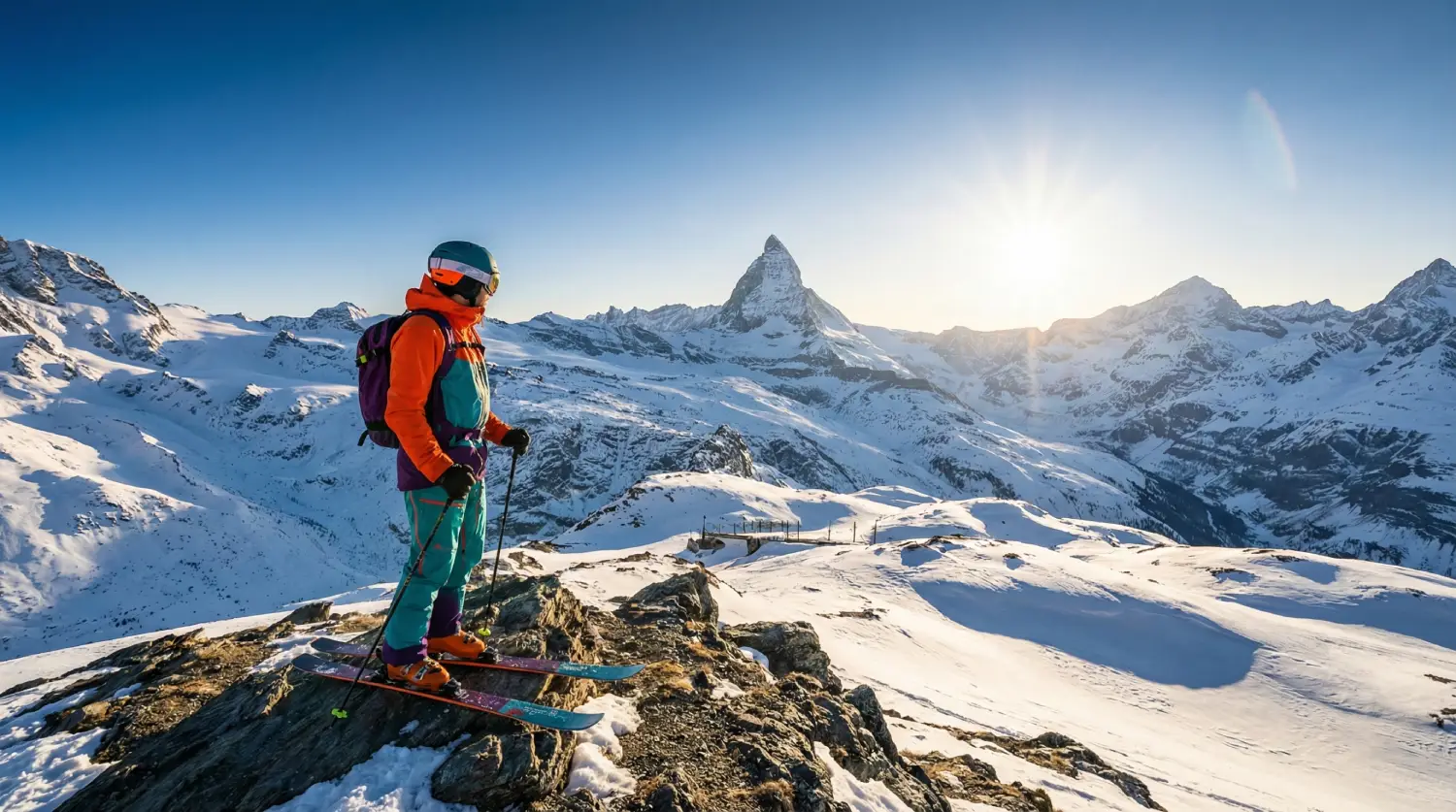

Whether you are chasing the glitz of St. Moritz or the iconic silhouette of the Matterhorn in Zermatt, the 2026 season is shaping up to be legendary with heavy snowfall reported across the Valais and Graubünden regions.
However, a successful trip requires more than just booking a hotel. You need to know which pass to buy to avoid overpaying, where to find the best après-ski that won’t bankrupt you, and why your standard European SIM card might fail you the moment you cross the border.
Here is your ultimate, no-nonsense guide to conquering Zermatt and St. Moritz in 2026.
Part 1: Zermatt – The King of Mountains
Zermatt is unique. It’s a car-free village, meaning you literally cannot drive to your hotel. But beyond the logistics, it offers of the most spectacular ski experiences in the world: the ability to ski across two countries in day.
Getting There: The "Täsch" Handoff
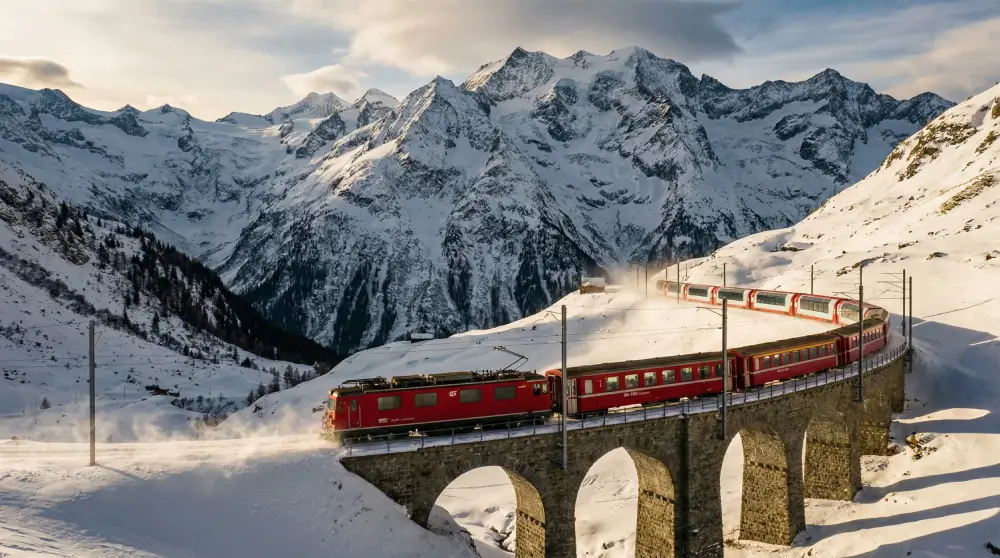
Since cars are banned, you must park in Täsch and take the shuttle train (every 20 minutes) into Zermatt.
-
Pro Tip: Don't drag massive luggage. The electric taxis in Zermatt are expensive. Try to book a hotel that offers a free pickup from the train station.
The Ski Area: Switzerland vs. Italy (Cervinia)
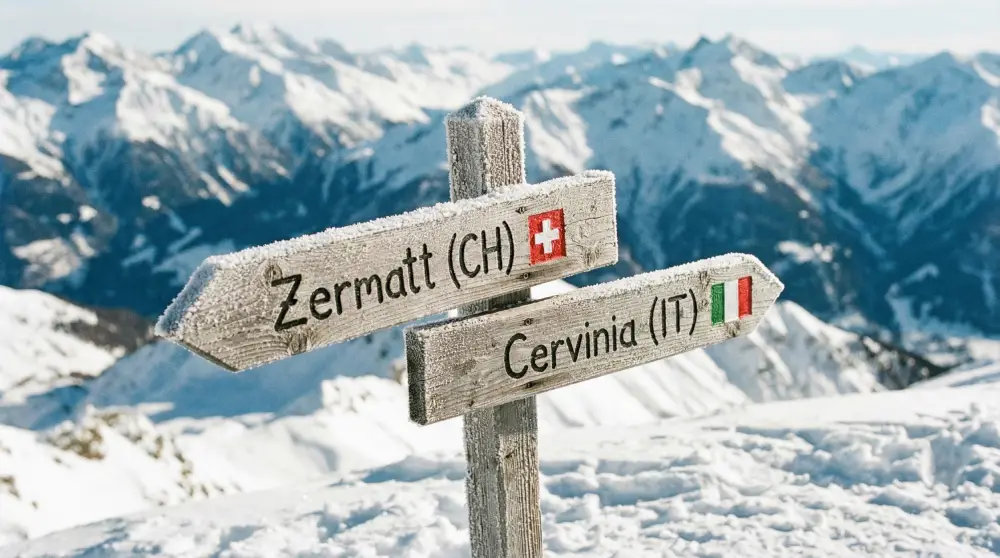
Zermatt shares its ski area (Matterhorn Glacier Paradise) with Cervinia, Italy. This is crucial for your ski pass choice.
-
The Zermatt Pass: Covers the Swiss side (Sunnegga, Gornergrat, Klein Matterhorn).
-
The International Pass: Covers Zermatt AND Cervinia.
Insider Hack: If you are an intermediate skier or better, buy the International Pass. Why? Because lunch on the Swiss side can easily cost 40-50 CHF per person. If you ski over the border to Cervinia for lunch, you can get incredible pasta and wine for half the price. Plus, the runs on the Italian side are wider and sunnier in the afternoon.
⚠️ The "Cervinia Trap" (Read This Carefully)
This is a mistake that ruins vacations. To ski between Switzerland and Italy, you take a series of high-altitude lifts. These lifts close early, often around 3:30 PM or 4:00 PM depending on the wind. If you are enjoying your espresso in Italy and miss the last lift back to Switzerland, you are stranded. A taxi ride from Cervinia to Zermatt takes 4 hours and costs roughly €300–€500.
-
The Fix: You must check the Matterhorn App for real-time lift status. Wind conditions change instantly at 3,800 meters. You need a reliable data connection to check these updates constantly. Do not rely on "maybe" signal.
Après-Ski in Zermatt
Zermatt rocks harder than St. Moritz.
-
Hennu Stall: This is legendary. Located on the valley run down from Furi, it’s chaotic, loud, and fun.
-
Cervo: For a more sophisticated vibe (and expensive cocktails), Cervo Mountain Resort is the place to be seen at the end of the day.
Part 2: St. Moritz – The Birthplace of Winter Tourism
If Zermatt is about the mountain, St. Moritz is about the lifestyle. It’s where winter tourism began in 1864. It’s glitzy, yes, but the skiing is surprisingly sporty.
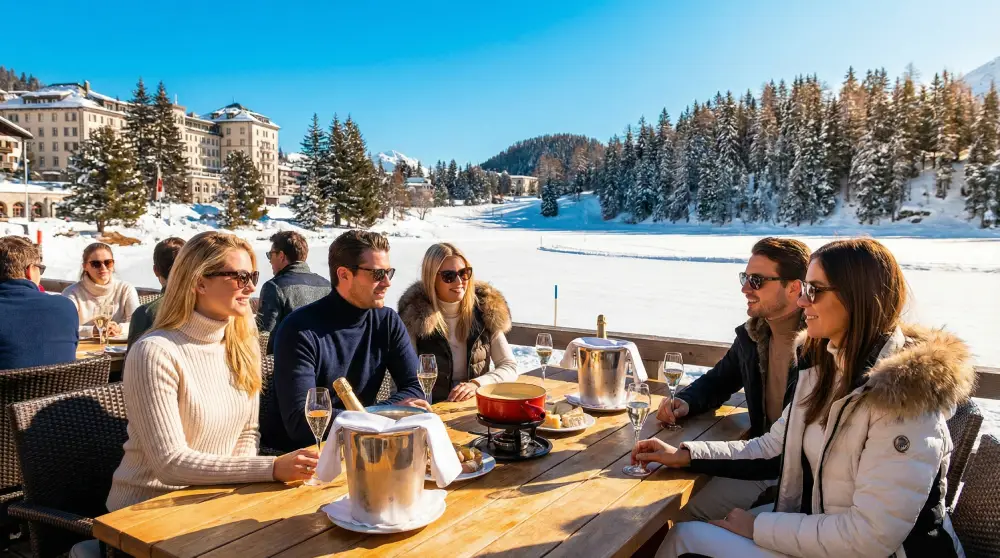
The Two Faces: Corviglia vs. Corvatsch
-
Corviglia: This is the "sunny side." It’s accessible directly from St. Moritz Dorf. The runs are perfectly groomed, wide, and World Cup standard. This is where you ski to be seen. The "Champagne Climate" is real here; the sun shines 322 days a year.
-
Corvatsch: The "sporty side" across the valley. It’s north-facing, meaning the snow stays powdery longer, but it’s colder. If you are here for serious skiing, go to Corvatsch.
The "White Turf" & Events
If you are visiting in February 2026, you might witness White Turf, where horse races are held on the frozen Lake St. Moritz. It’s a surreal experience.
-
Budget Tip: St. Moritz is notoriously expensive. To save money, look for accommodation in nearby Celerina or Silvaplana. You are connected by bus/train to the lifts in minutes but pay significantly less.
Part 3: Essential Apps for Swiss Skiing (Why You Need Data)
Skiing in 2026 isn't just about boots and poles; it's about digital tools. Switzerland has an incredible digital ecosystem for skiers, but they all require an active internet connection on the slopes.
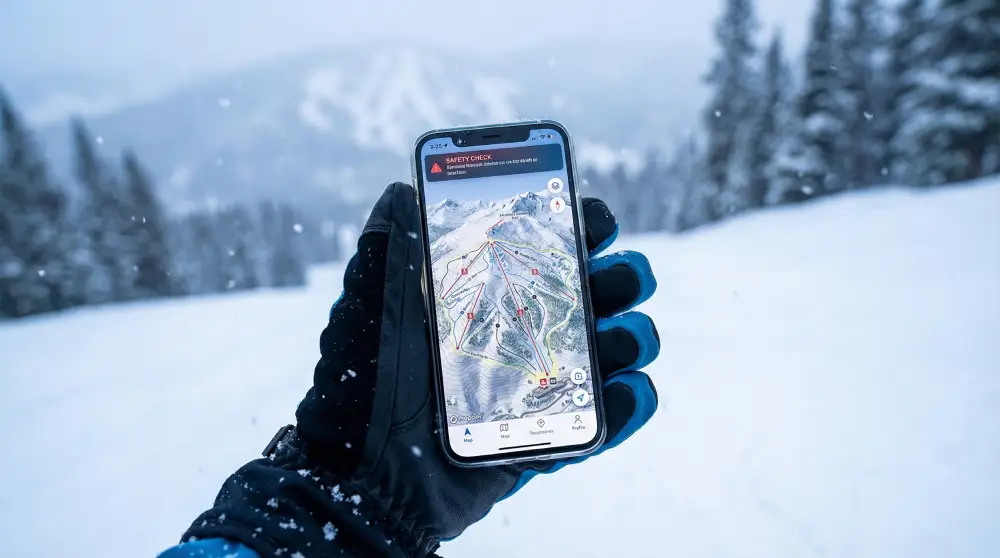
1. SBB Mobile (Trains & Buses)
Swiss public transport is precise to the second. You will need this for the ski bus in St. Moritz or the train to Zermatt. You buy tickets directly in the app.
-
Why Data Matters: No Wi-Fi on the bus. If the ticket inspector comes and you can't load the app, the fine is heavy.
2. MeteoSwiss (Weather)
The Alps are unpredictable. MeteoSwiss is the gold standard for weather forecasts, wind speeds, and avalanche warnings.
-
Safety Check: Never go off-piste without checking the avalanche bulletin on this app.
3. Fatmap / Skitracks
Google Maps is useless on a ski slope. Fatmap gives you 3D terrain maps so you don't accidentally ski off a cliff or a Black run you aren't ready for.
4. REGA (Emergency Rescue) – Critical!
This is the most important app you will download. REGA is the Swiss Air Rescue service.
-
How it works: If you have an accident, you open the app and swipe. It instantly transmits your exact GPS coordinates to the rescue helicopter.
-
The Reality: Voice calls (112) can be fuzzy in the mountains. Data transmission via the app is often faster and more accurate. But it requires an internet connection.
Part 4: The "Swiss Connectivity Trap"
Here is where many travelers get caught out. You might assume, "I have a UK SIM" or "I have a European SIM, roaming is free."
Stop right there.
Switzerland is NOT in the EU (European Union) and NOT in the EEA. This means the "Roam Like at Home" rules that apply in France, Italy, or Germany do not apply here.
-
The Horror Story: You take the train from Milan to Zermatt. You are streaming a video. You cross the border at Chiasso. You receive a text message: "Welcome to Switzerland. Data is £5 per MB." By the time you close the video, you’ve spent enough for a nice dinner.
-
The Solution: Do not rely on your home carrier. Get a dedicated eSIM for Switzerland. It connects to local networks (Swisscom or Sunrise) which offer the best coverage on high peaks like the Klein Matterhorn.
We have a detailed guide on this topic if you are traveling from neighboring countries: Does EU SIM Work in Switzerland?. Make sure you read it before you board the train.
Which eSIM is Best?
For 2026, you need a provider that prioritizes speed and mountain coverage. Roafly uses top-tier local networks to ensure you have a signal whether you are posting a selfie from the Gornergrat or checking the REGA app in an emergency. Check out our comparison here: Best eSIM for Switzerland 2026.
Get Connected Instantly
Don't waste time hunting for a SIM shop in Zurich airport or Zermatt village (where prices are double). Install your eSIM before you fly.
Need data in Switzerland? Get an eSIM!
Choose the perfect data plan for your trip

Manage your eSIM in the app
Install, top up and track data.
Part 5: Final Safety & Budget Tips for 2026
-
Drink Water: Altitude sickness is real at 3,883m (Matterhorn Glacier Paradise). Hydrate.
-
Sunscreen: The sun at high altitude is brutal. Wear SPF 50.
-
Insurance: Helicopter rescue in Switzerland costs thousands of Francs. Ensure your travel insurance covers "Winter Sports" and includes Search & Rescue.
-
Book Restaurants: In Zermatt, the best mountain huts (like Chez Vrony) are booked months in advance. Use your data to book as soon as you know your dates.
Ready for the slopes? Switzerland offers the best skiing in the world, period. Don't let logistical stress or connectivity issues ruin the powder day. Download the apps, get your Roafly Switzerland eSIM, and enjoy the ride.
If you are landing in Zurich or Geneva first, check our arrival guide: How to Get Internet in Switzerland.