

'%3e%3cpath fill='%23012169' d='M0 0v30h60V0z'/%3e%3cpath stroke='%23fff' stroke-width='6' d='m0 0 60 30m0-30L0 30'/%3e%3cpath stroke='%23C8102E' stroke-width='4' d='m0 0 60 30m0-30L0 30' clip-path='url(%23b)'/%3e%3cpath stroke='%23fff' stroke-width='10' d='M30 0v30M0 15h60'/%3e%3cpath stroke='%23C8102E' stroke-width='6' d='M30 0v30M0 15h60'/%3e%3c/g%3e%3c/svg%3e)
When UK Travel Will Be Busiest This Christmas
Transport authorities and industry data indicate that the festive travel period will be the busiest seen in over a decade. Several independent outlets, including The Independent and international travel industry publications, report aligned peak dates across multiple transport modes.
Key peak dates to note
-
Friday 19 December
-
Saturday 20 December
-
Monday 22 December
-
Sunday 28 December
-
Friday 2 January – Sunday 4 January
These dates affect both departures and arrivals, meaning pressure is not limited to people leaving the UK — inbound tourists will face the same congestion.
Airports: What Arriving and Departing Travellers Should Expect
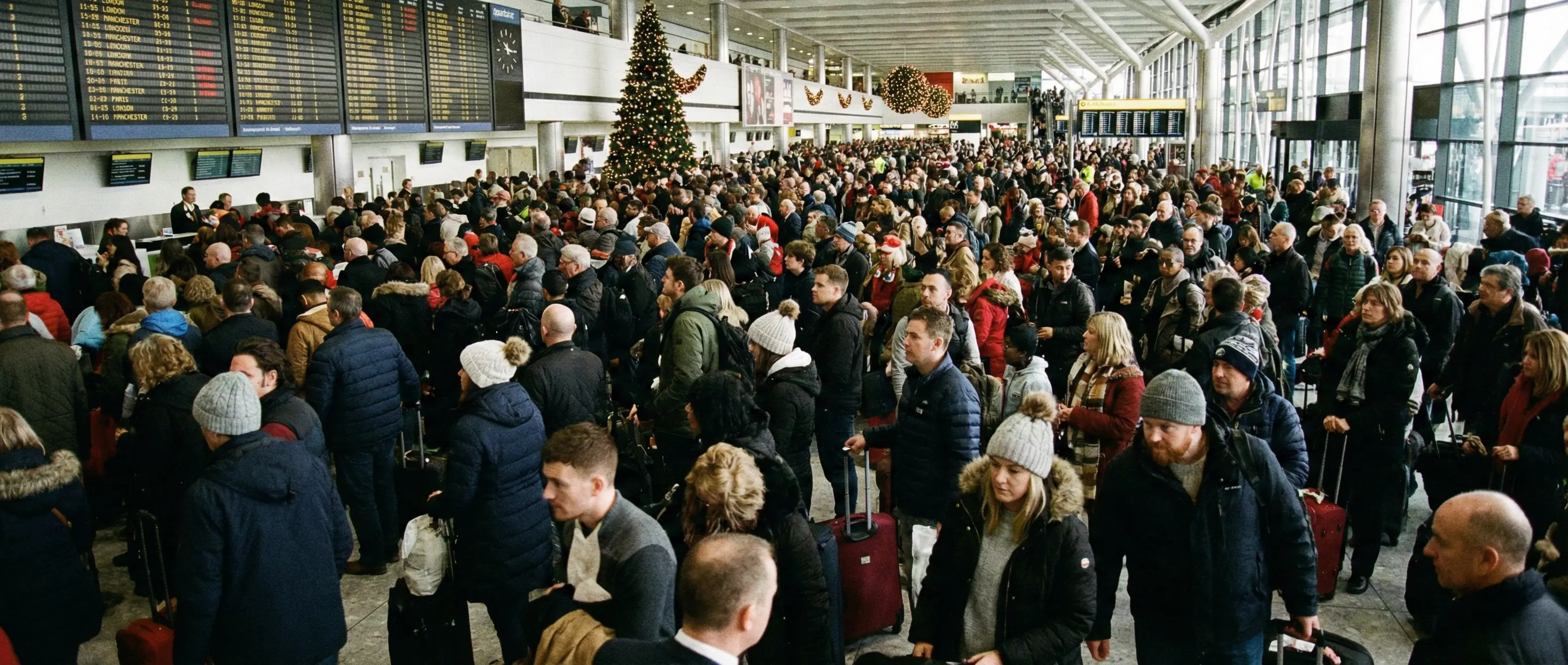
International aviation industry reports also confirm the scale of disruption, with major hubs such as Heathrow and Manchester preparing for record-breaking passenger volumes during the Christmas period.
Major UK airports including London Heathrow, Manchester, Birmingham, Edinburgh, Glasgow, and Luton are preparing for their busiest Christmas periods on record.
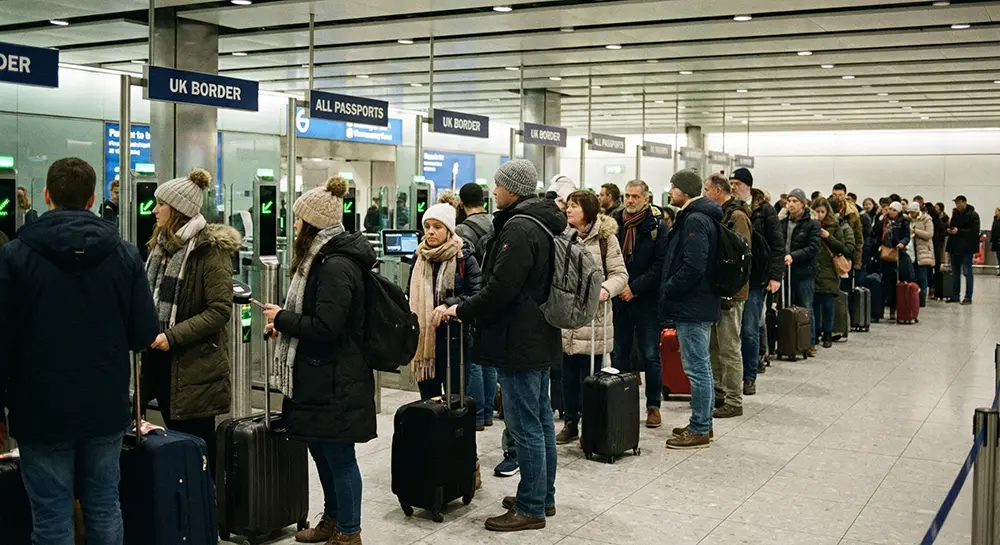
For travellers entering the UK
-
Arrival halls and passport control areas may experience long queues, especially on 28 December, 2 January, and 4 January
-
Baggage delivery delays are more likely during peak arrival waves
-
Ground transport availability (trains, coaches, taxis) may be limited immediately after landing
For travellers leaving the UK
-
Early-morning and late-afternoon departures on peak days are expected to be the most congested
-
Last-minute gate changes and boarding time adjustments are more common during high-volume periods
Popular outbound destinations during this period include Amsterdam, Dublin, Dubai, Geneva, Alicante, and Tenerife, meaning European and long-haul routes are both affected.
Rail Disruptions Inside the UK
According to National Rail, no trains will operate on Christmas Day, while Boxing Day services will be extremely limited and several major routes will be affected by planned engineering works.
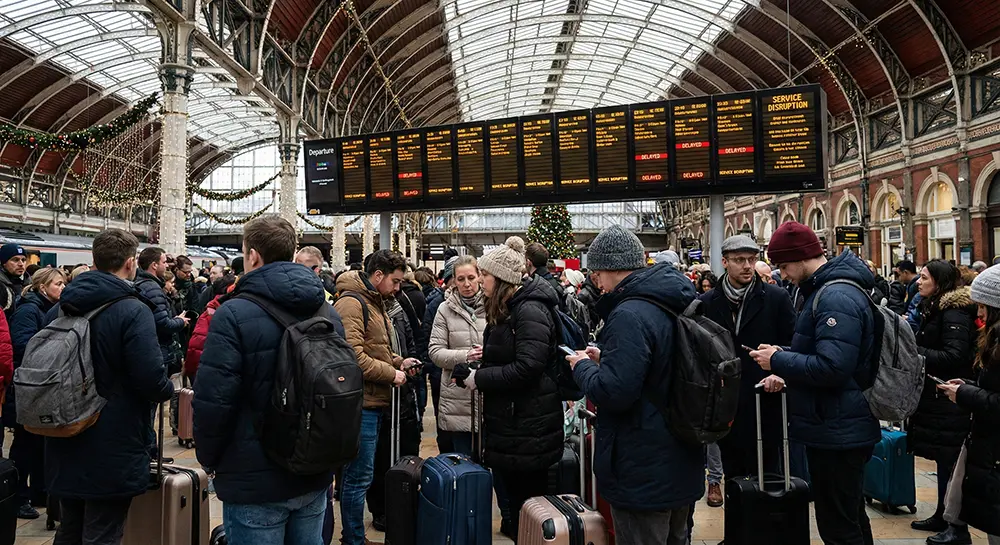
Rail travel will be particularly challenging over Christmas due to a combination of peak demand and planned engineering works.
Key rail impacts
-
No trains operate on Christmas Day
-
Very limited services run on Boxing Day
-
London Waterloo will be closed from the end of services on Christmas Eve until 28 December
-
Major sections of the West Coast Main Line will be closed into early January
-
Several regional routes, including parts of northern England, will have suspended or reduced services
For travellers arriving in the UK and planning journeys by train, this is critical. Airport arrivals may be smooth, but movement within the country could be significantly delayed or rerouted.
Road Travel and Coach Alternatives
Road travel is also expected to experience severe congestion.
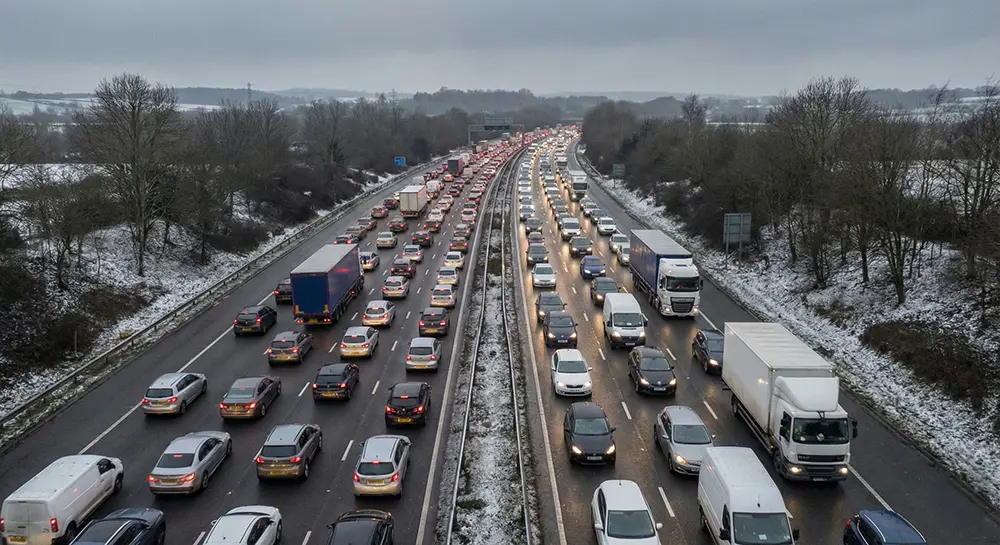
According to UK traffic authorities:
-
Christmas Eve is forecast to be the single busiest day for road travel
-
Key congestion points include the M25, M6, M4, and M5
-
Some motorway sections will be closed overnight or for extended engineering works
Coach operators such as National Express and FlixBus are running additional services, particularly on days when rail services are unavailable. However, these services may sell out quickly during peak dates.
For international visitors unfamiliar with UK holiday travel patterns, road delays can be more severe than expected — especially when combined with winter weather.
Ferry Travel and Cross-Border Movements
Ferry routes, particularly through Dover, are also under pressure. Authorities expect heavy traffic from early morning through early afternoon during the weekend before Christmas.
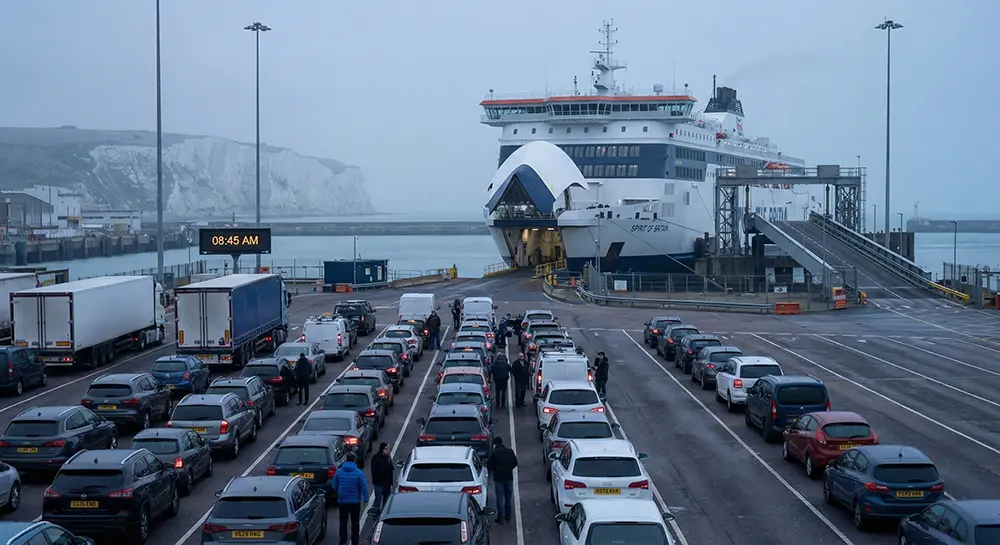
While ferry operators generally rebook missed sailings caused by congestion without penalty, waiting times can still be significant. This affects:
-
UK residents travelling to continental Europe
-
International travellers using the UK as part of a multi-country itinerary
Why This Matters for International Visitors
Although no entry rules or visa requirements are changing as part of this travel period, the experience of entering and moving through the UK will be materially different from quieter seasons.
International travellers may encounter:
-
Longer processing times on arrival
-
Reduced domestic transport flexibility
-
Higher likelihood of missed connections or overnight delays
These challenges are operational, not regulatory — but they can still disrupt itineraries if not anticipated.
Wider European Impact and Connecting Flights
It is also important to recognise that UK disruptions are not happening in isolation. Across Europe, several airports are facing planned industrial action and staffing constraints during December.
Flights departing from or connecting through UK airports may be affected by broader European disruption patterns. Travellers connecting via major hubs should be aware of these risks.
For a detailed breakdown of strike-related risks, readers can refer to this dedicated guide:
European Airport Strikes December 2025: Christmas Travel Disruption Guide
Staying Informed While Travelling
During periods of disruption, real-time information becomes essential. Travellers often rely on live updates for:
-
Gate and platform changes
-
Rebookings and cancellations
-
Alternative routing options
If you are travelling to or within the UK and want a clear overview of your connectivity options, this guide may be useful:
How to Get Internet in the United Kingdom – SIM Cards, Airport SIM & eSIM
For travellers who prefer to arrange mobile connectivity in advance, UK-specific travel eSIM options are also available here:
Need data in United Kingdom? Get an eSIM!
Choose the perfect data plan for your trip

Manage your eSIM in the app
Install, top up and track data.
Final Thoughts
Christmas travel in the UK is expected to be exceptionally busy, affecting arrivals, departures, and domestic movement alike. While no formal travel restrictions are changing, congestion and disruption are very real factors for both UK residents and global travellers. Planning ahead, staying flexible, and remaining well-informed will make a meaningful difference.
Check the latest travel updates before departure and allow more time than usual throughout your journey.