


As winter storms become more intense and unpredictable, understanding how these events affect European travel — and how to stay prepared — is increasingly important for international travellers.
Flight Cancellations Across France, Belgium, and the Netherlands
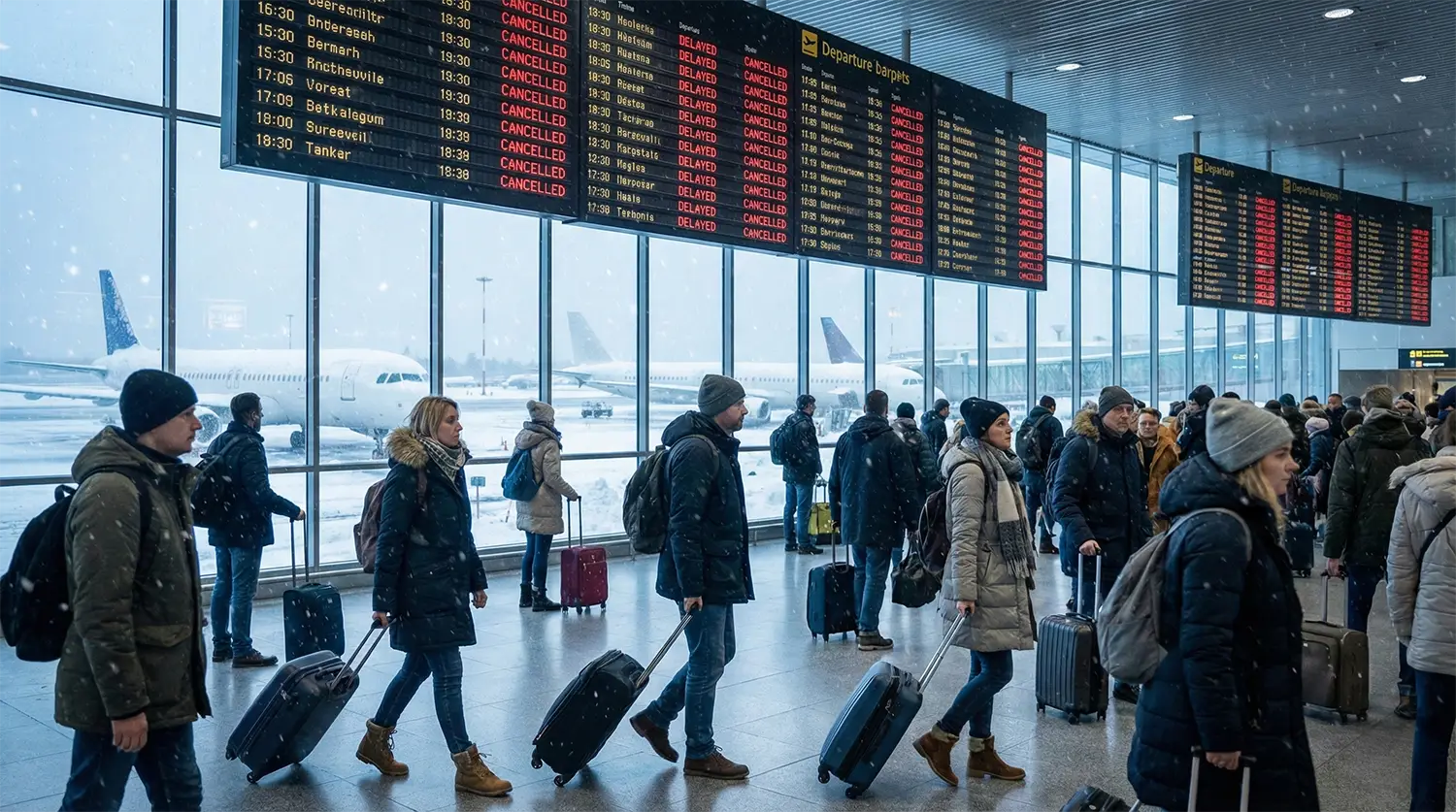
According to Euronews, hundreds of flights have been cancelled across Western Europe as snowfall and black ice disrupt airport operations.
Paris Airports Ground Dozens of Flights
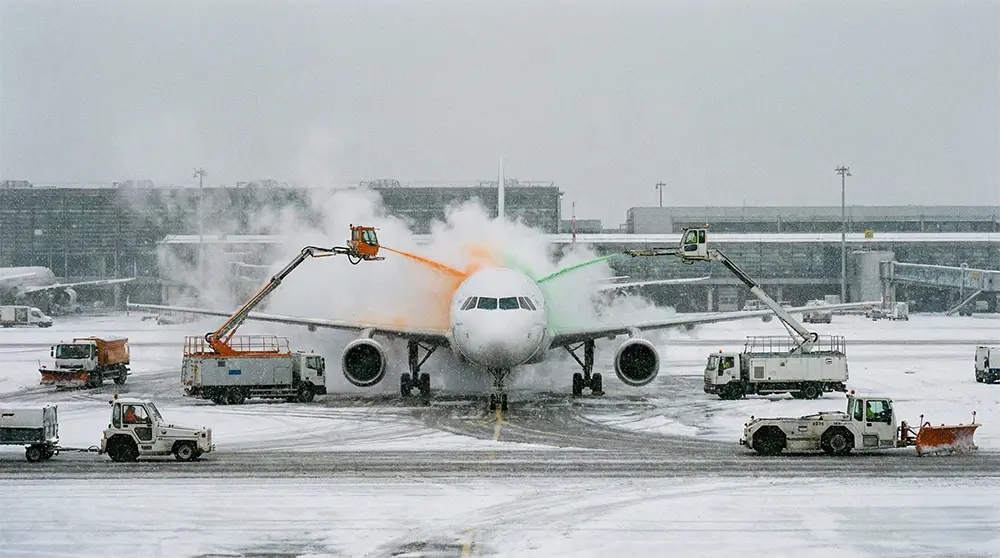
Around 100 flights were cancelled at Charles de Gaulle Airport, with a further 40 cancellations at Orly Airport after heavy snowfall overnight. Authorities also suspended all public bus services in Paris and nearby suburbs due to icy road conditions.
According to SNCF, snow accumulation on rail tracks forced operators to reduce train speeds and cancel services across multiple regions.
Amsterdam Schiphol Sees Massive Disruptions
Meanwhile, Schiphol Airport announced at least 700 flight cancellations in a single day. More than 1,000 passengers were forced to sleep overnight in the terminal, with camp beds and emergency food provided.
Belgium was also affected, with at least 40 flights cancelled at Brussels Airport, where delays were expected throughout the day due to de-icing procedures.
Eurostar and Rail Services Severely Affected
Air travel is not the mode of transport impacted. Rail services across Europe have also been disrupted by Storm Goretti.
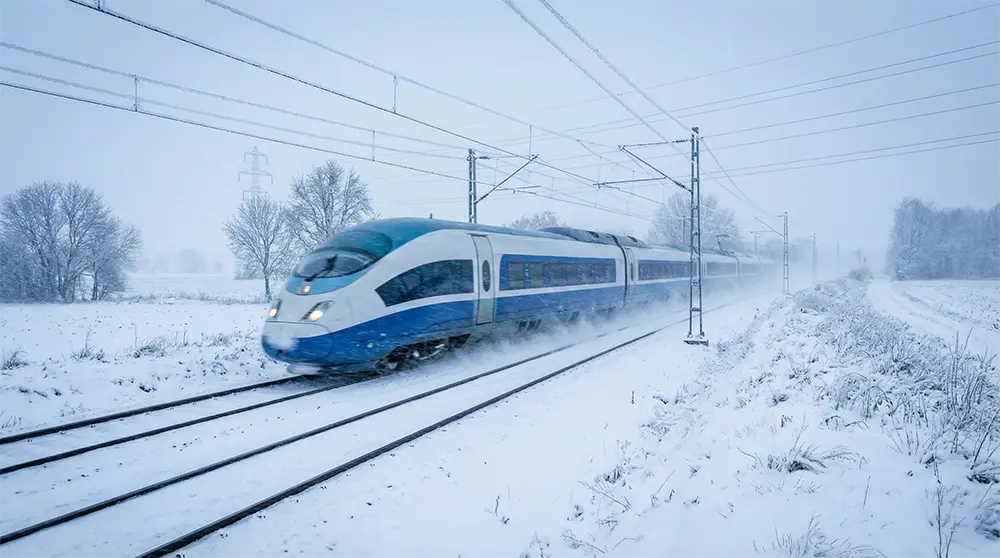
According to Eurostar, trains between London, Paris, Brussels, and Amsterdam are subject to severe delays and last-minute cancellations. Some services are operating with limited routes, preventing passengers from disembarking at intermediate stops.
In the Netherlands, rail operator Nederlandse Spoorwegen urged travellers to delay journeys if possible, as snowfall snarled both domestic and international rail networks.
Why Winter Storms Cause Widespread Travel Chaos in Europe
Winter storms like Storm Goretti disrupt travel far beyond snowfall alone. Several operational factors contribute to widespread cancellations:
-
Aircraft de-icing requirements significantly reduce airport capacity
-
Runway snow clearance slows departures and arrivals
-
Speed restrictions on rail lines increase journey times
-
Crew displacement from earlier delays causes knock-on cancellations
According to Météo-France, the cold snap is of “rare intensity for the season,” with 38 French departments placed on alert for heavy snow and black ice.
Such conditions make rapid recovery difficult, even after snowfall stops.
UK, Nordic Countries, and Central Europe Also Impacted
Storm Goretti’s effects extend beyond Western Europe. According to UK Met Office, yellow warnings for snow and strong winds remain active across large parts of England, Wales, and southwestern regions.
In Sweden, trams were suspended in Gothenburg, while authorities warned of potential power outages. Hungary experienced of its heaviest snowfalls in 15 years, leading to multiple flight cancellations at Budapest Airport.
These conditions highlight how a single winter system can disrupt travel across an entire continent.
What to Do If Your Flight or Train Is Cancelled
When winter weather disrupts your travel plans, preparation and quick decision-making are key.
Know Your Passenger Rights
Under EU regulations, passengers are generally entitled to:
-
Rebooking or refunds for cancelled flights
-
Assistance such as meals or accommodation during long delays
-
Alternative transport where available
However, weather-related disruptions often limit compensation eligibility, making practical planning essential.
Be Ready for Overnight Airport Stays
As seen at Schiphol and Paris airports, unexpected overnight stays are common during snow events. Access to reliable mobile internet becomes crucial for:
-
Rebooking flights
-
Communicating with airlines
-
Navigating alternative routes
This is especially important when airport Wi-Fi networks become overloaded.
Staying Connected During Winter Travel Disruptions in Europe
During widespread delays, travellers often cross borders unexpectedly or reroute through multiple countries. Relying on airport Wi-Fi or roaming plans can quickly become unreliable or expensive.
A multi-country Europe eSIM allows travellers to stay connected across France, Belgium, the Netherlands, and the UK without searching for local SIM cards during emergencies.
For travellers moving across multiple countries during winter disruptions, a Europe-wide option is often the most practical choice.
Need data in Europe? Get an eSIM!
Choose the perfect data plan for your trip

Manage your eSIM in the app
If you are planning winter travel through Europe, staying connected can make rebooking and rerouting significantly easier during unexpected delays.
Final Tip
Before travelling during Europe’s winter season, check the latest weather alerts and ensure your connectivity plan works seamlessly across borders.
Check the latest Europe eSIM packages before winter travel disruptions catch you off guard.