

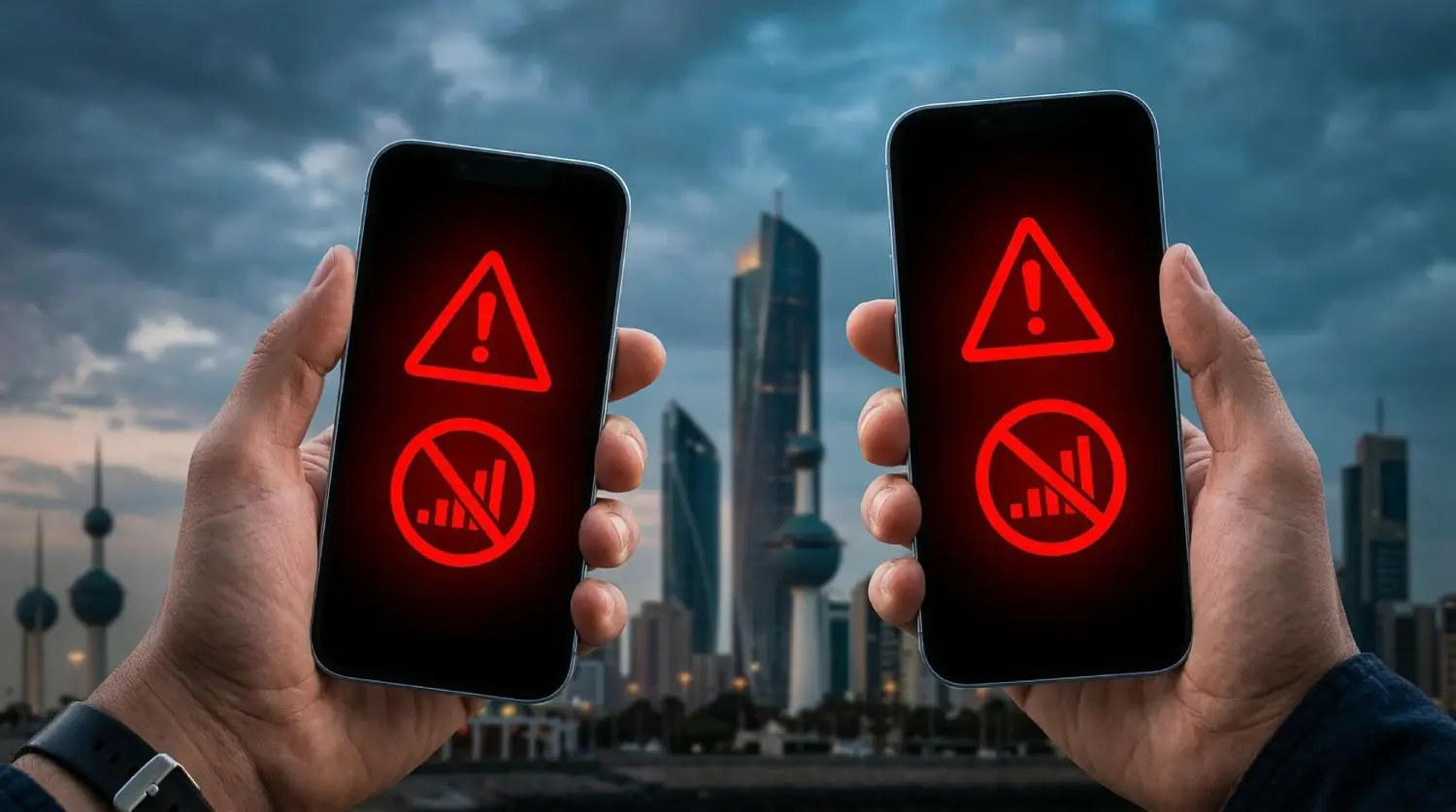

n a sudden and sweeping regulatory move in March 2026, Kuwait has officially restricted the operation of international tourist eSIMs within its borders. Overnight, major global eSIM providers were forced to pull all Kuwait-specific data bundles from their stores. Furthermore, travelers relying on massive "Global" or "Middle East & North Africa (MENA)" regional plans suddenly found themselves completely offline the moment they crossed into Kuwaiti airspace.
Why did of the wealthiest Gulf nations suddenly pull the plug on digital connectivity for tourists? What happens to the eSIM plan you already paid for? And most importantly, how do you get internet in Kuwait City now?
Here is the exclusive, in-depth breakdown of the 2026 Kuwait eSIM ban, the regulatory reasons behind it, and your immediate alternatives to stay connected.
1. The Breaking News: What Exactly Happened?
The shutdown was incredibly swift. During the second week of March 2026, global telecommunications routing partners and eSIM aggregators received urgent notices regarding new restrictions within Kuwait's telecom infrastructure.
The Immediate Impacts on Travelers:
-
Sales Halted: You can no longer purchase a single-country Kuwait eSIM from almost any major international provider. The products have been removed from sale with immediate effect.
-
Active Bundles Disconnected: If you are currently in Kuwait using a travel eSIM, or if you had a queued bundle waiting to activate, the connection has been officially terminated by the local networks.
-
Regional Bundles Altered: Kuwait has been entirely stripped out of multi-country packages. If you purchased a broader "Middle East & Africa" or "Global" eSIM plan, that plan will still work perfectly in neighboring countries like Saudi Arabia or the UAE, but it will instantly go dark (No Service) while you are inside Kuwait.
2. The "Why": The Real Reasons Behind Kuwait's eSIM Ban 🔍
While sudden telecom blackouts can be frustrating, they are rarely accidents. The Gulf Cooperation Council (GCC) countries have incredibly strict, highly regulated telecommunications sectors.
While official government press releases on digital bans are often vague, industry experts point to two massive catalysts for this sudden restriction:
Reason A: Strict KYC (Know Your Customer) and Security Laws
Security and digital identity tracking are paramount in the Middle East. Under normal circumstances, if you buy a physical SIM card at Kuwait International Airport, you must hand over your physical passport. The telecom provider (like Zain, Ooredoo, or stc) scans your passport, registers your biometrics, and links your exact identity to that specific phone number and IP address.
The eSIM Loophole: Travel eSIMs (which are essentially roaming data profiles) bypassed this entire system. A tourist could buy an eSIM using Apple Pay without ever uploading a passport or proving their identity to the Kuwaiti government. For national security regulators, thousands of anonymous, untraceable data connections operating inside the country became an unacceptable security loophole that had to be closed immediately.
Reason B: Protecting the Local Telecom Monopoly
Kuwait’s telecom infrastructure is dominated by three giants: Zain, Ooredoo, and stc. When tourists bypass the airport kiosks and buy cheap, digital travel eSIMs from international companies, the local operators lose out on millions of dollars in highly profitable prepaid tourist sales. By blocking foreign eSIM profiles from connecting to their local towers, the government forces tourists to go back to the traditional, locally taxed method of buying connectivity directly from local vendors.
3. How Does This Affect Your Existing Plans?
If you are a traveler caught in the middle of this policy shift, here is exactly where you stand:
-
If you bought a Kuwait-Only eSIM: Your provider should be proactively reaching out to you. Because the service was cut off at the network level, you are fully entitled to a refund or store credit. Reach out to your eSIM provider's support team immediately.
-
If you bought a Regional (MENA/Global) eSIM: Your eSIM is not broken. It will continue to work flawlessly in Qatar, Bahrain, Egypt, and the rest of the included countries. You simply cannot use the data allowance while physically standing in Kuwait.
4. Your Alternatives: How to Get Internet in Kuwait Now 📲
With the digital travel eSIM route temporarily blocked, you have to revert to the "old school" methods of staying connected during your Kuwait trip. Here is your survival guide:
Option 1: Buy a Physical SIM at Kuwait Airport (The Best Option)
This is now your most reliable route. you clear immigration at Kuwait International Airport (KWI), walk straight into the Arrivals Hall.
-
The Providers: You will see bright, official kiosks for Zain, Ooredoo, and stc.
-
The Process: You must present your original passport and your entry visa. The agent will register your details and insert a physical SIM card into your phone.
-
The Cost: While slightly more tedious than an eSIM, local data rates in Kuwait are actually very reasonable, and 5G coverage across Kuwait City is world-class.
Option 2: Rely on International Roaming (The Expensive Option)
If your home carrier (like AT&T, Verizon, or Vodafone) offers a daily international travel pass (usually ranging from $10 to $15 per day), this will still work. Because these are established, state-level roaming agreements between massive telecom corporations, they are exempt from the tourist eSIM ban. However, for a 10-day trip, this could easily add $100+ to your phone bill.
Option 3: Hotel and Mall Wi-Fi (The Budget/Risky Option)
Kuwait City is a highly developed metropolis. Luxury hotels, massive shopping centers like The Avenues, and high-end cafes all offer free, fast Wi-Fi. If you don't need internet for Google Maps while driving, you can survive by simply "Wi-Fi hopping" between locations.
-
Security Warning: Never check your bank accounts or enter sensitive passwords on open, public Wi-Fi networks without using a secure VPN.
Final Thoughts: Will eSIMs Return to Kuwait?
Telecommunications policies in the Gulf change rapidly. It is highly possible that Kuwait is simply pausing tourist eSIMs while they build a "digital passport registration" gateway that will eventually allow eSIM aggregators to sell legally compliant profiles.
Until then, pack your physical SIM ejector tool, keep your passport handy at the airport, and prepare to buy your internet the old-fashioned way.
We will continually monitor the situation and update this page the moment Kuwait's telecom borders reopen to digital travelers.