Download the App and manage your eSIMs easily
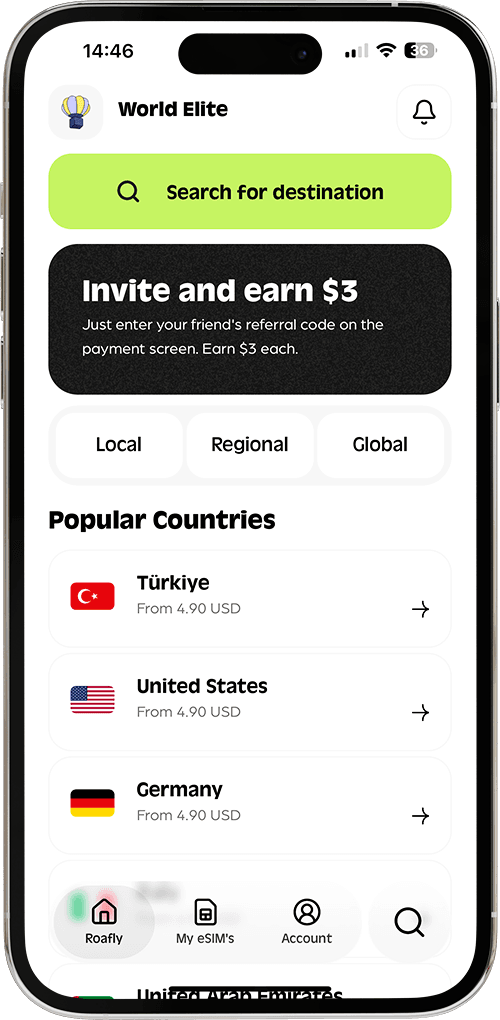
Create your order quickly
See your eSIM details
Track your remaining data
Download the App and manage your eSIMs easily
Create your order quickly
See your eSIM details
Track your remaining data
Getting internet in Mexico is easy, but the best option depends on how you travel. Some visitors want the cheapest local SIM, some want data working the moment they land, and others just need a backup option for a short trip.
Telcel, AT&T
Instant delivery
From 4.50 USD

Sophie Callahan
Updated Mar 6, 2026
10 min read
Jump to section
👇Best for most trips
Telcel, AT&T

Mexico
10 GB · 30 days
Enough for maps, bookings and everyday travel.
Hotspot supported
$24.90
From 4.50 USD
In 2026, travelers in Mexico usually choose between five practical options: buying a SIM card at the airport, getting a local prepaid SIM in town, using a travel eSIM, renting a pocket WiFi device, or relying on airport and public WiFi. Mexico’s main mobile networks still offer broad nationwide service, with Telcel generally leading on reliability while AT&T also remains a strong option in cities and tourist corridors.
If you want the simplest answer, here it is:
Buy a local prepaid SIM after arrival if you want the lowest local cost.
Use an eSIM if you want to avoid store visits and get connected faster.
Use pocket WiFi if several people need to share one connection.
Use airport or public WiFi only as a short-term backup, not as your main plan.
For most travelers, the real choice comes down to physical SIM vs eSIM. If you want a full comparison of digital options, you can also read our best eSIM for Mexico guide.
Choose the perfect data plan for your trip

Buying a SIM card at the airport is possible, but it is usually the least cost-efficient way to get online. Airport kiosks, convenience stores, and reseller counters often charge more than stores in the city, and package availability can vary by terminal and by airport. Travel guides for Mexico City Airport and Cancun Airport consistently note that airport pricing is higher than city pricing, with common tourist packages starting around MXN 150 to MXN 300, or roughly $8 to $17 at early March 2026 exchange rates.
At Mexico City Airport, travelers have reported finding prepaid SIMs through convenience stores such as OXXO and 7-Eleven, with some sellers charging extra for activation. One recent airport guide says a Telcel SIM sold at the airport can carry an additional activation charge at OXXO, even though self-activation may be possible.
At Cancun Airport, free WiFi is available across terminals, which is useful if you want to message your driver or hotel first and then buy a SIM later in town. Airport-focused guides also describe reseller pricing in the MXN 200 to MXN 300 range for short tourist packages.
| Where you buy | Typical tourist pricing | What to expect |
|---|---|---|
| Mexico City Airport | Around $8–$17 (MXN 150–300) | Convenient, but often marked up |
| Cancun Airport | Around $11–$17 (MXN 200–300) | Easy for arrivals, usually pricier than in town |
| Airport resellers/kiosks | Around $10–$30 | Fast purchase, but package details can vary |
These are market-observed traveler prices and reseller offers, not fixed national rates, so they can change by terminal, season, and stock availability.
Airport SIMs are still useful in a few situations. They make sense if you are arriving late at night, heading straight to a remote area, or need instant data for rideshare, maps, or WhatsApp. They are also practical if your phone does not support eSIM.
Still, if you are staying in Mexico City, Cancun, Guadalajara, Monterrey, Puerto Vallarta, Tulum, or another major destination, you will usually find better value by buying your SIM in town.

For travelers who want the lowest local cost, buying a prepaid SIM in the city is usually the best-value option. In Mexico, prepaid service is widely sold through official carrier stores, convenience stores, and electronics shops. Telcel’s prepaid system is built around Amigo Sin Límite top-ups, while AT&T also offers prepaid packages under AT&T GO. Telcel’s own tourist eSIM page confirms that tourist service is tied to Amigo Sin Límite, and AT&T’s official eSIM promo page shows prepaid package tiers up to 20 GB.
A basic local SIM itself is often inexpensive, while the real cost comes from the recharge package you add. Recent Mexico travel and community sources put physical SIM starter prices around MXN 30 to MXN 100 in regular stores, with popular prepaid bundles commonly sold in the MXN 100, 150, 200, and 300 range. Using the current mid-market exchange rate, that is roughly $1.70 to $5.70 for the SIM and about $5.60 to $17 for the bundle.
These are the price points travelers will most often see in Mexico:
Around $5.60 (MXN 100): entry-level recharge
Around $8.50 (MXN 150): better for light use
Around $11.30 (MXN 200): a common tourist sweet spot
Around $17.00 (MXN 300): more comfortable for maps, rideshare, and social apps over a longer stay
Telcel’s official prepaid pages confirm that all recharges include WhatsApp, and from MXN 50 upward, users also get Facebook and X included. AT&T’s official prepaid eSIM page shows 30-day package examples including $150 MXN for 6.5 GB and $200 MXN for a higher allowance. Movistar’s current prepaid pages also still advertise recarga offers, including a $100 MXN recharge with bonus data, though plan mechanics vary by promotion window.
The easiest places to buy are:
Official carrier stores in malls and city centers
Convenience stores
Electronics and mobile phone shops
In major tourist areas, convenience stores are everywhere, but official carrier stores are usually better if you need help with setup, APN settings, or registration. Some travelers have reported that activation can be inconsistent at convenience stores and easier to fix at a carrier shop.
Requirements can vary based on the seller and activation process. Some users report passport checks or delayed activation for physical SIMs bought in person. That is one reason many travelers now prefer eSIM for short stays.
For most short-term travelers in 2026, eSIM is the easiest way to get internet in Mexico. You do not have to find a store, swap out your home SIM, or wait in line after a flight. You can set it up before departure and activate when you arrive.
If you want the smoothest experience, Roafly is the most practical eSIM option to mention here because it gives you a clear Mexico setup without the usual airport hassle. Roafly’s Mexico eSIM runs on AT&T Mexico, is data-only, supports hotspot sharing, does not require eKYC, and starts its validity period when the SIM connects to a supported network. Installation is available through iOS & Android Direct Install, QR code, or manual setup.
| Plan | Validity | Price |
|---|---|---|
| 1 GB | 7 days | $4.50 |
| 2 GB | 15 days | $9.90 |
| 3 GB | 30 days | $10.90 |
| 5 GB | 30 days | $16.00 |
| 10 GB | 30 days | $24.90 |
| 20 GB | 30 days | $39.90 |
| 50 GB | 30 days | $79.90 |
This makes Roafly especially useful for travelers who want to land with working data already set up. It also fits well for people visiting multiple cities, since you do not have to spend your first hour in Mexico searching for a mobile store.

An eSIM is usually the best fit if:
You want internet as soon as you land
Your phone supports eSIM
You do not want to remove your main SIM
You only need data, not a local Mexican phone number
You want hotspot access for a laptop or second device
If your trip is focused on easy setup rather than shaving a few dollars off the absolute lowest local rate, the Roafly Mexico eSIM page is usually the best place to start.
Pocket WiFi still works well in Mexico, but it is more of a group solution than a solo-traveler solution. A portable hotspot lets multiple devices connect at once, so it can make sense for families, couples, or remote workers carrying phones, tablets, and laptops.
Mexico pocket WiFi rental offers in early 2026 commonly advertise daily pricing starting from around $10 per day with airport pickup available in places like Mexico City, Cancun, and Puerto Vallarta, although some international rental services promote lower per-day rates before shipping and add-ons. Devices usually support up to 10 connected devices.
Good for sharing one connection across several devices
Useful for families or teams
Works even if some phones are not eSIM-compatible
Usually more expensive than a local SIM or eSIM
You need to carry and charge another device
Pickup, return, or shipping logistics add friction
Battery life becomes part of your daily planning
For one traveler, an eSIM is usually simpler. For three or four travelers who all need stable data, pocket WiFi can still be a sensible backup.
Mexico’s airport WiFi is useful when you first land, but it should not be your long-term internet plan.
Cancun Airport confirms WiFi service is available for passengers in all terminals. Mexico City also offers airport WiFi in both terminals, and the city itself has a large public WiFi program for visitors.
Public WiFi is fine for:
Messaging your driver after landing
Downloading offline maps
Booking transport
Checking hotel details
Light browsing
It is not ideal for:
Navigation while moving around
Continuous WhatsApp calls
Uploading work files
Banking or sensitive logins
Reliable travel days between cities
Public WiFi in airports, cafés, hotels, and plazas can be uneven, slow, or overloaded. It is best treated as a backup layer, not your primary connection.
Coverage in Mexico is good in major cities and tourist areas, but it becomes more uneven once you move into remote beaches, mountain areas, or smaller towns. Independent mobile network reporting from Opensignal shows Telcel continuing to lead Mexico on reliability, while AT&T performs strongly on availability and remains a solid option in urban and traveler-heavy routes.
That matters for travelers going beyond Mexico City and Cancun. If your itinerary includes road trips, smaller pueblos mágicos, Baja routes, Chiapas, Oaxaca coast segments, or inland nature areas, coverage quality can matter more than the headline data allowance.
For most normal tourism itineraries, though, any well-configured local SIM or a Roafly eSIM on AT&T Mexico should be enough for maps, messaging, booking apps, and regular browsing.
The best option depends on your priorities.
You need data immediately after landing and do not mind paying more.
You want the cheapest local rates and are willing to visit a store.
You want the easiest setup, no store visit, no physical SIM swap, and reliable data from the start.
You are traveling as a group and want several devices online from one connection.
You just need a temporary backup until your real mobile connection is ready.
The cheapest way to get internet in Mexico is usually a local prepaid SIM bought in town. The easiest way is an eSIM. Airport SIM cards are convenient but usually overpriced, and public WiFi is useful only in short bursts. For most travelers in 2026, especially anyone who wants to skip store visits and get online fast, Roafly is the most practical option.
Check the latest eSIM packages for Mexico before your Mexico trip so you can land already connected.
Best for most trips
Telcel, AT&T
Mexico
10 GB · 30 days
Enough for maps, bookings and everyday travel.
Hotspot supported
$24.90
From 4.50 USD

Manage your eSIM in the app
Install, top up and track data.
Choose the perfect data plan for your trip
Manage your eSIM in the app
Install, top up and track data.
