


This could not be further from the truth.
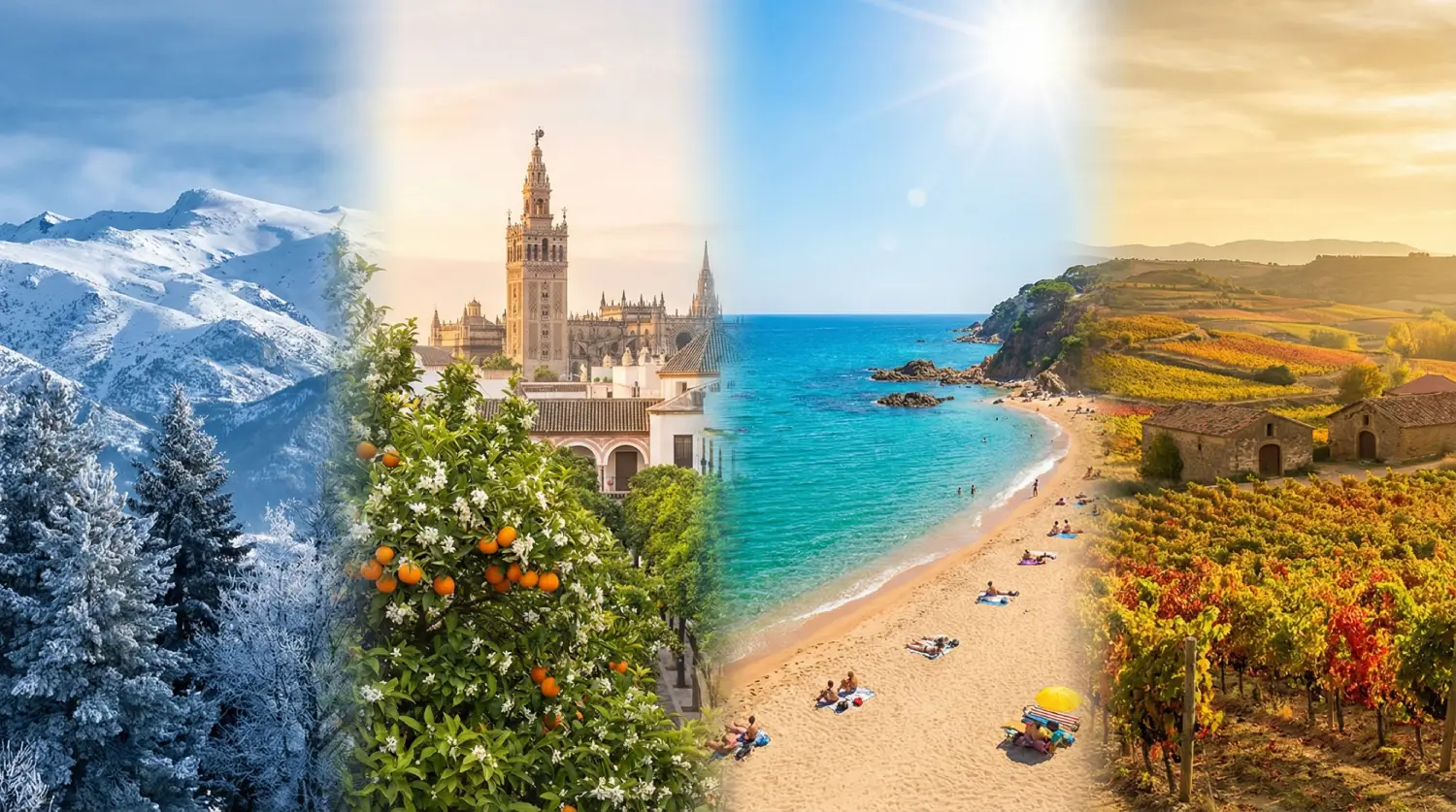
Spain is the second most mountainous country in Europe, and its climate is wildly diverse. In August, while tourists in the southern city of Seville are suffering through blistering 45°C (113°F) heatwaves, travelers in the northern region of Galicia are wearing light jackets in the misty rain. In January, while Europeans flock to the Canary Islands for winter sun, locals in Madrid are wrapping up against freezing winds.
To have the perfect Spanish vacation in 2026, you cannot just pick a random date on the calendar. You need to match the season with the specific region you want to explore.
This comprehensive guide will break down the absolute best (and worst) times to visit Spain, month by month, region by region, and show you exactly how to avoid the crushing tourist crowds and extreme weather.
1. The Four Seasons of Spain: A Quick Overview
Before we dive into the regions, let's look at what the country looks like throughout the year.
Spring (March – May): The Absolute Sweet Spot

-
The Vibe: Spring is widely considered the ultimate best time to visit Spain. The countryside is lush and green, the orange trees are blooming in the south, and the weather is warm enough for t-shirts but cool enough for long days of walking.
-
The Highlights: This is festival season. You have Las Fallas (the festival of fire) in Valencia in March, Semana Santa (Holy Week) across the country in April, and the spectacular Feria de Abril in Seville.
-
The Catch: Because the weather is perfect, prices for flights and hotels begin to surge, especially around Easter week.
Summer (June – August): The Oven and The Crowds
-
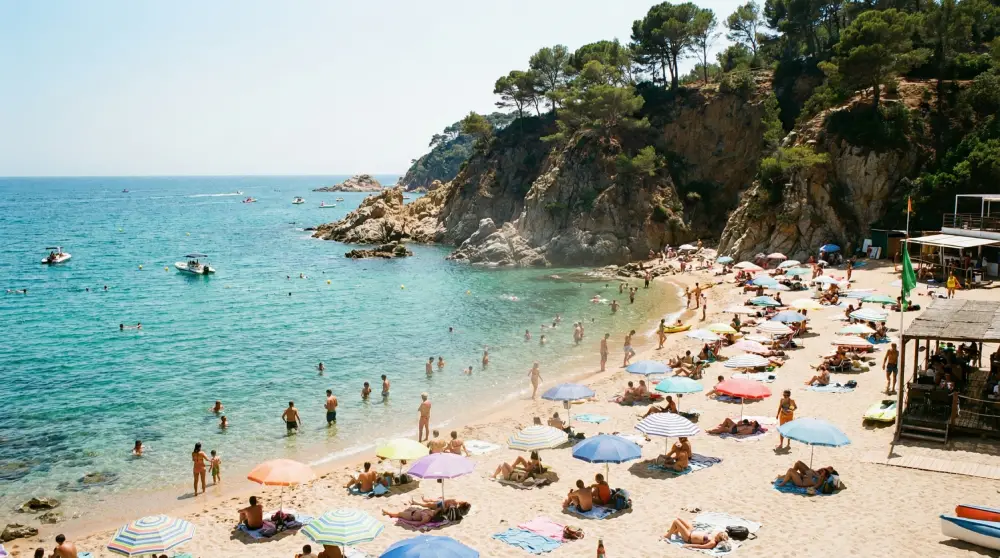
The Vibe: Hot, crowded, and expensive. Spain receives the bulk of its 80+ million annual tourists during these three months. Coastal areas like Costa del Sol, Costa Blanca, and the Balearic Islands (Ibiza, Mallorca) are packed to capacity.
-
The Highlights: Perfect beach weather, vibrant nightlife, and massive music festivals like Primavera Sound in Barcelona.
-
The Catch: The heat in the interior and southern regions is physically exhausting. Cities like Cordoba, Seville, and Madrid frequently hit over 40°C (104°F). Locals abandon the cities for the coast, and the afternoon siesta is not just a cultural quirk—it is a survival mechanism. Avoid southern cities in August.
Autumn (September – November): The Golden Season

-
The Vibe: The intense heat breaks, the massive summer crowds return to work and school, and the Mediterranean Sea is at its absolute warmest, having been heated all summer.
-
The Highlights: This is the season for food and wine lovers. The grape harvest (la vendimia) takes place in famous wine regions like La Rioja and Ribera del Duero. September still feels like summer on the coast, but with half the crowds.
-
The Catch: November can be quite rainy and gray, particularly in the northern regions and Madrid.
Winter (December – February): The Budget Traveler's Dream
-
The Vibe: Cold in the center, mild on the southern coasts. This is the low season for tourism (excluding Christmas week and the Canary Islands).
-
The Highlights: You will have world-class attractions like the Alhambra in Granada, the Prado Museum in Madrid, and the Sagrada Familia in Barcelona almost entirely to yourself. You can even go skiing in the Sierra Nevada mountains (just two hours from the sunny beaches of Malaga).
-
The Catch: Many beach resorts and seasonal restaurants on the islands and coastal towns shut down completely for the winter.
2. The Best Time to Visit by Region
Spain is massive. The "best time" depends entirely on where your flight is landing.
Andalusia (The South: Seville, Granada, Cordoba, Malaga)
-
Best Time: March to May, and September to October.
-
Why: This region is the cultural heart of Spain (flamenco, tapas, Moorish architecture), but it is also the hottest region in Europe. Visiting the Alhambra or the Alcazar is a magical experience in April when the jasmine is blooming.
-
Worst Time: July and August. Unless you are staying strictly on the coastline (Malaga, Marbella), do not go. The heat is oppressive and dangerous for sightseeing.
Madrid and Central Spain (Toledo, Segovia)
-
Best Time: May, June, September, and October.
-
Why: Madrid sits on a high plateau. It suffers from extreme continental weather. The local saying about Madrid’s weather is "Nueve meses de invierno, tres de infierno" (Nine months of winter, three of hell). Spring and early autumn provide the perfect moderate temperatures to explore the capital’s rooftop bars and surrounding medieval towns.
-
Worst Time: August (it is a ghost town as locals flee the heat) and January (bitterly cold winds).
Barcelona & The Mediterranean Coast (Valencia, Costa Blanca)
-
Best Time: Late April to June, and September to October.
-
Why: You get the perfect balance of beach weather and city exploration. Barcelona suffers heavily from overtourism, so visiting in the "shoulder seasons" (Spring/Fall) allows you to enjoy the Gothic Quarter and Park Güell without feeling claustrophobic. September is arguably the best month, as the sea water is perfectly warm for swimming.
-
Worst Time: August. It is unbearably humid, incredibly crowded with cruise ship passengers, and peak season for pickpockets.
The North (Basque Country, Galicia, Asturias)
-
Best Time: June to August.
-
Why: This is the exception to the Spanish summer rule. The "Green Spain" is lush for a reason: it rains a lot. Summer is the absolute best time to visit cities like San Sebastian, Bilbao, and Santiago de Compostela. The weather is a comfortable 25°C (77°F), making it an incredible escape from the boiling south.
-
Worst Time: November to February. It is very wet, gray, and chilly.
The Canary Islands (Tenerife, Gran Canaria, Lanzarote)
-
Best Time: Year-round, but especially November to March.
-
Why: Located off the coast of Africa, the Canaries boast the best year-round climate in the world. They are the ultimate European winter escape. When London and Berlin are freezing, Tenerife is a sunny 22°C (71°F).
3. Month-by-Month Cheat Sheet
-
January: Coldest month. Great for skiing in the Pyrenees or budget city breaks in Madrid/Barcelona.
-
February: Almond blossoms in Andalusia. Very quiet tourist month.
-
March: Spring begins. Valencia erupts in fire and fireworks for Las Fallas.
-
April: The absolute best month for southern Spain. Holy Week processions take over the cities.
-
May: Perfect weather nationwide. The start of the beach season in the south.
-
June: Summer kicks off. Long daylight hours (sun sets around 9:45 PM). Great for northern Spain.
-
July: Peak heat, peak crowds, peak prices. Stick to the northern coast or the islands.
-
August: The hottest month. Cities empty out; coasts are packed. Book everything months in advance.
-
September: The golden month. Summer weather, fewer crowds, warm oceans, and the wine harvest begins.
-
October: Beautiful autumn colors. Perfect for hiking the Camino de Santiago.
-
November: The rainiest month in many regions. Good for visiting indoor museums and enjoying hearty stews.
-
December: Festive atmosphere, Christmas markets, and spectacular holiday lighting in Madrid and Malaga.
4. What to Know Before You Go: Logistics & Rules
Traveling to Spain requires a bit of logistical planning, especially regarding how you pack and what you buy.
Spain is world-famous for its culinary exports: Jamón Ibérico (Iberian ham), Manchego cheese, and incredible Rioja wines. Naturally, tourists want to pack their suitcases full of these delicacies before flying home.
However, you cannot just throw five bottles of wine and a leg of ham into your luggage. The European Union and international customs have strict limits on what can leave and enter the country. Before you head to the airport, it is crucial that you read our updated guide on Spain Airport Customs Rules to ensure your expensive souvenirs aren't confiscated by border agents.
5. Connectivity: Why You Cannot Be Offline in Spain
Whether you are visiting in the heat of July or the quiet of January, there is absolute necessity for modern travel in Spain: A reliable internet connection.
Spain is not a country where you can simply wander blindly and hope for the best.
-
Train Travel: The Renfe high-speed train network (AVE) is fantastic, but platforms change at the last minute, and you need data to check the live boards or show your digital QR code ticket.
-
Navigation: Trying to find a hidden tapas bar in the winding, maze-like alleys of Barcelona's Gothic Quarter or Seville's Barrio Santa Cruz without Google Maps is a guaranteed way to get hopelessly lost.
-
Language: While English is spoken in major tourist hubs, you will absolutely need Google Translate to read authentic menus in smaller towns or communicate with local taxi drivers.
The Solution: Do not rely on spotty hotel Wi-Fi, and do not pay exorbitant roaming charges to your home carrier.
When you land at Madrid Barajas or Barcelona El Prat airport, the lines for physical local SIM cards can take hours. If you want to understand all your connectivity options before you fly, read our comprehensive breakdown on How to Get Internet in Spain
The Smart Traveler's Hack
The fastest, safest, and most cost-effective way to get is to use a travel eSIM. You buy it before your trip, scan a QR code, and the moment your plane touches down in Spain, your phone automatically connects to local high-speed 5G networks like Movistar or Orange.
To skip the research and see which data plan fits your itinerary, check out our direct comparison in the Best eSIM for Spain
Ready to explore the land of tapas and flamenco? 👉 Grab your Spain eSIM right now and guarantee seamless connectivity from the beaches of Ibiza to the streets of Madrid.
Final Verdict: When Should You Book?
If you want the ultimate Spanish experience—perfect weather, vibrant local culture, and manageable crowds—aim for the shoulder seasons: May or September.
If you are a budget traveler who loves museums and architecture without the suffocating heat, book a trip in January or February.
And if you must visit in July or August, do yourself a favor: skip the burning heat of the south and head to the lush, culinary paradise of Northern Spain.
Plan your region, pack smart, download your eSIM, and get ready for the trip of a lifetime. ¡Buen viaje!