

The situation is fast-moving, information may change by the hour, and conditions on the ground can shift quickly.
Quick Answer (as of 3 Jan 2026)
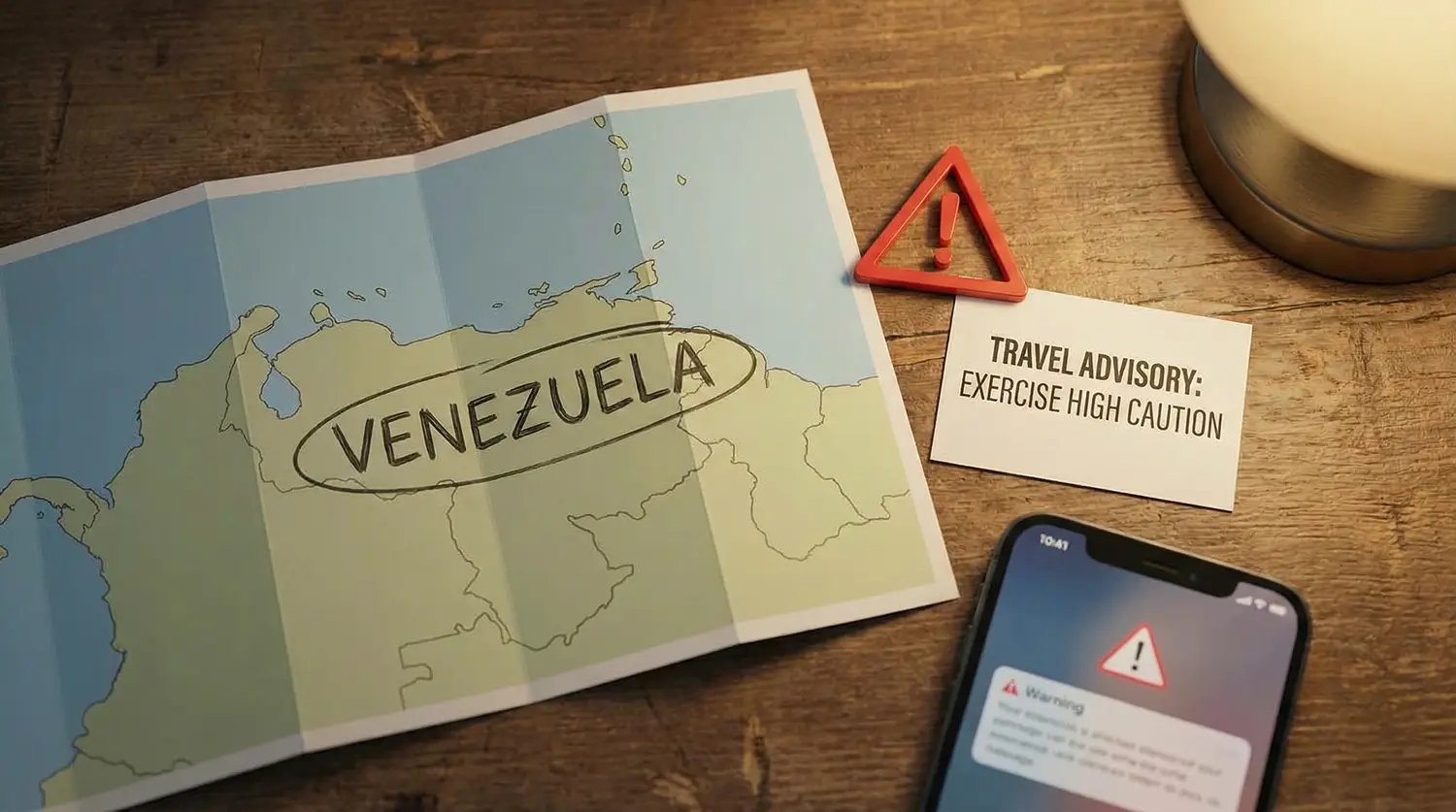
Right now, Venezuela is not a safe destination for tourists. If you are not already there, the practical advice is to postpone travel until official advisories and on-the-ground conditions stabilize.
If you are currently in Venezuela, prioritize shelter, reliable information, and a safe exit plan (details below).
What happened in Venezuela (and why it matters for travelers)
On January 3, 2026, reports from Reuters and multiple international outlets described explosions and strikes affecting Caracas and surrounding states (including Miranda, Aragua, and La Guaira).
There were also reports of power outages in parts of the capital.
U.S. President Donald Trump claimed that Venezuelan President Nicolás Maduro and his wife were captured during the operation; at the time of reporting, official confirmation and details were still developing across sources. For travelers, this combination—active military action + emergency declarations + infrastructure disruption—can lead to:
-
sudden curfews, roadblocks, or security operations
-
airport/flight disruptions
-
unreliable power and mobile networks
-
rapidly changing rules that are hard to verify in real time
Official travel advisories: what governments are saying
Even before today’s escalation, Venezuela was already considered high-risk by multiple governments. Today’s events raise the risk further.
United States: “Level 4 — Do Not Travel”
The U.S. State Department’s Venezuela advisory is Level 4: Do Not Travel, warning of severe risks including wrongful detention, violent crime, civil unrest, and limited ability to assist U.S. citizens.
Additionally, the U.S. Embassy in Venezuela issued a security alert referencing explosions and advising people to shelter in place.
United Kingdom: increased caution + flight disruption updates
The UK government’s FCDO travel advice for Venezuela includes significant warnings and notes updates related to flight cancellations (important for anyone trying to enter or leave).
Why this matters: Travel insurance can become invalid if you travel against official advice in many policies—always check your insurer’s wording before you fly.
Flights, airports, and airspace: expect disruption
Air connectivity to Venezuela has already been under pressure in recent months. Reuters reported that multiple international airlines canceled or suspended flights after U.S. warnings about hazardous conditions in Venezuelan airspace.
Separate reporting has described Venezuela’s main airport (Maiquetía / Simón Bolívar International) operating with sharply reduced connectivity and repeated interruptions.
With an active crisis, travelers should assume:
-
last-minute cancellations and schedule changes
-
possible rerouting by airlines or avoidance of Venezuelan airspace
-
limited alternative flight options if a hub shuts down
If you have a ticket: don’t travel to the airport blindly—confirm flight status directly with your airline, and keep screenshots/receipts for rerouting or refunds.
On-the-ground safety risks for tourists
In situations like this, the biggest risk is not only “crime” (which is already a major concern in Venezuela), but the unpredictability created by emergency measures.
Typical high-risk patterns during escalations include:
-
heavy security presence and checkpoints
-
protests and clashes (even if you don’t intend to attend, they can block roads)
-
arbitrary enforcement: misunderstandings can escalate fast
-
limited medical access if services are strained
-
misinformation and rumors spreading faster than verified updates
The U.S. travel advisory specifically highlights risks such as wrongful detention and civil unrest.
If you’re already in Venezuela: practical checklist (do this now)
If you are currently in Venezuela, focus on “stability and options,” not sightseeing.
1) Shelter and reduce movement
-
If credible alerts advise it, shelter in place.
-
Avoid government buildings, military sites, large gatherings, and demonstrations.
-
Don’t travel across the city “to check what’s happening.” That’s how people get caught in roadblocks.
2) Prepare for blackouts and limited services
-
Charge everything: phone, power banks, laptop.
-
Store clean water and ready-to-eat food for 24–48 hours.
-
Keep cash in small denominations (ATMs may not work reliably).
-
Keep your passport and essential documents on you (or immediately accessible).
3) Keep information channels clean
-
Rely on official sources (your embassy, airline alerts, government travel advisories).
-
Avoid forwarding unverified voice notes and social posts as “facts.”
-
Save key phone numbers offline.
4) Plan a safe exit—without rushing
-
Contact your airline and check what routes are operational.
-
If your government advises departure, leave only when it’s safe and feasible.
-
If you have embassy registration services available (e.g., STEP for U.S. citizens), use them.
Should you cancel or postpone your Venezuela trip?
For most tourists: yes, postpone.
Consider postponing even if:
-
your trip is “just a beach plan”
-
your accommodation says it’s “fine here”
-
you feel confident because you’ve traveled in risky places before
Active escalations create risks you can’t control: transport disruptions, sudden security measures, and limited assistance if something goes wrong.
Staying connected: how to reduce avoidable headaches
During crises, connectivity can become unstable—especially if there are power issues or network congestion. Reports from today included power outages in parts of Caracas, which can also affect mobile coverage.
If you still need to travel later (once conditions stabilize), a simple habit helps:
-
Set up mobile data before you arrive so you’re not dependent on airport kiosks or unpredictable local storefronts.
-
Using an eSIM can keep your primary SIM free for banking codes and emergency calls, while giving you a separate data line for maps and messaging.
Also do this now (even if you’re staying home):
-
Download offline maps and save your hotel/embassy location pins.
-
Keep backup communication apps installed (WhatsApp/Signal/Telegram), and store important addresses in your notes.
What to watch over the next 24–72 hours
If you’re deciding when (or whether) Venezuela could become viable again, track these signals:
-
Are commercial flights reliably operating in/out?
-
Are embassies reducing alerts, or escalating evacuation language?
-
Is there sustained power/internet stability in Caracas and major regions?
-
Are government advisories lowering risk levels (not just “no updates”)?
Until those stabilize, the safe call is to delay travel.
What to watch over the next 24–72 hours
If you’re deciding when (or whether) Venezuela could become viable again, track these signals:
-
Are commercial flights reliably operating in/out?
-
Are embassies reducing alerts, or escalating evacuation language?
-
Is there sustained power/internet stability in Caracas and major regions?
-
Are government advisories lowering risk levels (not just “no updates”)?
Until those stabilize, the safe call is to delay travel.
Quick FAQ
Is it safe to transit through Venezuela right now?
If you mean a flight over Venezuelan airspace or a transit stop: assume possible disruption and check airline routing and advisories carefully.
I have non-refundable bookings—what should I do?
Contact airlines/hotels immediately, document everything, and ask about “force majeure / disruption” policies. Don’t rely on third-party rumors.
Will travel insurance cover this?
Depends on your policy and whether you’re traveling against official advice. Always check your insurer’s wording and your government’s advisory status.